This post may contain affiliate links. Please read our disclosure policy.
From street food and local music to colorful shopping arcades, Kokusai Dori in Naha captures the vibrant, modern spirit of Okinawa.
What Is Kokusai Dori?
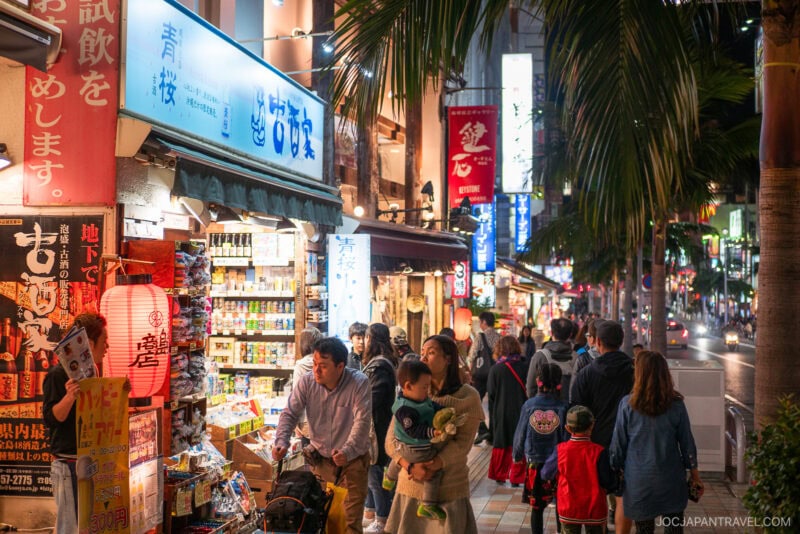
When we wanted to experience the lively, urban side of Okinawa, we headed straight to Kokusai Dori (国際通り). This two-kilometer stretch in central Naha is known as “International Street,” and it quickly became one of our favorite places to wander after a day of exploring historical sites and beaches.
Kokusai Dori runs from the Naha Bus Terminal to Makishi Station on the Yui Rail. The street is packed with souvenir shops, local eateries, cafes, bars, and live music venues.
The name “Kokusai Dori” comes from the Ernie Pyle International Theater, a postwar cultural center that once stood along the road. Over time, the area transformed into a dynamic neighborhood that reflects Okinawa’s fusion of Japanese, American, and native Ryukyuan influences.
Things to Do on Kokusai Dori

1. Try Local Okinawan Street Food
From steaming bowls of Okinawa soba to tender rafute (braised pork belly), there’s no shortage of flavor here. Taco rice was a hit with the kids, and we also grabbed freshly fried sata andagi (Okinawan donuts) from a street vendor, still warm and crisp.
For drinks, many shops offer tropical juices made from passionfruit, pineapple, or shikuwasa citrus. Adults can also enjoy free awamori tastings in some souvenir stores.
2. Explore the Shopping Arcades
Off the main street, walkways are packed with snack stalls, trinkets, and handmade crafts. One of the highlights was visiting Makishi Public Market. Inside, we saw everything from giant prawns and local fish to Okinawan pickles and sauces. Upstairs, there are small restaurants where they’ll cook your seafood purchase on the spot.
3. Catch Live Sanshin Music
In the evening, some restaurants host live performances featuring the sanshin, a three-stringed instrument with deep roots in Okinawan music.
Tips for Visiting Kokusai Dori
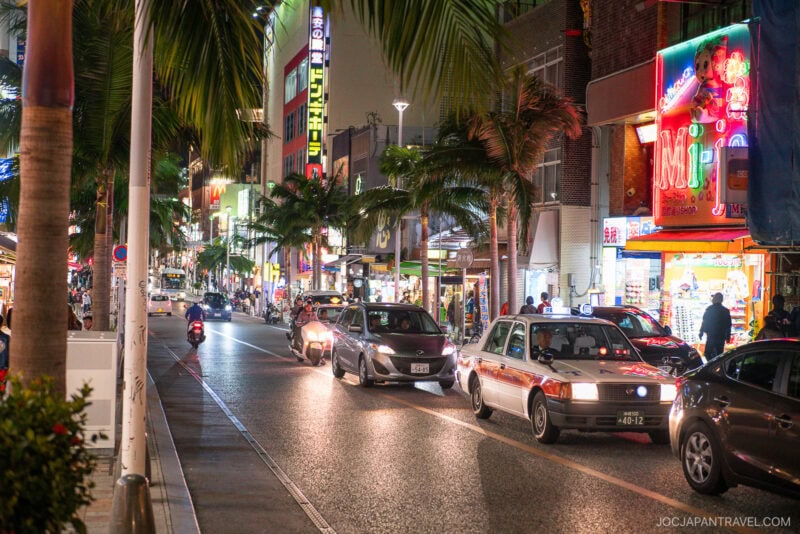
- Evening is Best: The street is most vibrant around dinnertime and stays lively into the night.
- Bring Cash: Some vendors and older shops don’t take credit cards.
- Great for Families: Our kids enjoyed picking out sweets, spotting souvenirs, and trying new foods.
How to Get to Kokusai Dori
Train
- The Yui Rail Monorail is the most convenient way to reach Kokusai Dori from Naha Airport and other parts of the city.
Pro Tip: Kokusai Dori is a “Pedestrian Paradise” (歩行者天国) every Sunday from 12:00 PM to 6:00 PM, when the street is closed to cars. This is a fantastic time to stroll freely, enjoy street performers, and soak up the lively atmosphere.
Is Kokusai Dori Worth Visiting?
Absolutely. While Okinawa is often known for nature and beach escapes, Kokusai Dori shows a different side of the island. It gave us a chance to taste local food, shop for gifts, hear Okinawan music, and experience the energy of Naha all in one place.
More to Explore Nearby
After shopping and snacking your way down Kokusai Dori, take time to explore these nearby cultural, historical, and spiritual landmarks in and around Naha.
- Shikinaen – This peaceful former royal garden features traditional pavilions, stone bridges, and seasonal flowers in a serene setting.
- Shuri Castle – Visit the rebuilt palace of the Ryukyu kings to learn about Okinawa’s regal past and enjoy sweeping views over the city.
- Seifa Utaki – A sacred UNESCO site tied to ancient Ryukyuan spirituality, nestled among cliffs and lush coastal forest.
- Himeyuri Peace Museum – A sobering look at Okinawa’s wartime history told through the eyes of student nurses during the Battle of Okinawa.