This post may contain affiliate links. Please read our disclosure policy.
The Kyushu Ceramic Museum in Arita offers free entry, world-class porcelain collections, and insights into centuries of ceramic craftsmanship.
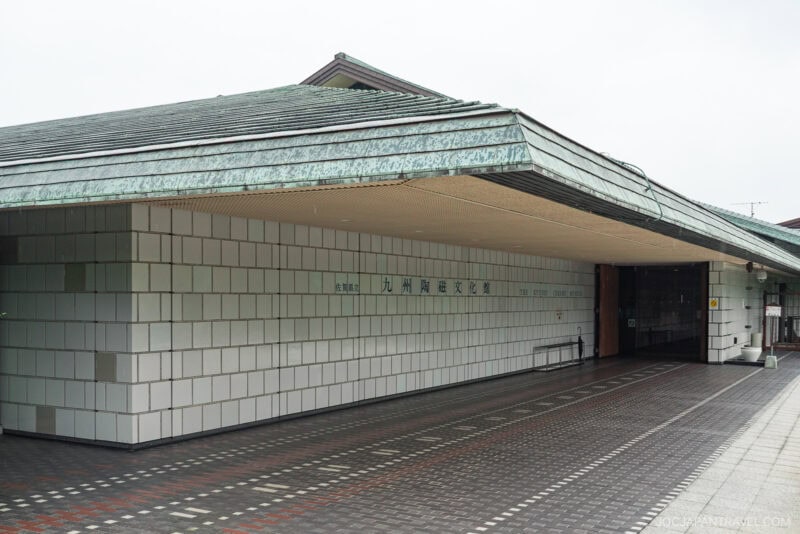
Arita’s Cultural Centerpiece
Arita in Saga Prefecture is known as the birthplace of Japanese porcelain, and the Kyushu Ceramic Museum is the best place to understand why. Situated on a hillside near Arita Station, this museum has been preserving and showcasing ceramic artistry since 1980.
We visited to deepen our appreciation for Arita ware, and the exhibits gave us a much richer understanding of how porcelain from this small town shaped global art history.
What You’ll See Inside

The museum’s five main exhibition rooms highlight both tradition and innovation. We especially enjoyed how each gallery told a different part of the porcelain story.
Contemporary Ceramic Art of Kyushu
This gallery features bold, large-scale works by modern artists across Kyushu. Many of the pieces push the boundaries of porcelain design, proving that Arita ware continues to evolve today.
Old Ceramics of Kyushu

Here we saw early ceramics from Arita, Karatsu, Satsuma, and other kiln sites across Kyushu. Walking through this gallery felt like traveling through time, with displays that showed how techniques and styles developed over the centuries.
History of Kyushu Ceramics
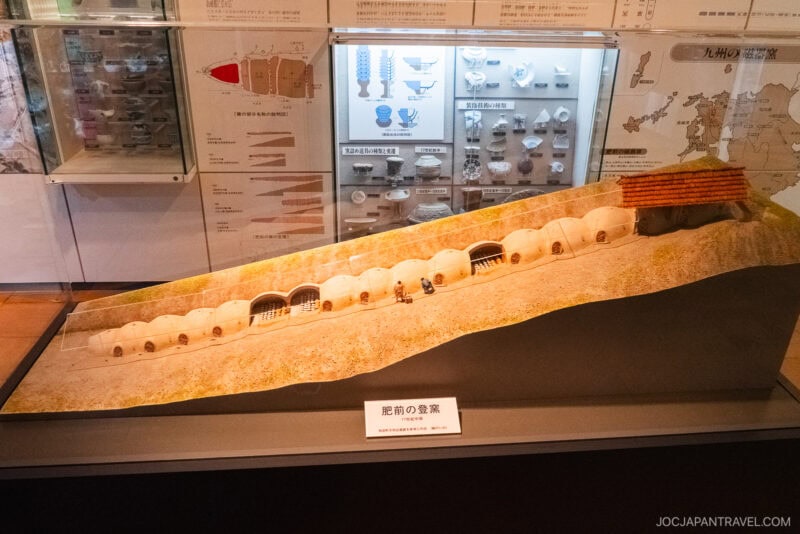
This section explains how Korean potters introduced porcelain-making to the region and how Kyushu later became a global export hub. Maps, panels, and historical documents helped us connect the local craft to its international impact.
Shibata Collection
The highlight of our visit was the Shibata Collection, which includes over 1,000 Edo-period Arita porcelain pieces. Donated by the Shibata family, the collection gives a rare look at museum-quality works that once traveled across the world through the Dutch East India Company.
Arita Ware vs. Imari Ware
One of the museum’s helpful explanations clarified something we often found confusing: Arita ware was made inland, but shipped from the port of Imari. That’s why much of Japan’s porcelain became known abroad as “Imari ware.” In Europe, these pieces were highly prized by aristocrats and collectors in the 17th and 18th centuries.
How to Get to Kyushu Ceramic Museum
By Train
From Arita Station (有田駅), walk about 12 minutes uphill or take a short taxi ride.
By Car
- From Hasami Arita IC on the Nishi Kyushu Expressway: about 10 minutes.
- From Takeo Kitagata IC on the Nagasaki Expressway: about 30 minutes.
- On-site parking is available.
Taxi
From Arita Station, a taxi takes about 4 minutes.
Pro Tip: Pair the museum with Izumiyama Quarry and Tozan Shrine for an easy half day.
Should You Visit Kyushu Ceramic Museum?

If you’re visiting Arita, we think the Kyushu Ceramic Museum should be one of your first stops. Seeing the history and artistry of porcelain in a curated setting makes exploring Arita’s kilns and shops even more rewarding. Whether you’re a collector, a history enthusiast, or simply curious about Japanese crafts, this museum is an essential stop in Saga Prefecture.
More to Explore Nearby
The Kyushu Ceramic Museum is the regional center for the historic Arita ware, positioning you perfectly to explore other local pottery towns, relaxing hot springs, and the distinct international history and cuisine of nearby Nagasaki.
- Arita Porcelain Town – Explore the nearby historic town renowned as the birthplace of Japanese porcelain, where you can browse local shops and galleries.
- Takeo Onsen – Visit this renowned hot spring town, famous for its cinnabar-red gate and smooth waters, offering relaxation after a day of exploring.
- Nagasaki Champon & Sara Udon – Dive into the unique regional food of Nagasaki by tasting these famous hearty noodle dishes, influenced by the city’s Chinese history.
- Nakashima River Stone Bridges – Discover the picturesque historical stone bridges of the Nakashima River in Nagasaki, a beautiful example of the city’s international history.