

This post may contain affiliate links. Please read our disclosure policy.
Takeo Onsen blends 1,300 years of hot spring tradition with cultural landmarks, lush gardens, and even a modern library that surprises first-time visitors.
Why We Stayed in Takeo Onsen
We first chose Takeo Onsen as a practical base for exploring Arita and Imari, but it quickly became one of our favorite parts of the trip. Just 15 kilometers (10 miles) from Arita, the town combines historic baths, impressive architecture, and unique attractions that appeal to both adults and kids.
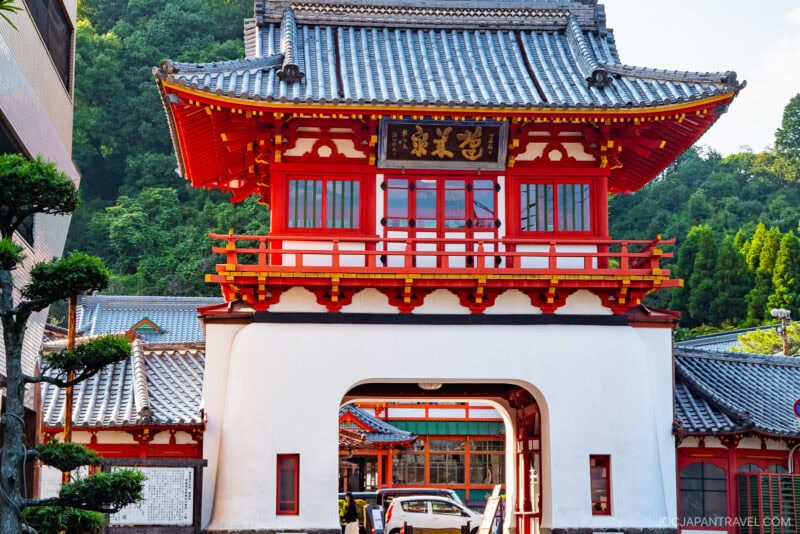
Takeo Onsen Romon Gate
The first landmark we saw was the striking vermilion Takeo Onsen Romon (武雄温泉楼門). Built in 1914 by Dr. Kingo Tatsuno, the architect of Tokyo Station, it was constructed without using nails. A fun detail links the two cities—four zodiac animals missing from Tokyo Station’s dome can be found carved into the corners of this tower gate.
Soaking in the Takeo Onsen Baths
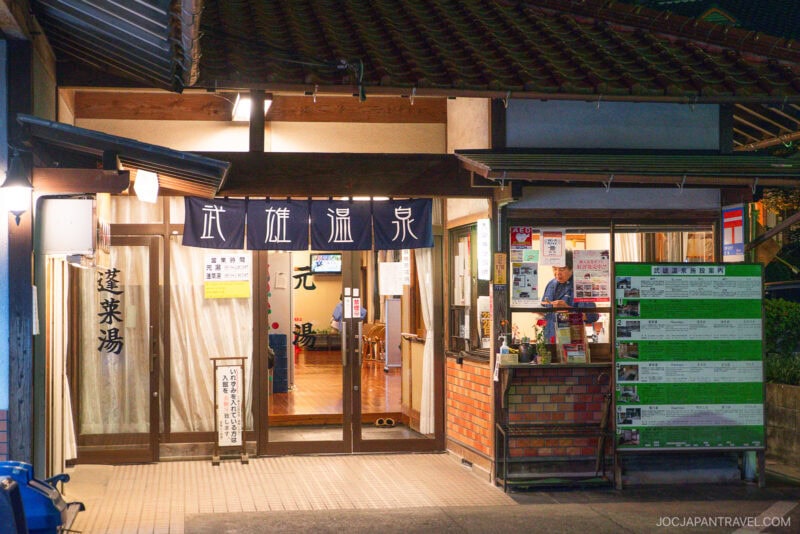
Just beyond the gate is Takeo Onsen Motoyu (武雄温泉 元湯), the main public bath dating back to 1891. It is one of the oldest existing onsen bathhouses in Japan. The water is alkaline, often called Bijin-no-yu or “beautifying waters,” and is said to help improve skin. Next door, Takeo Onsen Shinkan features a small museum, ceramic displays, and a shop with local crafts.
Mifuneyama Rakuen Garden
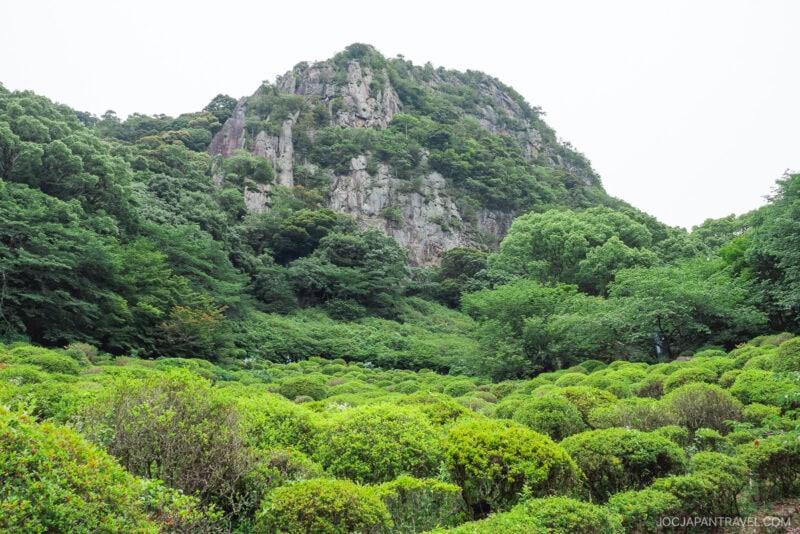
One of the highlights of our visit was Mifuneyama Rakuen (御船山楽園), a garden spread over 120 acres at the base of Mount Mifune. Established in 1845, it is known for its spring azaleas and autumn foliage.
We visited in summer and found the green landscape beautiful, with trails leading to ponds, viewpoints, and even a cave of 500 carved stone Buddhas. During summer, the teamLab digital art exhibition transforms the garden at night into an illuminated wonderland, making it one of the most unique seasonal events in Kyushu.
Takeo Shrine and the Ancient Camphor Tree
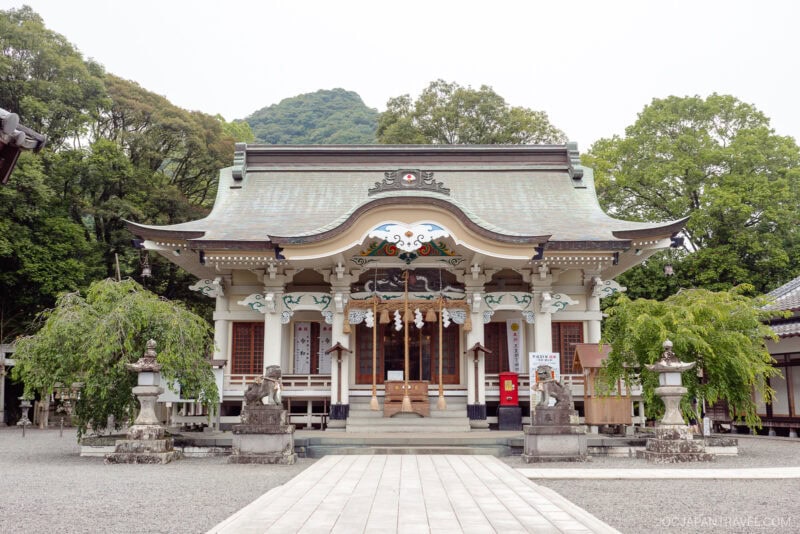
Nearby, Takeo Shrine (武雄神社) is home to a giant camphor tree estimated to be more than 3,000 years old. Standing 27 meters tall, it is one of Japan’s oldest trees and a sacred natural monument. We also stopped at the “couples cypress,” two intertwined trees said to bring good fortune in love and marriage.
Staying at Hotel Shunkeiya
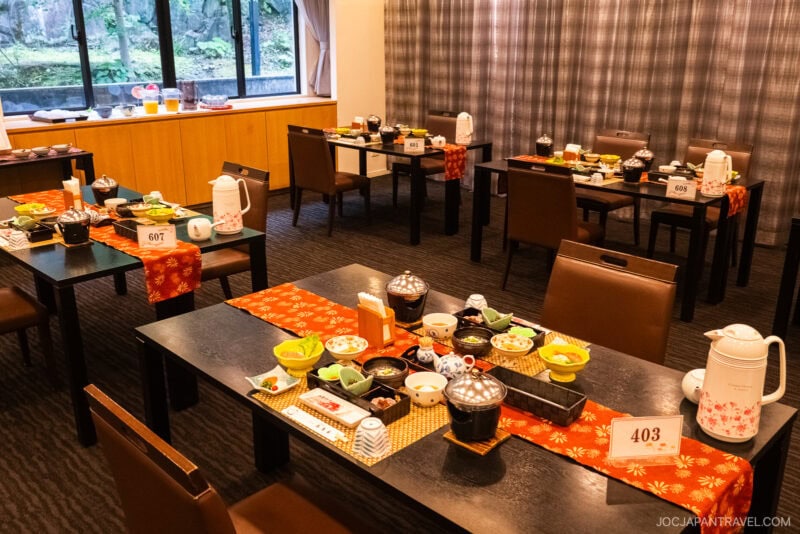
We stayed two nights at Hotel Shunkeiya, a modest ryokan close to the baths. The rooms were simple but spacious, and the onsen facilities were a highlight for our kids, who enjoyed putting on yukata and heading downstairs for a soak.
Dinner was served kaiseki-style with seasonal dishes such as eel rice, fugu tataki, and asparagus pasta. While not as refined as high-end ryokan cuisine, it was satisfying and varied.
Takeo City Library

Before leaving town, we visited the Takeo City Library, a striking space that doubles as a Tsutaya bookstore and cafe. With wide bookshelves, clean design, and even marked photo spots, it has become a symbol of the city’s focus on community spaces. It’s not your typical library, but definitely one you’d wish was in your own neighborhood.
How to Get to Takeo Onsen
Takeo Onsen sits in Takeo City, Saga Prefecture. The station name is Takeo-Onsen Station.
By Train
- From Arita Station: JR Sasebo Line, about 17 minutes to Takeo-Onsen Station.
- From Fukuoka (Hakata Station): JR Limited Express Midori or Huis Ten Bosch, about 1 hour 15 minutes to Takeo-Onsen Station.
- From Nagasaki: Take the Nishi Kyushu Shinkansen Kamome to Takeo-Onsen Station.
From the Station
- Walk about 10 to 15 minutes to the Romon Gate and Motoyu baths.
- Most ryokan are within a short taxi ride or an easy walk.
By Car
- About 22 minutes from Arita.
- About 1 hour 20 minutes from central Fukuoka, depending on traffic.
By Taxi
- A taxi from Takeo Onsen Station to the onsen area takes about 5 minutes.
Pro Tip: If you plan to see the night illumination at Mifuneyama Rakuen, stay in Takeo Onsen so you can enjoy the show without rushing back.
Is Takeo Onsen Worth Visiting?
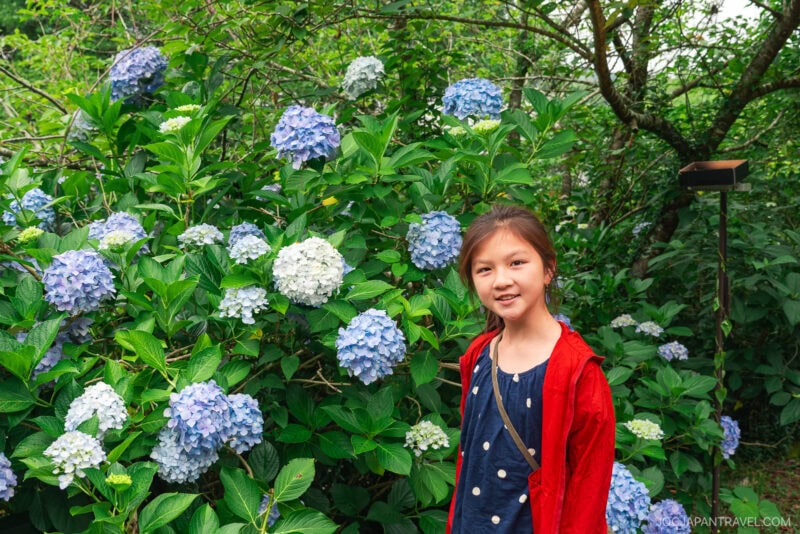
There are only a few hotel options in Arita and Imari, which makes Takeo Onsen a convenient and appealing choice. The town captures the charm of a traditional hot spring area while offering attractions you won’t find anywhere else.
Whether you’re exploring nearby Arita and Imari or traveling across Kyushu, Takeo Onsen promises a memorable experience filled with history, culture, and relaxation.
More to Explore Nearby
Takeo Onsen is famous for its beautiful cinnabar-red gate and smooth waters, positioning you near Kyushu’s famous pottery regions, historical sites, and other relaxing hot springs experiences.
- Arita Porcelain Town – Explore the historic town nearby, renowned as the birthplace of Japanese porcelain, where you can browse local shops and galleries.
- Kyushu Ceramic Museum – Discover the history and artistry of the region’s famous ceramics, with a focus on Arita ware, at this excellent museum.
- Okawachiyama Village – Visit this scenic and remote “Village of the Secret Kilns,” famous for its beautiful views and traditional Iro-Nabeshima porcelain.
- Kurokawa Onsen – Travel south to experience this beautifully preserved traditional hot spring village, famous for its atmospheric outdoor baths (rotenburo).




Konnichiwa! We are traveling to the Arita area in October 2026 thanks for the blog about the onsen and activities.
I will read the blog carefully, thanks you!
Hi Kristine,
Let us know if you have any questions. It’s much easier to get around the area if you have a car.
For hotels, we would recommend looking around Ureshino Onsen.