This post may contain affiliate links. Please read our disclosure policy.
Nestled at the foot of the Kunisaki Peninsula, Usa Shrine is one of Kyushu’s most revered shrines. Dense cedar forests and vermilion torii gates line the approach. Over 1,300 years of sacred history give it an atmosphere hard to find anywhere else in Oita.

Usa Shrine (宇佐神宮) was established in 725 and serves as the head shrine of over 40,000 Hachiman shrines across Japan. It enshrines Hachiman, the deified spirit of Emperor Ojin and the protector of Japan, and is considered one of the founding sites of syncretic Shinto-Buddhist worship in the country.
That tradition ended in 1868 when the Meiji government ordered the formal separation of the two faiths, but the depth of the site’s spiritual history runs through every stone, gate, and altar on the mountain. I visited early in the morning, when very few other people were around, and it remains one of the most memorable shrine experiences I have had in Kyushu.
What is Usa Shrine
Usa Shrine is a major Shinto complex spread across and around Mount Ogura in Usa City, Oita Prefecture. The Upper Main Shrine (Jogu), designated a national treasure, sits at the mountain’s summit and the Lower Main Shrine (Gegu) at its base, connected by forested approaches, ponds, auxiliary shrines, and a treasure hall accessible from the north and west gates. The complex is free to enter and open from 5:30 to 19:00, with restricted hours from October to March.
My Experience at Usa Shrine

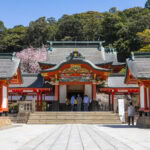
I entered through the north gate, passing a row of shops and restaurants. From there, the Omotesando leads to the main approach to the shrine. The dense forest on either side of the path contrasts beautifully with the vermilion torii gates. The red-lacquered shrine structures further in add to the effect.
Arriving early in the morning meant I had much of the precinct to myself. The sounds of chirping birds filled the air. Shrine staff quietly swept fallen leaves from the stone paths. It has a serene atmosphere, which I recommend visiting before it gets busy later in the day.
The Omotesando, Treasure Hall, and the Kurehashi Bridge
Just beyond the first gate on the north approach is the treasure hall. It sits on the right and houses cultural artifacts related to Usa Shrine’s history. Some of these are designated national treasures. It is only open on Sundays and national holidays. Hours are 10:00 to 15:00, and admission is 300 yen. Plan accordingly if seeing the collection is a priority.
If you enter through the west gate instead, you will encounter the Kurehashi. It is a thatched-roof bridge unlike anything else at the shrine. Its doors remain almost permanently closed. They open only once every ten years. This happens when the Emperor’s messenger arrives for an imperial ritual. The west approach joins the Omotesando at a large pond covered in lotus plants. It is one of the most photogenic spots in the complex.
The Upper Shrine and Its Three Altars

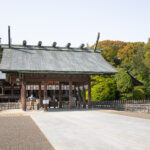
The Upper Shrine at the summit of Mount Ogura is a designated national treasure. It is the spiritual heart of the complex. Its main hall consists of three altars, each built in the Hachiman-zukuri style. In this style, two halls share a connected roofline to form a single structure. Visitors cannot enter the altars. They are guarded by the Chokushimon Gate of the Imperial Emissaries. The view of the three halls from the outside is worth a visit in itself.
The left altar is dedicated to Hachiman, patron of agriculture, fishing, travel, commerce, scholarship, and the arts. The central altar enshrines Himeookami, guardian of travelers, communication, and happiness. The right altar is dedicated to Empress Jingu, guardian of childbirth and marital relationships. Each deity draws its own steady stream of worshippers, and the variety of blessings offered at a single shrine complex is unusual even by Japanese standards.


Andy’s Travel Tips
These simple tips will help you when you visit.
- Arrive early in the morning before the day-trippers arrive. The isolated, quiet sounds of nature are what make the Usa Shrine memorable, and those things are best appreciated with fewer people around.
- Enter through the west gate as well as the north to see the Kurehashi thatched-roof bridge and the lotus pond where the west approach meets the Omotesando. The two routes offer noticeably different experiences of the same complex.
- Visit the treasure hall on a Sunday or national holiday if you want to see the cultural artifacts and national treasures inside. It is only open between 10:00 and 15:00 on those days, and it is easy to miss if you do not check in advance.
- Rent a car and combine with the Kunisaki Peninsula. The shrine is best reached by car, and it sits naturally at the southern entry point of a full Kunisaki day trip that includes Fukiji, Futagoji, and the Koikana Road coastline.
- The shrine opens at 5:30 am from April to September, making it one of the earliest-opening major shrines in Kyushu. An early morning visit in mist or low light is a genuinely different experience from midday.
How to Get to Usa Shrine
Train
The closest station to the shrine is JR Usa Station, which is located on the JR Nippo Main Line.
- From Beppu Station: Take the Limited Express Sonic. The ride takes approximately 30 minutes.
- From Oita Station: Take the Limited Express Sonic. The ride takes approximately 40 to 45 minutes.
- Note: Once you arrive at Usa Station, you are still about 4 kilometers from the shrine. You will need to take a bus or taxi to reach the entrance.
Bus
- From JR Usa Station: Buses operated by Oita Hokubu Bus run roughly once per hour. Look for buses heading toward “Usa Hachiman” or “Bungo Takada.” The ride takes about 7 to 10 minutes.
Car
Driving is a great way to visit Usa Shrine, especially if you plan to explore the ancient stone Buddhas and temples deeper in the Kunisaki Peninsula.
- From Beppu: The drive takes about 40 to 50 minutes via the highway or Route 10.
- From Oita City: The drive takes approximately 50 to 60 minutes.
Taxi
- A taxi from JR Usa Station to the shrine is a quick and convenient alternative to the bus.
- The ride takes about 10 minutes and costs approximately ¥1,600 to ¥2,000.
Is Usa Shrine Worth Visiting?
Yes, particularly for anyone making time for Oita Prefecture beyond Beppu and Yufuin. The scale of the complex, the depth of the forest, and the historical significance of the site set it apart from most shrines in Kyushu. It is free to enter, relatively uncrowded by the standards of major Japanese shrines, and easy to combine with the rest of the Kunisaki Peninsula as part of a full day’s exploration.
More to Explore Nearby
- Beppu Travel Guide — About an hour south, Japan’s most prolific hot spring city is an essential Oita stop — from the famous steaming “hells” tour to sand baths and lively resort streets.
- Beppu Bamboo Weaving — Beppu’s other great tradition, this time artisanal. Try a hands-on weaving workshop and take home a beautifully crafted piece of one of Japan’s finest bamboo craft cultures.
- Yunotsubo Kaido — Yufuin’s charming main street is lined with galleries, craft shops, and local food stalls — a lovely way to spend an afternoon en route between Usa and the highlands.
- Yufuin Kinrin Lake — Yufuin’s most iconic spot, a mist-wrapped lake surrounded by traditional inns and cafes, is one of the most photographed scenes in all of Oita.