

This post may contain affiliate links. Please read our disclosure policy.
From volcanic coastlines to mountain ranches, Kagoshima serves up some of Kyushu’s most unforgettable local dishes. A few of them might genuinely surprise you.
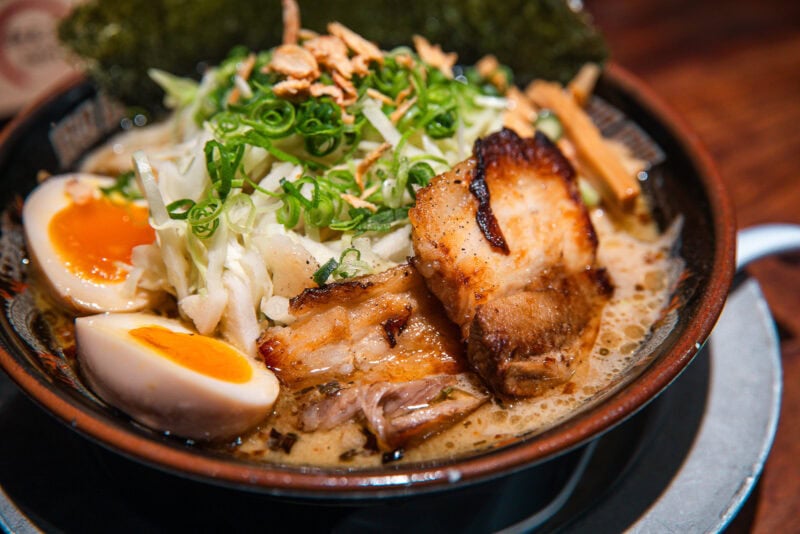
Many people know Kagoshima for Sakurajima, the brooding active volcano that looms over the city. But spend a little time here and you quickly realise that Kagoshima’s real character lives in its food.
Shaped by a landscape that stretches from temperate highlands to subtropical coastlines, the prefecture produces an extraordinary range of ingredients. These include prized livestock, abundant seafood, and volcanic soil crops. These are the dishes I’d put at the top of your list.
The Trio of Black Meats: Kurobuta, Kuroushi, and Kuro Satsuma-Dori
Kagoshima is famous for what locals call the “trio of black meats” – three premium proteins all named for the animals’ dark coats:
- Kurobuta (black pork)
- Kuroushi (black beef)
- Kuro Satsuma-Dori (black chicken).
Kuroushi is tender and full-bodied, with beautifully balanced marbling and a quietly distinct umami profile. Kuro Satsuma-Dori is raised free-range, which shows in both its firm texture and clean flavour. It’s commonly served as torisashi (lightly seared raw chicken, thinly sliced with soy sauce and ginger) or sumibiyaki-style over charcoal.
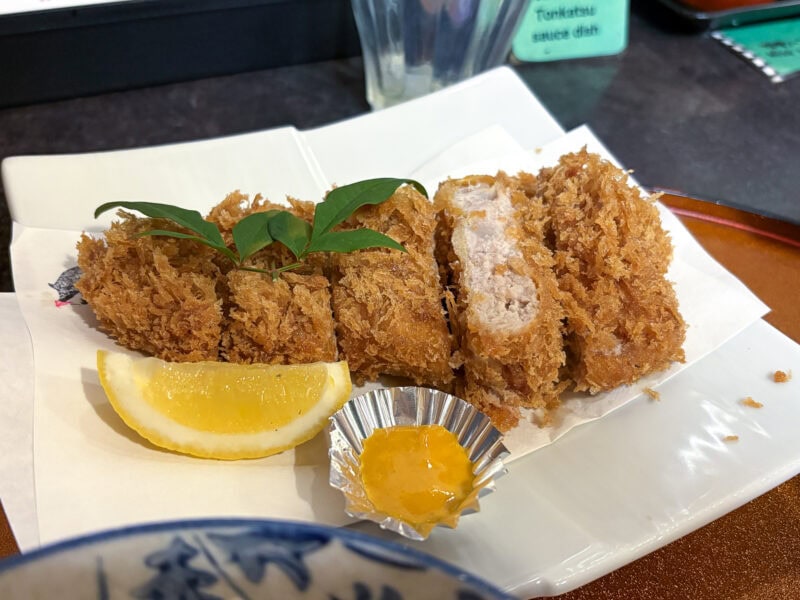
But of the three, Kurobuta is the undisputed star, and rightly so. While standard commercial pork is typically reared for around six months, black pigs are raised for closer to eight. This produces firmer, more muscular meat with a remarkable fat-to-lean balance. What sets it apart is a natural sweetness and a fat that melts at low temperatures. This gives each bite a silky, lingering richness unlike any pork I’ve had elsewhere.
There are plenty of ways to enjoy it, like shabu shabu, grilled, and stewed. But I went straight for tonkatsu (breaded, deep-fried pork cutlet), which is one of my favourite dishes in Japan. I settled on Kurobuta, a restaurant right in the city centre. The cutlet was tender with a satisfying bite, and that underlying sweetness came through beautifully. A dab of sea salt and wasabi worked perfectly, though the house tonkatsu sauce was equally good. It became my single favourite dish from the entire trip around Kyushu.
Satsuma Wagyu

Here’s something that might surprise you: Kagoshima is Japan’s number one producer of Wagyu beef. It accounts for roughly 20% of all black Wagyu raised in the country. The animals are raised with serious care, amongst spacious ranches, fresh air, clean water, and as stress-free an environment as possible.
I tried Satsuma Wagyu, a select brand from the western region of the prefecture. It is considered among the finest Wagyu Japan has to offer. The marbling is fine and even, and the fat is moist and glossy. The flavour is rich without being overwhelming.
For Wagyu, my standing recommendation is always a yakiniku restaurant. There, you can grill different cuts yourself to appreciate the range of flavors and textures. Gyu Do! is a fantastic option, offering Satsuma Wagyu cuts such as fillet, sirloin, and tongue. They have both à la carte and set menus. I went for the set, which was excellent value. The meat was buttery and deeply satisfying in a way that’s hard to put into words until you try it.
Satsuma-age (つけ揚げ)

Satsuma-age, locally known as tsukeage, is Kagoshima’s beloved fish cake, with a history dating back to the Edo period. Originally developed to preserve the region’s abundant small fish catch in the warm southern climate, it’s made by grinding fish into a fine paste, seasoning it with local sake and sugar, shaping it, and deep-frying it.
Horse mackerel, mackerel, and flying fish are common, though higher-quality versions use lizardfish, conger eel, or croaker. Vegetables like carrot, burdock, or lotus root are often mixed in for extra texture and flavour.
You’ll find specialty shops selling it across the city, and it turns up regularly at restaurants and izakayas, often in oden, or simply as a snack with drinks. What I appreciated most was how it doesn’t hit you with a strong fishy smell. The texture has a satisfying, springy bite, and it pairs well with almost anything as a side dish.
Kibinago (きびなご)

Kagoshima’s fishing grounds span Kagoshima Bay, the East China Sea, and the Pacific. They are known for their exceptional diversity and high-volume production of premium marine species. One of their most prized catches is kibinago, or silver-stripe round herring. These tiny fish are only about 10 cm long with a distinctive silver stripe running their length. They are an indispensable part of local cuisine.
Kibinago can be prepared in a surprising number of ways: sumiso (with vinegared miso), shioyaki (salted and grilled), nitsuke (simmered in broth), and tempura. Most classically, it is served as sashimi, arranged in the shape of a chrysanthemum flower with vinegared miso or ginger soy sauce. The presentation alone is worth the order.
I found both kibinago and satsuma-age at Tenmonkan Wakana, in the covered Tenmonkan shopping arcade. It’s a great spot if you want to try several Kagoshima specialties in one sitting.
Kagoshima Ramen

Kyushu is ramen heaven, and most people’s minds go straight to Fukuoka’s tonkotsu when they think of the region. But Kagoshima has its own distinct style, and it’s worth seeking out.
Two things set it apart. First, the broth: a blend of pork bones, chicken carcasses, vegetables (dried mushrooms, kelp), and sometimes dried sardines, simmered into something gentler and more layered than a straight tonkotsu.
Second, the noodles don’t use kansui, the alkaline solution that gives most ramen noodles their characteristic chew, so they’re noticeably softer and easier to eat. Toppings typically include char siu pork, kikurage (wood ear mushrooms), scallions, bean sprouts, and crispy fried onions.
I went to Mengarufu Tenmonkan, inside the Tenmonkan shopping arcade. The broth had real depth without being heavy, and I loved the soft noodles. They absorbed the flavour rather than competing with it. I chose the traditional char siu, though kurobuta is an option too. The addition of sliced cabbage on top was a pleasant surprise, providing a fresh, crunchy counterpoint to the soup’s richness.
Is it Worth Visiting Kagoshima For the Food?
Food plays a big part in how I travel, and Kurobuta alone makes Kagoshima worth the trip for me. The quality of the black pork here is genuinely unlike anything you’ll find elsewhere in Japan, and experiencing it as tonkatsu in the city centre is one of my favourite meals from all of Kyushu. That said, I’ll be honest — if premium pork isn’t your thing, the remaining dishes, while good, may not be destination-worthy on their own. Come for the food culture, stay for the volcano, and you’ll leave very happy.
Have you visited Kagoshima? I’d love to hear what you ate — drop your recommendations in the comments!
More to Explore Nearby
Kagoshima’s food culture runs deep — from kurobuta pork to fresh seafood and shochu. The city and its surroundings pair perfectly with a food-focused visit.
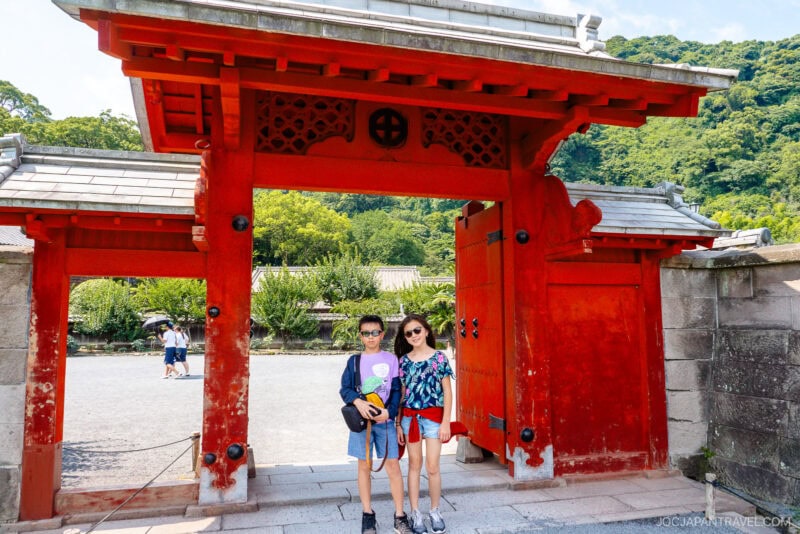
- Kumasotei Restaurant — A lively local favorite serving Kagoshima specialties in a rustic, atmospheric setting.
- Kagoshima Sightseeing and Shopping — Tenmonkan arcade is the city’s beating heart, packed with eateries, izakayas, and shochu bars.
- Sengan-en — A stunning feudal garden with Sakurajima as its backdrop, home to a tea room and traditional sweets worth seeking out.
- Sakurajima — A short ferry ride across the bay to Kagoshima’s iconic volcano, where you can sample the famously giant Sakurajima daikon radish.
- Tabelog Guide — A practical walkthrough of Japan’s most trusted restaurant review app, essential for hunting down Kagoshima’s best local spots.


