This post may contain affiliate links. Please read our disclosure policy.
Nara, home to many early emperor palaces and free-roaming wild deer, is also known for its cherry blossoms. In this guide, we’ll take you to some of the best places in this historic city to experience the breathtaking beauty of cherry blossoms in full bloom.
Nara, a city steeped in history, is less than an hour from Kyoto and Osaka. When springtime arrives, cherry blossoms transform the city into a serene, pastel wonderland.
Whether you’re wandering historic temples, strolling through ancient parks, or soaking in the tranquil riverside, Nara offers countless spots to enjoy hanami, the cherished tradition of cherry blossom viewing. Here are nine of the best places to see Nara’s sakura in full bloom.
More Cherry Blossom Viewing Spots in Japan
Chasing cherry blossoms is one of the most exciting things to do when you visit Japan in spring. Don’t miss our recommendations on where to experience this magical time in Japan!
Nara Park 奈良公園
Blooming Period: Late March to Early April
Photo date: April 4th, 2024
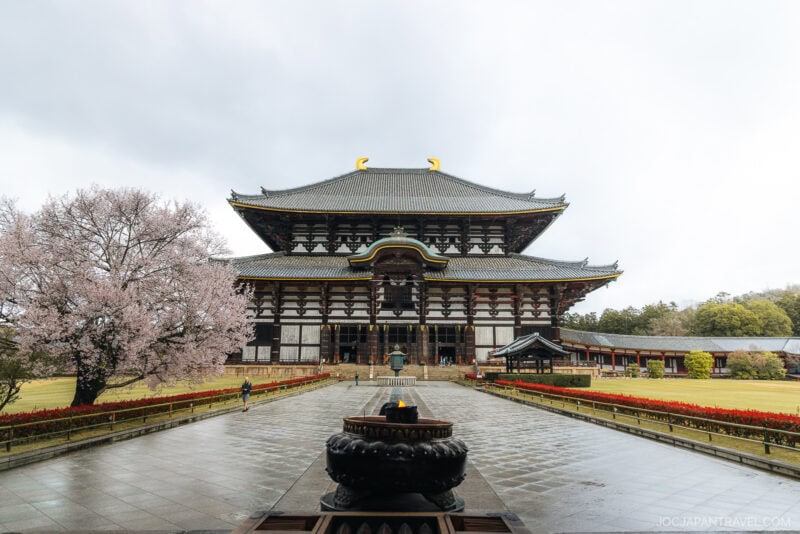
A visit to Nara isn’t complete without stopping by the famous Nara Park. Many visitors come for the bowing deer, but the cherry blossoms scattered throughout the park create a magical atmosphere.
Todaiji is also surrounded by cherry trees, which splash delicate pink across the revered temple. A particularly huge tree to the left frames an unforgettable scene.
Here’s a tip for your hanami experience: sometimes it’s better to be slightly late than early. As petals fall, you may witness a sakura fubuki, a “cherry blossom snowstorm.” Watching the petals drift and swirl in the wind is a breathtaking reminder of their fleeting beauty.
Yamato-Koriyama Castle Ruins 郡山城

Blooming Period: Late March to Early April
Photo date: April 4th 2024
Located in the southwest of Nara City, Yamato-Koriyama Castle has earned a spot in both the “Continued Top 100 Japanese Castles” and the “100 Best Cherry Blossom Spots in Japan.”
A short walk from Kintetsu-Koriyama Station or JR Koriyama Station takes you to the castle grounds. Lord Toyotomi Hidenaga (1540-1591) once envisioned a castle that reflected his vast holdings.
During my visit, a cherry blossom festival was in full swing. Food stalls offered favorites like yakisoba, okonomiyaki, and takoyaki, perfect for a picnic inside the grounds. While the castle itself is mostly ruins today, the combination of moats, historic walls, and clusters of cherry blossoms creates a striking spring scene.
Saho River 佐保川

Blooming Period: Late March to Early April
Photo date: April 4th 2024
Exploring Nara by bicycle is a joy thanks to the city’s flat terrain. I stumbled upon the Saho River, which stretches along five kilometers lined with cherry trees. It reminded me of Tokyo’s famous Meguro River, but with far fewer crowds. Locals enjoying picnics and families playing by the water made the atmosphere lively yet relaxed.
The river offers scenic spots to stop and soak in the blossoms, making for a stress-free way to enjoy Nara in spring.
Matabei-Zakura 又兵衛桜

Blooming Period: Late March to Early April
Photo date: April 5th 2024
Southern Nara boasts some of the prefecture’s most spectacular cherry blossom spots. Matabei-Zakura, a weeping cherry tree over 300 years old, is one of the highlights.
Legend says Sengoku warrior Goto Matabei spent his later years as a priest here, giving the tree its name. Standing 13 meters tall with a three-meter circumference, its cascading blossoms are an impressive sight. This tree is a dream for photographers!
Although accessible by train and bus, the journey takes nearly two hours. I recommend renting a car and exploring the entirety of southern Nara in a day.
Tsubosakadera 壷阪寺
Blooming Period: Late March to Early April
Photo date: April 5th 2024
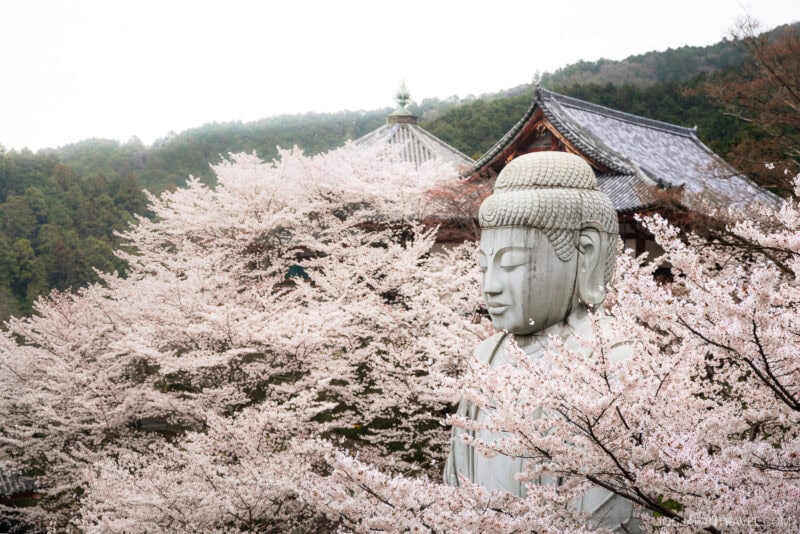
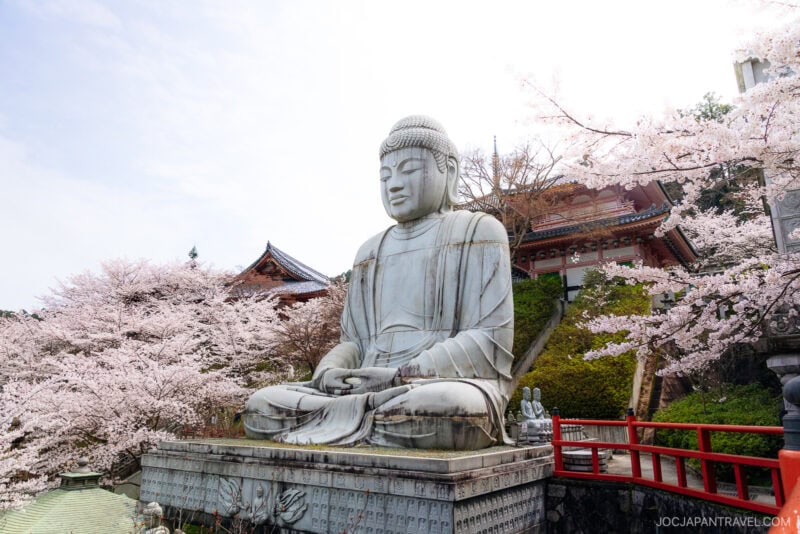
Perched on Tsubosaka Mountain, this temple combines Japanese and Indian influences. Completed in 717, Tsubosakadera is renowned as a site of healing and beauty. Legend tells of a shaman who discovered a Senju Kannon, a thousand-armed Buddha, granting him healing powers. The shaman healed the Empress’s eye disease, and in gratitude, she built the temple.
At the center stands a giant Buddha statue surrounded by cherry blossoms. Climbing a few staircases to the viewing platform reveals an iconic perspective, with the Buddha’s head peeking through a sea of pink petals.
To the right is a 20-meter-tall Kannon statue, a symbol of friendship and compassion built jointly by India and Japan. The temple grounds also feature a three-story pagoda from 1497, a wall adorned with bas-relief sculptures narrating Buddha’s tale, and a sanctuary evoking the Taj Mahal.
The combination of historical structures and cherry blossoms makes Tsubosakadera a truly unique and unforgettable destination.
Hasedera 長谷寺
Blooming Period: Late March to Early April
Photo date: 5th April 2024
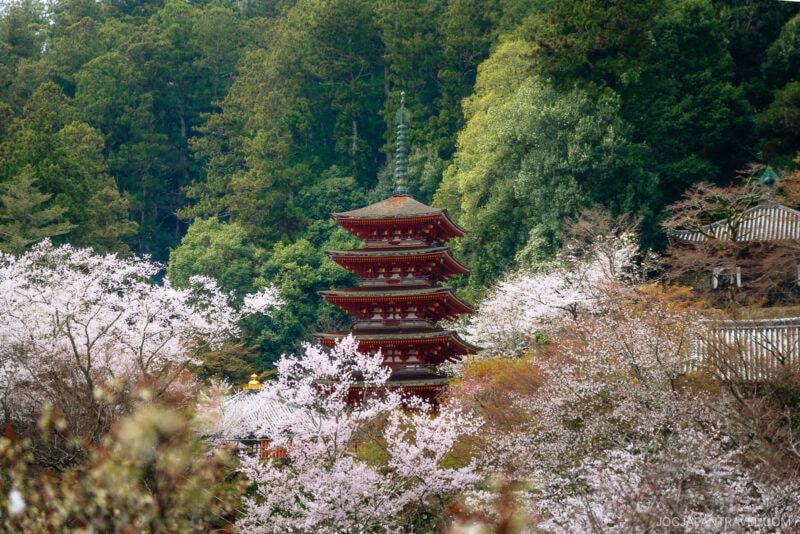
Hasedera, established in 686, serves as the head temple of the Bunzan school of Shingon Buddhism, overseeing around 3,000 smaller temples nationwide. This iconic temple sits near the mountaintop, surrounded by countless flowers, earning it the name “Temple of Flowers.”
The approach to the temple is lined with dozens of small shops, inviting visitors to explore, dine, and browse as they make their way up. Beyond the entrance, a sequence of long corridors and nearly 400 steps lead to the main hall. While not overly steep, the climb is enough to work up a sweat, so comfortable shoes are recommended.
Hasedera Temple Grounds
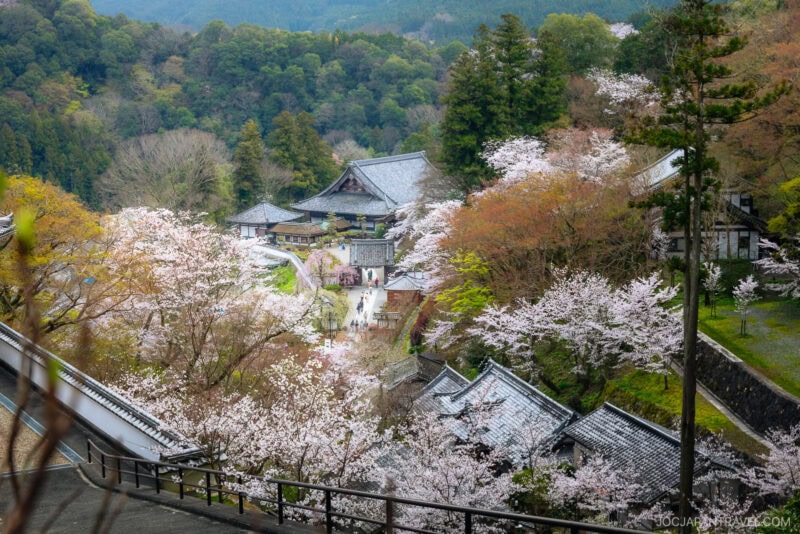
Once at the top, you are rewarded with breathtaking views over the temple grounds. The five-story pagoda rises gracefully from a sea of white and pink cherry blossoms. Active monks still live and practice here, so be sure to respect their space.
After my climb, I was ready for a bite and found a small restaurant near the entrance called Suyacho (酢屋長). I tried the local Mugwort udon, which had a subtle earthy flavor and a chewy texture that I loved.
Another local specialty is Kakinoha-zushi, persimmon leaf-wrapped sushi. At Torase, a little further down the road, you can pick mackerel or salmon-topped sushi and either dine in or take a box to go.
Ishibutai Tumulus 石舞台古墳
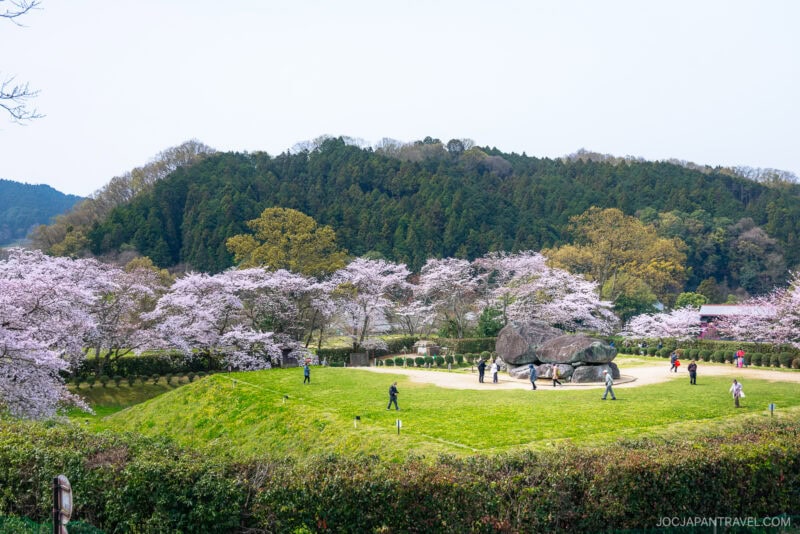
Blooming Period: Late March to Early April
Photo date: April 5th 2024
While exploring southern Nara, a stop at Ishibutai Tumulus is worthwhile. Originally thought to be a stage for performances—‘Ishi’ means stone and ‘butai’ means stage—archaeologists discovered a sarcophagus here in the 1930s. It is now believed to be the tomb of Soga no Umako, an influential figure who helped Prince Shotoku promote Buddhism during the Asuka period.
For 300 yen, visitors can explore the grounds and even enter the stone structure. While the site is small, it’s a peaceful way to enjoy the countryside and watch locals picnicking under the cherry trees. I couldn’t resist joining in with a sakura-flavored soft cream, which had a delicate floral taste balanced with subtle sweetness.
Mount Yoshino (Yoshinoyama) 吉野山
Blooming Period: Late March to Mid-April
Yoshinoyama’s cherry blossoms are some of the most famous in Nara and all of Japan. Due to its mountainous location, the trees bloom later than in central Nara. I unfortunately just missed peak bloom, but even a week later, the area felt enchanting.
Approximately 30,000 cherry trees cover the mountains, with the oldest tree over 1,300 years old. The varieties add a multitude of colors and textures to the landscape. Recognized as a UNESCO World Heritage Site, the area has been celebrated for centuries.
Mount Yoshino Sections
The area is split into four sections:
- Shimo Senbon (Lower 1000 Trees): At the mountain base, accessible by cable car or hiking.
- Naka Senbon (Middle 1000 Trees): Upper town with restaurants, shops, Kinpusenji Temple, and Yoshimizu Shrine. Shuttle buses run during peak season.
- Kami Senbon (Upper 1000 Trees): Quieter area, ideal for serene walks. Hanayagura View Point offers famous vistas.
- Oku Senbon (Inner 1000 Trees): At the top, fewer people, and late-blooming trees for those who miss lower elevations.
Yoshino is easily accessed by JR trains on the Kintetsu Yoshino Line or a direct express from Osaka’s Abenobashi Station (90 minutes, 1,170 yen).
Takada Senbon Sakura 高田千本桜

Blooming Period: Late March to Early April
Photo date: April 4th 2024
Known as “the thousand cherry blossoms of Takada,” this lesser-known spot is a true hidden gem. While the trees are beautiful during the day, evening illuminations (yozakura) transform the area into a magical wonderland.
The Takada River and surrounding streets are lined with cherry trees and festival lanterns. Families and couples gather along the river, enjoying street food and drinks. I tried huge beef and pork skewers and loved the lively yet relaxed atmosphere. Many parks, temples, and shrines stay open for yozakura, giving visitors a chance to experience a different side of hanami.
Is Nara Worth Visiting for Cherry Blossoms?
Nara is home to some of Japan’s most iconic spring scenes, and southern Nara, in particular, offers tranquil and less crowded experiences. Exploring these areas left a lasting impression on me, and I hope everyone has the chance to witness the delicate beauty of cherry blossoms in this magical region.