

This post may contain affiliate links. Please read our disclosure policy.
Experience the stunning beauty of Tokyo’s cherry blossoms with our list of the best viewing spots in the city. From traditional gardens to popular parks, these locations offer the perfect backdrop for a memorable hanami (flower viewing) experience.

Tokyo’s vast network of bustling streets, soaring skyscrapers, and peaceful parks connects more than 37 million people. Yet, when the cherry blossoms bloom, time seems to pause. Their delicate pink petals stand out beautifully against the city’s modern skyline, offering quiet moments of wonder.
I’ve explored the megacity’s 2,194 km² (well, not all of it…) to share the top 10 spots you shouldn’t miss during cherry blossom season.
If you haven’t yet, you can also read my Nara and Kanazawa cherry blossom guides to help plan your next trip to Japan!
Meguro River (目黒川)

Blooming Period: Late March to Early April
Meguro River is one of the most beloved cherry blossom viewing spots in central Tokyo. Rows of trees stretch for about 5 km from Gotanda to Meguro Sky Garden, with the most popular section between Nakameguro Station and Meguro Station.
As you walk along the river, the air is filled with the mouthwatering aroma of street food from nearby stalls. Treat yourself to yakisoba, takoyaki, or candied sweets. Since this is a residential area, please take your trash with you or use designated bins to help keep it clean.
The river is especially enchanting in the evening when the trees are illuminated. You may notice the branches no longer hang as low over the river, as many were trimmed in 2024 to protect the trees. While it may not have the same look as before, the Meguro River remains one of Tokyo’s most atmospheric sakura spots.
Chidorigafuchi (千鳥ヶ淵)
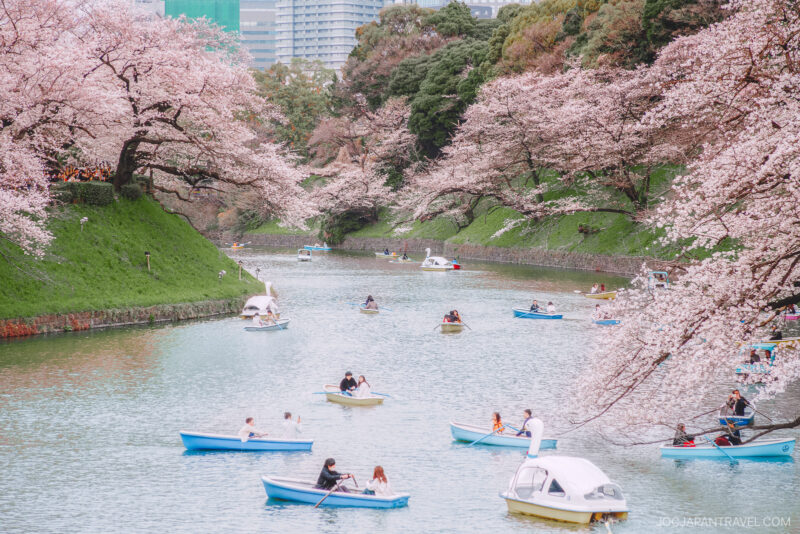
Blooming Period: Mid/Late March to Early April
For a romantic and memorable experience, rent a rowboat at Chidorigafuchi, located on the northwest edge of the Imperial Palace. The 700-meter walkway lined with over 200 cherry trees feels magical, with the blossoms reflecting gently in the water below.
From the pathway, you can admire the blossoms set against the city’s skyline. Rowboats are available from 9:00 a.m. to 8:30 p.m., and the evening yozakura (night viewing) is breathtaking, with Tokyo Tower glowing softly in the distance.
Inokashira Park (井の頭恩賜公園)
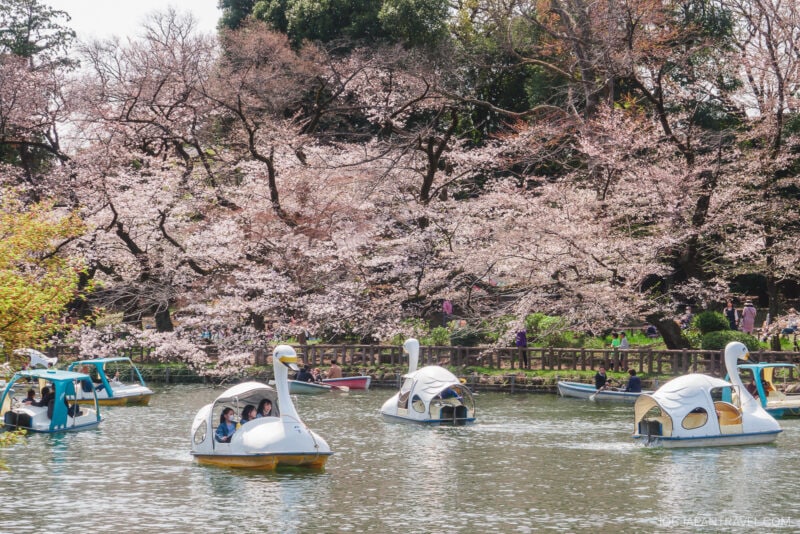
Blooming Period: Late March to Early April
Located in the charming neighborhood of Kichijoji on Tokyo’s west side, Inokashira Park is a favorite spot for locals and visitors alike. The park is home to the Inokashira Zoo, the Studio Ghibli Museum, and over 400 cherry trees.
The park’s highlight is the scenic Inokashira Pond, where over 200 trees drape elegantly over the water, their reflections shimmering in the spring sunlight. You can rent a rowboat or swan boat to enjoy the blossoms up close.
If you prefer a picnic, another 200 trees surrounding the pond offer a lovely backdrop for hanami. Locals often arrive early in the morning to reserve their spots, so plan to come early if you want a good place to sit.
Inokashira Park also showcases a variety of cherry trees, from the early-blooming Kawazu-zakura with their deep pink petals (February to March) to the later Yaezakura, which bloom from mid to late April.
Rikugien Gardens (六義園)
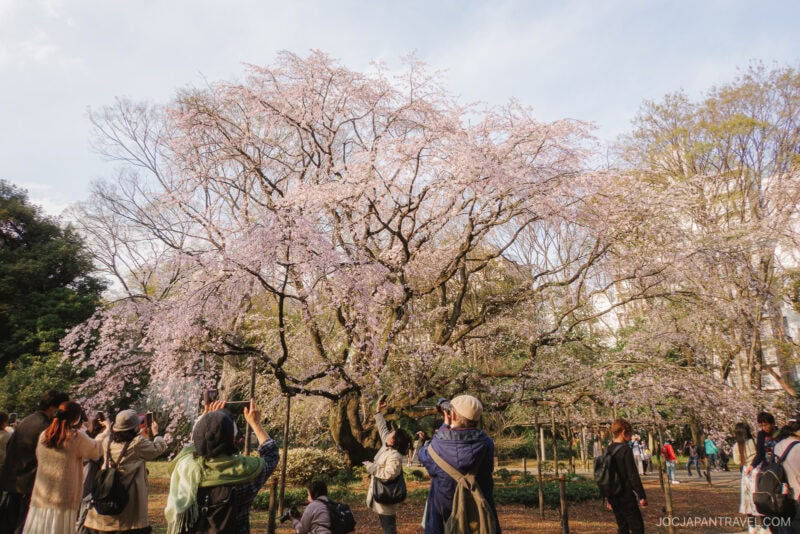
Blooming Period: Late March
Rikugien is one of Tokyo’s most beautiful traditional landscape gardens, designed during the Edo Period (1603–1868). Tucked away in a quiet residential area of Bunkyo City, the garden was created by Yoshiyasu Yanagisawa, a close aide to the fifth shogun, Tsunayoshi Tokugawa.
Its name, Rikugien, means “Six Poems Garden” and reflects the design concept inspired by classic Japanese poetry. You’ll find winding paths that lead through wooded areas, across stone bridges, and past tranquil ponds and teahouses.
Right through the main gate, a magnificent weeping cherry tree called Takizakura (meaning “waterfall cherry tree”) greets visitors. Its cascading branches resemble a flowing waterfall, creating a mesmerizing sight during full bloom.
Shinjuku Gyoen (新宿御苑)

Blooming Period: Late March to Late April
Shinjuku Gyoen is one of Tokyo’s most famous parks and transforms into a floral wonderland every spring. With about 68 varieties of cherry trees, the park offers something new to see throughout the season. Early April brings the beloved Somei Yoshino blossoms, followed by Kanzan in mid-April and Baigoji Juzukakezakura in late April. If you visit in February, you may even spot the winter-blooming Kanzakura.
The park’s design is a unique mix of Japanese, English, and French garden styles. Wide lawns and open spaces invite families and friends to relax, picnic, and enjoy the day together.
Although there’s a modest 500 yen entrance fee, Shinjuku Gyoen remains one of the city’s most beautiful and well-kept spots for cherry blossom viewing.
Yoyogi Park (代々木公園)

Blooming Period: Late March to Early April
Just south of Shinjuku Gyoen, Yoyogi Park is another classic Tokyo hanami destination. The park’s lively and welcoming atmosphere is part of its charm. You’ll often find people singing, dancing, and celebrating together under the trees.
Although Yoyogi Park has fewer cherry trees compared to other parks, its central location and community feel make it a favorite among Tokyoites.
It can get quite crowded, so finding a spot may take patience, but the energy and joy of the place make it worthwhile. After your visit, wander over to nearby Harajuku for some shopping and delicious street food.
Sumida Park (隅田公園)
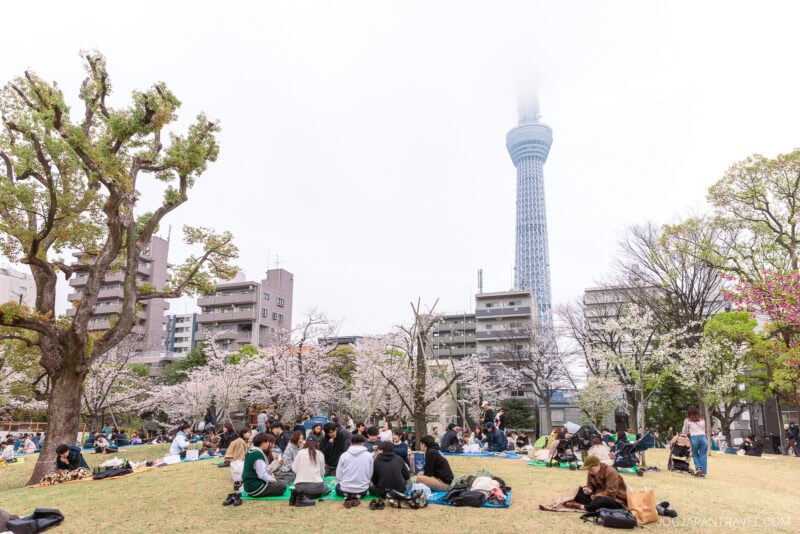
Blooming Period: Mid March to Early April
The banks of the Sumida River have been a cherished cherry blossom viewing spot since the Edo Period. For centuries, people have gathered here to admire the blossoms with the Tokyo skyline and the towering Skytree in the background.
You can enjoy the spring scenery from both sides of the river. The western side, near Asakusa, offers postcard-worthy views of Tokyo Skytree framed by soft pink petals, while the eastern side provides a peaceful place to sit beneath the trees and take in the 634-meter tower from another angle.
During the season, you might spot geisha at the Mukojima Geisha Chaya tea event, held over two weekends in late March (dates vary yearly). For a unique perspective, hop aboard a traditional yakatabune boat or the Tokyo Water Bus to see the blossoms from the water.
As the sun sets, the illuminated trees and skyline glow together, lanterns sway in the breeze, and the scent of yakisoba fills the air. It makes for a night you’ll never forget in Tokyo.
Shiba Park (芝公園)

Blooming Period: Late March to Early April
For another iconic view, visit Shiba Park, one of the oldest parks in Tokyo and Japan. Built around Zojoji Temple, it offers spectacular cherry blossom views set against Tokyo Tower’s red and white frame.
Even though the park is right in the heart of Tokyo, it feels calm and peaceful. The rustle of the blossoms in the breeze adds to the serene atmosphere, while Tokyo Tower standing tall in the background reminds you that this oasis lies right in the middle of one of the world’s busiest cities.
Roppongi (六本木)

Blooming Period: Late March to Mid-April
In Tokyo’s lively entertainment district, Roppongi, cherry blossoms add a touch of natural beauty to the urban scene. Around Tokyo Midtown, you’ll find trees lining the streets, creating a picturesque spot for a stroll after shopping or dining.
Just beyond Roppongi, Aoyama Cemetery is a quieter, reflective space where you can feel the transient beauty of the season. Nearby, Keyakizaka is especially striking, where rows of cherry trees form a soft pink tunnel leading toward Tokyo Tower.
The most impressive stretch, Sakurazaka, is a 400-meter slope lined with about 75 cherry trees. Watching petals fall as taxis and cars glide through is a quintessential Tokyo experience—modern yet poetic. Afterward, explore Roppongi Hills for more shopping, dining, and entertainment.
Koganei Park (小金井公園)

Blooming Period: Late March to Early April
If you’re craving a quieter escape from central Tokyo, head west to Koganei Park. About one and a half times larger than Ueno Park, it’s home to 1,700 cherry trees representing around 50 varieties.
Each year in late March, locals and visitors from across Japan gather for the park’s cherry blossom festival. The celebration features live performances, food stalls, and drinks under the trees. From late March to mid-April, you can also enjoy evening illuminations.
Under Tokyo’s Pink Canopy: Share Your Hanami Moments
So there you have it, our top 10 must-visit cherry blossom spots in Japan’s capital, Tokyo! While these places are among the most beloved, the city is filled with countless parks, shrines, and hidden corners waiting to be discovered.
Have you experienced hanami in Tokyo before? We’d love to hear about your favorite spots or memories. Share them in the comments below!
More to Explore Nearby
While Tokyo’s cherry blossoms offer unmatched seasonal beauty, the city itself is a relentless hub of culture, entertainment, and history. After enjoying the pink petals, the following attractions offer essential Tokyo experiences that are easily accessible across the metropolis.
- Tokyo Skytree – Visit the world’s tallest tower for a magnificent view of the city and its pink carpet of blossoms from above, especially stunning in the Sumida River area.
- Senso-ji Temple (Asakusa) – Step back in time at Tokyo’s oldest temple. Explore the vibrant Nakamise-dori market and the stunning historical architecture, providing a great cultural contrast to the modern city.
- Shinjuku Gyoen National Garden – Though often a blossom spot, this massive park remains a perfect sanctuary. It features three distinct garden styles (Japanese, French, and English) and is ideal for a peaceful walk.
- Shibuya Crossing and Hachiko – Experience the raw energy of modern Tokyo by witnessing the world’s busiest intersection and visiting the famous statue of the loyal dog, Hachiko.


My family moved to western Tokyo last May, so I’m now living through my first hanami season. Thought I’d toss a few observations:
. There is no “best spot.” The trees are everywhere, and they’re all gorgeous. Along streets, in schools and parks … and train stations and shopping malls and police stations and along canal paths … everywhere.
. No photo, painting, movie, or other representation can do them justice. The trees inspire lots of great art, of course, but the imitations are shadows.
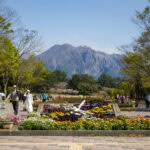
. The Showa Kinen Park in Tachikawa has lots of gorgeous flower bed displays to accompany the sakura. Half an hour from downtown on the Chuo line (or, better, the Ome line to Nishi Tachikawa) … big, huge, gorgeous park with picnicking families and kids flying kites and all the rest. And, because it’s so big and a bit away from downtown, it’s not as crowded.
. You probably do have to live here to realistically get the full experience. Timing is hard to predict, it doesn’t last that long, the different phases of bloom are all meaningful … it’s not just a single walk in the park or a guided tour sort of thing. I’m not fond of the term, but hanami is more of a lifestyle than an experience.
b&