This post may contain affiliate links. Please read our disclosure policy.
Gango-ji in Nara offers a quiet, off-the-beaten-path look into Japan’s earliest Buddhist history, with ancient mandalas, oni statues, and UNESCO World Heritage status.
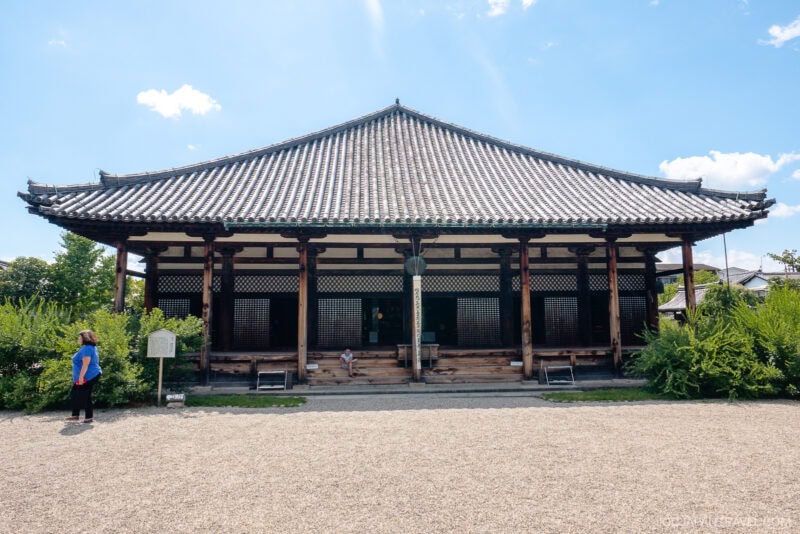
Walking Through Over 1,300 Years of History
Gango-ji’s origins go back to the 6th century, when it was first built in Asuka as Hoko-ji under the direction of Emperor Sushun. It was Japan’s first official Buddhist temple. When the capital moved to Heijo-kyo (present-day Nara) in 710, the temple was dismantled and moved here, taking the name Gango-ji.
This move symbolized more than just a change of location. It marked the start of Nara’s role as Japan’s spiritual and political center. Gango-ji went on to become one of the Seven Great Temples of Nara (Nanto Shichi Daiji) and helped usher in a golden age of Buddhist art and learning.
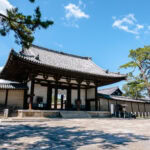
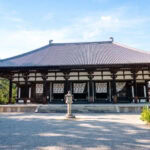
Today, its remaining structures, including the Gokurakubo (Hall of Paradise), are part of the UNESCO World Heritage Site “Historic Monuments of Ancient Nara.”
Hidden Charms Inside the Temple
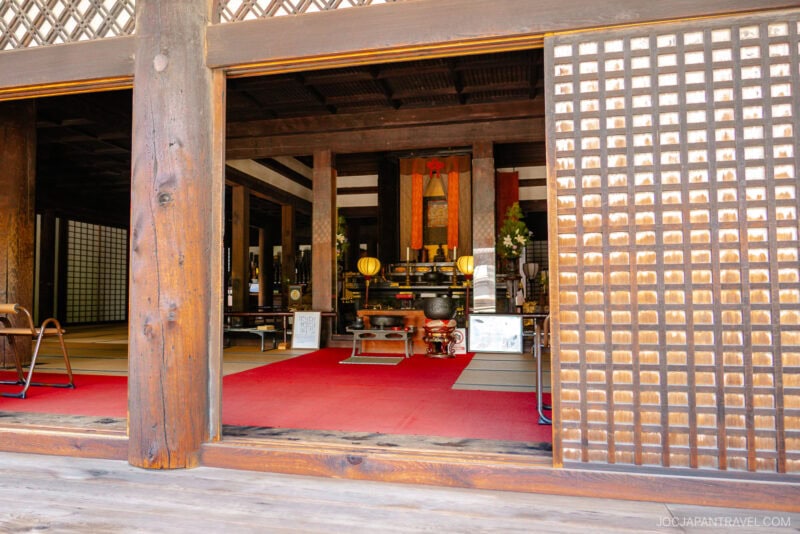
Gango-ji may appear modest compared to Nara’s grander temples, but its treasures are in the details.
Inside the Gokurakubo, we admired four ancient mandalas—symbolic diagrams in esoteric Buddhism. Seeing them up close, in such an intimate setting, gave us a rare look at Japan’s early religious art.
We also noticed small oni (demon) statues tucked around the grounds. Local legend says these guardians protect the temple from evil spirits.
Other highlights include statues of Jizo Bosatsu, the protector of children and travelers, and the quiet atmosphere that encourages slow, thoughtful exploration.
A Step Back in Time in Naramachi
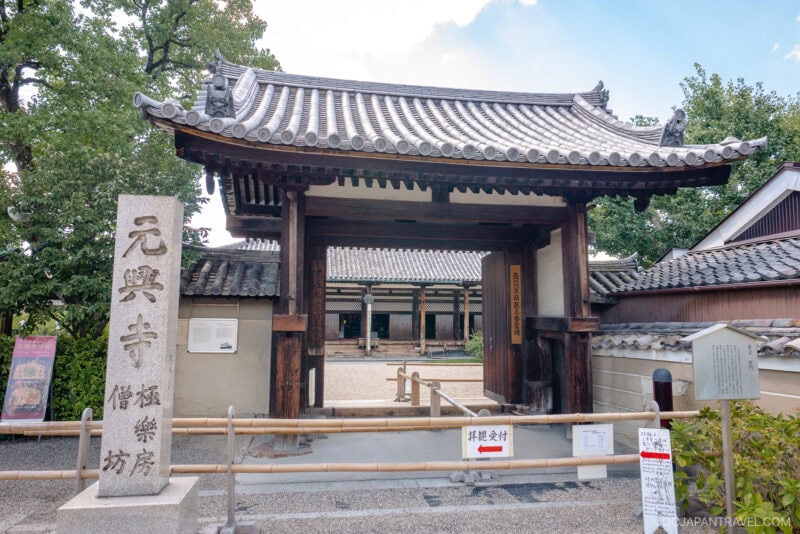
Gango-ji is located in Naramachi, a preserved district of narrow lanes and traditional machiya townhouses. The walk to the temple is as enjoyable as the visit itself, passing old merchant homes, cafes, and small shops. Compared to Nara Park or Todai-ji, this area feels calm and uncrowded, making it easy to enjoy at your own pace.
How to Get to Gango-ji
Train
- Kintetsu Nara Station – about 15 minutes on foot through Naramachi.
- JR Nara Station – about 20 minutes on foot or a short bus ride.
Bus
- From JR Nara or Kintetsu Nara, take the Nara City Loop Bus and get off at Fukuchiin-cho stop. Walk 5 minutes.
Taxi
- The ride takes about 5 minutes from Kintetsu Nara Station and costs approximately ¥700–¥800.
Is Gango-ji Worth Visiting?
While it doesn’t have the towering halls of Todai-ji or the famous deer of Nara Park, Gango-ji offers a more intimate and contemplative experience. Its role as Japan’s first Buddhist temple, well-preserved mandalas, and charming oni statues give it a unique character that history lovers and curious travelers will appreciate.
More to Explore Nearby
As a World Heritage site, Gango-ji Temple is situated in the charming, historical Naramachi district, placing you close to grand world-class temples, historical parks, and unique local dining experiences.
- Naramachi – Explore the beautifully preserved traditional merchant quarter that surrounds Gango-ji, featuring charming narrow streets, cafes, and artisan shops.
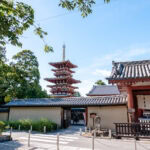
- Kofuku-ji Temple – Visit this massive and historically significant temple, one of the oldest in the city, known for its majestic five-story pagoda.
- Nara Park – Wander through the famous public park nearby, home to hundreds of wild deer and several of Nara’s most important cultural sites.
- Kakinoha-zushi – Sample Nara’s famous preserved food, a unique type of pressed sushi wrapped in persimmon leaves for flavor and preservation.