This post may contain affiliate links. Please read our disclosure policy.
Uji has grown Japan’s most respected green tea for eight centuries. I spent a day there learning to grind it and whisk it myself.
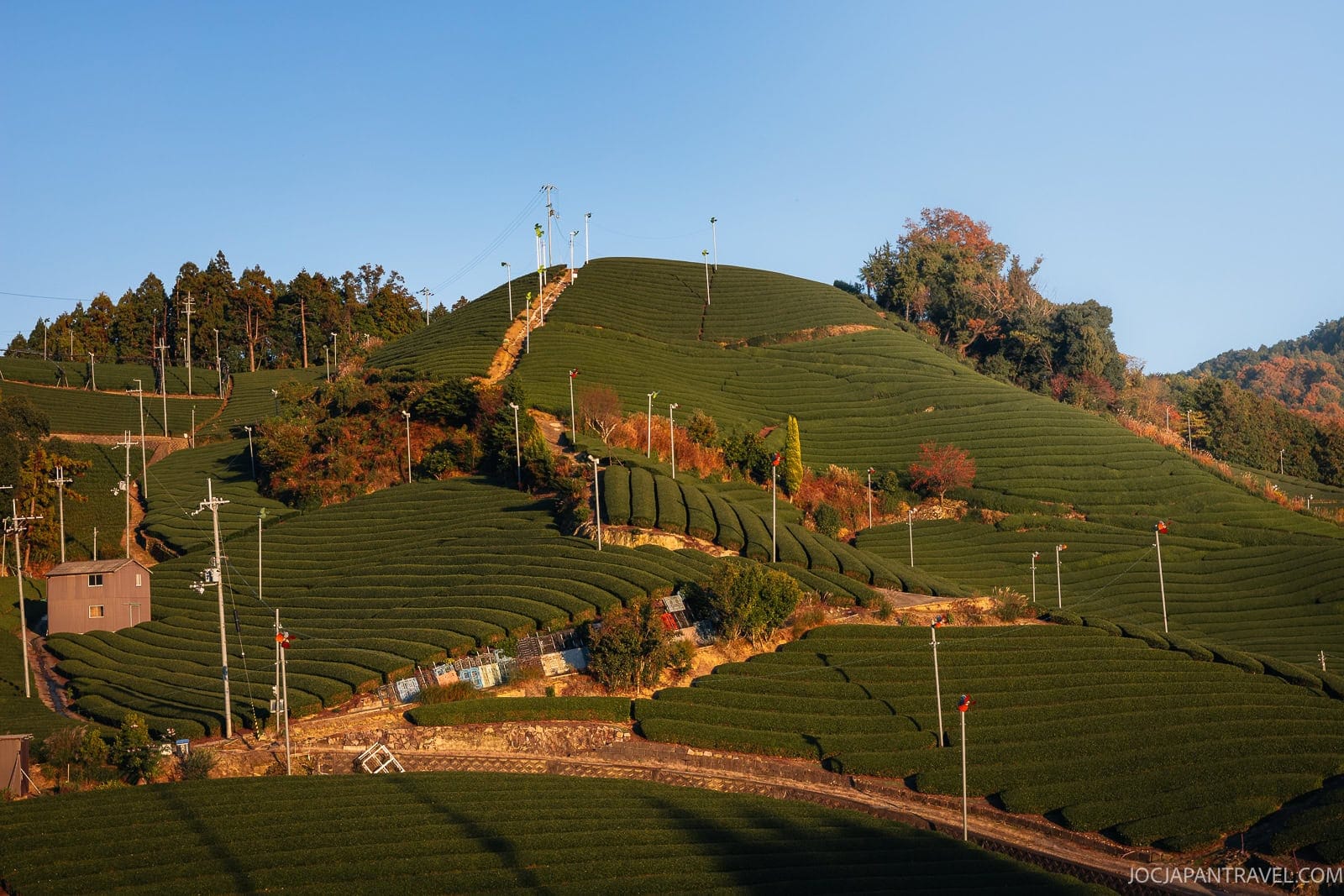
The smell reaches you before the shops do. Walk toward Byodoin and the air turns grassy and sweet. Uji has grown Japan’s most respected green tea for centuries, and never really moved on to anything else.
I came for one cup and left having ground my own. It is a rare town where the souvenir and the craft are the same thing.
What is Uji Tea
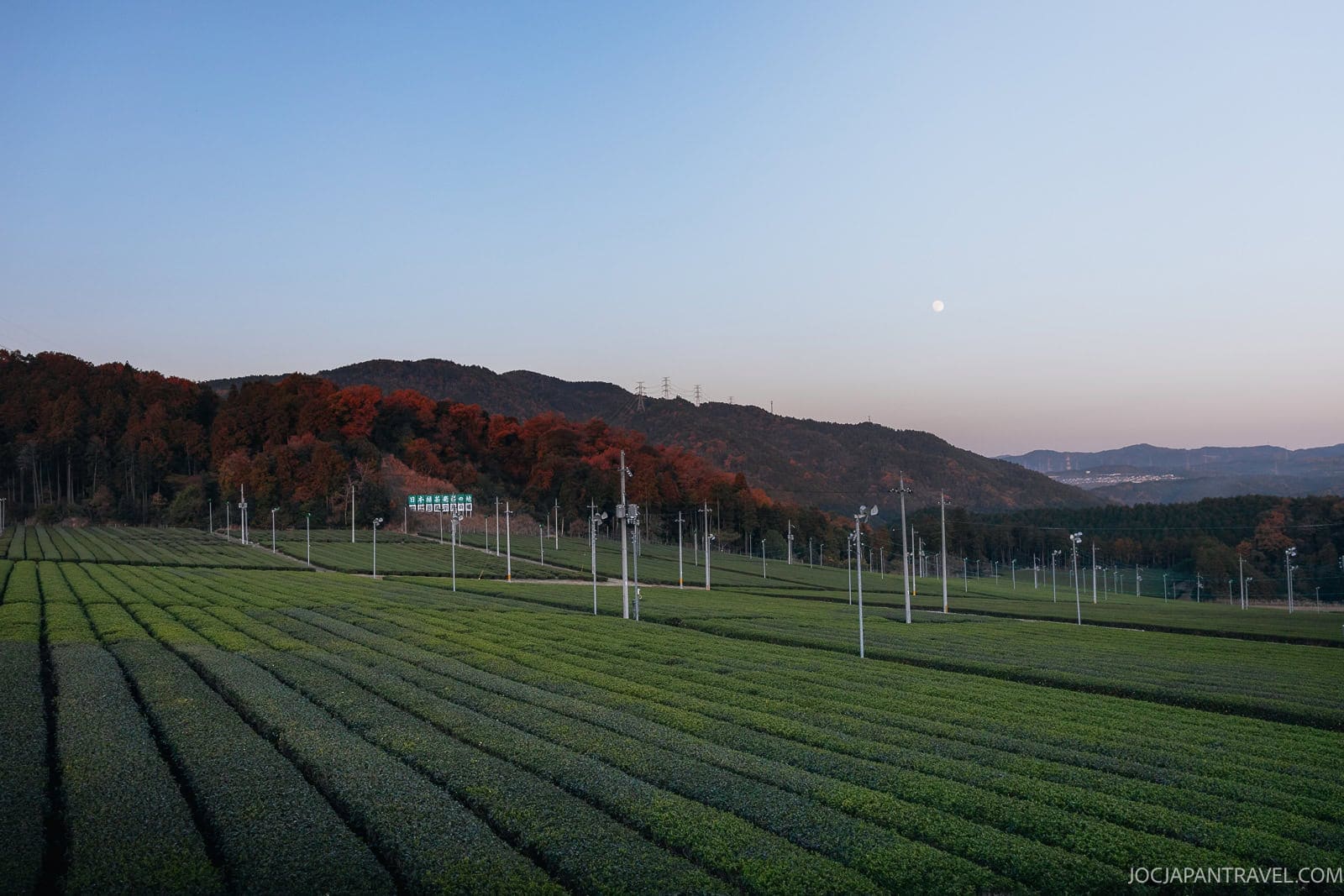
Uji tea (宇治茶) is not one drink but a family of them. All of it grows in the hills around the town. What separates one type from the next is shade, and what happens to the leaf afterward.
Shade slows the plant down and pushes it to make more of the compounds that read on the tongue as sweetness and depth. Three types of green tea matter most.
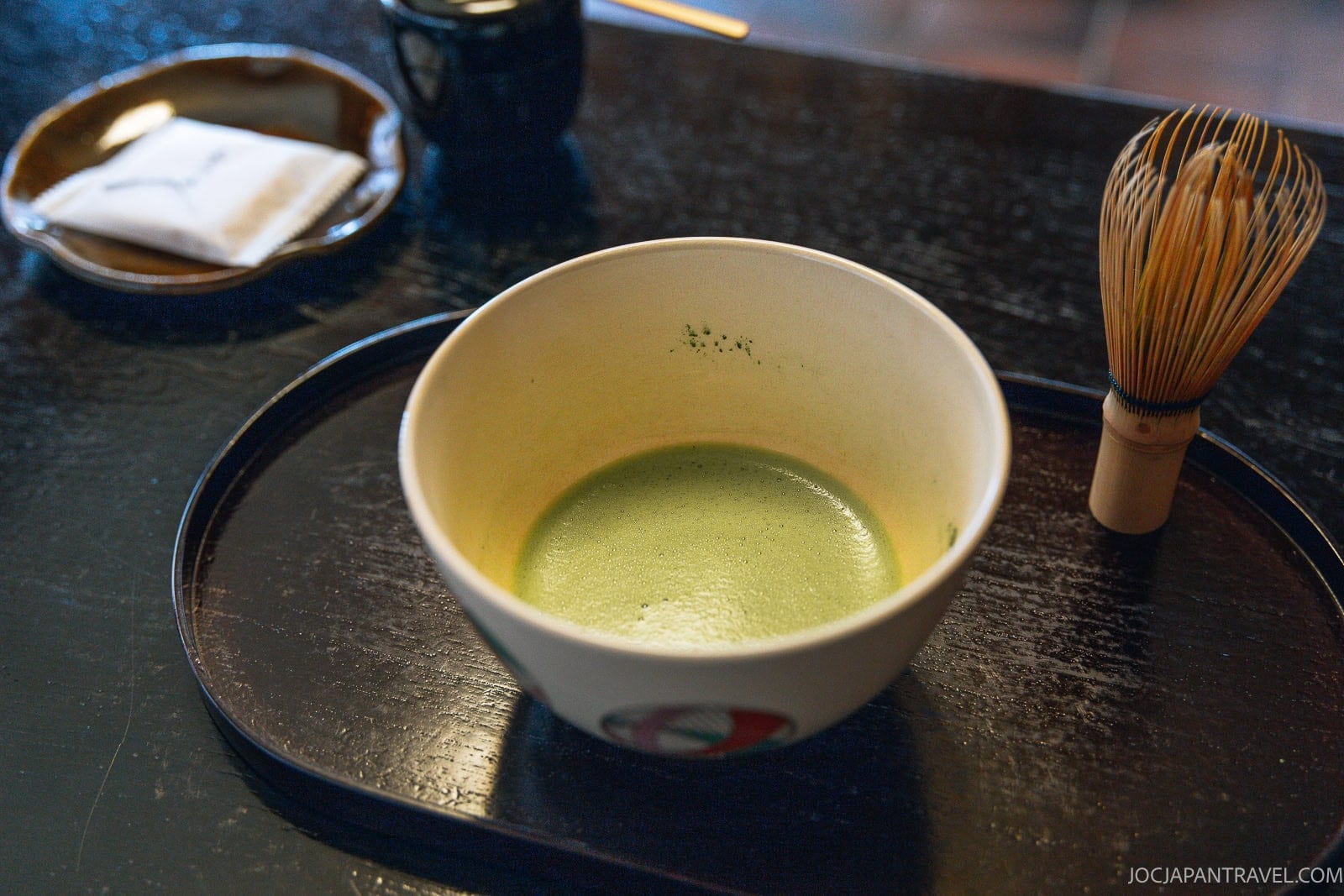
- Matcha. Growers shade the plants, then steam and dry the leaves and grind them on a stone mill. You whisk the powder into water rather than steeping it. Deep umami, smooth body, and the tea at the center of the ceremony.
- Sencha. Japan’s everyday green tea, and the one most people picture. The leaves grow in full sun, then get steamed, rolled, and dried. Fresh and grassy, sweet with a mild bite.
- Gyokuro. The top of the range. Farmers shade the plants for weeks, then hand-pick the first flush. Full-bodied and unusually sweet, with a faint note of seaweed.
How Uji Became a Tea Town
Tea reached Uji in the 13th century. The Zen priest Eisai brought seeds back from China. He made the case for growing them, and Uji’s priests adopted the method. By the 15th century, the Ashikaga shogunate had named Uji the country’s finest. It set up seven official plantations.
Growers kept refining the method through the 16th century. The tea ceremony was turning a drink into an art form. The Edo period brought the biggest leap, when a grower in Uji worked out gyokuro in the early 1800s. Japan opened to trade later that century, and demand for green tea jumped. Growers terraced the hills south of town into the plantations you still see.
Quick Facts
- Omotesando shopping street runs roughly 300 meters from the station to Byodoin
- Taihoan: 10:00–16:00, irregular closures. Tea ceremony 1,000 yen, tea-making experience 2,400 yen. Reservation required
- Fukujuen Ujicha Kobo: 10:00–17:00, irregular closures. Free to enter, workshops 1,650–3,850 yen
- Fukujuen Ujicha Tei cafe: 11:45–17:00, irregular closures
My Experience with Uji Tea
Matcha is everywhere in Uji, and much of it is aimed squarely at visitors. Omotesando runs from the station down to Byodoin. Cafes and specialty shops line it the whole way.
They sell matcha cookies, matcha chocolate, and every tea-flavored souvenir you can imagine. It is enjoyable and very easy. Two places went further than that for me. One taught me the ceremony, and the other put a stone mill in my hands.
Taihoan, a Tea Ceremony You Can Join
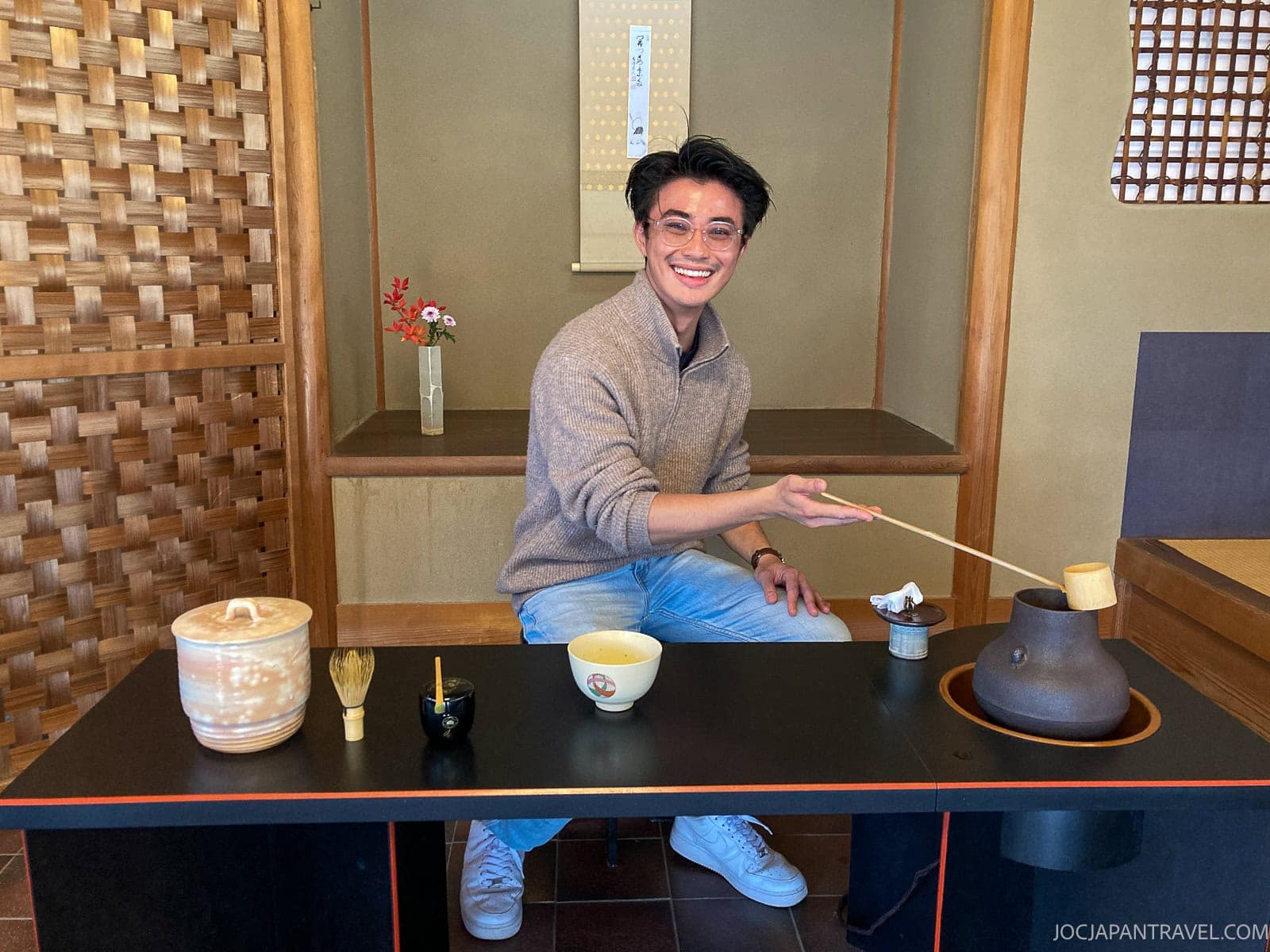
Taihoan sits a few minutes’ walk from Byodoin. It is a public tea house, so you do not need to know anything to walk in. I booked the tea-making session, not just the tasting. A staff member walked me through every step. The grip on the ladle. The angle of the whisk. Where the arm stops. Nothing was rushed, and nothing was skipped.
What stayed with me was how much of it is about attention rather than flavor. The wagashi served alongside was very good, too. Depending on the day, they pour matcha or sencha, so you take what the room is doing.
Fukujuen Ujicha Kobo, Grinding Your Own Matcha
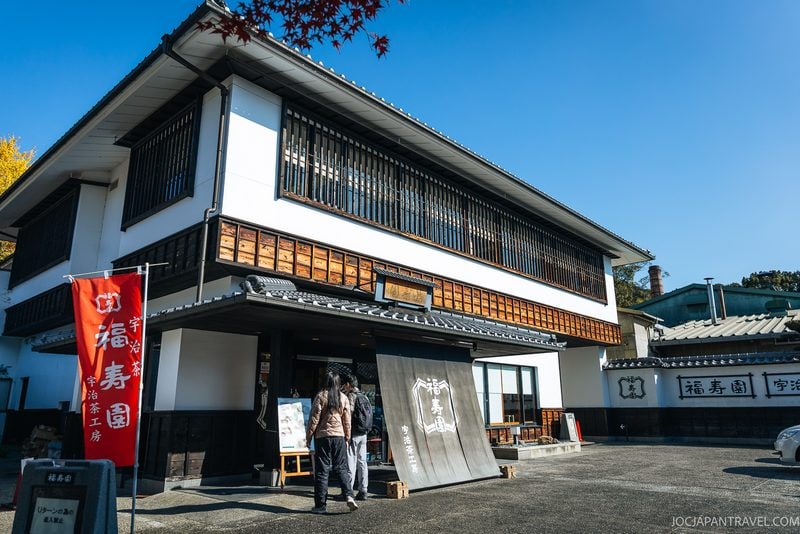
Fukujuen Ujicha Kobo sits across the Uji River. Displays on the ground floor take you from leaf to cup. That is a decent primer, but the workshops are the real reason to come. I took the one where you grind your own matcha. You feed leaves into a stone mill and turn it by hand until the powder runs fine. It takes far longer than you expect for a very small amount. The arm you are using will tell you about it afterward. A certified instructor then showed me how to brew what I had made, which is its own small skill.
Upstairs I ate matcha anmitsu: agar jelly with red bean, mochi, fruit, and matcha ice cream. They pour a sweet matcha sauce over it at the table, and you decide how much of it you want. The same floor serves cha soba, and with a reservation, a lunch box built around Uji tea.
Sitting there with a bowl I had ground myself an hour earlier is the part of the day I would repeat.

Andy’s Travel Tips
These simple tips will help you when you visit.
- Book Taihoan ahead. Reservations are required, and the tea house keeps irregular closing days.
- Choose the tea-making session over the tasting. You leave knowing how to whisk a bowl properly, not just how one tastes.
- Walk Omotesando slowly. The street between the station and Byodoin holds most of the town’s tea shops and cafes.
- Cross the river for the workshop. Fukujuen Ujicha Kobo sits on the far bank. Entry is free even if you skip the class.
- Come hungry. Matcha here goes well past drinks, into anmitsu, cha soba, and a reserved lunch box.
How to Get to Uji Omotesando
Train
- JR Line (From Kyoto Station): Board the JR Nara Line at JR Kyoto Station. Take the Miyakoji Rapid train to JR Uji Station (a 17 to 20-minute ride) or a local train (about 27 minutes). From the station exit, walk straight east down the main avenue for about 8 to 10 minutes to reach the entrance of the approach.
- Keihan Electric Railway (From Osaka or Central Kyoto): If coming from central Kyoto (e.g., Gion-shijo Station) or Osaka (e.g., Yodoyabashi Station), take the main Keihan Line to Chushojima Station, then transfer to the Keihan Uji Line and ride to Keihan Uji Station. From the station exit, cross the Uji Bridge; the entrance to the Omotesando is a 5 to 7-minute walk immediately across the river.
Taxi
- A taxi taking you from JR Uji Station or Keihan Uji Station to the start of the pedestrian avenue takes about 3 to 5 minutes, costing around ¥800 to ¥1,200.
- A taxi taken directly from central Kyoto (around JR Kyoto Station) takes about 30 to 40 minutes and typically costs between ¥5,000 and ¥7,000 depending on traffic.
Pro Tip
The shops along Omotesando generally open around 9:00 AM or 10:00 AM and begin closing by 5:00 PM. If you want to sit down at famous long-established tea houses like Nakamura Tokichi or Tsujiri without waiting in massive multi-hour lines, arrive right as the shops open before entering Byodoin Temple.
Is Uji Tea Worth Trying?
Yes, if you like tea even slightly. The whole town runs on one thing, which makes for an easy, focused half day. The ceremony is worth doing once even if the etiquette goes over your head. Go on a weekday if you can, because the ceremony rooms are small and fill quickly. If tea does not interest you at all, though, Byodoin alone is the better reason to come.
More to Explore Nearby
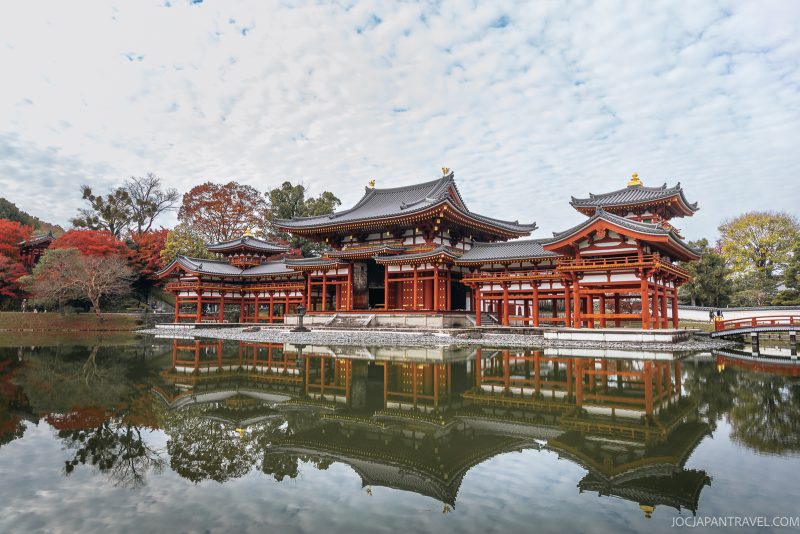
- Day Trip to Uji – The wider town beyond the tea shops, with riverside shrines and a half-day route.
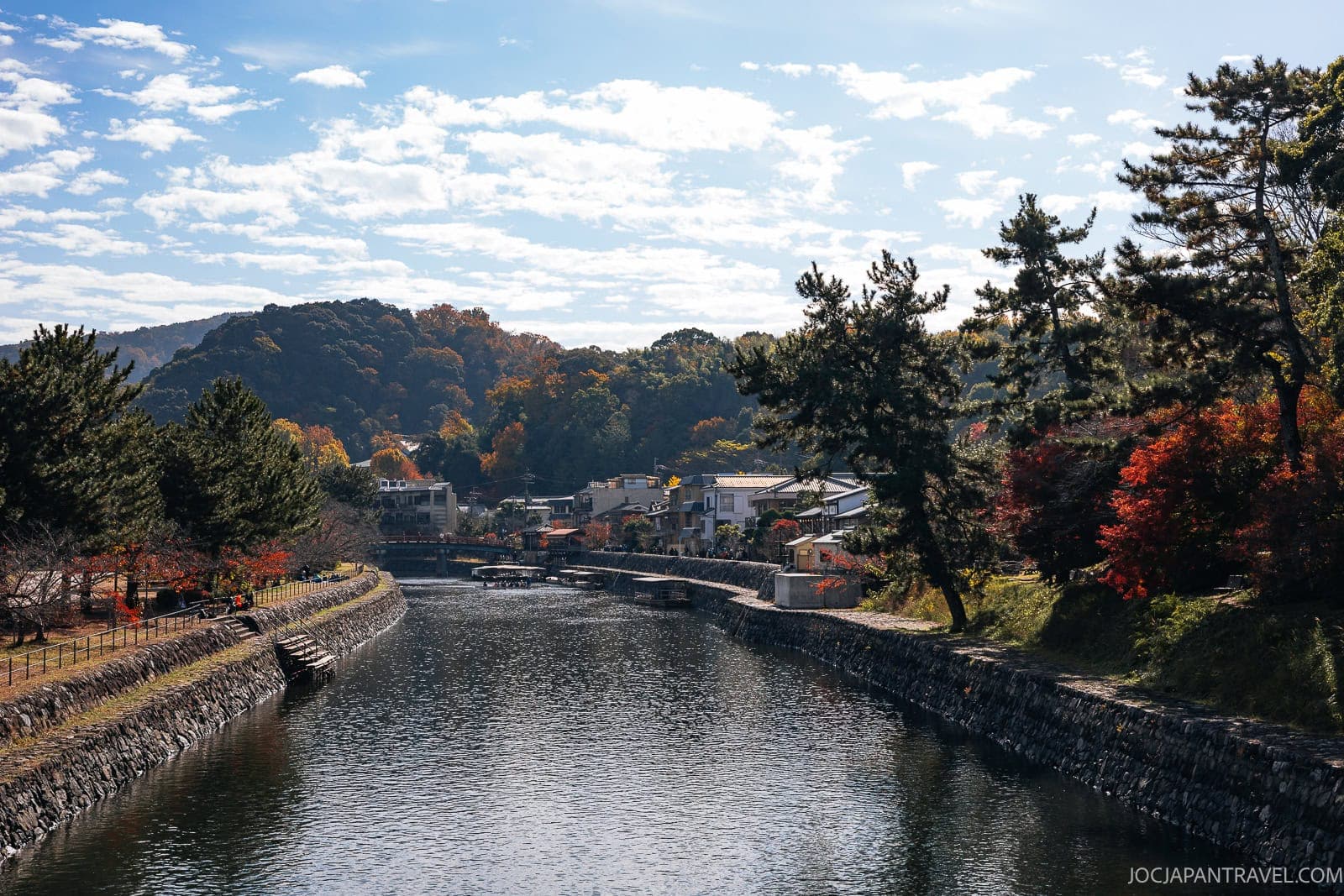
- Uji River – The heart of Uji
- What to Eat in Kyoto – Twelve dishes worth planning meals around, once you head back into the city.
- Fushimi Inari Taisha – Thousands of vermilion gates, one stop up the JR line between Uji and Kyoto.