This post may contain affiliate links. Please read our disclosure policy.
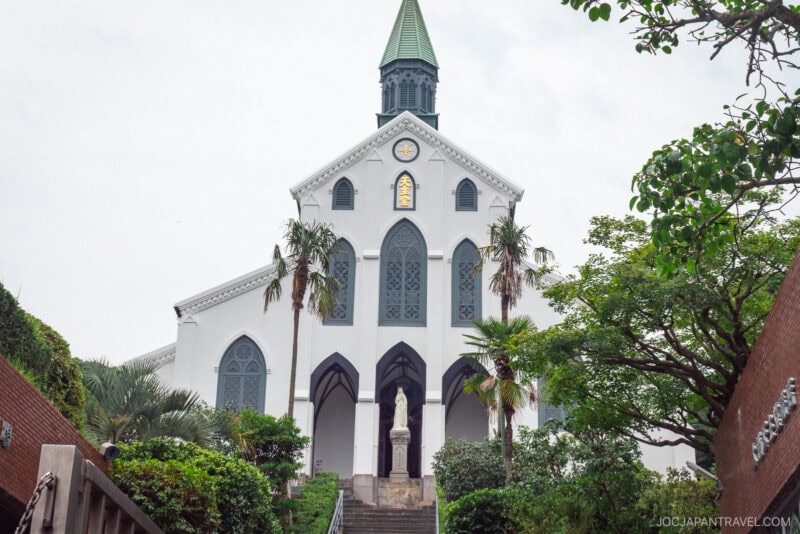
Oura Church in Nagasaki stands as a testament to Gothic design and centuries of hidden Christian faith, making it one of Japan’s most significant historical sites.
Why Visit Oura Church?
Perched on a hill above Nagasaki’s port, Oura Church is more than just a beautiful building. It’s a National Treasure, a UNESCO World Heritage Site, and the oldest surviving Catholic church in Japan.
Built in 1864 by French missionaries, it’s officially named the Basilica of the Twenty-Six Holy Martyrs of Japan, honoring Christians executed in 1597 during the early crackdown on the faith. What really strikes me is how it represents resilience, especially for the kakure kirishitan, the hidden Christians who quietly kept their faith alive for centuries.
Quick Facts About Oura Church
- Full Name: Basilica of the Twenty-Six Holy Martyrs of Japan
- Year Built: 1864
- Claim to Fame: Oldest standing Catholic church in Japan
- Designations: National Treasure of Japan, UNESCO World Heritage Site
- Style: Neo-Gothic, with pointed arches, stained glass, and vaulted ceilings
- Admission: Includes entry to the Christian Museum next door
Exploring the Church Grounds
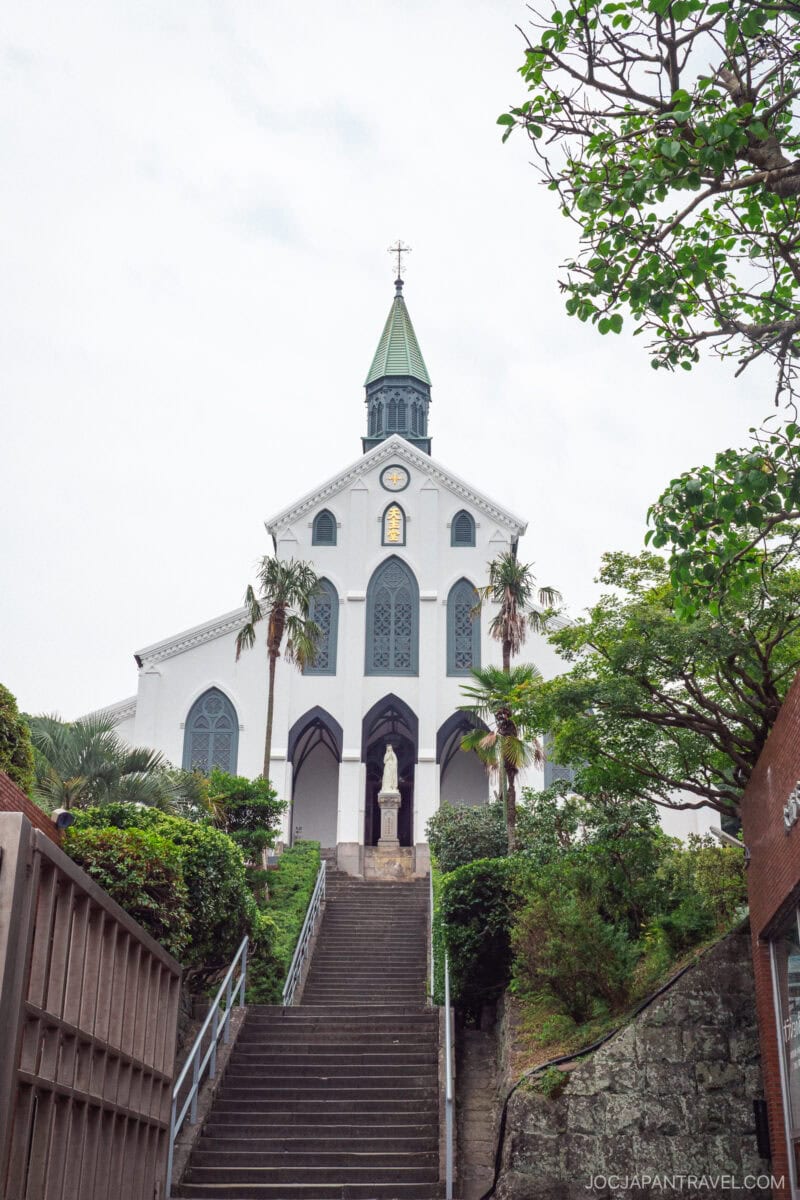
Walking up the garden path to the church’s white spire feels both solemn and inspiring. Inside, sunlight filters through tall stained glass windows onto wooden pews, creating a quiet and reflective space.
One of the most powerful moments comes outside, at the statue of the Virgin Mary inscribed with the words, “In memory of discovered followers.” This commemorates 1865, when local Christians revealed their hidden faith to a French priest after more than 250 years of secret practice. That encounter marked the first time the hidden Christians openly identified themselves since persecution began in the 1600s.
The Story of the 26 Martyrs of Japan
Oura Church honors 26 Christians—both Japanese and European—who were crucified on Nishizaka Hill in 1597. Their deaths symbolized the start of Japan’s long suppression of Christianity. Families continued to practice their faith in secret, disguising prayers and rituals as folk traditions.
Christian Museum and Nearby Attractions

The admission ticket includes access to the Christian Museum, located next to the church. The museum displays artifacts from early missionary work in Japan and items used by hidden Christians in daily worship.
How to Get to Oura Church
By Tram
Take the Nagasaki Electric Tram Line 5 to Ouratenshudoshita Station. It is a 5 minute uphill walk.
From Nagasaki Station
Ride a tram toward Tsukimachi and transfer to Line 5. Get off at Ouratenshudoshita Station.
By Taxi
A taxi from Nagasaki Station takes about 10 minutes, depending on traffic.
By Car
Driving from Nagasaki Station takes about 10 minutes. There is no dedicated parking at the church. Use nearby coin lots.
Pro Tip: Wear comfortable shoes and bring water on hot days. The slope can feel steep.
Is Oura Church Worth Visiting?
Oura Church is a place that tells a story of faith, resilience, and cultural exchange.
We were especially moved by the story of the “discovered followers” and the way the church honors hidden Christians. Even if you aren’t religious, Oura Church offers a profound perspective on Japan’s history and the human spirit.
More to Explore Nearby
Oura Church, as one of Japan’s most historic and beautiful churches, is the spiritual center of Nagasaki’s hillside district, positioning you perfectly to explore other European heritage sites and dramatic city views.
- Glover Garden – Explore the preserved hillside district featuring beautiful Western-style mansions built by foreign merchants and enjoy sweeping views of the harbor.
- Museum of the 26 Martyrs – Discover the profound history of early Christianity in Japan at this museum and monument dedicated to the foreign missionaries and Japanese converts.
- Hollander Slope – Wander down this picturesque, stone-paved street near the church, lined with historical Western-style homes from the foreign settlement period.
- Champon and Sara Udon – Dive into the city’s unique culinary heritage by sampling these hearty noodle dishes, which were developed with strong Chinese influence.