This post may contain affiliate links. Please read our disclosure policy.
Perched on a hillside with views of Nagasaki Port, Glover Garden blends Western-style homes, Meiji-era history, and vibrant festival culture at the adjacent Traditional Performing Arts Center.

The History Behind Glover Garden
After Japan ended its isolationist sakoku policy in the mid-1800s, Nagasaki became one of the first ports open to foreign trade. Foreign residents settled in designated areas, and Minamiyamate (today’s Glover Garden) became home to several Western-style residences.
Who Was Thomas Blake Glover?
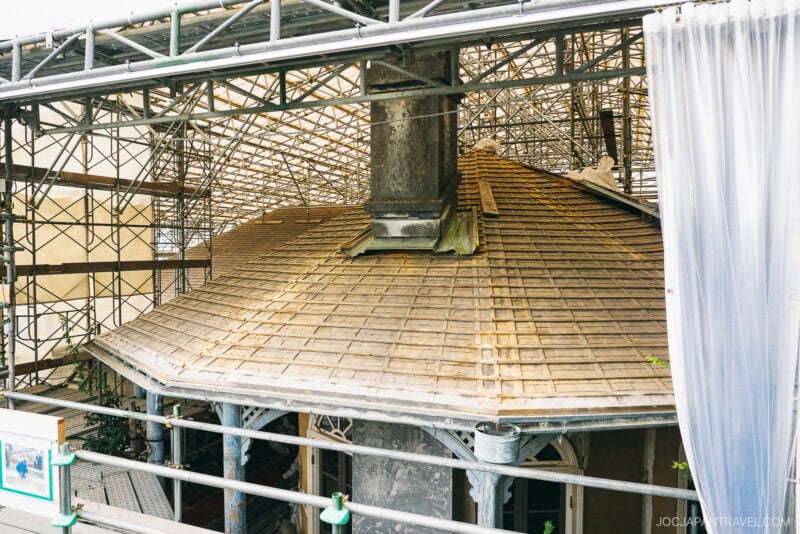
The star attraction is the Glover House, built in 1863. It is the oldest Western-style wooden residence in Japan and once belonged to Scottish merchant Thomas Blake Glover. Glover helped establish Japan’s first shipyards, introduced modern coal mining, and played a role in founding what later became Kirin Brewery. He also supported young Japanese who studied abroad, laying the groundwork for Japan’s modernization.
The Glover House is part of the UNESCO World Heritage Sites of Japan’s Meiji Industrial Revolution. During our visit, the house was under restoration, but it has since reopened to the public.
What to Expect When Visiting Glover Garden
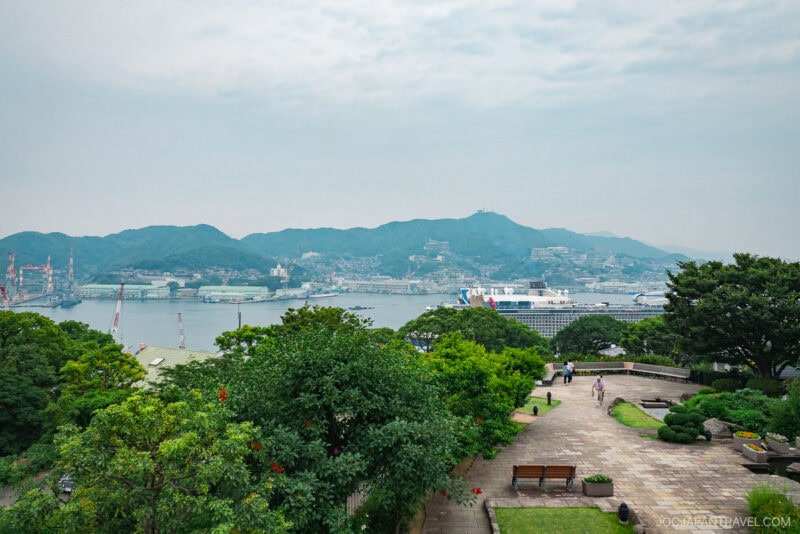
Walking through the hillside park felt like stepping back into Nagasaki’s international past.
- Escalator entrance: Visitors ride up and stroll downhill through the garden, making it easy for families.
- Nine preserved homes: While the Glover House is original, most others were relocated from around Nagasaki to protect them.
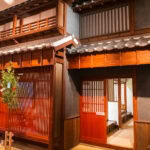
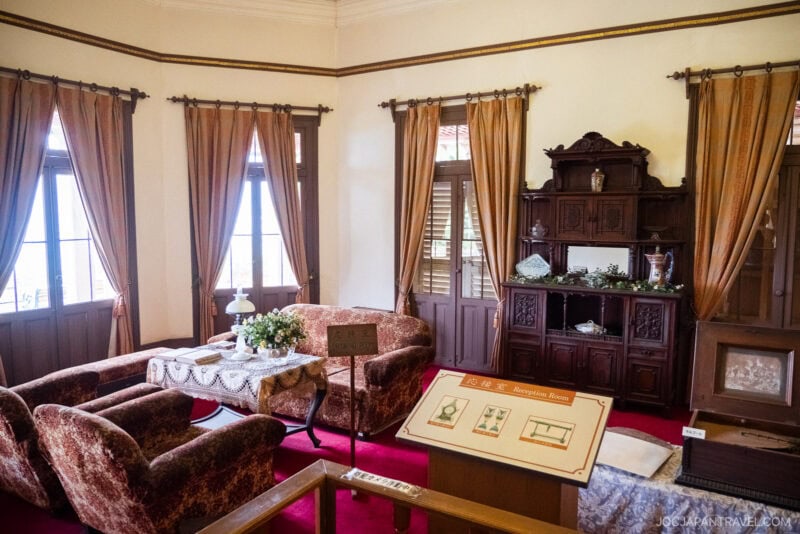
- Interiors with character: Several homes are decorated with furniture that shows the blend of Western and Japanese lifestyles of the late 1800s.
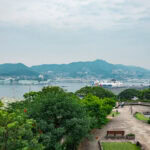
- Panoramic harbor views: The vantage points overlooking Nagasaki Bay are some of the best in the city.
Even if you’re not into history, the flowers, open lawns, and photo spots make it an enjoyable walk.
Nagasaki Traditional Performing Arts Center
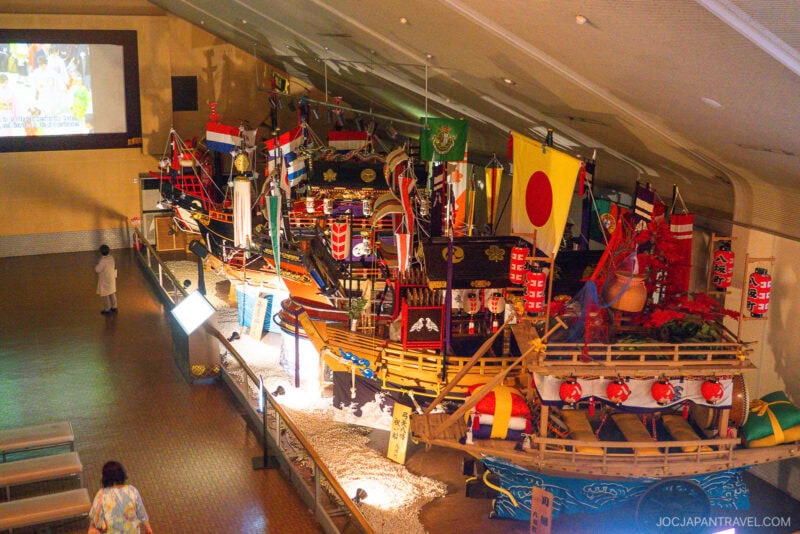
At the base of Glover Garden is the Nagasaki Traditional Performing Arts Center, which preserves the spirit of Nagasaki’s famous Kunchi Festival held every October.
Inside, we explored:
- Festival floats and stage sets: Elaborate dragon floats and portable shrines.
- Video displays: Performances showing the mix of Japanese, Chinese, and Dutch influences.
- Bilingual exhibits: Panels in Japanese and English explaining the festival’s origins.
We left with a much better appreciation for how Nagasaki’s international identity is reflected in its culture.
How to Get to Glover Garden
Tram
From JR Nagasaki Station, walk to Nagasakiekimae tram stop. Ride Nagasaki Electric Tram Line 5 to Ouratenshudoshita. From the stop, follow signs uphill past Oura Church; it’s a 5–10 minute walk to the entrance.
On Foot
It’s 20–25 minute walk from Dejima or Nagasaki Chinatown. The final approach is uphill.
Taxi
About 10–15 minutes from Nagasaki Station depending on traffic. Ask to be dropped near Oura Church; the garden entrance is a short walk uphill.
Accessibility
Use the escalators and moving walkways inside the garden to start at the upper gate and walk downhill. The Glover Sky Road elevator also links the hillside to the top entrance.
Pro Tip: Enter at the upper gate via escalators, explore downhill toward the exit, then visit the Nagasaki Traditional Performing Arts Center at the base.
Is Glover Garden Worth Visiting?
For our family, Glover Garden was one of the highlights of Nagasaki. It’s rare to find a place where history, architecture, and scenery come together so seamlessly. Pairing the garden with the Traditional Performing Arts Center and nearby Oura Church makes for a perfect half-day of exploring Nagasaki’s unique cross-cultural legacy.
More to Explore Nearby
Glover Garden, with its scenic views and historical Western-style mansions, perfectly preserves the atmosphere of Nagasaki’s foreign settlement, positioning you close to essential spiritual sites, unique historical landmarks, and the city’s dramatic views.
- Oura Church – Visit one of Japan’s most historic and beautiful churches, the spiritual center of Nagasaki’s hillside district.
- Hollander Slope – Wander down this picturesque, stone-paved street near the garden, lined with historical Western-style homes from the foreign settlement period.
- Dejima – Step back in time on this reconstructed fan-shaped artificial island that served as Japan’s only point of contact with the West during the two centuries of national isolation.
- Mt. Inasayama Observatory – Take a ropeway up the mountain to experience one of Japan’s most famous night views.