This post may contain affiliate links. Please read our disclosure policy.
Step into the East Gardens of the Imperial Palace, a historic retreat with seasonal blooms, castle ruins, and quiet paths just minutes from Tokyo Station.
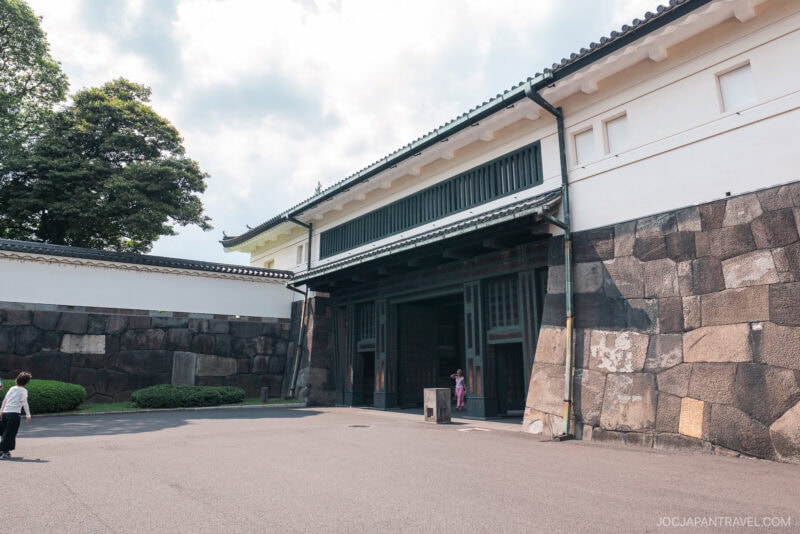
Why Visit the East Gardens of the Imperial Palace?
Just behind ancient stone walls in the heart of Tokyo, the East Gardens of the Imperial Palace offer a rare mix of history, nature, and open space. Once part of Edo Castle’s inner compounds, the gardens are now a public park where you can wander peaceful trails, see castle foundation remains, and enjoy seasonal flowers, all free of charge.
We spent a slow, relaxed afternoon strolling through the gardens. It’s hard to believe this much open space exists just steps from Marunouchi’s high-rises and Tokyo Station. The mix of calm nature and centuries-old ruins made it a refreshing escape from the energy of modern Tokyo.
A Brief History of the East Gardens

The origins of Edo Castle go back to 1457, when it was built by military leader Ota Dokan. In the early 1600s, Tokugawa Ieyasu chose it as the seat of his new shogunate. For over 260 years, it remained Japan’s political center under the Tokugawa family.
After the Meiji Restoration in 1868, the capital moved from Kyoto to Tokyo. The emperor moved into the western part of the castle grounds, now the Imperial Palace. Fires destroyed much of Edo Castle, but the eastern grounds were eventually opened to the public in 1968. Today, they’re one of the few places where visitors can walk on the original castle site.
What to See in the East Gardens

Honmaru Area
Tenshudai (天守台): This large stone base is all that remains of Edo Castle’s central tower, once the tallest in Japan. Climb to the top for views of the gardens and surrounding city.
Honmaru Lawn: A wide open space where the shogun’s residence once stood. It’s now a grassy spot where people pause to sit and take in the scenery.
Ninomaru Area
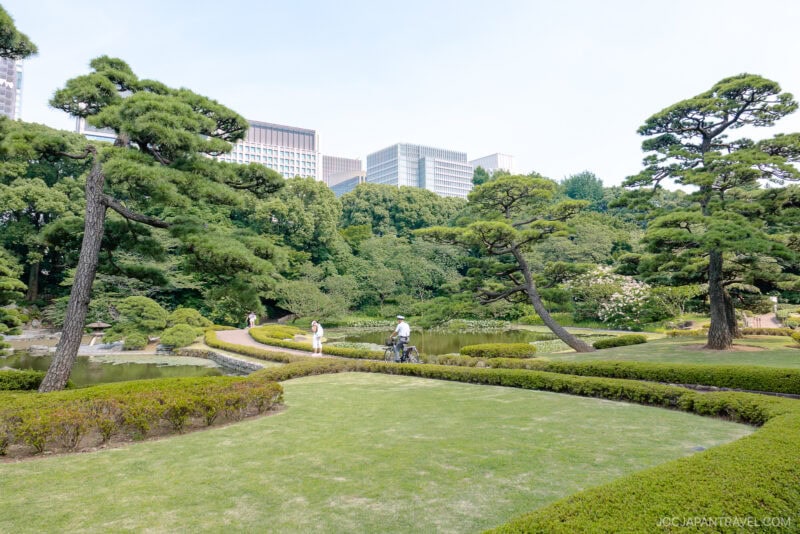
Ninomaru Garden (二の丸庭園): A traditional Japanese-style garden featuring koi ponds, iris beds that bloom in early summer, and carefully pruned pine trees.
Suwa-no-chaya (諏訪の茶屋): A teahouse from the Edo period, now relocated to the garden. It adds historical charm to the landscape.
Dokan Moat (道灌濠): A narrow moat named after Ōta Dōkan. It winds along the edge of the Ninomaru area and makes for a scenic photo spot.
Sannomaru Area
Sannomaru Shōzōkan (三の丸尚蔵館): A small museum that displays items from the Imperial Household collection. Rotating exhibits include lacquerware, ceramics, and calligraphy.
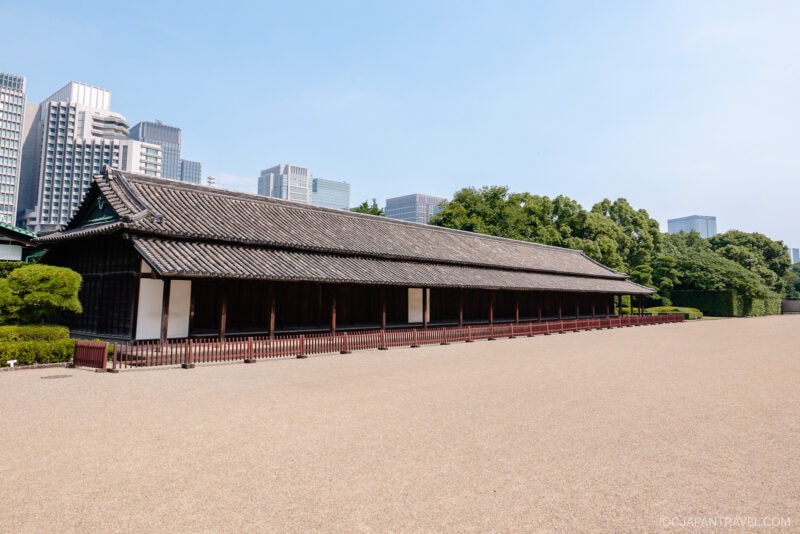
Hyakunin Bansho (百人番所) and Dōshi-bansho (同心番所): Preserved samurai guardhouses that once protected Edo Castle’s inner sections.
Seasonal Highlights and Tips
- Spring to Early Summer: Look for camellias, azaleas, and irises. The Ninomaru iris beds are especially colorful in early June.
- Autumn: Expect rich fall foliage across the park.
- Winter: Camellias continue to bloom, and the open lawns remain peaceful.
- Summer: Bring water. The gardens can get hot, and shade is limited in some areas.
The gardens are generally stroller-friendly, though a few areas have stairs or uneven paths. There are restrooms available throughout.
How to Get to East Gardens of the Imperial Palace
Train
- From Otemachi Station (Tokyo Metro), take Exit C13a and walk about 5 minutes.
- From Tokyo Station (JR), use the Marunouchi North Exit and walk about 15 minutes.
- Total travel time: 5–10 minutes on foot from major stations.
Pro Tip: Entry is free and reservations are not required, but check the Imperial Household Agency’s website for any temporary closures.
Should You Visit the East Gardens of the Imperial Palace?
Yes, especially if you enjoy history and want to experience it firsthand. The East Gardens are a relaxing way to explore Tokyo’s samurai-era past without leaving the city center. They are free to enter, stroller-friendly, and showcase seasonal beauty throughout the year.
More to Explore Nearby
After enjoying the calm and history of the East Gardens, explore more cultural and shopping spots just a short train ride or walk from the heart of Tokyo.
- Ginza Kabuki-za Theater – Watch traditional kabuki performances or browse the underground souvenir hall and rooftop garden at this cultural icon.
- Shibuya Hikarie – Visit this sleek shopping, food, and event complex connected to Shibuya Station, with city views from the upper floors.
- Takeshita Street – Walk through Tokyo’s most colorful youth fashion street, lined with crepes, trinkets, and bold Harajuku style.