This post may contain affiliate links. Please read our disclosure policy.
Nijo Castle was built to show what a shogun could afford. The floors squeak on purpose.

Nijo Castle was never meant to survive a siege. It was built for people who needed to be impressed. The gates are gilded, the screens are enormous, and the corridors chirp underfoot so nobody crosses them quietly. I went in expecting fortifications and came out having looked mostly at ceilings. It is the most theatrical building I have walked through in Kyoto.
How the Castle Is Laid Out
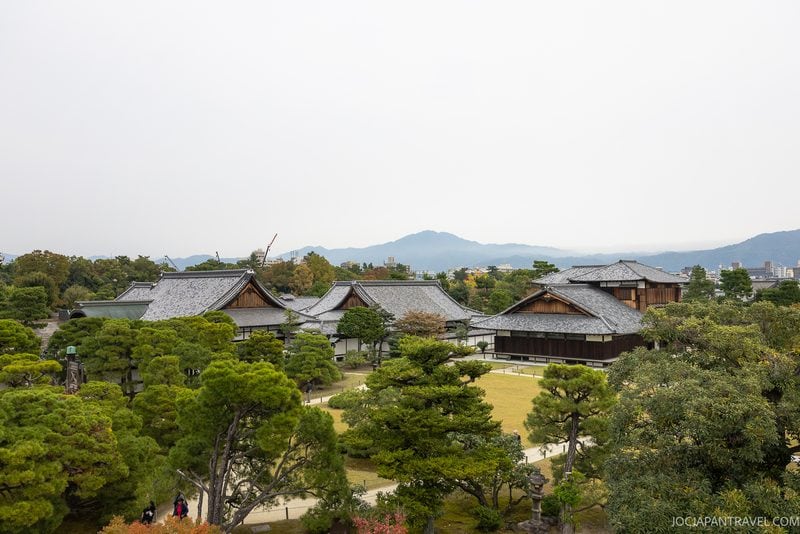
Nijo castle divides into three parts, and you see them in order. The Ninomaru is the outer ring, and it holds the palace almost everyone comes for. The Honmaru sits inside it, wrapped by its own moat.
Gardens fill the space between and around both. You enter through the east gate, where you pick up tickets and the English audio guide. The Karamon Gate comes next. It is worth stopping at rather than walking under.
From Shogun’s Residence to City Property
Tokugawa Ieyasu commissioned the castle in 1603, the year he became the first Tokugawa shogun. It served as the family’s Kyoto residence for roughly 260 years. The Meiji Restoration ended that, and the castle passed to the imperial household. Kyoto took it over in 1939. UNESCO added it to the World Heritage list in 1994.
Quick Facts
- Open 8:45–17:00, last entry 16:00. Ninomaru Palace admits until 16:10
- Castle grounds: 800 yen adults, 400 yen junior high and high school, 300 yen elementary. Ninomaru Palace adds 500 yen for adults and is free for students
- Honmaru Palace: 1,000 yen adults, 300 yen junior high and high school, 200 yen elementary. Advance reservation required
- Grounds closed 29–31 December. Ninomaru Palace closed 26–28 December, 1–3 January, and Tuesdays in January, July, August, and December
- When a closure falls on a national holiday, Ninomaru Palace opens and shuts the following day instead
- Ninomaru Palace: five buildings, 33 rooms, roughly 800 tatami mats. No photography inside
- Around 400 cherry trees, in bloom from late March to mid-April
My Experience at Nijo Castle
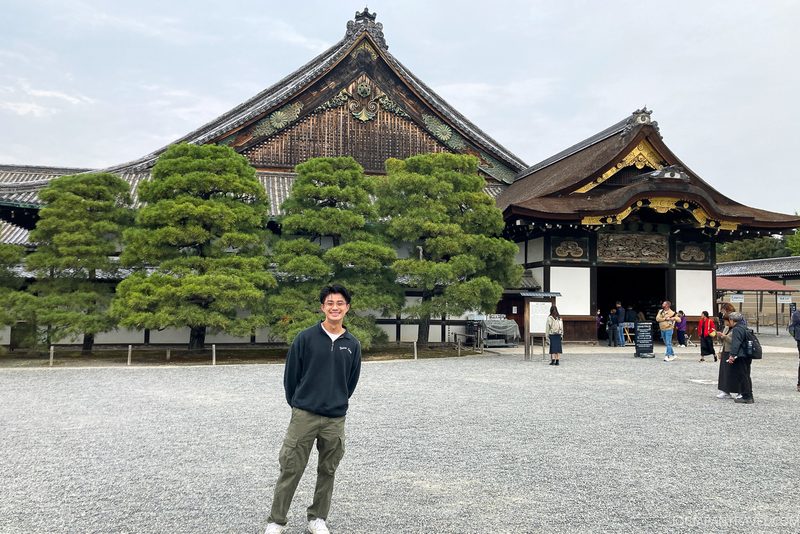
I came for the architecture and stayed for the floors. The route through the site is fixed, which makes it easy to follow and hard to escape once a tour group arrives.
Ninomaru Palace and the Nightingale Floors
Photography is banned inside Ninomaru Palace, which helps. You walk it instead of shooting it. The rooms are arranged so a visitor moved closer to the shogun only as far as rank allowed.
Painted screens cover the walls, gold leaf behind tigers and pines. The floors are the part people remember. They are built to squeak, and the sound follows you from room to room. Guards called them nightingale floors, and no amount of care stops them.
The Honmaru and the Inner Moat
The Honmaru is quieter. A five-story keep once stood here alongside a second palace, and fire took both in the 18th century. What stands now arrived from the Kyoto Imperial Palace grounds in 1893. It was shut for years and reopened in September 2024, by advance reservation only. The inner moat around it is the only part of the site that feels genuinely defensive.
The Gardens Through the Seasons
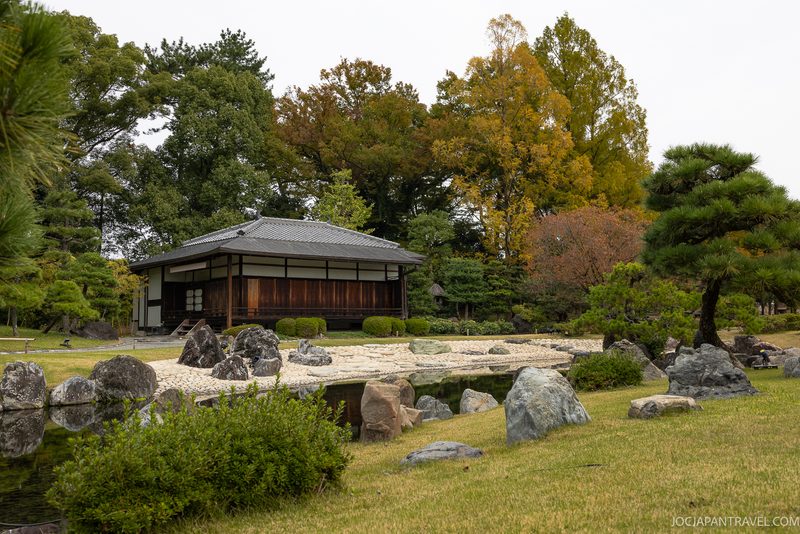
Ninomaru Garden sits just outside the palace, built around a pond with arranged stones and old pines. It is formal, and worth the ten minutes. The rest of the grounds are looser. Cherry trees carry the place through spring. Maples and ginkgo take over in autumn.
It gets very busy. School groups moved through in blocks the day I visited, and the palace corridor ran single file. Come at opening or in the last hour, and it is a different building.

Andy’s Travel Tips
These simple tips will help you when you visit.
- Arrive at opening or in the final hour. The middle of the day brings tour groups and school parties, and the palace corridor only moves at one speed.
- Book Honmaru Palace ahead. It reopened in 2024 and entry is by advance reservation only, separate from the grounds ticket.
- Budget for more than one ticket. The grounds fee does not cover Ninomaru Palace, and Honmaru is charged separately again.
- Take the audio guide. Photography is banned inside Ninomaru, so the commentary is most of what you leave with.
- Stop at the Karamon Gate. Most people walk straight under it on the way to the palace. It is the best-preserved thing on the site.
How to Get to Nijo Castle
Subway
The municipal subway system provides the most direct access without getting caught in surface city traffic.
- Nijojo-mae Station: Take the Kyoto Municipal Subway Tozai Line straight to Nijojo-mae Station. Exit out of Exit 1, and the moat and outer gates of the castle will be right across the street, just a 1 to 2-minute walk away.
- From Kyoto Station: Board the Karasuma Subway Line heading north to Karasuma Oike Station (a 6-minute ride). Transfer to the Tozai Line heading west and take it one stop to Nijojo-mae Station (a 2-minute ride).
JR Train (Best for JR Pass Holders)
If you are using a Japan Rail Pass and want to avoid paying non-JR subway fares, you can take a regional line and complete the final leg on foot.
- Board the JR San-in Line (Sagano Line) at Kyoto Station and take it to JR Nijo Station. The train trip takes about 6 minutes.
- From the exit of JR Nijo Station, walk east down Oike-dori street for about 10 to 15 minutes to reach the main east entrance gate of the castle.
Bus
City buses stop directly alongside the primary castle entrance.
- From Kyoto Station: Head to the bus terminal outside the North Exit and board Kyoto City Bus Route 9 or 50.
- Disembark at the Nijo-jo-mae bus stop. The ride typically takes 15 to 20 minutes depending on road traffic, dropping you right outside the outer walls.
Taxi
- A taxi taken from the stands at Kyoto Station takes roughly 10 to 15 minutes to reach the castle gates, costing approximately ¥1,200 to ¥1,800 depending on city congestion.
Pro Tip If you plan on visiting the nearby Kyoto Imperial Palace, they are situated very close to one another. You can easily walk 20 minutes northeast from Nijo Castle through local neighborhood streets, or take a quick 5-minute subway connection to Marutamachi Station.
Is Nijo Castle Worth Visiting?
Yes, and it is unlike anything else in Kyoto. Temples and shrines dominate the city, and this is the one place built to display secular power instead. The nightingale floors alone justify the ticket. Go early, though. The palace has a single fixed route, and crowds turn it into a queue.
More to Explore Nearby
- Kyoto Station – The transit hub you will pass through, and a striking piece of modern architecture in its own right.
- Kinkaku-ji – The Golden Pavilion, north-west of the castle and the other great display of wealth in the city.
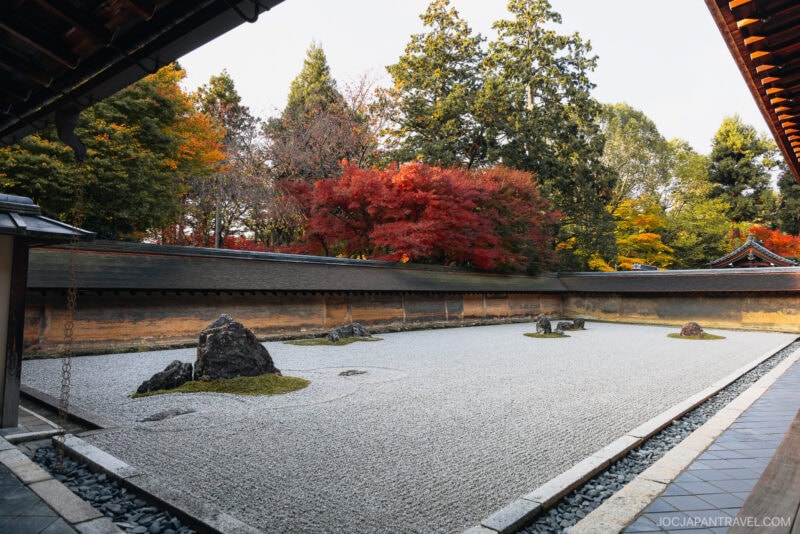
- Ryoan-ji – The famous rock garden, a short hop from Kinkaku-ji and the quietest thing on this list.
- 10-Day First Trip to Japan – Where Nijo Castle fits into a fuller Tokyo, Kyoto, and Osaka route.