

This post may contain affiliate links. Please read our disclosure policy.
Discover the flavors of Yamagata, from tender Yonezawa beef and distinctive ita soba noodles to the savory dondonyaki grilled pancake. Come along as we explore the local food scene, sharing must-try dishes and favorite dining spots that promise a memorable culinary experience.

Yamagata Prefecture, tucked away in the heart of Tohoku, is surrounded by some of Japan’s most beautiful natural landscapes. Towering mountains, sparkling streams, and fertile soil create the ideal environment for cultivating fresh, local ingredients that define the region’s distinctive cuisine.
From juicy cherries that are celebrated as some of the best in the country to rich, comforting stews that are perfect for chilly winter days, Yamagata offers something delicious to enjoy in every season.
Yonezawa Beef (米沢牛)
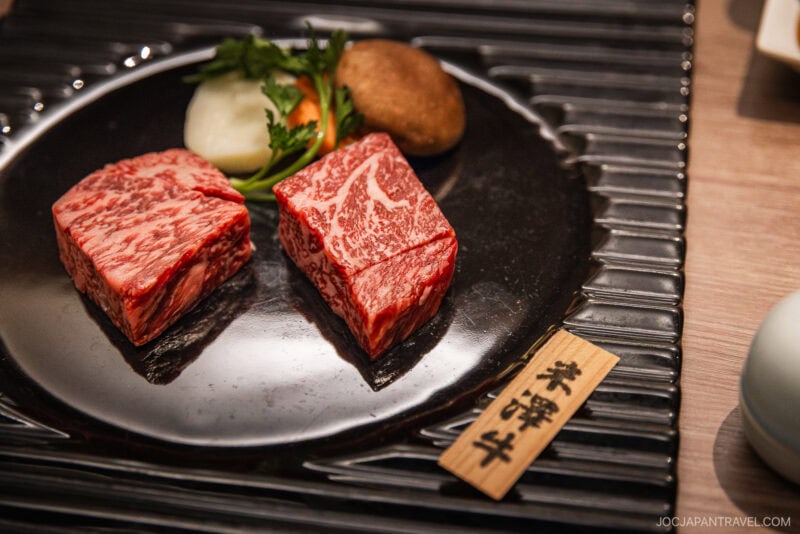
Start your Yamagata food journey with the region’s prized Yonezawa beef, one of Japan’s Three Great Wagyu alongside Matsuzaka and Kobe. Unlike Yamagata beef, Yonezawa beef comes exclusively from cattle raised in the Okitama region, meeting strict criteria including age, breed, and diet. Fed a special blend of wheat and corn, the meat is tender, naturally sweet, and full of flavor.
You can enjoy Yonezawa beef in sukiyaki, shabu-shabu, or yakiniku. For a truly indulgent experience, stay at the Takinoyu Hotel in Tendo. After relaxing in the famous onsens, try a tasting course featuring both Yonezawa and Yamagata beef. The course also includes fresh seafood and more. Grill each bite to your liking and take time to compare the subtle differences in flavor.
Imoni (芋煮)
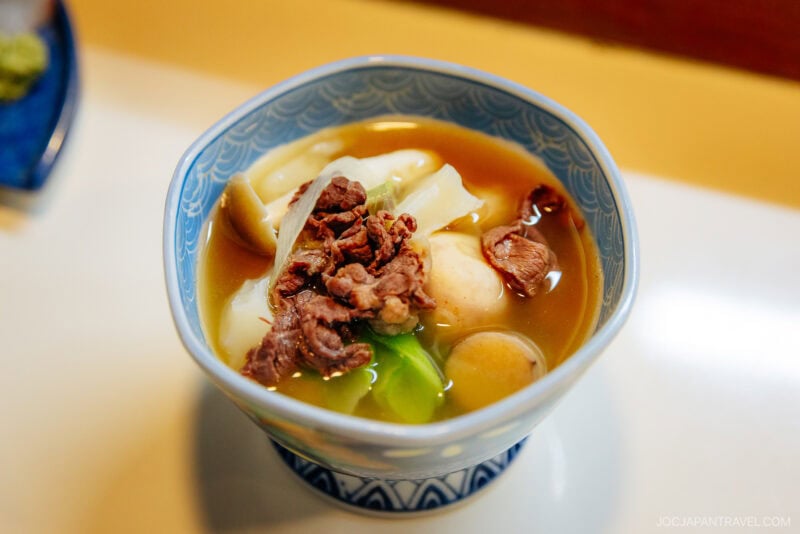
One of Yamagata’s most beloved dishes is imoni, a taro and beef stew in a savory dashi and soy sauce broth. Legend has it that imoni began in the 1600s when boatmen, waiting for consignees, made a stew from dried cod and local taro.
Today, it features taro, beef, konnyaku, and leeks, though regional twists add variety. In Shonai, pork and miso replace beef, with fried tofu and green onions added. In Mogami, wild vegetables and mushrooms give the stew a forest-fresh flavor.
You can find imoni in many izakayas across Yamagata. At Nakano, a small family-run spot, the stew was so good I had to go back for seconds.
Imoni is also celebrated with seasonal imonikai (stew parties) and a September riverside festival. That festival holds a Guinness World Record for serving soup to 12,695 people in eight hours, using a 6-meter cauldron filled with over three tons of taro.
Jingisukan (ジンギスカン)
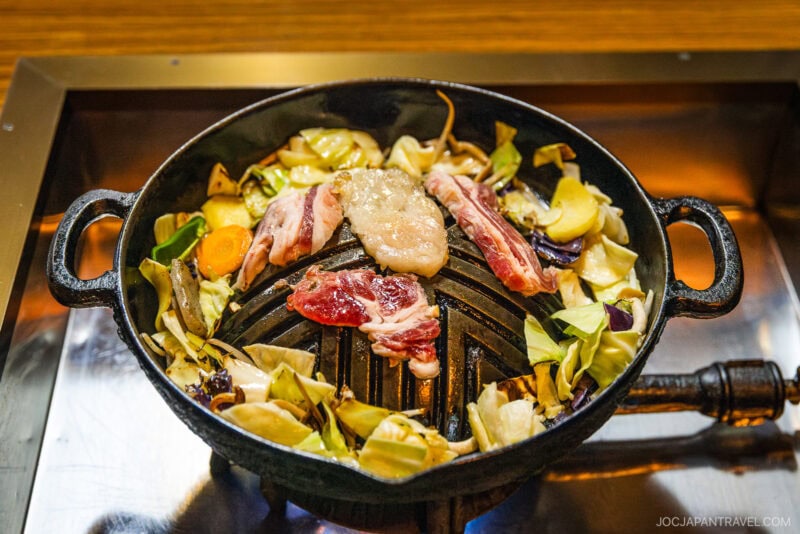
You may know jingisukan as a Hokkaido favorite, but it’s also popular in the Zao area. Thin slices of lamb are grilled on a dome-shaped grill, with vegetables at the base. As the lamb cooks, its juices drip down, infusing the vegetables with rich flavor.
For a homely jingisukan experience, try Barbecue Shirakaba (バーベキュー白樺). Recommended by a local, it did not disappoint. The set meal included rice, side dishes, a mountain of vegetables, and a generous plate of lamb.
I’ve tried jingisukan across Hokkaido, and Barbecue Shirakaba ranks among the best. It’s beloved by locals, so be sure to reserve ahead.
Dondonyaki (どんどん焼き)
To appreciate dondonyaki, we have to start with its predecessor, monjayaki, born in Tokyo’s vibrant shitamachi. This savory mix of flour, sauce, and dashi is topped with ingredients like cheese and mochi. Unlike okonomiyaki, monjayaki has a thinner, almost liquid-like consistency, making it tricky to take home.
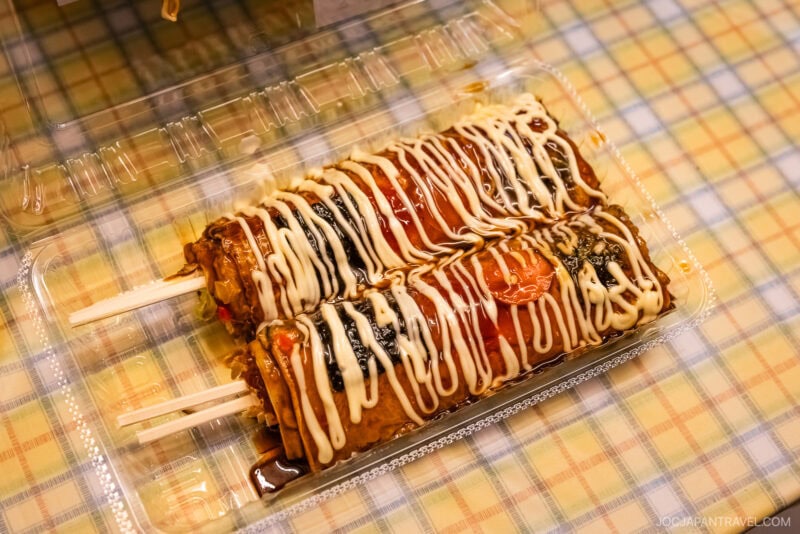
In 1938, Kamekichi Oba created a firmer version, rolled around a wooden stick for easy eating. The name comes from staff banging drums, or “dondon,” to attract customers.
Before visiting Kajo Park for cherry blossoms, stop by the Dondon Yaki Snack Shop at the entrance. Choose from cheese, double cheese, or curry, all topped with okonomiyaki-style sauce and mayonnaise. This beloved shop has welcomed many famous visitors, so grab yours before they sell out.
Hiyashi Ramen (冷やしラーメン)

If you visit Yamagata in summer, you must try hiyashi ramen, or cold ramen. This refreshing dish was first created at Sakaeya Honten (栄屋本店) by owner Abe Senshiro, who wondered why cold soba existed but not cold ramen.
Abe spent a year perfecting a secret soy sauce-based broth made with bonito and kelp, ensuring the flavor stays rich even as the ice melts. Sakaeya offers variations with vegetables, chicken, or wontons, making it the perfect dish to enjoy on a hot summer day.
Ita Soba (板そば)
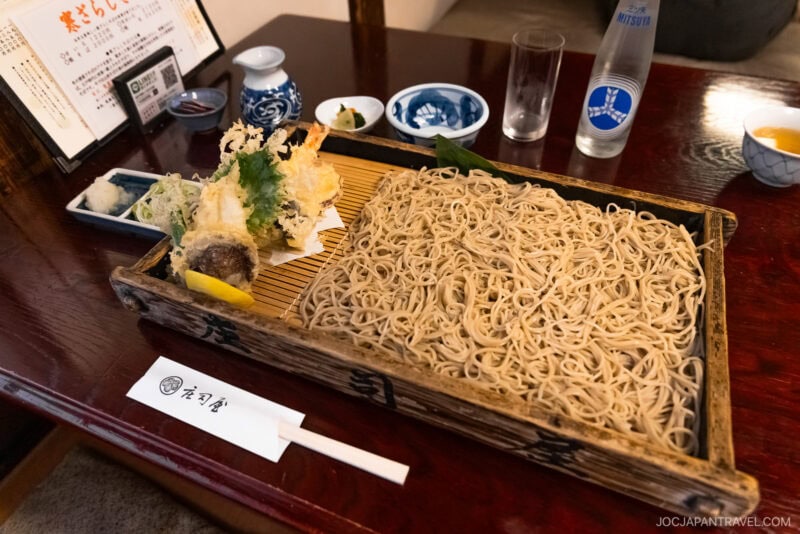
Another must-try noodle in Yamagata is ita soba, made with unpolished buckwheat and traditionally served in a shallow cedar box. The husks add a deeper flavor and slightly chewier texture.
My favorite spot is Shojiya (そば処 庄司屋), just a five-minute walk from Yamagata Station. They offer hot and cold soba, tempura, dashi tamagoyaki, and options for regular or large portions, including ita soba.
In late spring and summer, try Kanzarashi soba, made by soaking whole buckwheat in cold water and wind-maturing it. This process reduces bitterness while enhancing aroma and flavor, making it a truly special seasonal treat.
Cherries
Known as the “Fruit Kingdom,” Yamagata is famous for its cherries, grapes, and pears. Cherry cultivation began in 1868, but the rainy season posed challenges. Thanks to a short rainy season and protective mountains, Yamagata produces these prized “red pearls” with ease.
Cherry farms open to the public in early summer, offering the chance to pick the famous ‘Sato Nishiki’ variety. Known for its perfect balance of sweetness and sourness, this cherry was created by Sato Eisuke and remains highly prized—500 grams sold for 1.3 million yen at a Tokyo auction in 2023.
Even outside cherry season, you can enjoy cherry-flavored foods, sweets, and drinks throughout the region.
Tama Konnyaku (玉こんにゃく)
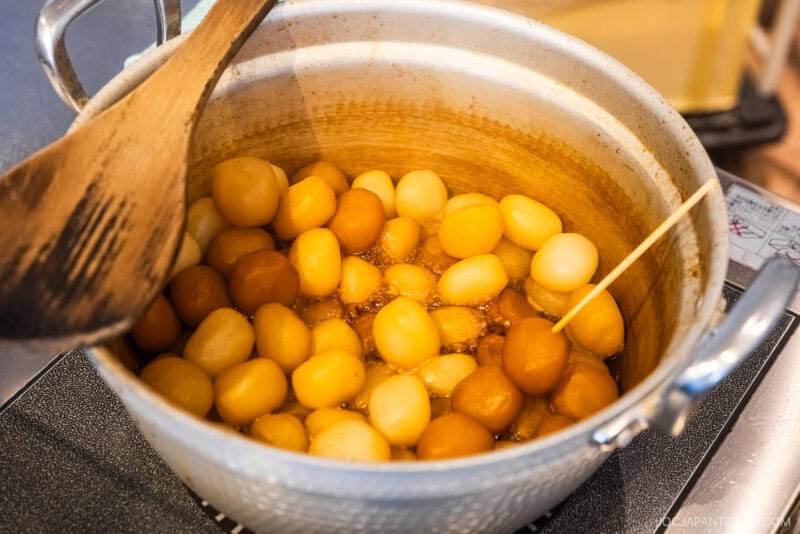
Konnyaku, or yam cakes, are made from konjac and mostly water, with almost no calories, sugar, fat, or protein. Their mild flavor makes them perfect for absorbing the rich tastes of dishes like oden and sukiyaki.
In Yamagata, konnyaku is shaped into small balls, skewered, and simmered in a soy sauce-based broth for hours. The result is a savory, slightly sweet, umami-packed treat, especially delicious with a touch of mustard.
You can find tama konnyaku at festivals, restaurants, and izakayas, or visit Tanno Konnyaku (丹野こんにゃく) to try skewers of the regional specialty and seasonal varieties, all for just a few hundred yen.
Dadacha Mame (だだちゃ豆)
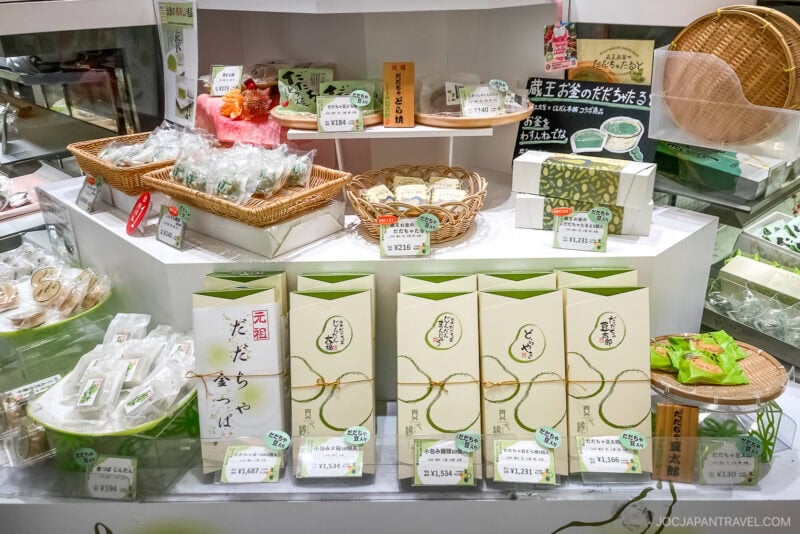
Dadacha beans are a specialty of the Shonai region in Yamagata. A unique type of edamame, each pod holds just two beans, smaller than usual, with a naturally sweet, rich flavor.
Grown only in a small area of Tsuruoka City, the beans thrive in rhizobia-rich soil and morning mist from the Yujiri River, which enhances their taste.
Fresh dadacha mame are available from July to September. Outside of season, they appear in desserts like roll cakes, dorayaki, and mochi. Visit a depachika to find a variety of dadacha sweets, perfect for souvenirs.
Fuuki Mame (ふうき豆)
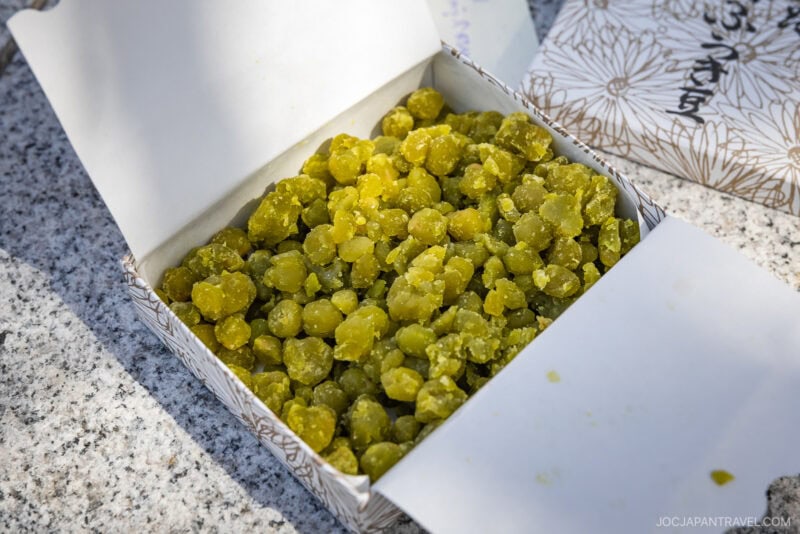
Fuuki mame is a simple, sweet snack made by boiling green peas with sugar, resulting a fluffy texture and rich bean flavor. Enjoyed since the Meiji Era, it’s a classic Yamagata treat.
Rather than restaurants, fuuki mame is sold as a souvenir. At Yamadaya Fuukimame Honpo (山田家ふうき豆本舗), you can pick up a box made with just peas, sugar, and salt, with no preservatives. Fresh for only three days, they make the perfect Shinkansen snack. I always make sure to grab a box before I get on my ride!
Yonezawa Ramen (米沢ラーメン)
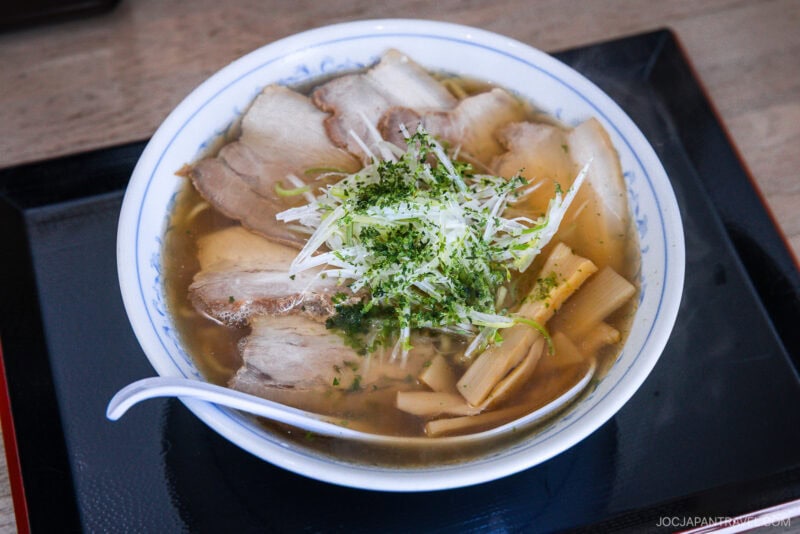
To finish our food tour, try Yonezawa ramen, featuring a light soy sauce broth made from chicken bones and dried sardines.
The noodles are the star, hand-kneaded with extra water, left to mature for 2-3 days, and perfectly chewy to hold the flavorful broth.
For an authentic experience, visit Menkou (めんこう). Their ramen balances rich broth, melt-in-the-mouth chashu, sweet crunchy menma, and refreshing green onions. Unlike many oily ramen bowls, Yonezawa ramen delivers a harmonious blend of flavors that will keep you coming back for more.
So that concludes Yamagata’s food scene! Whether it’s noodles, meat, or fruits, there’s something for everyone throughout the year. Let me know in the comments what other food guides you’d like to see.
Savoring the Flavors of Yamagata
From hearty noodles and premium meats to sweet, seasonal fruits, I had an amazing time tasting my way through Yamagata. I hope you get the chance to try them all when you visit.
I’d love to hear from you—let me know in the comments which food destinations or guides you’d like to see next!
More to Explore Nearby
Yamagata Prefecture is celebrated for its deep snow, high-quality onsen, and profound religious sites like Yamadera. It serves as a perfect hub for exploring the history and natural wonders of the central Tohoku region.
- Zao Winter – Explore the shared mountainous area famous for the spectacular “Snow Monsters” (Juhyo), excellent skiing, and natural hot spring resorts.
- Kakunodate – Journey to this beautifully preserved former castle town in Akita, which boasts an extensive samurai district lined with traditional residences.
- Chuson-ji Temple – Visit this UNESCO World Heritage site in Iwate Prefecture, famous for its brilliant golden Konjikido Hall and deep historical significance.
- Lake Tazawa – Discover Japan’s deepest lake in Akita Prefecture, a beautiful natural landmark offering serene views and local legends about the golden Tatsuko statue.


