This post may contain affiliate links. Please read our disclosure policy.
Osaka, known as “Japan’s Kitchen,” is a food lover’s paradise, offering everything from on-the-go street snacks to hearty local specialties.
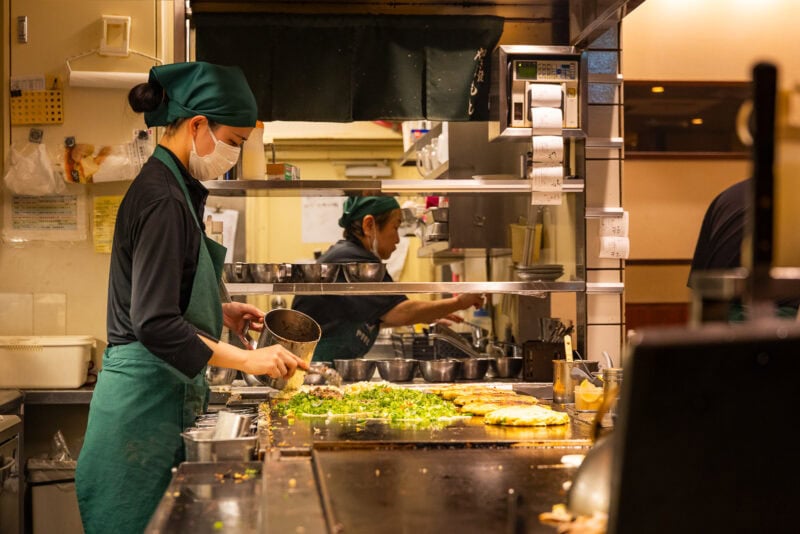
When visiting Osaka, you may hear the term kuidaore, which means “eat until you drop.” This phrase perfectly captures Osaka’s dynamic food culture. The heart of traditional cuisine in Osaka lies in flour-based dishes, or konamono, often called “B-ranked foods” due to their affordable prices. But don’t let the low cost fool you—these dishes are some of the most delicious in Japan.
From sizzling takoyaki and crispy kushikatsu to irresistible bowls of ramen and the city’s famous okonomiyaki, Osaka’s cuisine is bold and bursting with flavors that will leave you craving more. Here are 10 must-try dishes in Osaka, all of which showcase the city’s rich culinary heritage.
Takoyaki
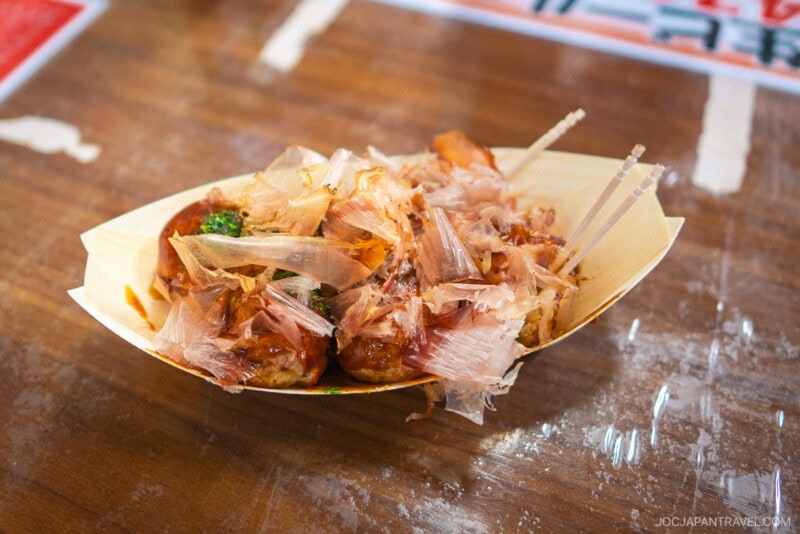
There’s no better way to kick off your Osaka food adventure than with takoyaki, which happens to be my personal favorite on this list. These small octopus-filled balls are made with a flour-and-egg batter, octopus pieces, benishouga (pickled ginger), and green onions. Using a special takoyaki pan, they’re fried into perfect little balls, then typically topped with takoyaki sauce, mayonnaise, aonori (fine seaweed flakes), and katsuobushi (dried bonito flakes).
Takoyaki has become synonymous with Japan’s street food scene, and while you can find many stands offering this iconic delicacy, you can also enjoy it in sit-down restaurants, especially around Dotonbori. That said, my favorite spots are the tiny, off-the-beaten-path shops, where the interiors may be a little rough around the edges, but the atmosphere is authentic, and the prices are just a few hundred yen.
Okonomiyaki
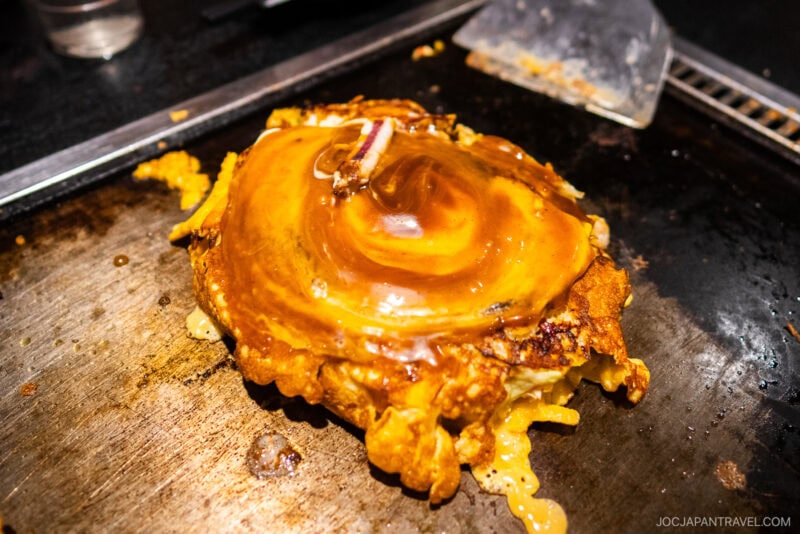
Another classic is okonomiyaki, a savory pancake made with a flour-and-egg batter, shredded cabbage, and toppings like pork and seafood. Like takoyaki, it’s topped with a special okonomiyaki sauce, mayonnaise, aonori (seaweed flakes), and katsuobushi (dried bonito flakes).
Okonomiyaki restaurants are often teppanyaki-style, where you can watch the chef prepare your dish right in front of you. In some restaurants, your table may have its own teppan (hot plate), so you can cook it yourself!
Negiyaki
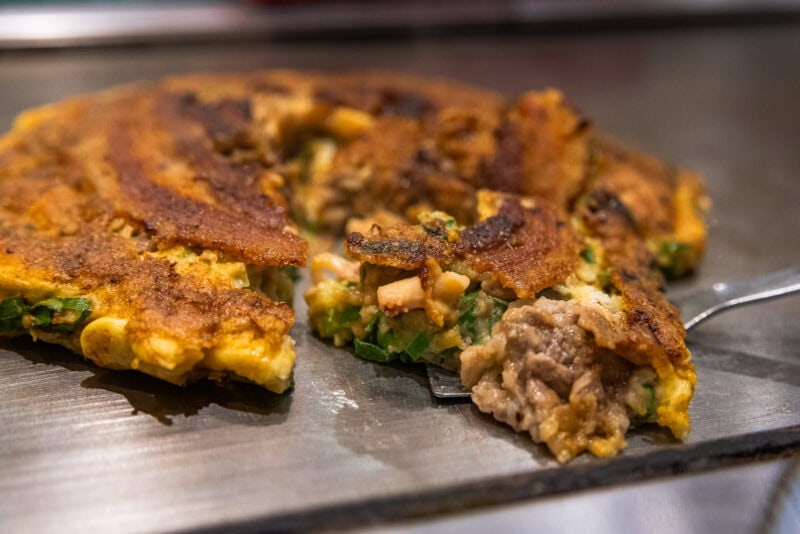
If you love okonomiyaki, then negiyaki is a must-try as well. It’s very similar, but negiyaki uses negi (Japanese long green onion) instead of cabbage. The result is a wonderfully sweet flavor from the negi, which makes it my favorite option over okonomiyaki.
You can find it in many okonomiyaki shops, but also at specialty spots like the one I visited, Negiyaki Yamamoto Umeda. You can choose from various options, such as pork, shrimp, or suji (beef tendons). They cook your negiyaki on the main grill and then transfer it to the grill right in front of you, so you can hear the sizzle and enjoy the aroma as it fills the air. It was so addictive that I finished mine in just a few minutes.
Kushikatsu
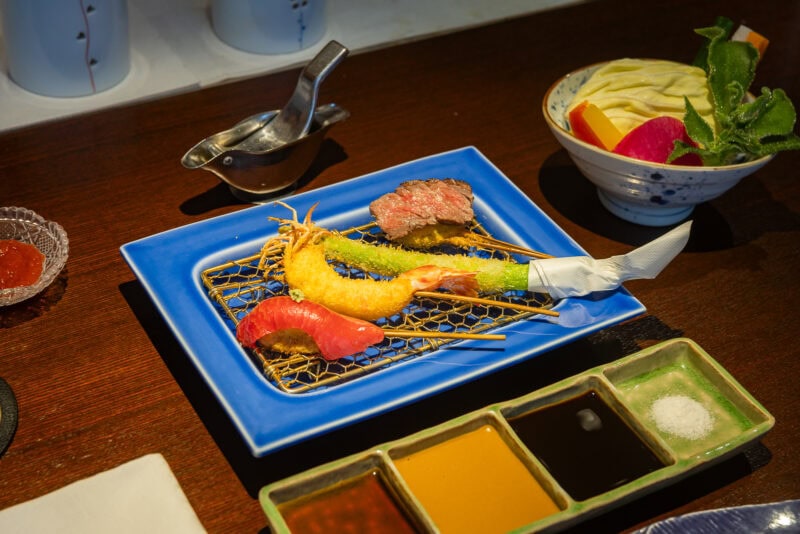
There’s a theory that in 1929, the owner of a small bar in Osaka’s Shinsekai district began frying skewered dishes for blue-collar workers. This marked the beginning of Japan’s love affair with deep-fried skewers. Various meats and vegetables are dipped in a batter made from flour, egg, and water, lightly coated in panko breadcrumbs, and deep-fried until crispy. The skewers are then dipped into a Worcestershire-based sauce for an extra tangy and salty kick. While meat and vegetables are common ingredients, you’ll also find unique options like cheese and mochi.
Kushikatsu Daruma is a popular chain that offers good-quality kushikatsu at a reasonable price, with countless varieties to satisfy any craving. For a more refined experience, Kitashinchi Kushi Katsu Bon is an excellent choice. I visited their second location in Tokyo, and if that’s any indication, it’s a must-visit. They take extra care in preparing a light yet crunchy batter and breadcrumbs, using premium ingredients like wagyu, tuna, and sea urchin.
Ikayaki
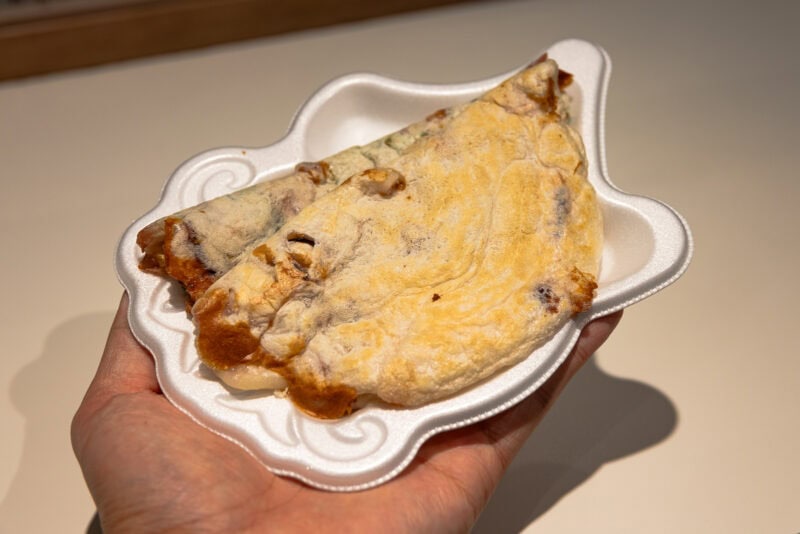
Some of you may know ikayaki as the whole grilled squid often served at festivals. However, Osaka’s version is, simply put, a squid pancake. Similar to okonomiyaki and takoyaki, it uses a batter with a slightly chewier texture. It might not sound the most appetizing, but I was surprised at how addictive it was!
My go-to spot is Hanshin Meibutsu Ikayaki on the basement floor of the Hanshin Department Store in Umeda. You can watch as the chefs expertly move around the grill, whipping up your ikayaki in just seconds. There are often long lines, but don’t let that deter you! For just a couple of hundred yen for one ikayaki, you can’t really go wrong.
Osaka Curry
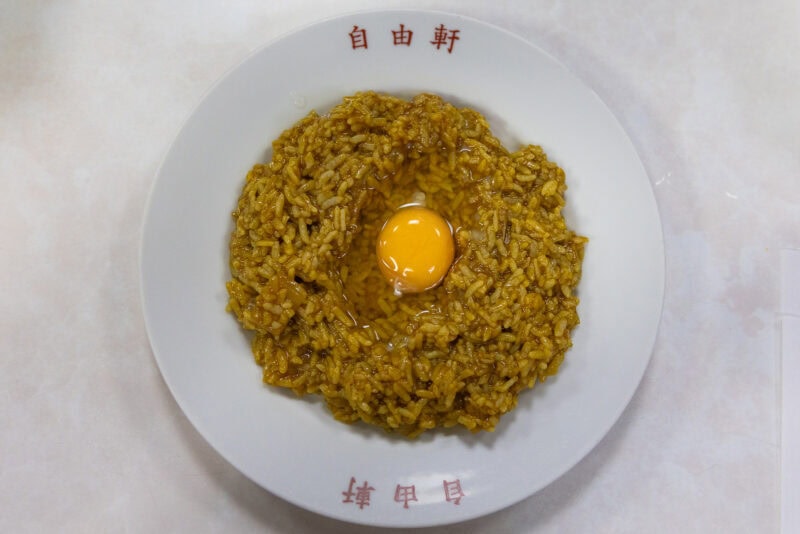
Jiyuken has been serving its version of curry rice since 1910, and locals have been hooked ever since. Traditionally, it’s served with curry poured over a plate of rice, but at Jiyuken, the curry is already mixed into the rice when it arrives at your table.
It’s topped with a raw egg, which you mix into the curry to enhance its richness. The curry contains very few onions and beef slices, making it quite carb-heavy. However, it’s definitely worth trying, especially if you love Japanese curry!
Torikara
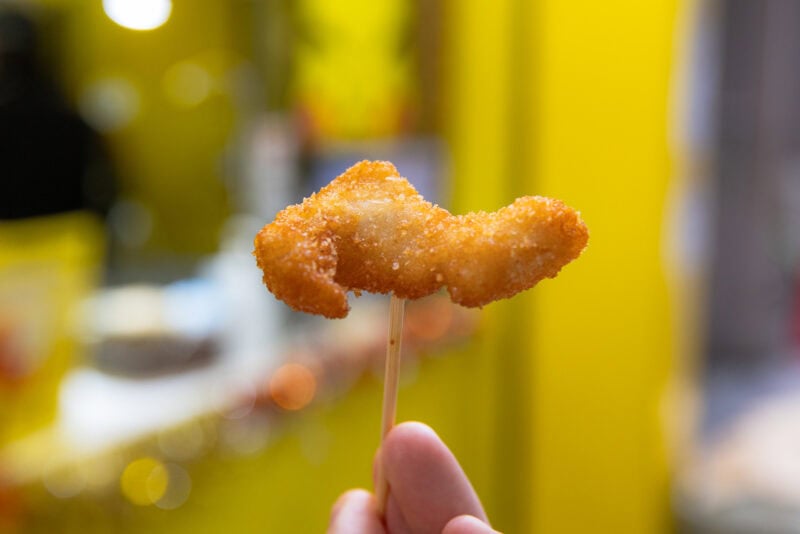
I’ve walked past several branches of Kinnotorikara countless times but only recently decided to try it. Here, you can pick up pieces of deep-fried, breaded chicken, or torikara. They’re fried to order, so they come out piping hot and irresistibly crispy. The chicken is served with seven sauces, including mayonnaise, sweet chili, and lemon juice.
You’ll find the bright yellow stores scattered around the city, offering single, double, and mega-sized portions, depending on whether you’re after a quick snack or a full meal.
Hakozushi
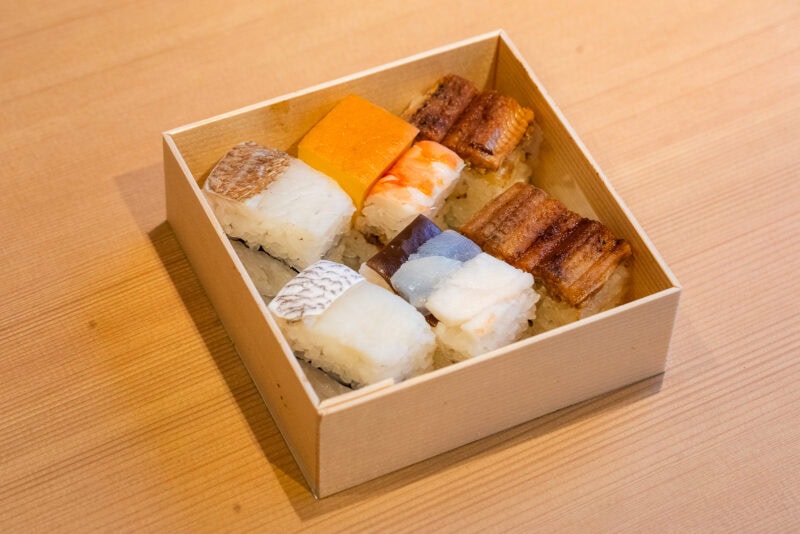
Hakozushi is a unique type of sushi that originated in Osaka at Yoshino Sushi during the Meiji period (1868-1912). It’s made by placing sweet vinegared rice in an oshibako (square wooden box), then layering cured or boiled ingredients like shrimp, sea bream, and conger eel, and pressing them together.
This method made it easier to transport sushi before refrigerators were common. While the production of hakozushi may be dwindling today, Yoshino Sushi is working to keep the tradition alive. The first floor features a simple counter where you can select your hakozushi pieces. You can then take them home or enjoy them in the simple, stylish second-floor restaurant.
The sushi itself is not only beautiful but also delicious. Because it’s pressed, hakozushi requires more chewing than regular sushi, which allows you to fully appreciate the flavor of the vinegared rice and toppings.
Kitsune Udon
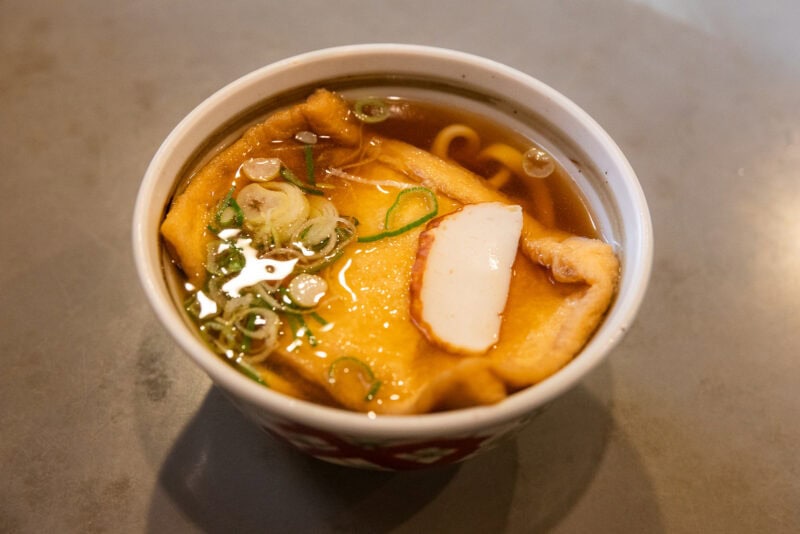
Kitsune udon is one of Japan’s most popular udon dishes. It consists of classic warm udon in a dashi broth and a topping of marinated aburaage (deep-fried tofu). Although the method varies depending on the region, the aburaage is first boiled to remove the oil and then seasoned with sugar, soy sauce, and mirin. Its name, Kitsune (which translates to “fox”), comes from the idea that fried tofu is said to be a favorite food of foxes.
I visited the supposed origin of Kitsune Udon at Usamitei Matsubaya, which was founded in 1893. Initially, the fried tofu was served as a side dish to udon. However, the owner, Usami Yotaro, saw that many customers were eating the tofu on top of the udon, thus birthing the famed noodle dish. The noodles have the perfect bounce and firmness, allowing the delicate yet umami-rich and deep broth. The aburaage adds a new texture and sweetness that balances the whole dish. Aside from kitsune udon, there are many other types of udon, such as donburi (rice bowl).
Osaka Ramen
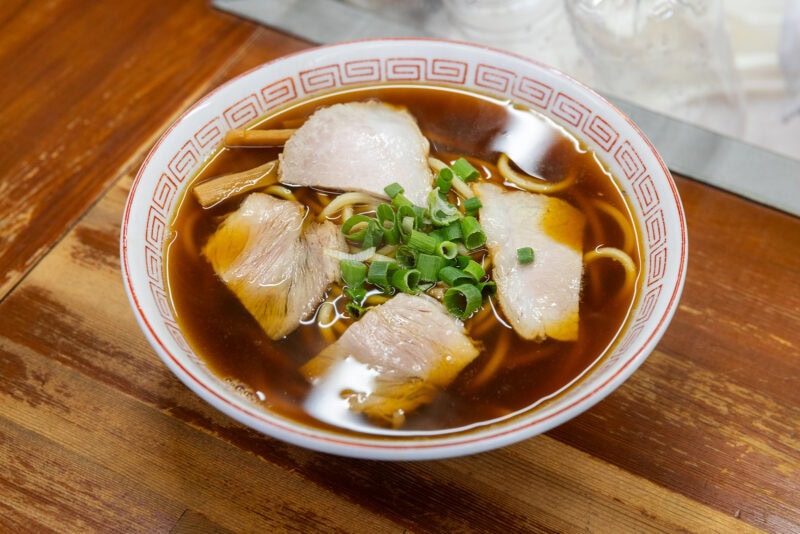
There is no clear definition of Osaka-style ramen. In fact, there are fewer ramen shops here compared to other cities, as Osaka is known for its stronger udon culture. However, there is a local variation known as “Takaida-style ramen,” a salty, hearty ramen that was originally served to factory workers and has since become a well-established genre of its own.
One popular spot is Chuka-soba Sumiyoshi, highly rated by locals. The restaurant is small, with just one L-shaped counter seating eight customers. The broth is rich in soy sauce flavor and deep dashi stock, offering a comforting and heartwarming taste. My biggest surprise was the noodles. The extra-thick, straight noodles are incredibly satisfying, with an addictive chew that complements the richness of the soup. At just 700 yen, it’s definitely worth trying!
What’s Your Favorite Osaka Food?
So that’s it for my top 10 must-try dishes in Osaka. Some of them you may already know, but hopefully, there are also a few you didn’t and would like to try! If your favorite Osaka food is not listed, let me know what it is in the comments below.
Don’t forget to explore the small streets and alleyways of Osaka, as many of the city’s best culinary gems are tucked away in hidden corners. Enjoy your culinary adventure in Osaka—kuidaore!