This post may contain affiliate links. Please read our disclosure policy.
While Oita Prefecture may be famed for its countless hot springs, it’s also home to a colorful food culture that celebrates tradition and dedication.
Situated along the eastern coast of Kyushu, Oita Prefecture is blessed with rich natural bounty. This ranges from fertile mountains to abundant seas. Whether indulging in the prefecture’s soul food, toriten (chicken tempura), or experiencing the thrill of cooking your meal using the bubbling steam of Beppu’s legendary hot spring, there is something for everyone.
I’ll take you through some of the must-try dishes and local eateries you should add to your Oita itinerary.
Toriten
In 2019, according to the Ministry of Internal Affairs and Communications survey, Oita City ranked first in Japan for annual household chicken consumption. There are various chicken dishes such as Tori-Meshi (a mixed rice dish with chicken) and Tori-Jiru (chicken miso soup). And, of course, there is karaage (Japanese fried chicken).
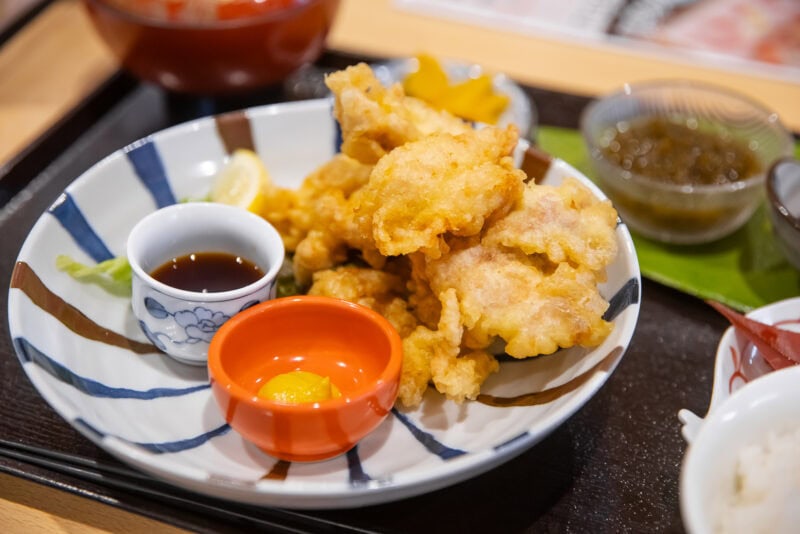
However, toriten steals the spotlight as Oita’s chicken soul food. While it may look similar to karaage, it is coated in a batter akin to tempura. The chicken thighs are cut into pieces and marinated in soy sauce and garlic. Restaurants may use different marinades. The pieces are then dipped in tempura batter and deep-fried until crisp on the outside and tender on the inside. It’s lighter and less oily than karaage, meaning you can eat more!
There are various theories about the origin of toriten. It is said to have begun in the 1950s at Toyoken in Beppu. If you don’t get the chance to visit Toyoken, you can find toriten in many restaurants and izakayas. I ate at Toyotsune, near Beppu Station, famed for its tendon (tempura bowl) and other Oita specialties, like toriten. The toriten was irresistibly tender and juicy, crisp and not too heavy. It came with a side of ponzu sauce and mustard for a nice kick and tang. You might find some other restaurants offering kabosu, a unique green citrus fruit native to Oita.
Jigokumushi
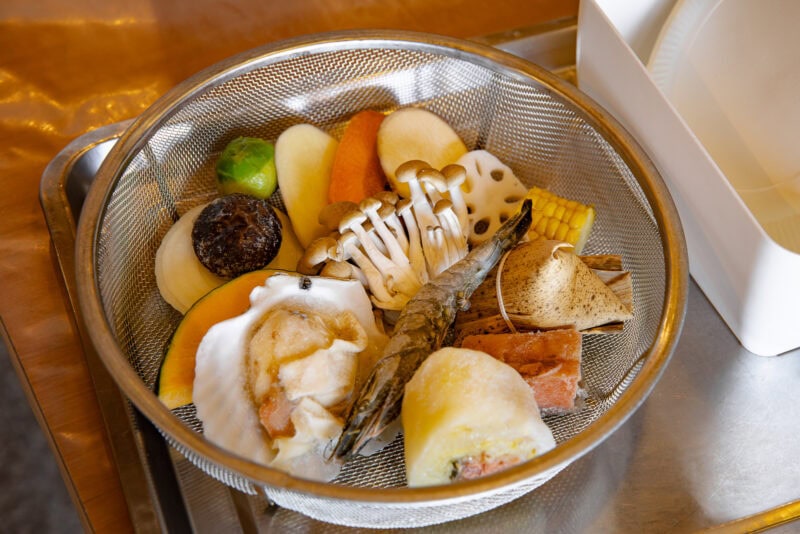
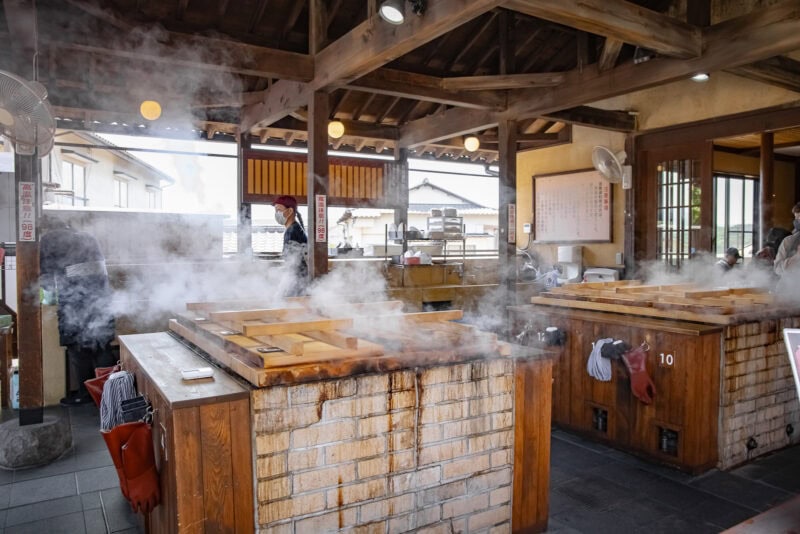
A trip to Oita isn’t complete without a trip to an onsen (hot spring). In the Kannawa district, one of Beppu’s most renowned onsen areas, head to Jigoku Mushi Kobo. There, you can enjoy the famed jigokumushi. This is a cooking style that uses steam from natural hot springs to cook food.
Here, you can either bring your own food or purchase a variety of reasonably priced, prepared plates. These include vegetables, chicken, seafood, rice bowls, and other dishes, which you can cook using one of the steam chambers. The hot spring contains sodium chloride, so the steam adds a slight saltiness to the ingredients. This helps to bring out their natural flavors, especially the vegetables’ sweetness.
You can dip the ingredients in salt or ponzu sauce for additional flavor. To finish your meal, I recommend getting the steamed purin (Japanese custard pudding)!
Jigokumushi Purin
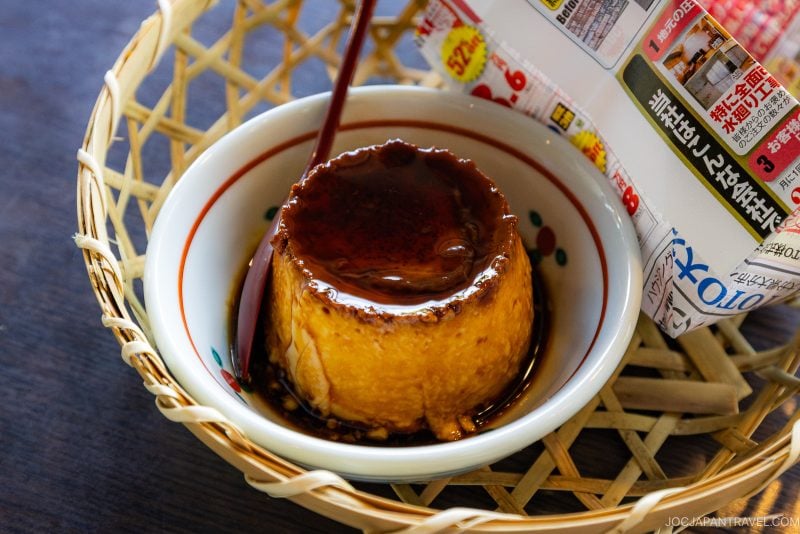
Another delicious food made from the steaming onsens is Jigokumushi purin (Japanese egg custard). While you can find them around the city, the go-to spot is Okamotoya in Myoban Onsen, considered the original. Here, they have been hand-making their purins using onsen steam, and it has become one of Beppu’s signature souvenirs and desserts.
Unlike many purins, this Jigokumushi purin has a slightly firmer texture with a deeper egg flavor. It has a pleasant sweetness that isn’t too sickly, and the caramel is dark, rich, and slightly bitter. The contrast between the creamy pudding and bittersweet caramel makes it one of my favorite purins in all of Japan.
Dango Jiru
Oita Prefecture has a well-developed plateau, and much of its land is unsuitable for rice cultivation. Field-based grain cultivation, such as wheat, has been popular for centuries. Many of these grains were made into flour, creating a prominent flour-based food culture.
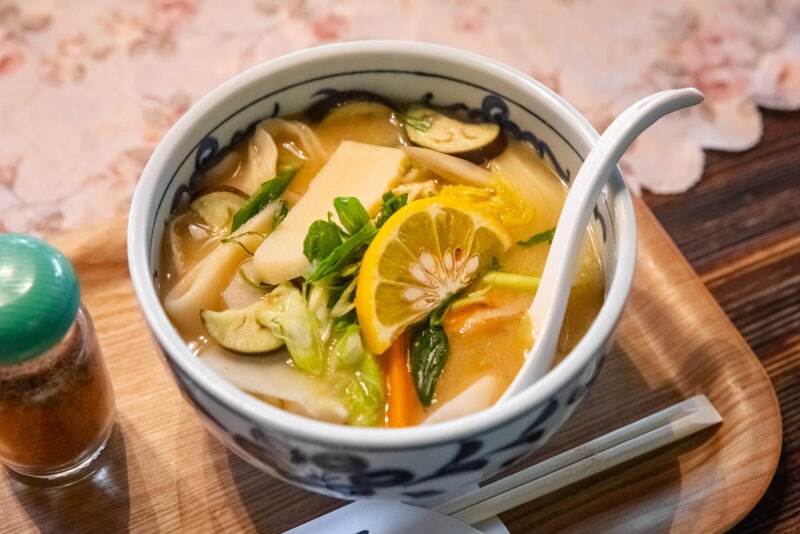
One of the most popular dishes is dango jiru, or dumpling soup. While you may think of dango as the round-shaped dumplings in other parts of Japan, in Oita, they are different. They are made by kneading wheat flour and stretching it into thin strips. The dango is added to a dashi-based soup, typically seasoned with barley miso (popular in Kyushu), pork, and vegetables. These vegetables include burdock root, carrots, and shimeji mushrooms. Similar to miso soup, each person has their own way of making dango jiru. This means you can try many different variations.
Whenever I am visiting family in Beppu, I always head to Shinanoya, a quaint cafe/restaurant in a traditional Japanese house. I love the homely atmosphere, as if I were eating at my grandmother’s house. The dango jiru is just as comforting with its deep umami from the miso and earthiness from all the vegetables. The long strands of dango also add a hearty bite. Aside from dango jiru, Shinanoya offers other classic Japanese dishes, desserts, and a range of drinks, from coffee to floats.
Ryukyu

Facing the Seto Inland Sea, Oita Prefecture is blessed with a wide variety of seafood throughout the year. The name “Ryukyu” is said to have originated with Oita fishermen who learned to make it from an Okinawan (also known as Ryukyu) fisherman.
Typically, thinly sliced sashimi of yellowtail, horse mackerel, mackerel, and other seasonal fish are marinated in soy sauce, sake, mirin, sesame, and ginger. Compared to traditional sashimi, the marination process gives the fish a slightly richer, bolder flavor without overpowering its natural taste. It also results in a velvety texture with a firmer bite.
Ryukyu can be served as is or over rice, which is my preferred method. The combination of salty soy sauce flavor, the chewy texture of the flesh, and the sweetness of the sake is addictive. The marinade also soaks into the rice, helping bring everything together and creating a comforting, flavorful, and deeply nourishing dish.
Seki Saba/Seki Aji

Seki saba and Seki aji (Chub Mackerel and Horse Mackerel) are the respective brands of fish that are caught in the Horyo Strait between the Saganoseki Peninsula and Shikoku. The tides of the Seto Inland Sea and the Bungo Channel meet, creating a fast, intense current rich in plankton. The fish becomes firmer with these conditions, giving it a unique texture when eaten. Seki saba is in season from December to March, while Seki aji is from March to October.
There are a few differences between regular aji and saba. First, they are caught one at a time, using the traditional pole-and-line method to ensure sustainability. Next, they must be killed by ikejime – a technique in which a knife is put into the gills, the spinal cord is cut, and then submerged into saltwater to let the blood out. Then, the shinkeijime process involves inserting a wire into the spinal cord to induce asphyxiation in the fish. This whole process involves no damage to the fish and helps maintain its freshness.
It is best enjoyed as sashimi, where you can savor its exceptional freshness, firm texture, and rich flavor. It typically comes with wasabi, kabosu, and a sashimi dipping sauce. HEIKE in Beppu is a well-known seafood restaurant where you can enjoy a variety of Oita specialties like Ryukyu, unique seafood dishes, and seki saba or seki aji, depending on the season. While both fish cost approximately 5000 yen each, it is well worth trying when in Oita.
Shiitake Mushrooms

Oita’s warm climate and abundance of oak-dense forests make it the number one producer of dried shiitake mushrooms in Japan, accounting for about 40% of the country’s total production.
There are three main types of shiitake mushrooms:
- Donko – Thick with a good texture and strong umami taste. Great in nabe (Japanese hot pot) or Chinese cooking.
- Koko – Slightly thicker and larger than donko, making it suitable for barbecue, Shiitake steak, or stew to fully enjoy its texture.
- Koushin – Thinner with a slightly mellow taste compared to the above. Perfect for cutting into slices/pieces and adding to hambagu (Japanese hamburger steak) or gyoza (Japanese dumplings).
I recommend visiting Yamayoshi Oita Shiitake Shop, where you can pick up these dried shiitake mushrooms to take home or as a gift. At the small eat-in space, you can enjoy marinated skewered shiitake mushrooms in a pork-and-shiitake donburi (rice bowl) or even shiitake-flavored soft cream!
Is it Worth Visiting Oita for the Food?
Oita might not be the first name that comes up when people talk about Japan’s great food destinations, and I’ll be honest – I wouldn’t put it in the same league as Fukuoka or Miyazaki for sheer culinary excitement. But that’s not really the point. The food here is deeply rooted in place, shaped by volcanic landscapes, mountain plateaus, and extraordinarily productive seas.
Toriten and dango jiru are the kind of honest, unpretentious dishes that stay with you. Seki saba is a genuine luxury worth treating yourself to. And jigoku-mushi is an experience you simply can’t have anywhere else on earth. If you’re coming to Oita for the onsen, and you should be, the food will reward you far more than you might expect.
More to Explore Nearby
Oita’s food scene stretches from Beppu’s street-side toriten to Hita’s riverside dining. The prefecture’s hot springs, temples, and mountain scenery make every meal part of a bigger adventure.
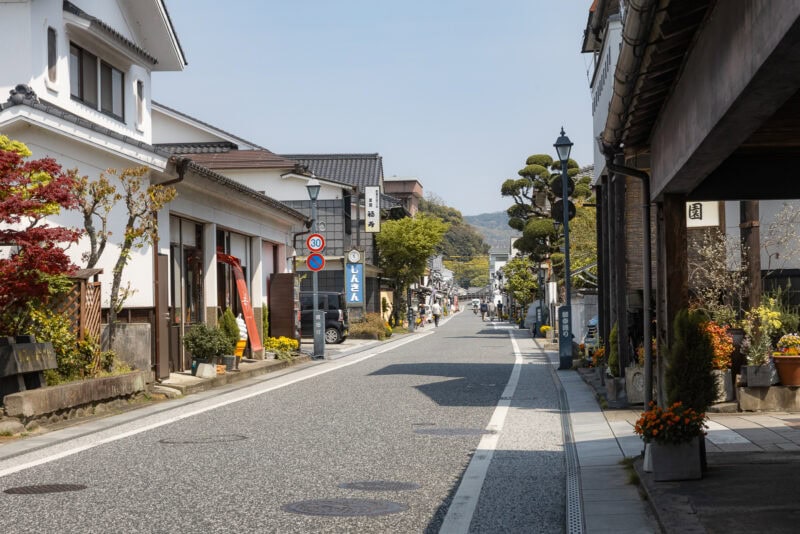
- Beppu – Japan’s most famous hot spring city, where steaming vents and bubbling pools set the scene for some of Oita’s best eating.
- Beppu Chicken Tempura (Toriten) – Beppu’s signature dish deserves a deeper look, crispy, juicy, and unlike any tempura you’ve had before.
- Yufuin: Yunotsubo Kaido – Yufuin’s charming main shopping street is lined with cafes, sweets shops, and local specialty stores.
- Hita: Oita’s Little Kyoto – A riverside town known for its Edo-era streetscapes and regional cuisine, tucked into the mountains of western Oita.
- Tabelog Guide – A practical guide to navigating Japan’s most trusted restaurant review app, helpful for tracking down local gems across Oita.