This post may contain affiliate links. Please read our disclosure policy.
Tucked away in the mountains between Kumamoto and Oita, Hita is a small riverside town. It has Edo-period streets, traditional festivals, and centuries-old craftsmanship. There is also a local eel dish that alone justifies making the journey.
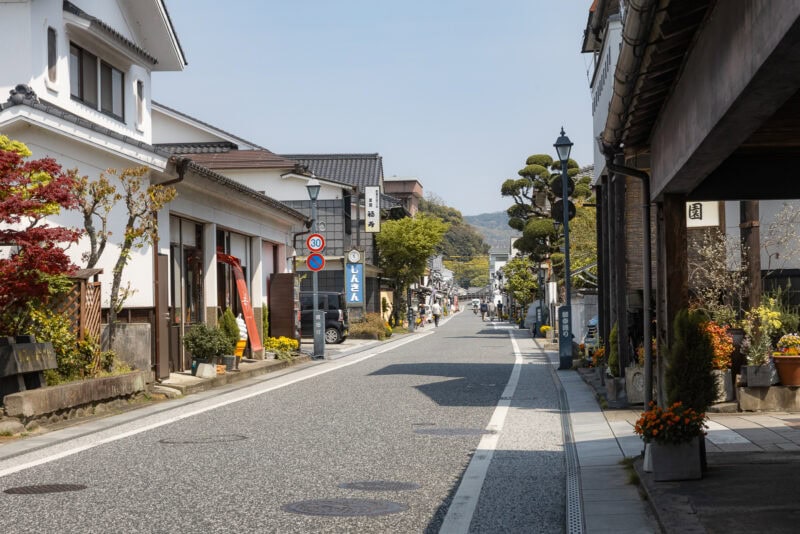
Hita (日田市) is a compact mountain city in western Oita Prefecture, famed for its Mameda and Kuma districts, which preserve the architecture and atmosphere of the Edo period. Centrally located in Kyushu, the city flourished as a trading hub and religious center before becoming a strategic base for feudal lord Toyotomi Hideyoshi in the late 16th century.
It later passed to Tokugawa Ieyasu. He designated it a tenryo, a territory under direct shogunate control. This shaped much of the merchant culture and architecture that survives today. Modeled on Kyoto’s townscape and trading tradition, Hita has earned its reputation as Oita’s “Little Kyoto.” Walking its historic streets makes that comparison feel entirely earned.
Table of Contents
Takatsuka Atago Jizoson
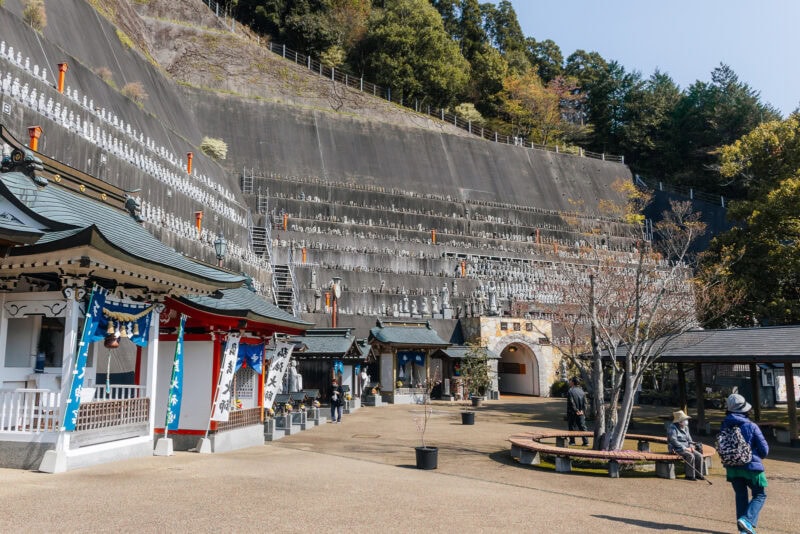
Takatsuka Atago Jizo-son is a spiritually layered temple with over 1,200 years of history, drawing visitors from across Japan who come to pray for specific blessings and the fulfillment of wishes. The grounds blend Shinto and Buddhist traditions and are home to over 2,000 Jizo statues arranged along the hillside, giving the approach a density and atmosphere that builds as you climb.
Three features in particular stand out. The Megumi no Tama, or Blessing Ball, behind the main hall, is said to grant wishes when gently touched. The Okakae Jizo, or Embracing Jizo, offers spiritual blessings to those who hold it while praying. Finally, along the approach, a 1,300-year-old ginkgo tree is revered for its spiritual energy and associated with fertility blessings.
The small streets at the base of the temple are lined with shops selling regional snacks and traditional souvenirs, making it a natural first stop before heading into the city.
Hita Gion Museum
Every July, Hita hosts the Hita Gion Festival. It is recognized as a National Important Intangible Folk Cultural Property. It is also part of Japan’s UNESCO-designated “Yama, Hoko, Yatai, Float Festivals.” Like other Gion festivals held across Japan in summer, it originates from prayers for protection. These prayers were directed against plague and natural disaster. The centerpiece is a parade of enormous Yamahoko floats through the historic city streets.
The Hita Gion Museum preserves and displays these magnificent floats year-round, along with the ornate curtains that traditionally adorn them. The museum was closed during my visit, so I was unable to see the collection in person. I recommend checking opening hours on their official website before visiting.
Kangien
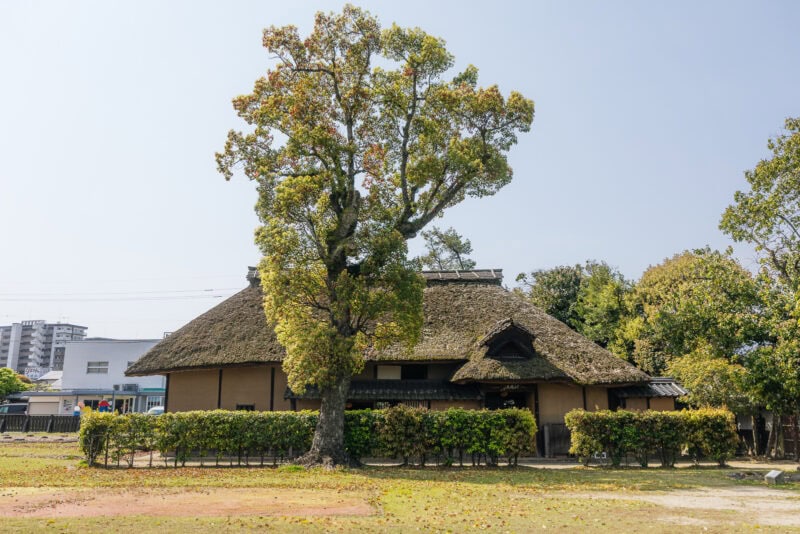
Established in 1805 by the scholar, educator, and poet Hirose Tanso, Kangien was one of the largest private schools in Japan during the late Edo period. Its name, Kan’i-en, meaning “open to all,” reflected a genuinely progressive philosophy that broke from shogunate convention by welcoming students regardless of social rank or gender. The school became one of the most important centers of intellectuals in Kyushu, producing influential figures such as Takano Choei and Omura Masujiro, who shaped Japan during its transition from the Edo to the Meiji eras.
Today, the historic grounds are free to explore, and the adjacent Kan’i-en Education and Research Center houses materials related to the school, its founder, and its graduates. It is a quieter stop than the temples and museums nearby, but the history it represents is significant, and the grounds have a reflective quality that rewards taking your time.
Kuma and Mameda
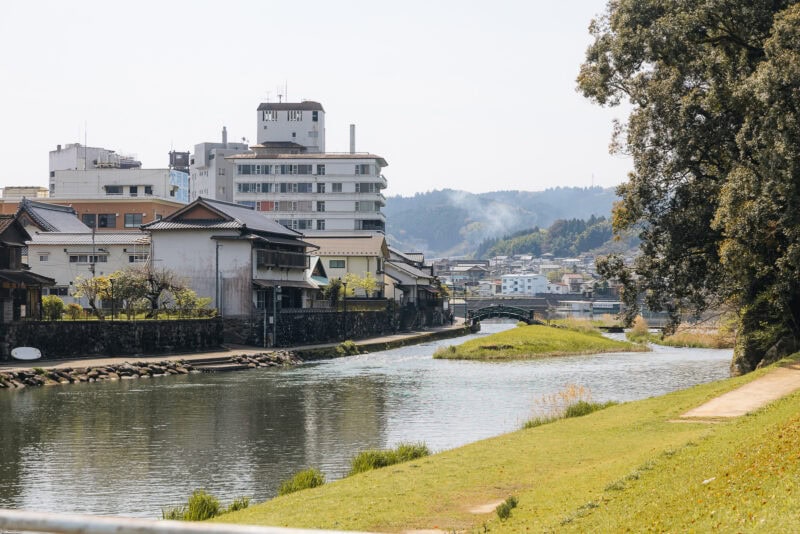
The two districts that define Hita’s character sit on either side of the station. Kuma, to the south, traces its roots to a traditional fishing village. It sits along the Mikuma River. It now serves as Hita’s hot spring retreat. A mix of classic ryokan and contemporary hotels can be found here. Their baths are fed by the region’s natural geothermal waters.
In summer, yakatabune traditional riverboats glide along the Mikuma River. Guests can enjoy seasonal meals on board. They can also watch traditional cormorant fishing from the water. It is one of the city’s more atmospheric experiences.
Mameda, to the north, is where Hita’s Little Kyoto reputation is most apparent. The historic streets are lined with traditional craft shops, sake and shochu producers, and old merchant buildings. Highlights include Kuncho Shuzo Sake Brewery with its sake and shochu museum, the Nihon Marukan Traditional Medicine Museum housed in a striking Edo-era building, and the Hita Shoyu Hina Goten, which I visited during my day trip and describe in the next section.
Hita Goten Museum
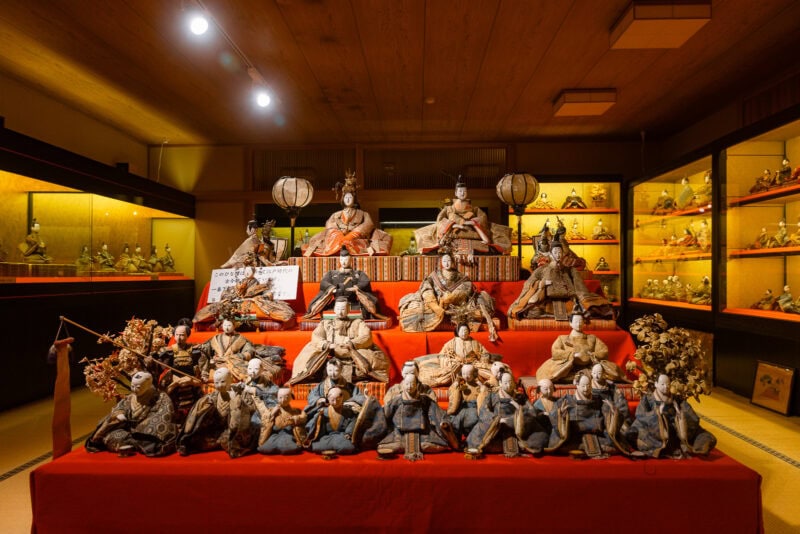
The Hina Goten Museum in Mameda houses approximately 3,500 antique hina dolls spanning from the early 1700s to the present, including the largest hina doll in all of Japan. The collection traces the evolution of the Hinamatsuri tradition, which is observed on March 3rd to wish young girls health and happiness. The festival has roots in the Chinese Shangsi Festival, where dolls were floated on rivers to carry away misfortunes. Over time in Japan, these became ornate ceremonial objects kept inside homes, eventually evolving into the elaborate tiered displays that are now synonymous with the holiday.
The scale and age of the collection here are remarkable. Even without a strong prior interest in the tradition, the craftsmanship of the oldest dolls and the sheer number of them on display is genuinely impressive.
Hita Mabushi Senya
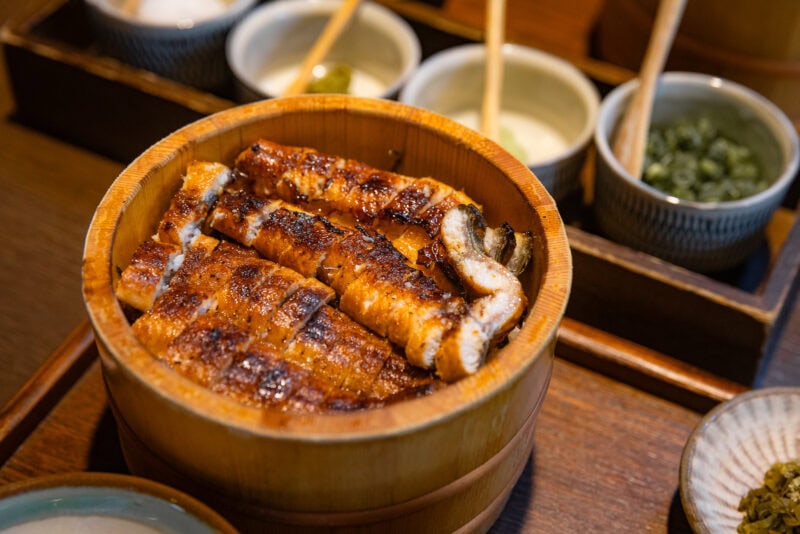
Eel is Hita’s most celebrated local specialty, and Hita Mabushi Senya is one of the city’s most renowned spots to eat it. The eel is grilled kabayaki-style until the skin crisps and the flesh becomes tender, then generously glazed with a sweet soy sauce-based sauce, chopped into smaller pieces, and arranged over rice.
The dish is called hitsumabushi and is eaten in four stages: first on its own, then with negi, wasabi, and seaweed, then as ochazuke with dashi broth poured over, and finally however you prefer. Its customization lets you enjoy the natural flavor of eel in different ways, each with a distinct taste. Note, the restaurant is typically busy from opening, so be prepared for a queue. It is worth it.

Andy’s Travel Tips
These simple tips will help you when you visit.
- Eat at Hita Mabushi Senya and arrive early. The restaurant fills up quickly from opening, and the four-stage hitsumabushi format is one of the most enjoyable ways to eat eel in Kyushu. Do not skip this.
- Spend time in both Kuma and Mameda. The two districts have completely different characters, so seeing both allows you to appreciate Hita’s full character.
- Visit in summer to watch cormorant fishing on the Mikuma River. The yakatabune river dining and the traditional fishing spectacle together make for one of the most distinctly Japanese evenings you can have in Oita Prefecture.
- Confirm the Hita Gion Museum is open before making it a planned stop. It was closed during my visit, and irregular hours mean it is worth checking ahead.
- Allow at least half a day. Hita is compact but has enough depth across its temples, museums, districts, and food that rushing through it misses most of what makes it special. A day trip from Fukuoka or Beppu works well, but an overnight stay in one of the Kuma ryokan lets you settle into the pace of the place properly.
How to Get to Hita City
Train
The city is served by JR Hita Station, a major stop on the Kyudai Main Line.
- From Hakata Station (Fukuoka): Take the Limited Express Yufu or the scenic Yufuin no Mori. The direct journey takes approximately 1 hour and 15 to 25 minutes.
- From Oita Station: Take the Limited Express Yufu. The ride takes about 1 hour and 30 minutes.
Bus
Highway buses are a frequent and cost-effective alternative to the train.
- From Fukuoka (Hakata/Tenjin): Highway buses depart every 30–60 minutes for the Hita Bus Terminal (located right across from the train station). The trip takes about 1 hour and 40 minutes.
- From Oita City: The “Toyonokuni” highway bus runs hourly and takes about 1 hour and 25 minutes.
Car
Hita is centrally located in northern Kyushu, making it a perfect stop for road trips between Fukuoka, Kumamoto, and Beppu.
- From Fukuoka City: Take the Oita Expressway and exit at Hita IC. The drive is approximately 1 hour and 10 minutes.
- From Kumamoto City: Take Route 212 north through the scenic Aso region. The drive takes about 1 hour and 30 minutes.
Pro Tip
If you are an Attack on Titan fan, head to the Oyama Dam (about 20 minutes south of the station by car/bus). You will find a life-sized bronze statue of Eren, Mikasa, and Armin looking up at the massive dam wall, recreating the iconic scene from the start of the series. Afterward, visit the Ume Hibiki roadside station nearby to see the free museum dedicated to the author’s original drawings.
Is Hita Worth Visiting?
Yes, it’s one of those towns that will win you over with its charm. The Edo-period streets in Mameda are well-preserved, the hitsumabushi eel is a real highlight, and the combination of the temple, the museums, and the riverside onsen district gives the city a variety that most small Japanese towns cannot match. It sees far fewer international visitors than the more famous onsen towns of Oita, which is part of its appeal. If you are traveling between Fukuoka and Beppu, a half day or more spent here can be very rewarding.
More to Explore Nearby
- Kokonoe Yume Suspension Bridge — About 40 minutes east, Japan’s longest pedestrian suspension bridge spans a dramatic gorge in the Kuju highlands, with sweeping views of waterfalls and forested valleys below.
- Yufuin Kinrin Lake — A scenic hour’s drive brings you to Yufuin’s most iconic spot, a misty lake ringed by traditional inns and charming cafes in one of Kyushu’s most beloved resort towns.
- Kurokawa Onsen — Over the Kumamoto border to the south, this intimate hot spring village set in a forested gorge is one of the most atmospheric onsen destinations in all of Kyushu. Yanagawa Canals — An hour northwest, the willow-lined waterways of Yanagawa offer a wonderfully unhurried afternoon drifting by flat-bottomed boat through the “Venice of Kyushu.”