This post may contain affiliate links. Please read our disclosure policy.
Located in Beppu’s Kannawa and Kamegawa districts, Jigoku Meguri offers a mesmerizing look at seven natural hot springs with extraordinary colors, extreme temperatures, and a cast of resident crocodiles that make it one of Japan’s most unforgettable attractions.
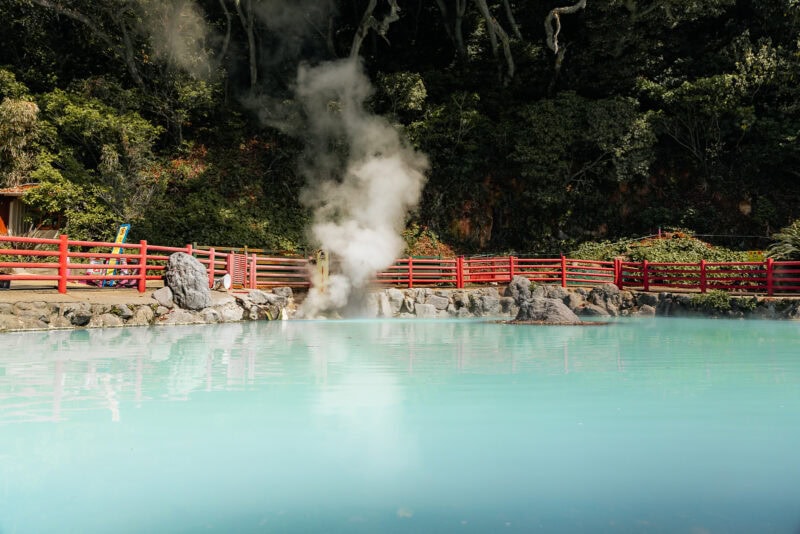
Beppu is Japan’s most geothermally active city. Beneath its streets, volcanic forces push boiling water, mud, and steam to the surface in hundreds of locations. The most dramatic of these are the Seven Hells, or Jigoku Meguri.
Why “hells”? The extreme heat made agriculture nearly impossible in parts of the city. Locals described the land as hell. Over time, those same hells became one of Japan’s most beloved tourist attractions. I have family in Beppu and return every year. The hells never get old.
Table of Contents
- How to Visit the Seven Hells
- 1. Umi-Jigoku (海地獄): Sea Hell
- 2. Oniishibozu-Jigoku (鬼石坊主地獄): Monk’s Head Hell
- 3. Kamado-Jigoku (かまど地獄): Cooking Pot Hell
- 4. Oniyama-Jigoku (鬼山地獄): Crocodile Hell
- 5. Shiraike-Jigoku (白池地獄): White Pond Hell
- 6. Chinoike-Jigoku (血の池地獄): Blood Pond Hell
- 7. Tatsumaki-Jigoku (龍巻地獄): Tornado Hell
- Andy’s Travel Tips
- Is Jigoku Meguri Worth Visiting?
- More to Explore Nearby
- Related Posts:
How to Visit the Seven Hells
The Seven Hells spread across two districts: Kannawa and Kamegawa. Walking between all seven takes around 40 minutes. The most convenient way to get around is the Kamenoi Bus 1-Day Travel Pass, which covers unlimited rides to all the sites and nearby attractions. Pick one up at Wander Compass Beppu at JR Beppu Station. One combined ticket covers all seven hells for 2,200 yen for adults and 1,000 yen for children. Buy it at the first hell you visit and collect a stamp at each stop.
1. Umi-Jigoku (海地獄): Sea Hell
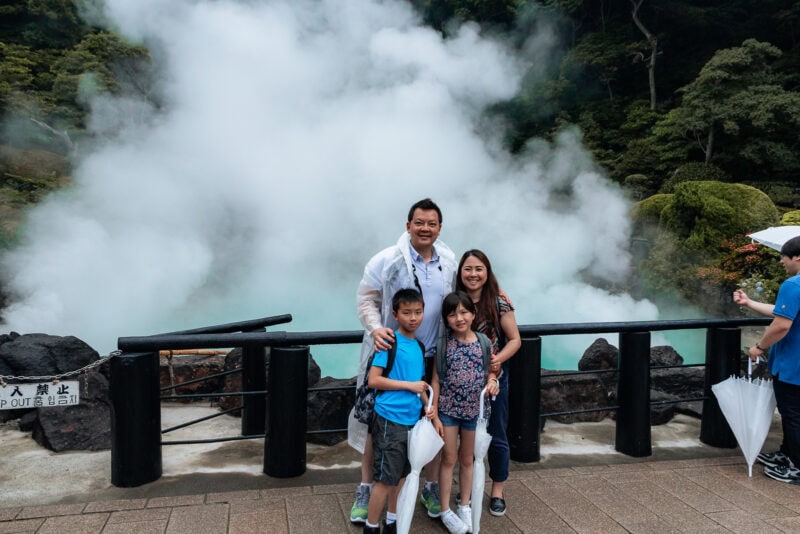
Start here. Umi-Jigoku is the largest and most impressive of the seven. A volcanic eruption of Mount Tsurumidake formed it over 1,200 years ago. The water is a striking cobalt blue, caused by naturally occurring iron sulfate. Do not let the color fool you. The temperature reaches 98°C. A smaller spring called Akaike Jigoku sits next door, its deep red offering a vivid contrast to the blue. A free footbath is available on site. Bring a towel.
2. Oniishibozu-Jigoku (鬼石坊主地獄): Monk’s Head Hell
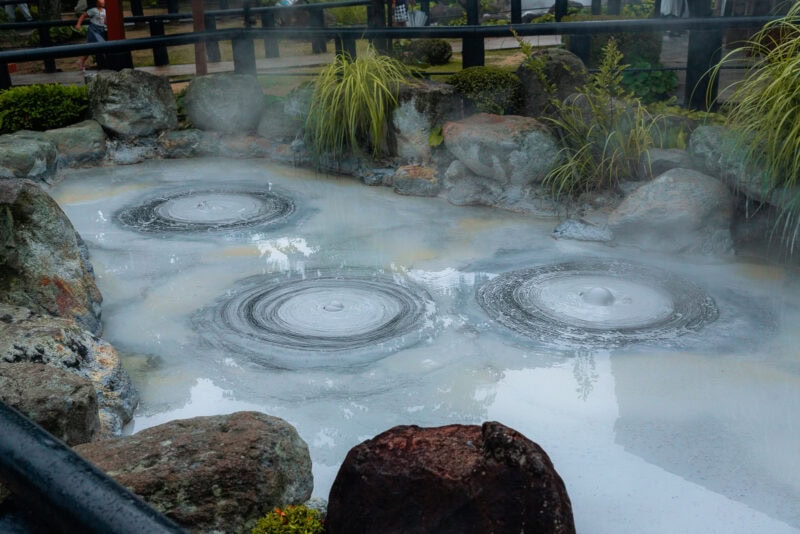
A short walk from Umi-Jigoku, this hell takes its name from the round bubbles that rise from its gray mud pools. They resemble the shaved heads of Buddhist monks, Bozu in Japanese. Alongside the visual effect, steam vents from nearby geysers. Locals call this sound “the snoring of demons.” It is one of the more atmospheric stops on the tour.
3. Kamado-Jigoku (かまど地獄): Cooking Pot Hell
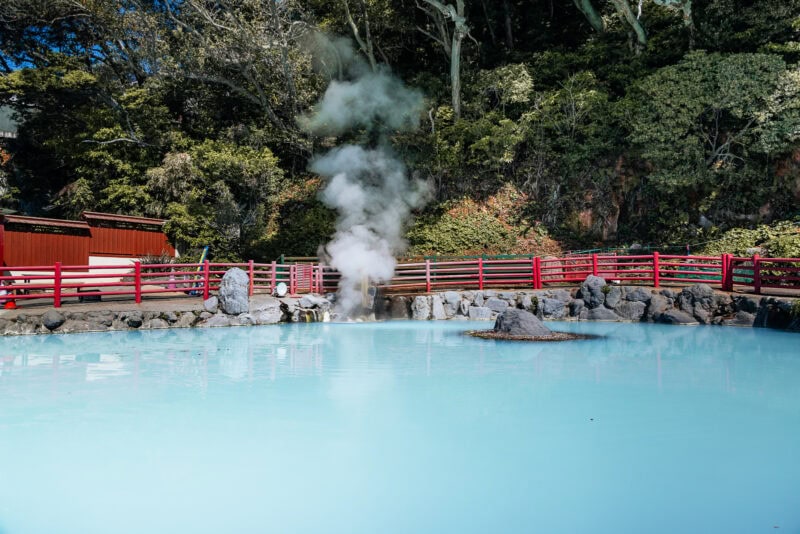
This is the stop for food lovers. Kamado means “cooking pot,” named after the historic practice of using the spring’s steam to cook rice. Today, the geothermal heat prepares silky soy sauce pudding and century eggs. You can sample both on site. Kamado also features a mix of spring types found across the other hells, making it a highlight even on its own.
4. Oniyama-Jigoku (鬼山地獄): Crocodile Hell
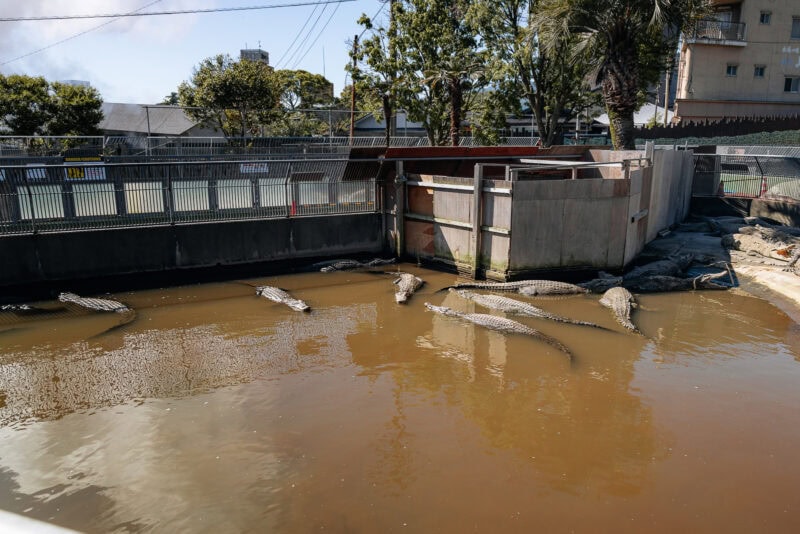
The vibrant green spring here reaches 99.1°C. But that is not why people remember this stop. Around 70 crocodiles have lived here since 1923. The natural warmth from the hot springs keeps them active year-round in conditions far warmer than their native habitat. Watching them move through the enclosures beside the spring is genuinely surprising the first time you see it.
5. Shiraike-Jigoku (白池地獄): White Pond Hell
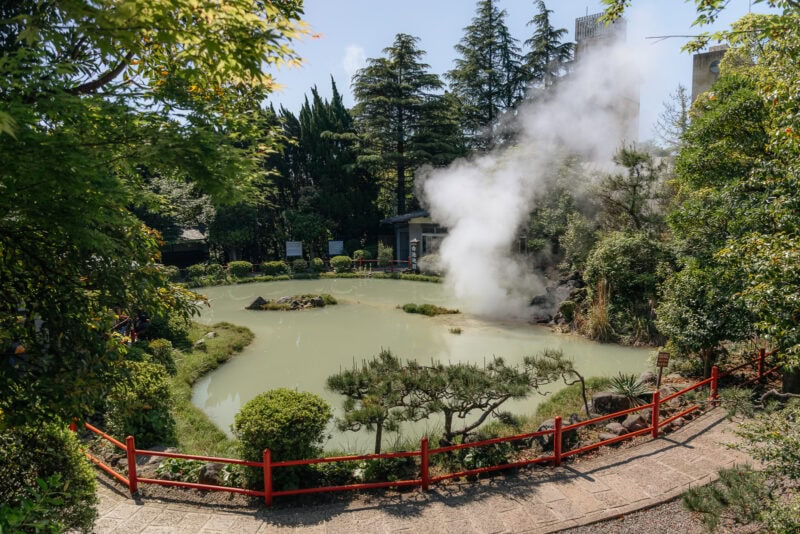
Shiraike opened in 1931 and offers a calmer atmosphere than the earlier stops. The spring gushes out at 95°C as clear water, but cools as it meets the air and turns milky white. A heart-shaped pond sits at its center, surrounded by a Japanese garden. The site also houses a small aquarium with tropical fish that thrive in the naturally warm water, as well as the Nihou Nanga-do Hall displaying traditional ink paintings by local Oita artists.
6. Chinoike-Jigoku (血の池地獄): Blood Pond Hell
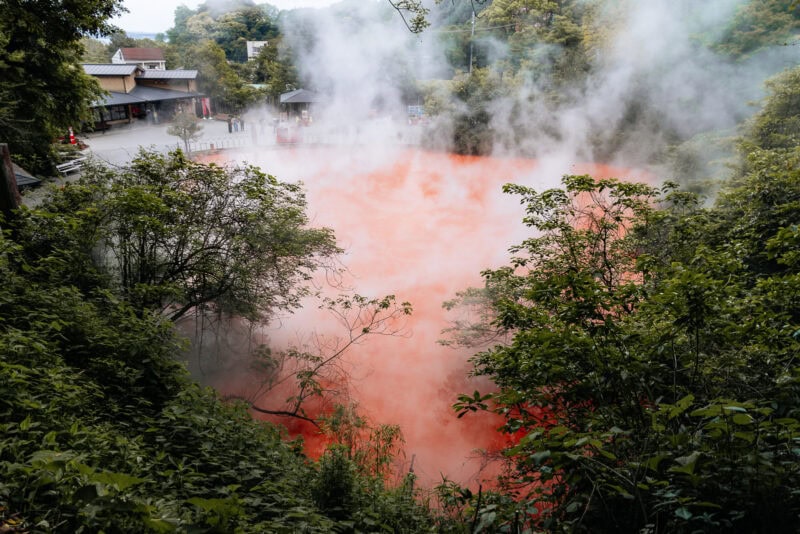
Chinoike is one of Japan’s oldest hot springs, dating back over 1,300 years. High concentrations of iron oxide and magnesium oxide in the clay give the water its deep crimson color. The temperature sits at 78°C, cooler than some of the others but still striking. Historically, people used the red clay for medicine and natural dye. You can buy a skin ointment made from the clay on site. There is not much else to do here beyond taking in the scenery. A quick stop is enough.
7. Tatsumaki-Jigoku (龍巻地獄): Tornado Hell

Tatsumaki is home to an active geyser that erupts every 30 to 40 minutes. It shoots water over 30 meters into the air. A concrete barrier caps the height for safety, but the eruption is still impressive. Check the schedule when you arrive and time your visit to catch it. After the hells, pick up freshly made gelato or a glass of orange juice pressed from Okayama oranges near the exit.

Andy’s Travel Tips
These simple tips will help you when you visit.
- Buy the combined ticket for all seven hells at 2,200 yen for adults. It is far better value than paying 400 yen per site. Pick up the stamp book at the same time.
- Grab the Kamenoi Bus 1-Day Travel Pass at Wander Compass Beppu inside JR Beppu Station before heading out. It covers unlimited rides to all seven sites and nearby attractions.
- Bring a towel for the free footbath at Umi-Jigoku. It is easy to forget, and you will want to use it.
- Time your visit to Tatsumaki-Jigoku around a geyser eruption. Ask the staff for the next scheduled time when you arrive. Missing it means waiting up to 40 minutes.
- Eat at Kamado-Jigoku. The soy sauce pudding and century eggs cooked in geothermal steam are a genuine highlight. Do not save your appetite for somewhere else.
- Start at Umi-Jigoku and work through the hells in order. The sites flow naturally in sequence, and you finish near the gelato and juice stalls at Tatsumaki.
Is Jigoku Meguri Worth Visiting?
Yes, without hesitation. No two hells look the same. The cobalt blue of Umi-Jigoku, the blood-red of Chinoike, the gray bubbling mud of Oniishibozu, and the crocodiles of Oniyama make this one of the most visually varied attractions in Kyushu. At 2,200 yen for all seven, it delivers excellent value. Budget at least three hours for the full tour. Which of the seven hells would you visit first? Let me know in the comments!
More to Explore Nearby
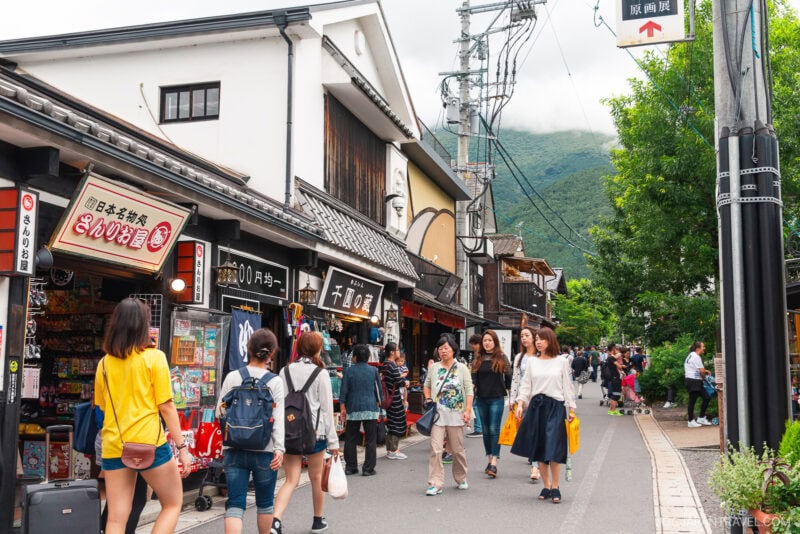
Beppu’s Jigoku Meguri showcases the city’s volcanic power at its most vivid. The rest of Beppu and Oita offer plenty more hot springs, local flavor, and mountain scenery.
- Beppu Ropeway — Ride to the summit of Mount Tsurumi for panoramic views over Beppu’s steaming landscape and Beppu Bay.
- Suginoi Hotel — One of Beppu’s most popular resort hotels, with hilltop baths offering sweeping views over the city.
- Beppu Chicken Tempura (Toriten) — Beppu’s signature dish — crispy, juicy, and a must-try while exploring the city’s hot spring district.
- Yufuin: Kinrin Lake — A serene, mist-covered lake in nearby Yufuin, surrounded by galleries and small cafes. An easy side trip from Beppu.
- Oita Food Guide — A guide to the best regional dishes across Oita, from toriten and dango jiru to kabosu citrus specialties.