This post may contain affiliate links. Please read our disclosure policy.
Kinugawa Onsen is a historic hot spring town in Tochigi Prefecture where riverside baths, mountain scenery, and family-friendly activities create the perfect getaway.
What is Kinugawa Onsen?
Kinugawa Onsen is one of the best-known hot spring resorts in Tochigi Prefecture, about two hours north of Tokyo. Its name means “angry demon river,” though the atmosphere is anything but fierce. With a 300-year history and a mix of traditional and modern comforts, it’s a favorite spot for travelers looking to relax in nature.
Top Things to Do in Kinugawa Onsen
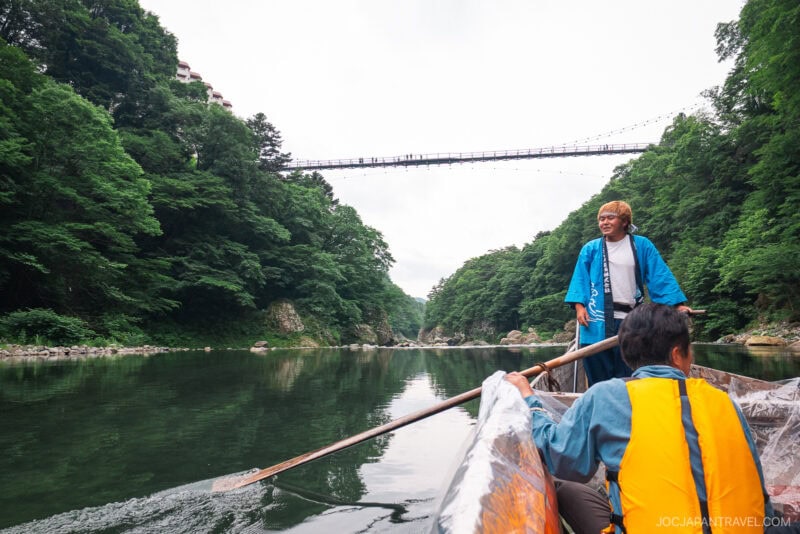
Kinugawa River Boat Ride (鬼怒川ライン下り)
We started our visit with a river boat ride. Traditional wooden boats glide down the emerald-green Kinugawa River, passing dramatic cliffs and curious rock formations. The gentle ride is punctuated by small rapids, which gave us a splash and a laugh. Tarps kept us mostly dry, and the scenery was unforgettable.
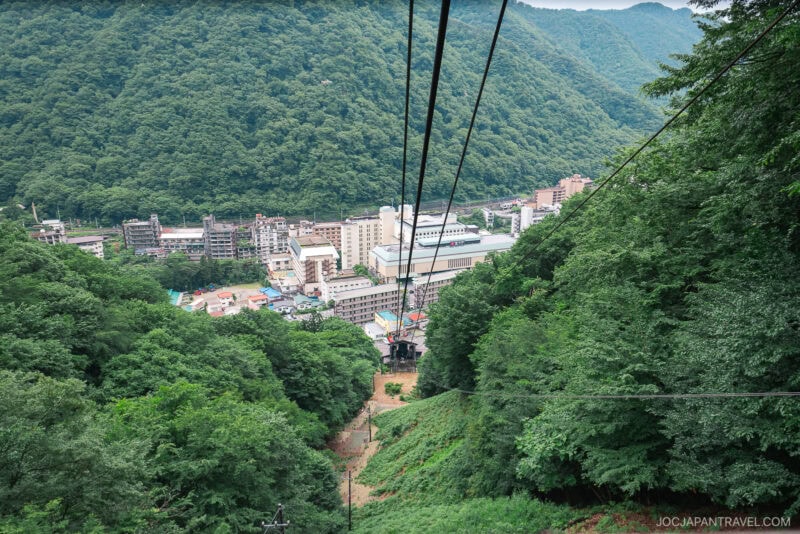
Kinugawa Ropeway & Monkey Mountain (鬼怒川温泉ロープウェイ)
The ropeway carried us up to a hilltop viewpoint with sweeping views of the valley. At the top is a small monkey park, where our kids loved feeding the monkeys and watching them play. It was an unexpected highlight that combined nature and wildlife in one stop.
Kinu-Tateiwa-Otsuribashi Suspension Bridge
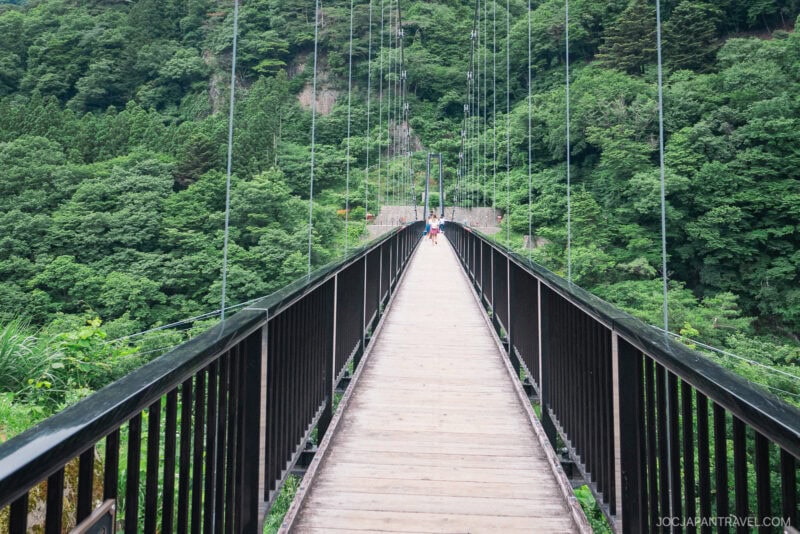
A short walk from the town center, this pedestrian suspension bridge stretches across the gorge. The views of the river and surrounding cliffs are stunning, especially in autumn when the foliage turns fiery shades of red and gold.
Staying at Asaya Hotel
A Hotel with an Illusion
We stayed at the historic Asaya Hotel, which has welcomed guests since the 1800s. From the street, it looks like a modest four-story building, but in reality, it’s twelve floors built into the hillside. The main lobby is on the sixth floor, with an open atrium reaching all the way down to a musical fountain and pipe organ at the base.
Rooms and Comfort
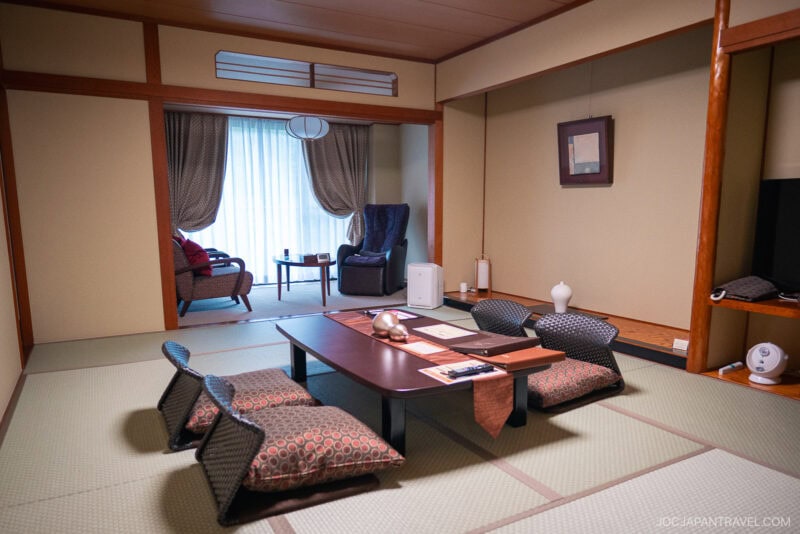
Our Japanese-style tatami room served as a living space by day and a bedroom at night. Sliding doors opened onto a balcony overlooking the Kinugawa River, with the town’s hotels nestled along the valley.
Soaking in the Hot Springs
The rooftop onsen was our favorite feature, especially at sunrise when the mountain view came alive. Indoors, the large bath area included a fun shampoo bar where guests could try different products. The rooftop baths alternate by gender throughout the day, so check the schedule when you visit.
If you’re new to bathing culture, our Onsen Etiquette Guide is a good place to start.
Dining at Asaya Hotel
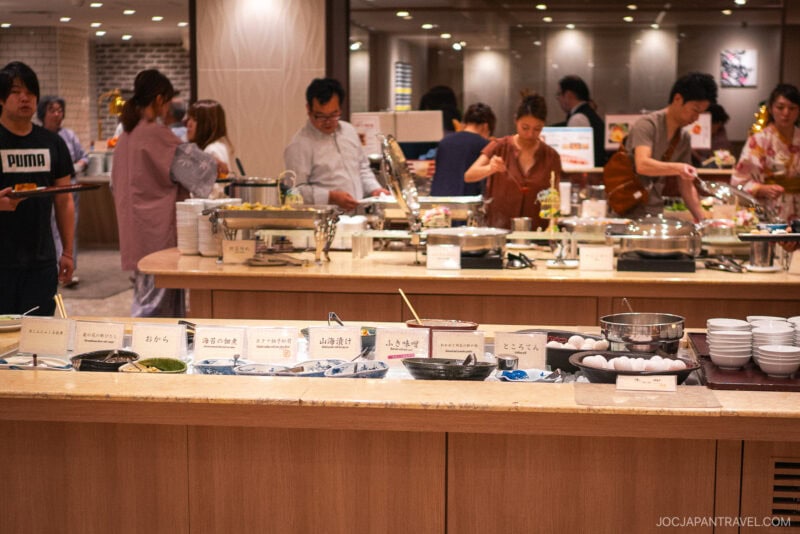
Breakfast was served buffet-style, with a wide spread of Japanese and Western dishes. Their famous French toast was a standout—crispy outside, soft and custard-like inside. The chef even shared the recipe with us, and it’s become a reader favorite on our blog. I hope you give it a try!
Dinner was kaiseki-style, with mixed results. Our first night’s shabu shabu was underwhelming, but the second dinner, featuring grilled beef, sea bream sashimi, and a stuffed eggplant dish, was excellent.
Kinugawa Onsen San-raku
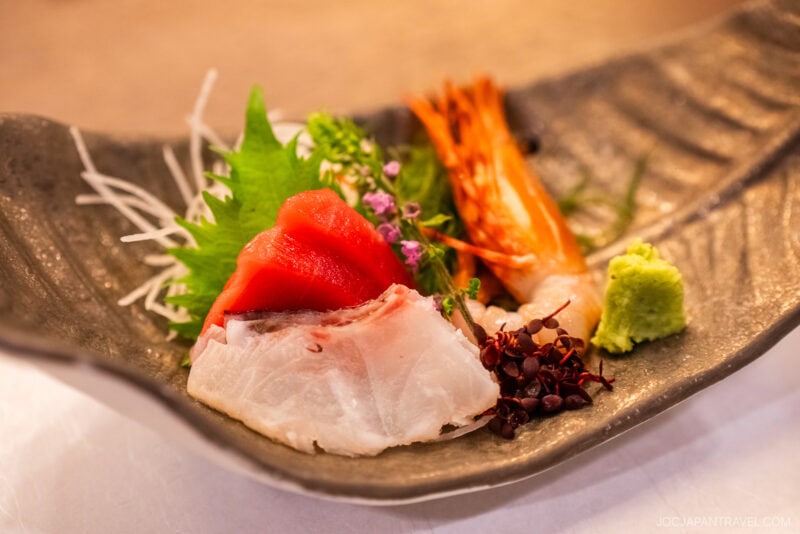
On another trip, we stayed at Kinugawa Onsen San-raku, a ryokan-style hotel with a more intimate feel than the much larger Asaya Hotel. While the property shows its age in places, the facilities are very well maintained, and everything felt clean and comfortable.
What stood out most was the service. Staff members were attentive and warm, making sure we felt welcome from the moment we arrived. The meals were another highlight. Dinner featured beautifully prepared kaiseki courses that showcased local ingredients, while breakfast offered a variety of fresh and seasonal dishes.
If you’re looking for a quieter, more personal onsen stay in Kinugawa, San-raku is an excellent choice.
The Ruins of Kinugawa
From our balcony, we noticed a row of abandoned hotels across the river. Left behind after the collapse of Japan’s bubble economy in the 1990s, these empty buildings are a stark reminder of the area’s struggles. The town also faced setbacks after the bankruptcy of a key regional bank and the 2011 Tohoku earthquake.
Today, Kinugawa Onsen is experiencing a revival, with new resorts, renovated facilities, and improved transit connections breathing life back into this historic hot spring town.
How to Get to Kinugawa Onsen
By Train
- From Asakusa (Tokyo): Take the Tobu Limited Express (SPACIA X or SPACIA) to Kinugawa Onsen Station; about 2 hours.
- From Shinjuku (Tokyo): Take a direct Limited Express “Kinugawa” service to Kinugawa Onsen Station; about 2 hours.
- From Nikko: Ride JR Nikko or Tobu Nikko to Shimo-Imaichi, then transfer to the Tobu Kinugawa Line for Kinugawa Onsen Station; 45 to 60 minutes.
By Car
- About 2.5 hours from central Tokyo via the Tohoku Expressway and Nikko Utsunomiya Road; exit at Imaichi IC and follow signs to Kinugawa Onsen.
Pro Tip: Tobu Railway discount passes often bundle round-trip fare and local attractions, which can save money on day trips or short stays.
Our Final Take on Kinugawa Onsen
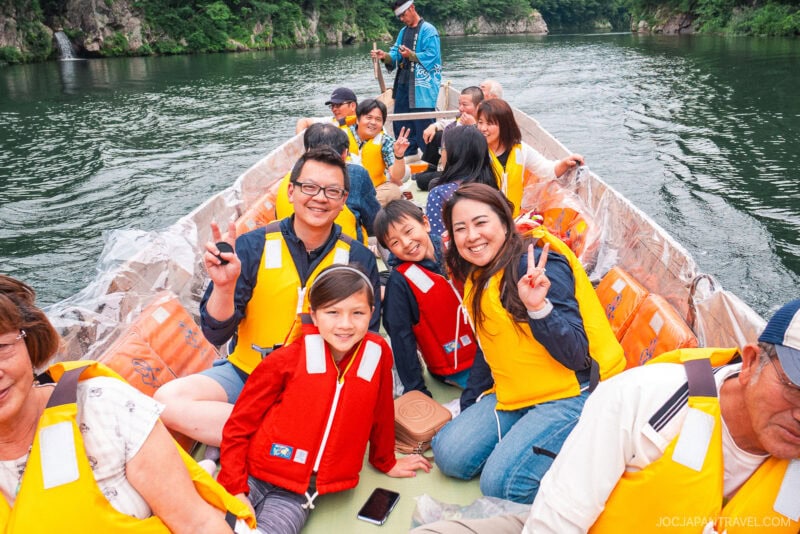
We always have a wonderful time at Kinugawa Onsen, where history, nature, and relaxation come together—all just a short trip from Tokyo. Families love the ropeway and boat rides, while couples can unwind in the riverside hot springs. It’s also a convenient base for exploring Nikko’s World Heritage sites.
More to Explore Nearby
The hot springs and scenic river gorge of Kinugawa Onsen position you perfectly to continue exploring the rich historical, architectural, and cultural themes of the nearby Nikko area.
- Tobu World Square – Visit this unique theme park featuring detailed miniature replicas of famous world landmarks and architecture.
- Edo Wonderland Nikko Edomura – Step back in time at this historical theme park, where you can experience life in the Edo Period with costumed actors and traditional architecture.
- Nikko Toshogu Shrine – Visit the magnificent World Heritage shrine, the elaborate final resting place of Tokugawa Ieyasu, featuring stunning detail and carvings.
- Nikko Futarasan Jinja – Explore this peaceful shrine near Toshogu, dedicated to the deities of Nikko’s three sacred mountains.