This post may contain affiliate links. Please read our disclosure policy.
Odawara Castle, one of the closest castles to Tokyo, showcases history, samurai culture, and panoramic views, making it a perfect stop before heading to Hakone.
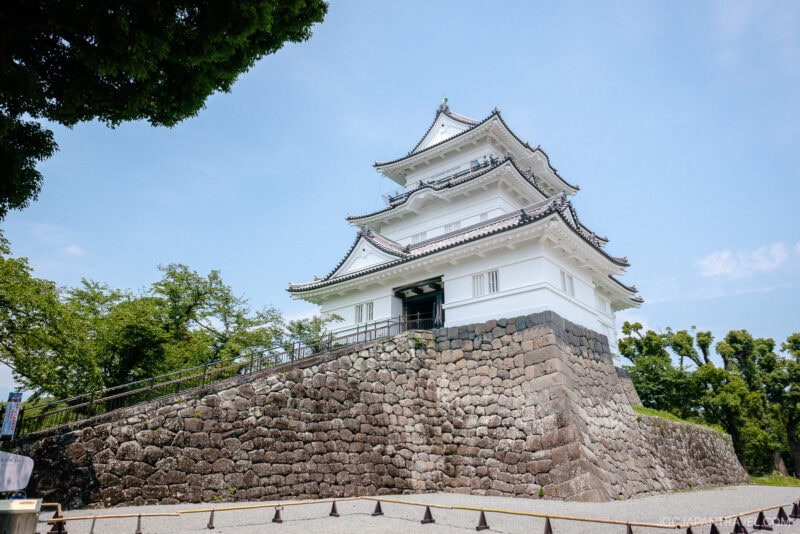
A Brief History of Odawara Castle
Odawara Castle has seen more rulers than most Japanese castles. In the 1500s, the powerful Hojo clan controlled it until Toyotomi Hideyoshi’s army besieged the castle in 1590. That victory paved the way for the unification of Japan.
Over the centuries, the castle changed hands between the Tokugawa, Okubo, and Inaba clans. Earthquakes destroyed much of the original structure, and the current keep was rebuilt in 1960. The restored gates were added later in 1971, 1997, and 2009, giving visitors a clear sense of what the fortress once looked like.
Walking the Castle Grounds
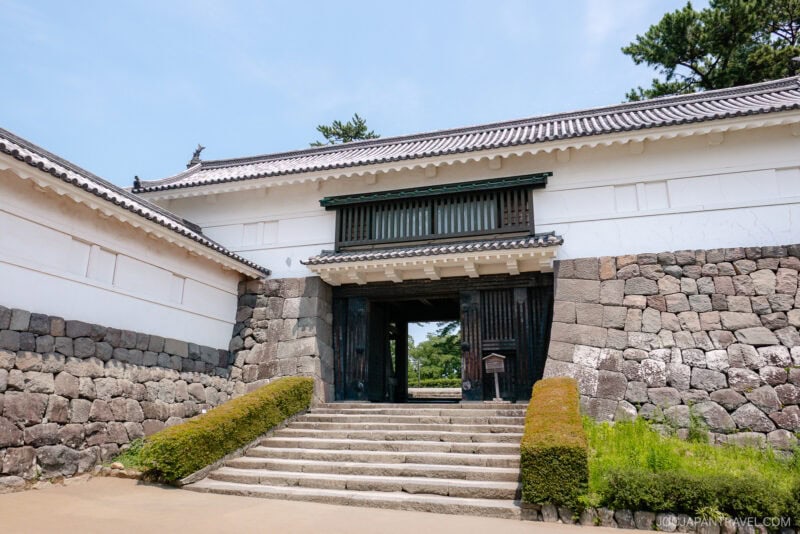
We began our visit at Akagane Gate and continued to Tokiwagi Gate, once a key defensive point. From there, the white tower of Odawara Castle appeared above the trees.
The grounds are easy to explore, with wide paths and open lawns. The park is free to enter, but keep in mind that the castle tower has no elevator. You’ll need to climb stone steps to reach the entrance, so plan extra time if traveling with kids or elderly family members.
Touring the Castle Tower
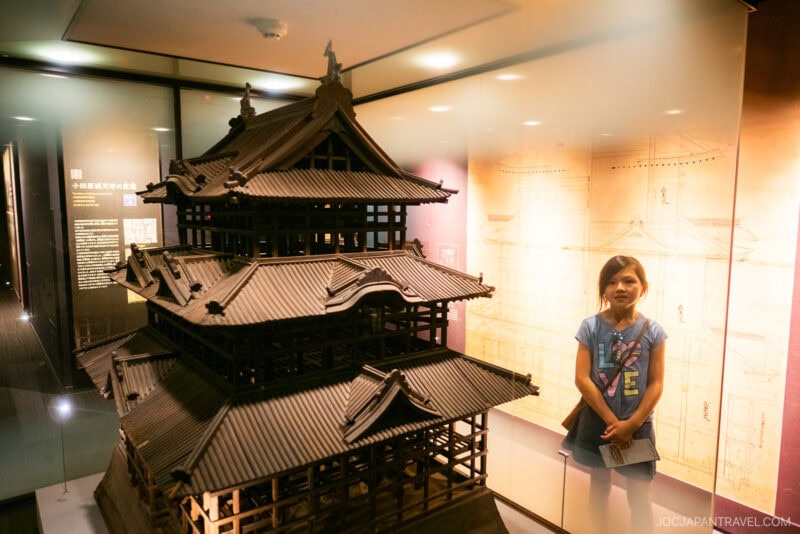
Each of the five floors has themed exhibits:
- 1st Floor: Edo-period displays, small theater, and gift shop
- 2nd Floor: Warring States exhibits
- 3rd Floor: Seasonal rotating exhibitions
- 4th Floor: Later history of Odawara Castle
- 5th Floor: Observation deck with sweeping views
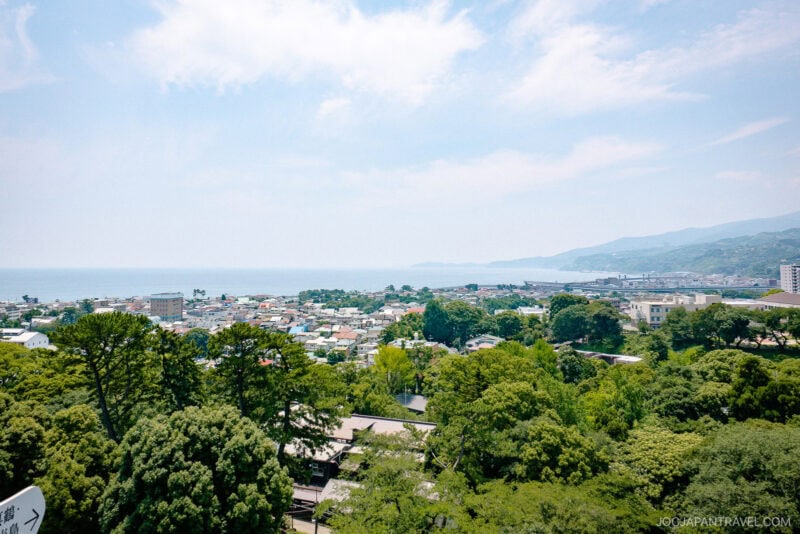
The observation deck was our favorite spot, with views of Sagami Bay, Mount Hakone, and the Izu Peninsula. Inside, we also admired miniature castle models and a shrine-shaped display featuring Marishiten, the Buddhist goddess of warriors.
Where to Eat Near Odawara Castle
Hashimoto Soba Restaurant (橋本)
This long-running soba shop, now in its sixth generation, has been serving locals for over 100 years. We tried regional specialties like shirasu sashimi (baby sardines), aji tataki (horse mackerel), and deep-fried kamaboko (fish cakes). The highlight was their two-color soba and crisp kakiage. Everything tasted fresh and seasonal.
Yanagiya Bakery (柳屋ベーカリー)
Before leaving town, we stopped at Yanagiya Bakery, a nostalgic shop known for its anpan (sweet red bean bread). The bread is soft, the filling generous, and it sells out quickly. We were lucky to get the last few in the afternoon.
How to Get to Odawara Castle
Odawara Castle is a 10-minute walk from Odawara Station, a major JR and Shinkansen stop.
Train
- Shinkansen – From Tokyo Station, take the Tokaido Shinkansen to Odawara. The ride takes about 35 minutes. Use Kodama or Hikari trains that stop at Odawara. The Japan Rail Pass is valid on these trains.
- By JR Local/Express – From Tokyo or Shinagawa, ride the JR Tokaido Line to Odawara. Travel time is about 80 to 90 minutes.
- By Odakyu Line – From Shinjuku, take the Odakyu Odawara Line. The Limited Express Romancecar reaches Odawara in about 70 minutes.
By Car
Odawara is about 80 km from central Tokyo. Use the Tomei Expressway and Odawara-Atsugi Road.
From Station to the Castle
- Exit Odawara Station East Exit and follow signs to the castle park.
- Walk past the moat toward Akagane Gate. The walk takes about 10 minutes.
Pro Tip: Continuing to Hakone? Transfer at Odawara to the Hakone Tozan Line or Odakyu. Use station coin lockers to store luggage during your castle visit.
Is Odawara Castle Worth Visiting?
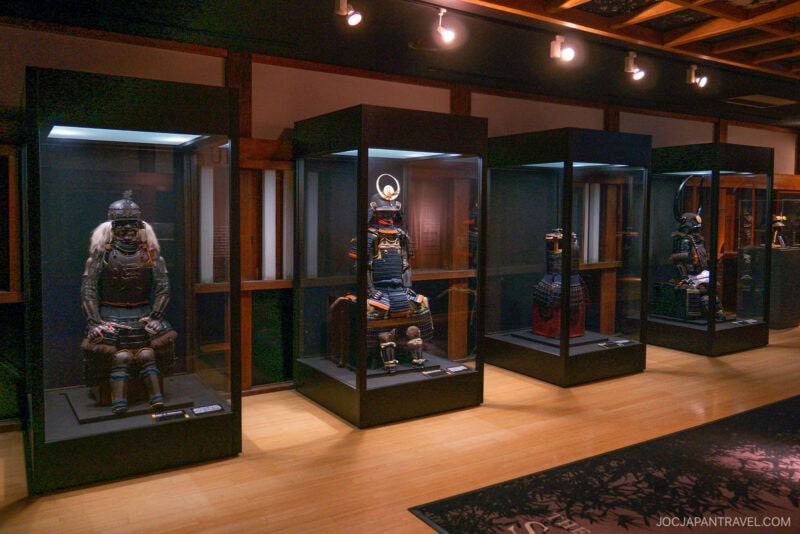
Odawara Castle is the closest major castle to Tokyo, which makes it an easy and rewarding stop for history lovers and families. The exhibits are engaging, the park is open and inviting, and the views from the tower are fantastic. Pair your visit with soba and local anpan for a memorable half-day trip before heading to Hakone or Izu!
More to Explore Nearby
As a historically significant coastal castle and symbol of the region’s samurai past, Odawara Castle is the gateway to the Hakone hot springs and is close to unique food production centers and local historical areas.
- Suzuhiro Kamaboko Museum – Discover the art of making kamaboko (fish cakes) at this unique museum and factory, offering hands-on experiences and tastings nearby.
- Hakone-Yumoto – Explore the charming town center and major transportation hub at the base of the mountain, famous for its hot spring atmosphere and local shops.
- Hakone Freepass Guide – Maximize your sightseeing and travel efficiency around this vast area with a comprehensive guide to utilizing the cost-saving Hakone Freepass.
- Hakone Open-Air Museum – Visit this unique, sprawling outdoor museum featuring an expansive collection of modern and contemporary sculpture art.