This post may contain affiliate links. Please read our disclosure policy.
Step into Sakuranobaba Josaien, a recreated Edo-period town at the base of Kumamoto Castle, where history, food, and cultural experiences come together.
A Taste of Old Kumamoto
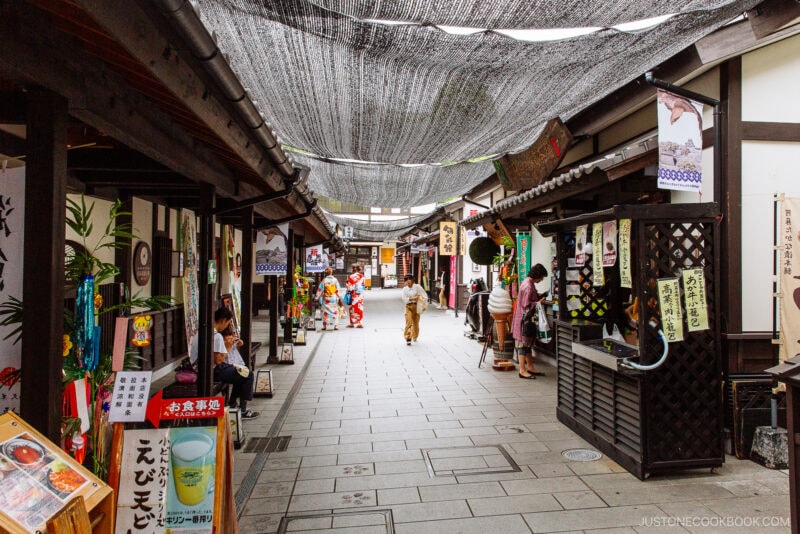
After exploring Kumamoto Castle, we walked down to Sakuranobaba Josaien, located just outside its southern gate. The complex looks like a castle town from the Edo period, with wooden storefronts, tiled roofs, and narrow alleyways that invite you to slow down and explore.
Shops sell regional crafts and souvenirs, while food stalls and restaurants feature local specialties such as karashi renkon (lotus root filled with spicy mustard), Ikinari dango (sweet potato dumplings), and Kumamoto ramen. We also found artisan goods like pottery and textiles made by local craftspeople, which made browsing especially enjoyable.
One of the city’s main tourist information centers is also inside Josaien. The staff were welcoming, and they shared English maps and travel tips that were useful for the rest of our stay.
Wakuwakuza Cultural Center (湧々座)
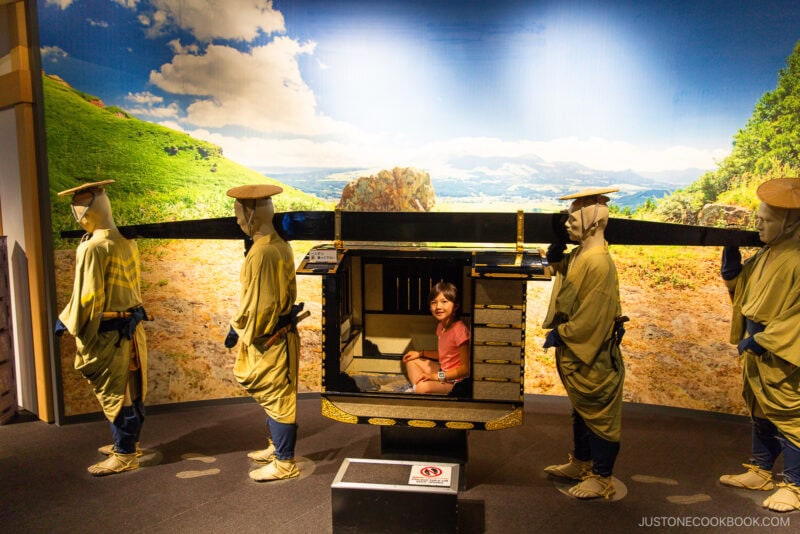
Attached to the back of Josaien is the Wakuwakuza Cultural Center, a hands-on museum that brings Kumamoto’s history to life. We tried on period costumes, explored digital exhibits, and watched videos explaining how the castle’s massive stone walls were built.
One of the most moving exhibits showed the impact of the 2016 Kumamoto Earthquakes. Through videos and 3D projections, we saw how Kumamoto Castle was damaged and how restorations are progressing. It gave us a deeper appreciation for the city’s resilience and the dedication of local builders and artisans.
How to Get to Sakuranobaba Josaien
Train/Tram
- From JR Kumamoto Station, take the Kumamoto City Tram toward Kengunmachi and get off at Kumamotojo/Shiyakusho-mae.
- Walk about 5 minutes to the entrance of Sakuranobaba Josaien beside the southern gate of Kumamoto Castle.
Taxi
A taxi from JR Kumamoto Station takes about 10 minutes. The fare is around ¥1,500 to ¥2,000.
Pro Tip: If you plan to ride the tram more than twice in a day, a one-day tram pass can save money.
Is Sakuranobaba Josaien Worth Visiting?
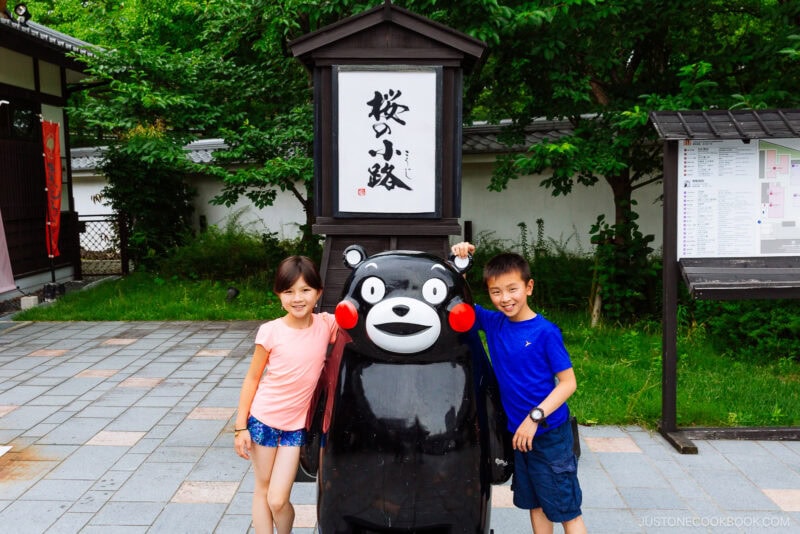
If you’re heading to Kumamoto Castle, be sure to carve out some time for Sakuranobaba Josaien. It’s one of the best spots in Kumamoto for families, food lovers, and history buffs alike. Here, you can soak up local culture, sample delicious treats, and enjoy hands-on experiences—all in one easy-to-explore area.
Pair it with a stroll through Kumamoto Castle, and you’ve got a half-day that’s both fun and full of memorable, educational moments.
More to Explore Nearby
Sakuranobaba Josaien is the perfect base for exploring the rich history and flavors of Kumamoto, placing you steps away from the reconstructed castle and within easy reach of Kyushu’s dramatic natural wonders.
- Kumamoto Castle – Explore one of Japan’s most impressive and important historical fortresses, renowned for its strong stone walls and recent reconstruction efforts.
- Suizenji Jojuen Garden – Stroll through this beautiful traditional Japanese garden that features a miniature replica of the Tokaido road, including Mount Fuji.
- Mount Aso – Journey east to explore one of the world’s largest active calderas, offering sweeping scenic views and unique volcanic landscapes.
- Nagasaki Peace Park and Museum – Visit this solemn and powerful site dedicated to the victims of the atomic bombing and a plea for world peace.