This post may contain affiliate links. Please read our disclosure policy.
The Tokyo Shitamachi Museum in Ueno Park brings the everyday life of Tokyo’s artisans and merchants from 100 years ago to life through immersive exhibits and hands-on displays.

Step Into Tokyo’s Past
The Tokyo Shitamachi Museum sits on the southeast corner of Shinobazu Pond in Ueno Park. Although compact, it’s packed with detail that makes you feel like you’ve stepped into early 20th-century Tokyo. Shitamachi means “low town,” once home to working-class families, merchants, and artisans who shaped the city’s culture.
Admission is just ¥300 (in 2025) for adults and free for children under junior high school age, making it a family-friendly and affordable stop.
First Floor: Life-Size Replicas of Old Tokyo
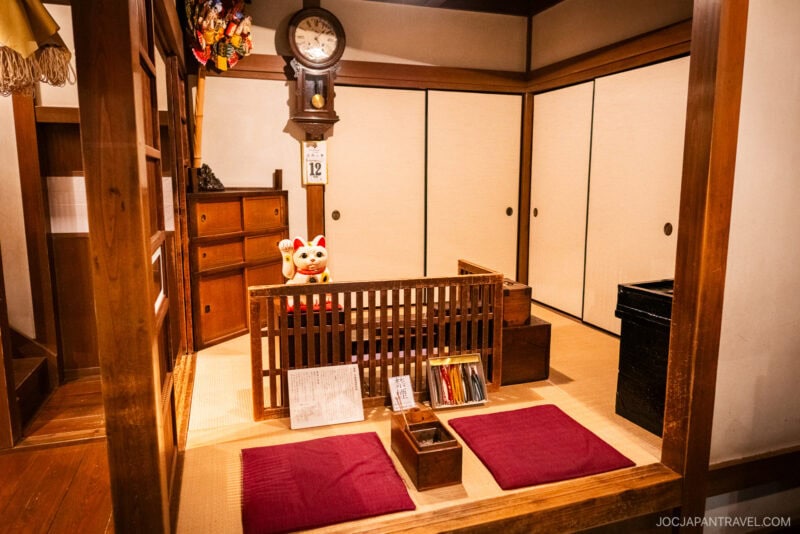
On the ground floor, we walked through a recreated neighborhood from 1910 to 1925. Every corner is filled with authentic pieces that show how people lived and worked.
Highlights include:
- A merchant’s home and workshop with original furnishings
- A nostalgic candy shop with wooden cases and toys
- A traditional phone booth and wholesale storefront
- A rickshaw and everyday household tools
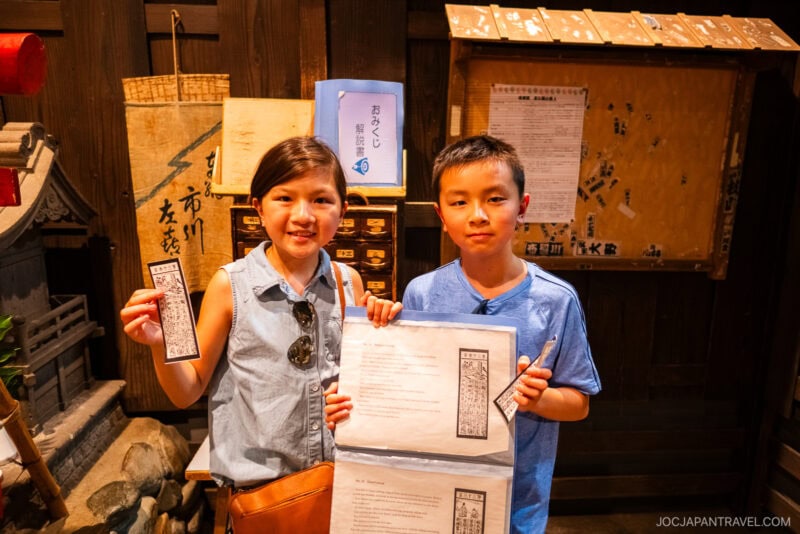
One fun surprise was a small shrine where we drew omikuji (paper fortunes). The museum provides English translations so visitors can understand their fortune slips.
Second Floor: Toys, Clothing, and Memories

Upstairs, the museum shifts into a gallery format, displaying items that capture everyday life in Tokyo.
We especially enjoyed:
- Antique toys such as tin trains, dolls, and wooden games
- Clothing and fabrics that show fashion from the early 20th century
- Panels describing the daily routines of children, peddlers, and shopkeepers
- Black-and-white photographs of Tokyo’s Taito Ward in the mid-1900s
- A recreated post-war kitchen and living room, complete with sink, dishes, and a vintage TV
Our kids loved the toys and were surprised at how different home life looked just a century ago. English signage throughout the exhibits and the helpful staff made it easy to follow along.
How to Get to Tokyo Shitamachi Museum
The Tokyo Shitamachi Museum is in Ueno Park beside Shinobazu Pond. It’s an easy walk from several major stations.
By Train
- JR Ueno Station (Park Exit) – about 5 minutes on foot
- Tokyo Metro Ueno Station (Ginza or Hibiya Line) – about 8–10 minutes on foot
- Keisei Ueno Station – about 5 minutes on foot
Pro Tip: Pair your visit with a stroll around Shinobazu Pond or plan a museum day with the Tokyo National Museum or the National Museum of Nature and Science nearby.
Is the Tokyo Shitamachi Museum Worth Visiting?
Yes, especially if you want to see what Tokyo was like before it became the modern metropolis we know today. The museum is small enough to enjoy in under an hour, yet it captures everyday life in old Tokyo with remarkable detail.
With its interactive exhibits, English support, and family-friendly admission, it’s a great stop for history lovers and curious kids alike.
More to Explore Nearby
The Shitamachi Museum, offering a nostalgic glimpse into Old Tokyo life, is surrounded by the best of Ueno Park’s cultural, recreational, and shopping destinations, all within easy walking distance.
- Ueno Park – Explore the expansive parkland, a massive cultural and natural haven in Tokyo that is famous for cherry blossoms and scenic walking paths.
- Tokyo National Museum – Visit Japan’s oldest and largest museum, located nearby in the park, to explore its extensive and prestigious collection of Japanese art and cultural artifacts.
- Ueno Zoo – Spend time at the country’s oldest zoological garden, located on the park grounds, famously known for its pandas and diverse animal exhibits.
- Ameyoko Market – Head just outside the park gates to this energetic street market for bargain shopping and diverse food stalls, offering a lively modern contrast to the museum’s nostalgia.