This post may contain affiliate links. Please read our disclosure policy.
Walk the lively lanes of Yanaka Ginza, a nostalgic shopping street in northern Tokyo where old-school storefronts, friendly cats, and fresh street food bring shitamachi life to the present day.
Yanaka Ginza (谷中ぎんざ) is a charming shotengai, or traditional shopping street, tucked just north of Ueno in Tokyo’s Taito Ward. Tokyo is famous for its towering skylines and fast-paced energy, but Yanaka Ginza is the rare spot that feels like the city forgot to modernize, and that is exactly what makes it special.
Lined with nostalgic storefronts, independent family-run shops, and the irresistible smell of fresh street food, this neighborhood captures the quiet, everyday soul of shitamachi, old Tokyo at its most honest. I came for a quick look and ended up wandering for most of the afternoon.
What Is Yanaka Ginza
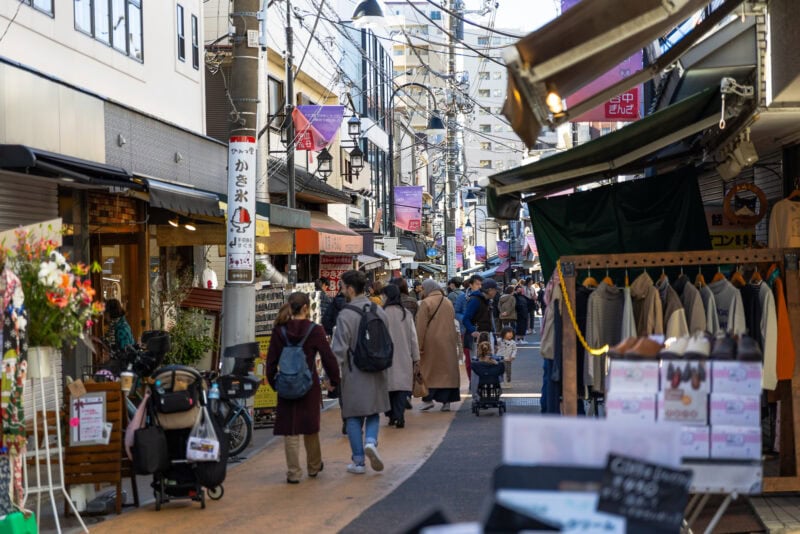
Yanaka Ginza is a roughly 170-meter covered shopping street in the Yanaka neighborhood, part of the beloved Yanesen area alongside Nezu and Sendagi. It is one of the best surviving examples of a Showa-period shotengai in Tokyo, with around 70 small shops selling everything from fresh meat and fish to traditional wagashi sweets and handmade crafts.
Unlike most shopping streets in Tokyo, many of these shops have been passed down through generations and still operate the old-fashioned way, preparing their goods in small batches throughout the day.
My Experience at Yanaka Ginza
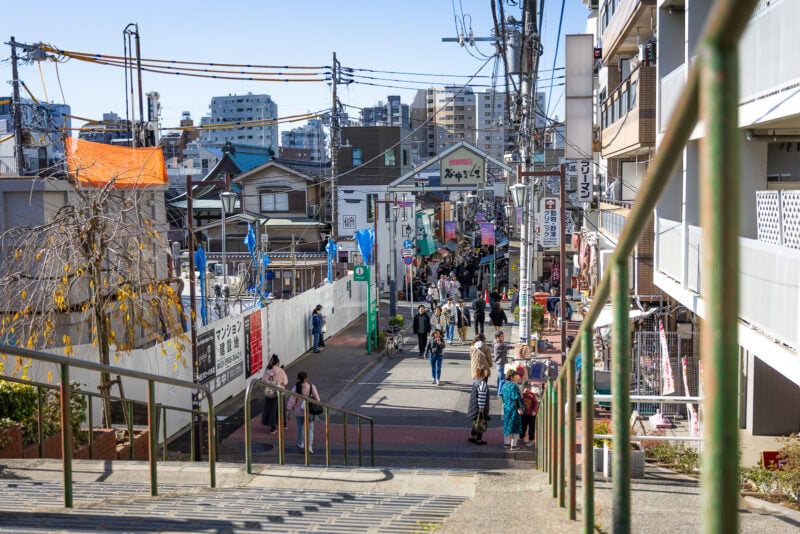
I started at the top of the Yuyake Dandan stairs, which gave me a wide view down the entire street before I even stepped in. Once I was on the street itself, the atmosphere pulled me along naturally. There was no map to follow and no landmarks to tick off. I just walked, stopped when something looked interesting, and let the neighborhood do the rest.
Yuyake Dandan and Street Food
The Yuyake Dandan stairs are the classic entry point to Yanaka Ginza, and they earn their reputation, especially at sunset. The name translates roughly to “Sunset Steps,” and on a clear evening, the view down the shopping street with the warm light catching the old shop signs is one of those quietly beautiful Tokyo moments that does not need a caption.
Once you descend, the real draw is the street food. Almost every block has something worth stopping for, and the shops prepare everything fresh throughout the day, so things sell out.
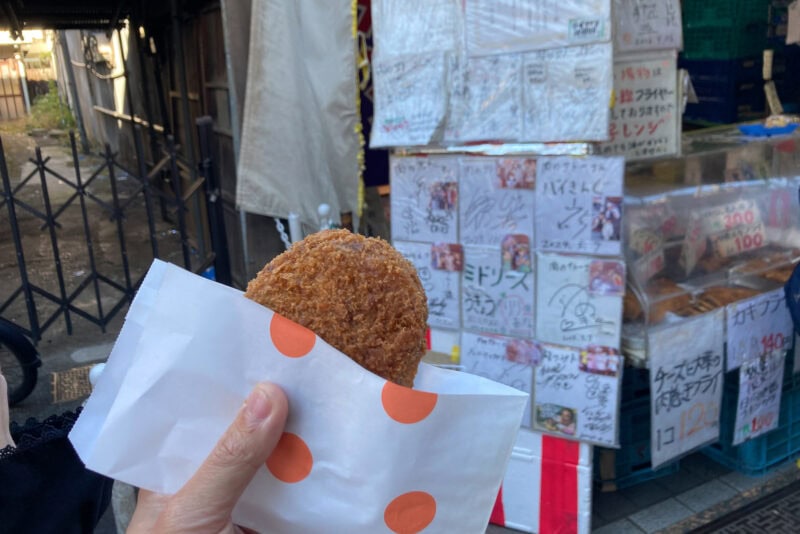
The one I keep recommending to anyone heading to Yanaka Ginza is the menchi katsu at Niku no Suzuki. This shop has been running for over 80 years, starting out as a butcher before evolving into a neighborhood deli.
The menchi katsu is a deep-fried, breaded beef patty that is crisp on the outside and genuinely juicy inside. I paid 230 yen for one in November 2024, and it was worth stopping mid-walk for. The shop gets featured on Japanese TV fairly often, and you can tell why the moment you take a bite.
Yanesen Tourist Center and the Cats of Yanaka
If you want to do more than browse and eat, the Yanesen Tourist Information and Culture Center is worth a stop. Visitors can join cultural activities like tea ceremony, calligraphy, flower arranging, and cooking lessons. Most of these require advance reservations, so plan ahead if you want to try one.
Yanaka has been nicknamed Cat Town, and the reputation goes back to the Edo period when local temples kept cats to manage the mouse population. That history gave the neighborhood a lasting cat culture, and you will still spot cats lounging around the area today. If you see one, take your time. The cats here are usually relaxed and used to people stopping to say hello.
Yanaka Cemetery and Think Bakery
Just below the shopping street is Yanaka Cemetery, one of the oldest and most atmospheric cemeteries in Tokyo. It is beautifully maintained and worth a slow walk through, with elegantly designed graves and a quiet that feels completely removed from the bustle just a few minutes away. The grave of Tokugawa Yoshinobu, the last shogun of the Edo period, is here if you want to find it.
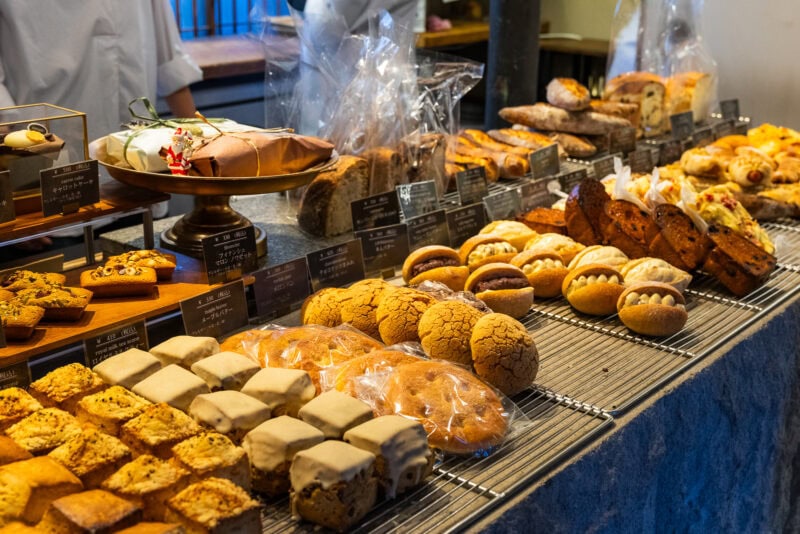
Before you leave the area, stop by Think near the south exit. It is a small bakery I ended up adding to my list of top must-visit bakeries in Tokyo, with well-made bread and pastries that are perfect for a slow finish to the afternoon.

Andy’s Travel Tips
These simple tips will help you when you visit.
- Start at the Yuyake Dandan stairs and time it for late afternoon if you can, since the view down the street at golden hour is genuinely worth planning around.
- Arrive on a weekday if you want more breathing room. Weekends get busy and the narrow street can feel crowded.
- Go early for the best street food selection, as many shops prepare in small batches and popular items like the menchi katsu at Niku no Suzuki can sell out before closing.
- Bring cash. Many of the small, family-run shops do not accept cards.
- Book cultural activities at the Yanesen Tourist Information and Culture Center in advance if you want to join a tea ceremony, calligraphy class, or cooking lesson during your visit.
- Allow extra time to wander into Yanaka Cemetery just below the street. It is peaceful, interesting, and rarely crowded.
How to Get to Yanaka Ginza
By Train
- Nippori Station (JR Yamanote Line / JR Keihin-Tohoku Line): The most convenient option. From the west exit, it is about a 5-minute walk to the top of the Yuyake Dandan stairs and the entrance to Yanaka Ginza.
- Sendagi Station (Tokyo Metro Chiyoda Line): Exit 2 puts you at the southern end of the Yanaka area, about a 5 to 7-minute walk to the shopping street.
By Taxi or Car
From Ueno Station, a taxi takes about 10 minutes depending on traffic. Parking in the area is very limited, so public transport is strongly recommended.
Accessibility Notes
The Yuyake Dandan stairs at the main entrance are not wheelchair accessible. The shopping street itself is flat and paved, but the stairs are the most practical way in from the Nippori side. An alternative route from Sendagi Station avoids the stairs entirely.
Is Yanaka Ginza Worth Visiting?
Yes, especially if you want a break from the Tokyo that everyone already knows. It is not a museum version of old Japan; it is a neighborhood that genuinely still operates the way it always has, with real shops, real locals, and street food made fresh every day. I would not make it your only stop in northern Tokyo, but paired with a day out in Ueno, it makes for one of the most memorable afternoons I have had in the city.
More to Explore Nearby
- Ueno Park – Head south to one of Tokyo’s most beloved green spaces, packed with museums, temples, and stunning cherry blossoms in spring.
- Ameyoko Market – Explore Ueno’s bustling open-air street market, a lively maze of food stalls, fresh produce, and bargain goods.
- Tokyo National Museum – Discover Japan’s premier collection of art and historical artifacts, housed in a grand complex at the northern end of Ueno Park.
- Tokyo Shitamachi Museum – Get a feel for old Tokyo life with reconstructed merchant homes and everyday artifacts from the Meiji and Taisho eras — a perfect complement to the nostalgic atmosphere of Yanaka.