

This post may contain affiliate links. Please read our disclosure policy.
Discover the beauty and charm of Matsushima, a picturesque coastal town in Tohoku Japan. From stunning views to its rich history, this travel guide will help you plan your perfect trip to Matsushima.
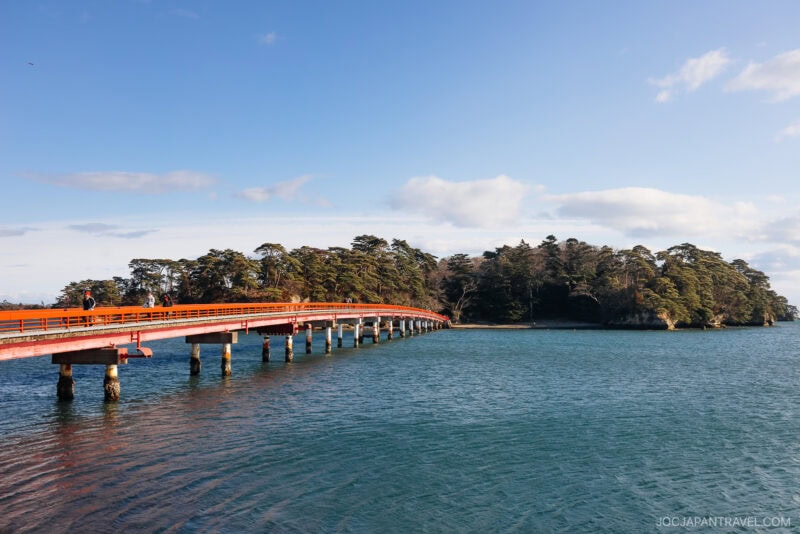
Matsushima is a small coastal town in the Tohoku region, just 40 minutes from Sendai. Its bay, scattered with 260 pine-covered islands, has long been celebrated as one of the “Three Views of Japan.”
For centuries, monks, rulers, and poets have found inspiration here. Even the haiku master Matsuo Basho was struck silent before its beauty. Standing by the water, it’s easy to understand why. The scenery feels both eternal and fleeting, touched by romance and spirituality.
During my visit, I cruised among the islands while enjoying fresh oysters and some of the best soft cream I’ve ever had in Japan. Visiting in early February meant a few spots were closed, but there was still plenty to explore. Ready to take a tour? Let’s go!
How to get to Matsushima

Matsushima is easy to reach by car or train. From Sendai Station, the drive takes about 35 minutes on the expressway (¥440 toll).
By train, the JR Tohoku Line goes directly to Matsushima Station in about 25 minutes (¥420). Alternatively, the JR Senseki Line takes about 40 minutes (¥420) to Matsushima Kaigan Station, conveniently located at the town’s entrance.
Matsushima Bay
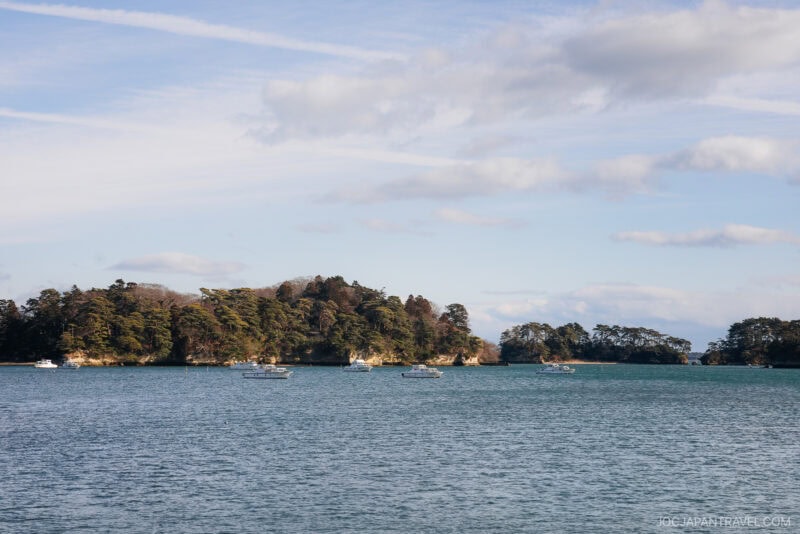
When you arrive in Matsushima, the open bay greets you with views of pine-covered islets, Godaido Temple, and the red Fukuurabashi Bridge to Fukuurajima.
The best way to take it all in is on a sightseeing cruise (about 50 minutes, ¥1,500 for adults, ¥750 for kids, free for under 6 in 2024). Onboard, some passengers enjoyed bento lunches as we drifted past the islands. A local guide shared stories of the bay’s history and how the islets shielded Matsushima during the 2011 tsunami.
There were plenty of photo-worthy moments—Nioh-jima resembles a guardian puffing a cigar, while Kanejima has four holes you can line up if you catch it just right (I only managed three!).
Seeing the oyster cages along the water reminded me why the seafood here is so famous. Before docking, I couldn’t resist picking up oyster takikomi gohan, a delicious local specialty.
Local Matsushima Delicacies
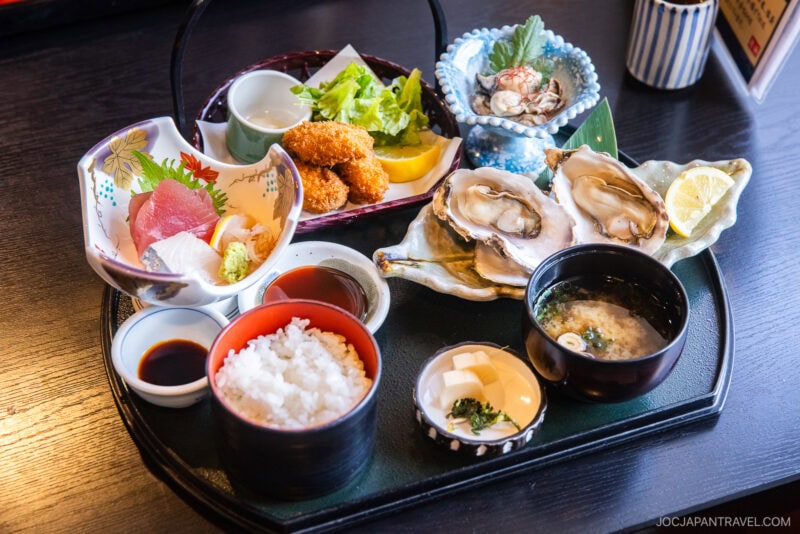
Shunkai Restaurant – Oysters and Fresh Seafood
If there’s one reason to visit Matsushima besides the stunning scenery, it’s the seafood, especially the oysters.
Oyster farming here dates back to the 1600s, thanks to the cove of Nonojima Island and the nutrient-rich waters of the Sanriku Coast. The calm seas also create ideal conditions for wakame, kombu, scallops, and oysters, making Miyagi Prefecture Japan’s second-largest oyster producer.
I headed to Shunkai to try the famed oysters and chose the lunch set, featuring raw, pickled, and deep-fried oysters (¥2,300), served with soup, rice, and tsukemono. Each bite was creamy, sweet, and perfectly briny, and the variety kept every mouthful exciting.
Yukitakeya – Rice Crackers and Soft Cream
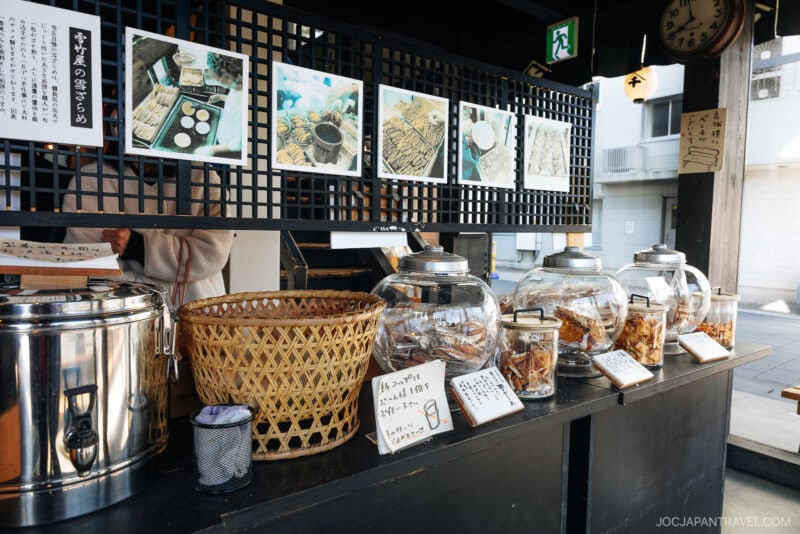
Along the street across from Matsushima Bay, souvenir shops offer local foods and traditional goods, from chopstick holders to giant rice crackers.
The rice crackers caught my eye first. Crispy, sticky, and delicious, though I struggled to finish it all by myself!
But the real star was the soft cream at Yukitakeys. Red bean-flavored, creamy, rich, and perfectly sweet with subtle bean undertones, it’s easily one of the best soft serves I’ve had in Japan.
Matsukama Sohonten – Sasa Kamaboko
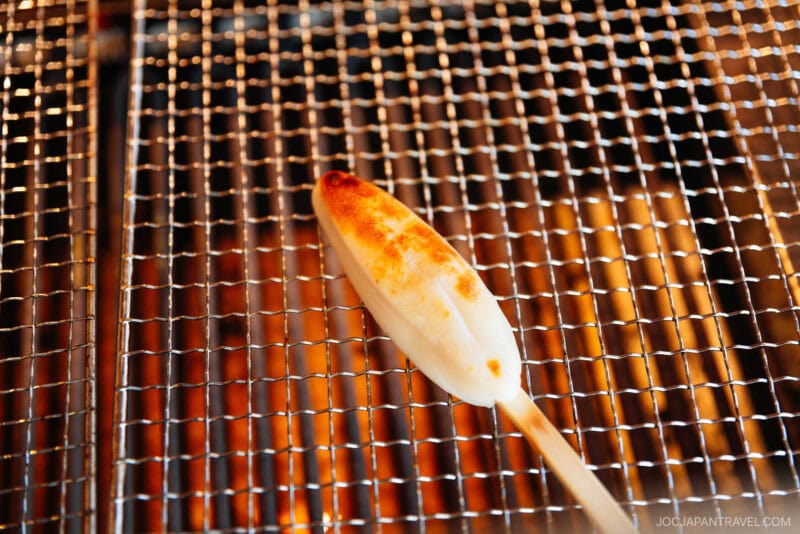
One of Miyagi Prefecture’s local foods is sasa kamaboko (笹かまぼこ), or bamboo leaf fish cake. In the early Meiji Era, an excess of flounder went to waste due to limited storage and transport. Locals began grinding the flounder meat into a fish cake, which came to be known as sasa kamaboko
At Matsukama Sohonten, you can grill your own sasa kamaboko and enjoy its slightly sweet, mild flavor. It’s a great snack to keep you going on your Matsushima adventures!
Historical Significance

Matsushima is not just about food and scenic views; it also holds deep historical significance. Date Masamune, one of Japan’s most powerful feudal lords, left his mark on the area by constructing iconic sites like Zuiganji Temple, Godaido, Entsuin, Tenrinin, and the Kanrantei Tea House.
Zuiganji and Kanrantei were built to face the harvest full moon in fall, reflecting Date’s love for the moon (his helmet features a crescent!). History buffs can visit the Date Masamune Historical Museum to learn more and even try on a replica of his armor.
Zuiganji

I had the chance to visit Zuiganji, a Zen temple dating back to the 9th century. Date Masamune commissioned the current structure, completed in 1609, as his family’s temple.
Inside, the hondo (main hall) is a national treasure. Its gold-leaf walls feature intricate paintings depicting the seasons and Date’s refined aesthetic, while wooden carvings of mythical animals add a magical touch.
The museum displays original samurai swords and a statue of Masamune, making the history feel remarkably alive.
Panoramic Views
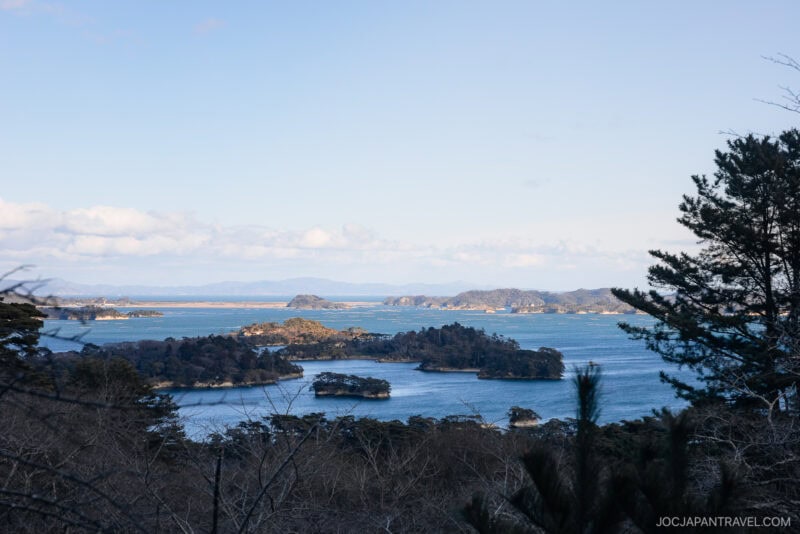
To view Matsushima Bay and the beautiful islands, you can visit one of the many observation points from different perspectives. I headed to Saigyo Modoshi no Matsu Park partly for the views and partly for Cafe le Roman.
The park is named after the poet Saigyo Hoshi, who, according to legend, gave up his journey after being stumped by a boy’s Buddhist riddles under a great pine tree.
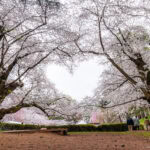
The park offers some of the best views of Matsushima Bay, adorened with 260 cherry blossom trees that turn the bay into a soft pink cloud in spring. At Cafe le Roman, I enjoyed an apple tarte tatin with spiced hot chocolate while taking in the scenery through its glass walls.
If you stay until evening, the night view is magical. The islands and trees cast shadows under the moonlight, making the bay feel completely serene.
Matsushima is a must-visit if you’re in Tohoku! For more local flavors, check out The Ultimate Sendai Food Guide.
More to Explore Nearby
Matsushima is one of Japan’s three most scenic views, offering incredible coastal beauty, but the surrounding Tohoku region is full of equally captivating historical cities, local cuisine, and dramatic natural wonders.
- Sendai City – Explore the largest city in the Tohoku region, known for its wide, tree-lined avenues, historical sites, and delicious local cuisine like beef tongue (gyutan).
- Shiogama Seafood Market – Visit this bustling, portside market near Matsushima, famous for handling the largest volume of tuna in Japan and offering incredibly fresh seafood.
- Aizu Wakamatsu – Journey south to this historic samurai city in Fukushima Prefecture, famous for its reconstructed Tsuruga Castle and deep feudal-era history.
- Ginzan Onsen – Travel north to this picturesque, historic hot spring town known for its beautifully preserved wooden inns and nostalgic, gaslit streets under a blanket of snow.

[…] Sasakamaboko is a fish cake shaped like a bamboo leaf. It is a famous specialty from Miyagi Prefecture. Many travelers buy it as a snack or souvenir. […]