This post may contain affiliate links. Please read our disclosure policy.
Tsukiji Outer Market Tokyo is a lively street food and seafood market where visitors can enjoy fresh sushi breakfasts, snacks, and local kitchenware near central Tokyo.
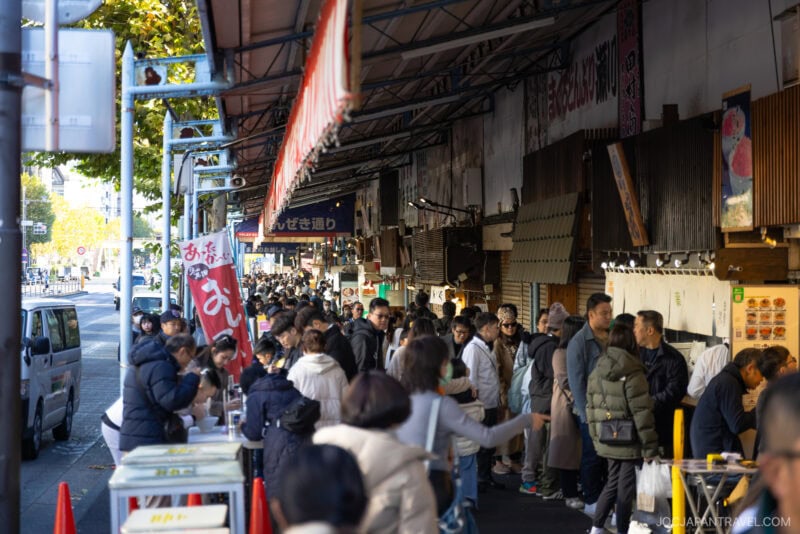
Historically, Tsukiji Fish Market was split into two areas, the inner wholesale market and the outer market. The inner market was home to the famous tuna auction, while the outer market grew into a busy neighborhood for seafood, produce, and kitchen tools. In 2018, the inner market moved to Toyosu, but Tsukiji Outer Market (築地場外市場) stayed right where it was and is still very lively today. Fresh seafood is delivered from Toyosu each morning, and the narrow streets fill with stalls, smells, and hungry visitors.
What To Expect At Tsukiji Outer Market
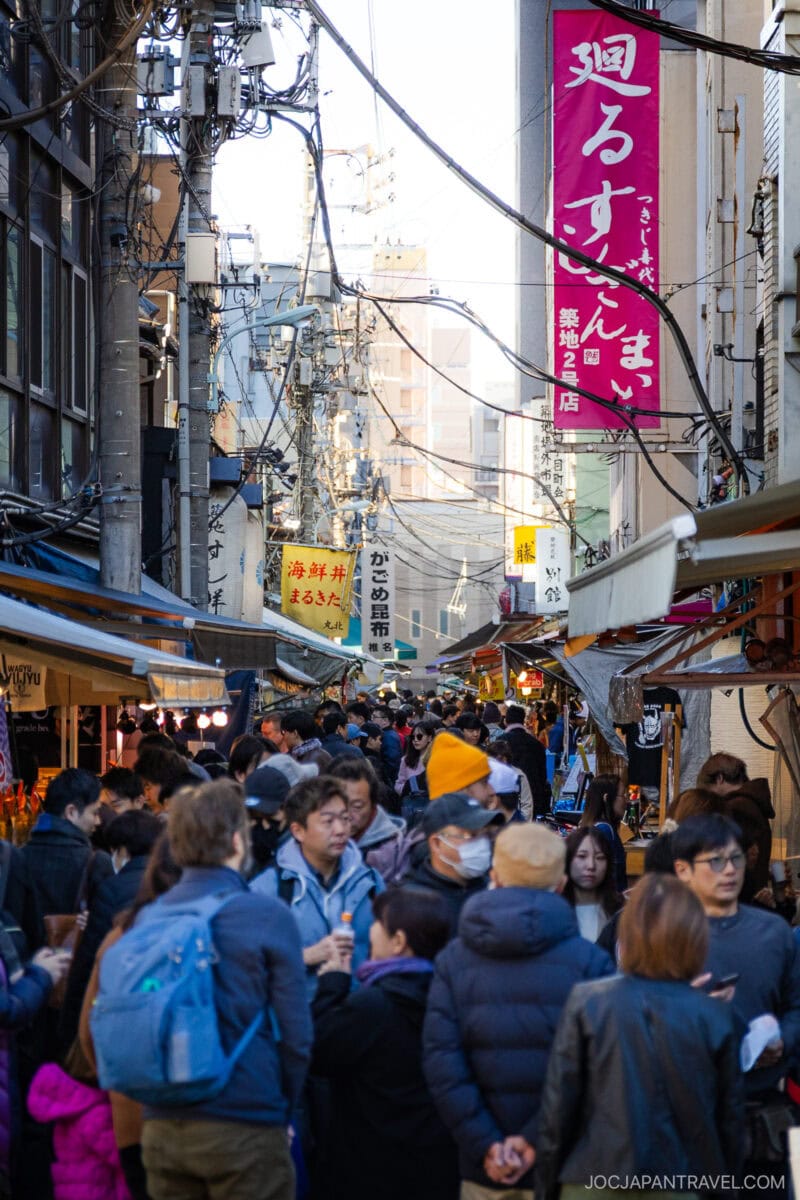
One of the main questions about Tsukiji Outer Market is whether it is still worth visiting now that the auctions have moved. For me, the answer is yes, but I try to arrive prepared.
The market is a maze of small streets lined with food stalls, casual restaurants, and specialty shops. I see everything from sushi and kaisendon to skewered scallops, grilled oysters, and rich uni. Many shops start opening from about 6:00 am and most are at their busiest between 9:00 am and noon. Most stalls close by mid afternoon, usually around 2:00 pm.
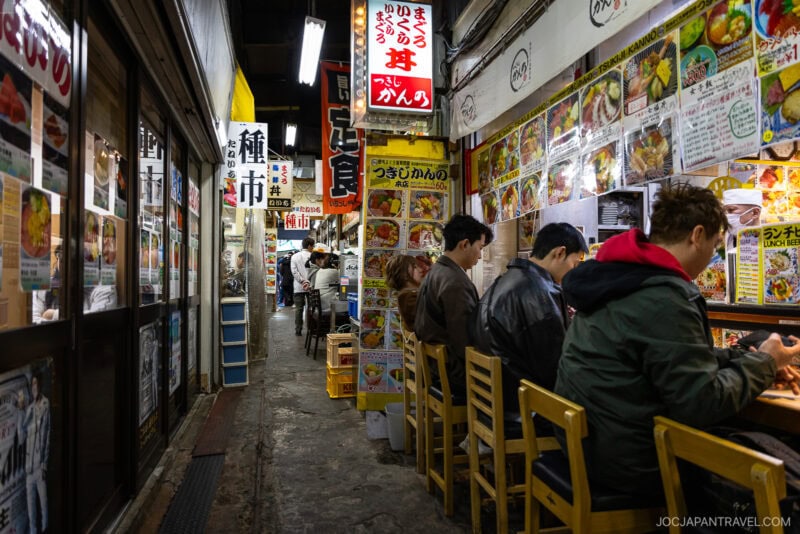
When I visited around 8:00 am, the market was already crowded and it was a little hard to move. If you are carrying a suitcase or pushing a stroller, try to store it first so you can walk more easily through the narrow lanes.
Tsukiji Outer Market is still a working market, so I always keep a few simple rules in mind:
- Avoid blocking shop entrances
- Eat in front of the stall instead of walking and eating
- Ask before taking close-up photos of people or food displays.
Eating Your Way Through Tsukiji
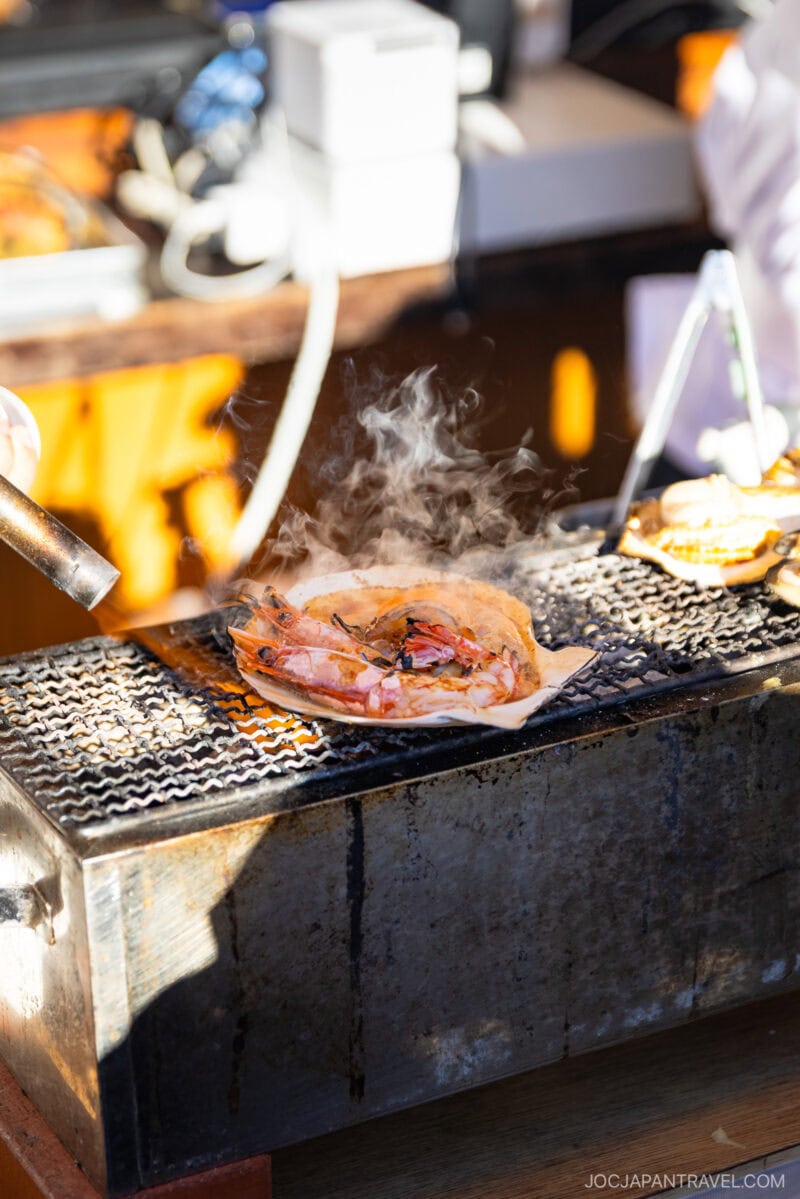
Eating is the main reason I go to Tsukiji Outer Market. There are all kinds of seafood, from grilled scallops brushed with soy sauce to steaming bowls of clam miso soup. Many restaurants also serve sushi and kaisendon topped with tuna, salmon, ikura, and a little uni.
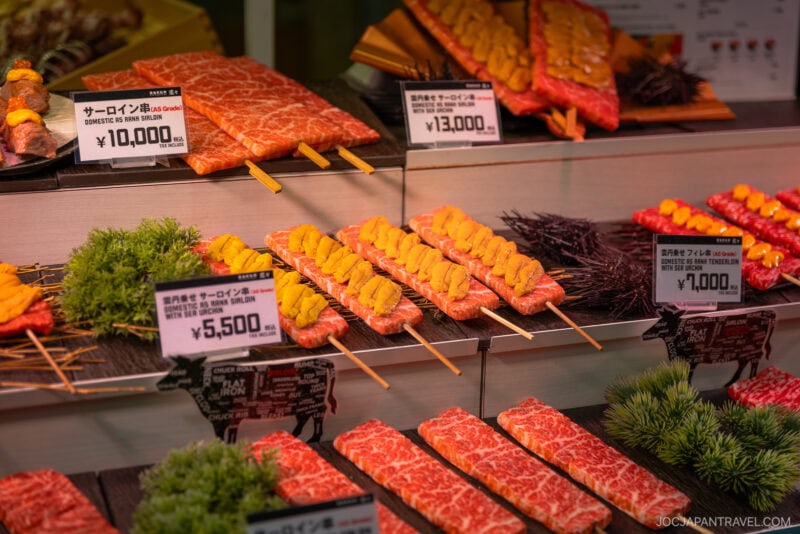
If you are not into seafood, you still have plenty of options. You can find tamagoyaki stands with thick slices of sweet rolled omelet on a stick, wagyu skewers sizzling on the grill, rice balls, and daifuku filled with red bean paste or seasonal fruit.
Prices can be higher than at a local neighborhood market, and some stalls clearly focus on tourists. I have seen trays of sushi or seafood skewers that felt overpriced for the portion, so I slow down, compare prices, and watch where locals line up before I decide what to buy.
Beyond Seafood: Shops And Souvenirs
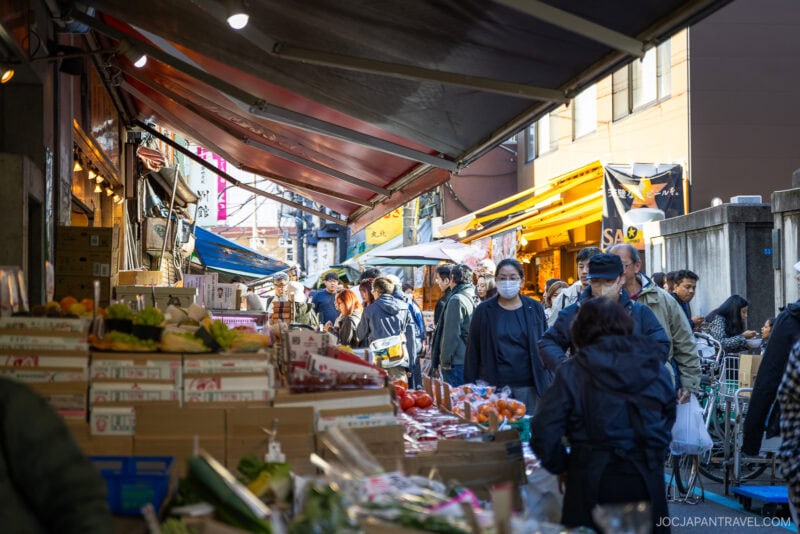
Even if I am not very hungry, Tsukiji Outer Market is fun to explore because of its variety. There are shops selling dried seaweed, bonito flakes for dashi, soy sauce, Japanese pickles, spices, and tea. I also find stores with high-quality kitchenware for both chefs and home cooks.
Storing Luggage And Using Plat Tsukiji
If I arrive with luggage or a stroller, I try to store it before entering the tight lanes. Near the market, there are coin lockers and a helpful information center called Plat Tsukiji. The Plat Tsukiji Information Center usually opens from 8:00 am to 2:00 pm, with slightly later opening hours on Sundays, holidays, and some Wednesdays. It provides maps, travel help, and guidance about where to find lockers, stroller parking, and smoking areas.
Nearby Attractions: Tsukiji Honganji And Namiyoke Shrine
Tsukiji is not only about food. Just around the corner from the market stands Tsukiji Honganji, a Buddhist temple with a unique design that blends Indian and modern architectural styles.
A short walk away is Namiyoke Shrine, which has long been seen as a guardian shrine of the area. It is dedicated to Namiyoke Inari, a deity believed to protect against misfortune and help people overcome hardships.
Opening Hours And Entrance Fees
There is no entrance fee to visit Tsukiji Outer Market. It is simply a neighborhood of streets and shops that anyone can walk through.
Most shops and restaurants tend to open between about 6:00 am and 9:00 am, and many close by early to mid-afternoon, often around 2:00 pm. Some stalls close earlier if they sell out, and many shops close on Sundays, holidays, and occasionally on Wednesdays. I recommend checking the official Tsukiji Outer Market website before a visit.
How to Get to Tsukiji Outer Market
By Subway (Recommended)
- Tsukiji Shijo Station (Oedo Line)
- Take the Toei Oedo Line to Tsukiji Shijō Station (E18).
- Use Exit A1 or Exit A2. The market is the closest from this line, just a 1 to 2 minute walk from the exit.
- Tsukiji Station (Hibiya Line)
- Take the Tokyo Metro Hibiya Line to Tsukiji Station (H10).
- Use Exit 1 or Exit 2. The market is about a 3 to 5 minute walk from this station, just across the main street.
By Taxi
- A taxi is convenient, especially for an early start.
- From Tokyo Station to Tsukiji, the ride takes about 10 to 15 minutes. The fare is roughly ¥1,500 to ¥2,000.
- Ask the driver for: “Tsukiji Jogai Ichiba” (Tsukiji Outer Market).
Pro Tip
The Outer Market’s shops typically open by 9:00 AM and begin closing around 2:00 PM. Arrive between 9:00 AM and 11:00 AM for the best selection of food and products.
Is it Worth Visiting
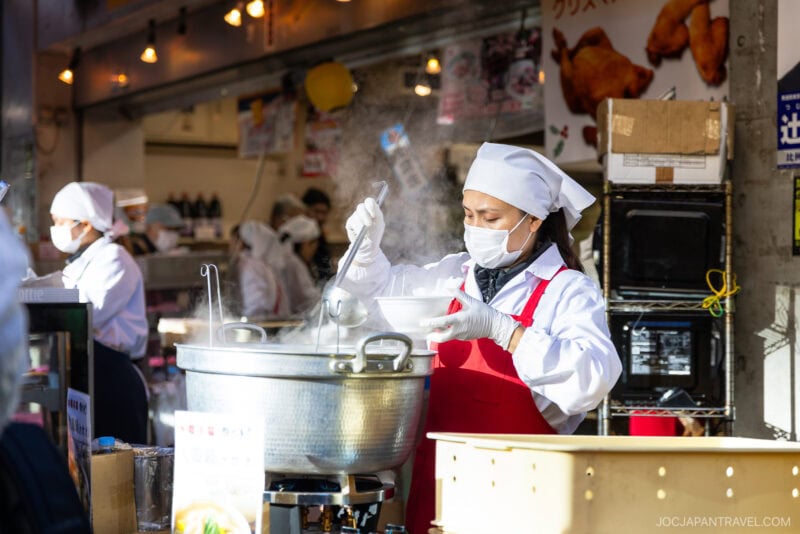
If you enjoy street food, seafood, and lively local neighborhoods, I think Tsukiji Outer Market is still worth visiting, especially as a morning stop combined with nearby Ginza or a later trip to Toyosu Market; just arrive early, store your luggage if you can, compare prices before you order, and you will be rewarded with a fun mix of fresh bites, traditional ingredients, and a taste of everyday Tokyo.
More to Explore Nearby
The Tsukiji Outer Market remains a vibrant hub for retail food and restaurants, and its location is convenient for visiting some of Tokyo’s most important cultural, historical, and high-end shopping districts.
- Toyosu Fish Market – Visit the massive, modern successor market nearby, which hosts the famous tuna auctions and provides vast observation areas for visitors to view the process.
- Tokyo’s Best Foods to Eat – Explore an extensive guide to the capital’s top dishes, which pairs perfectly with the food-centric atmosphere of the Outer Market.
- Shopping in Ginza – Head north to the adjacent neighborhood of Ginza, which offers Tokyo’s premier destination for high-end luxury shopping, department stores, and artisan crafts.
- East Gardens of the Imperial Palace – Discover the former site of Edo Castle, providing a peaceful, historical green space just a short distance from the market area.