This post may contain affiliate links. Please read our disclosure policy.
Toyosu fish market Tokyo offers early morning tuna auctions, fresh seafood breakfasts, and family friendly views of Japan’s biggest wholesale market.
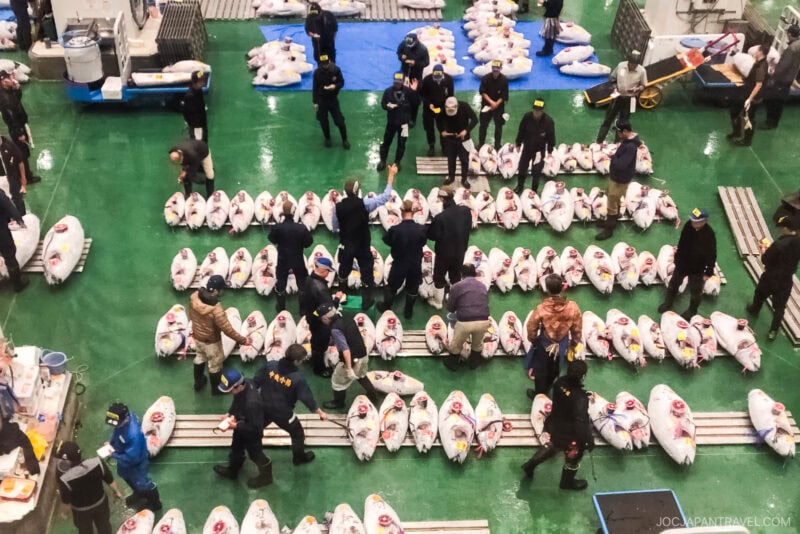
Toyosu Market opened in October 2018 as the modern successor to the old Tsukiji inner market. Today it is the largest wholesale fish and seafood market in the world, almost twice the size of Tsukiji and fully indoors with strict temperature control. I come here to watch the famous tuna auction, walk the clean observation corridors, and enjoy a super fresh sushi breakfast while the city is still waking up.
Overview Of Toyosu Market
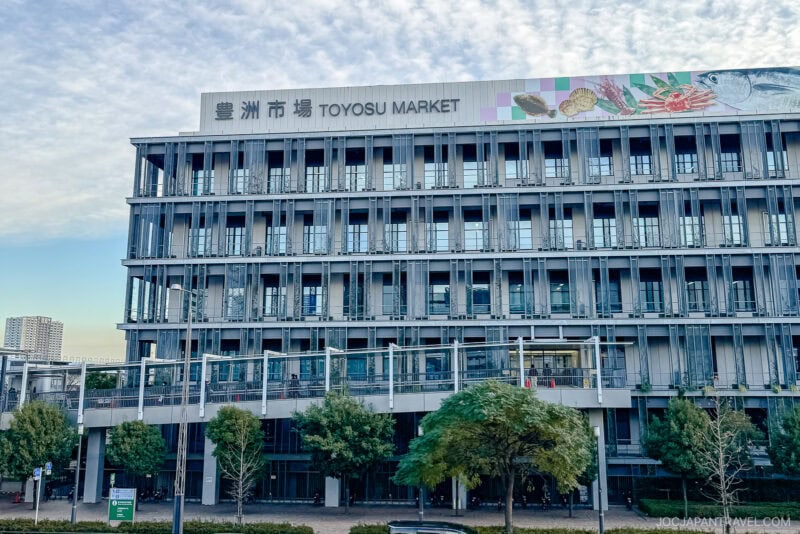
Toyosu Market is made up of three main buildings that are connected by raised walkways: the Fisheries Wholesale Market Building, the Fisheries Intermediate Wholesale Market Building, and the Fruit and Vegetable Market Building. Each building has its own focus, and visitors follow clearly marked routes with windows and observation decks.
The market is open to visitors from around 5:00 am to 5:00 pm on operating days, and admission is free. Shops and restaurants usually finish by early afternoon, often between noon and 2:00 pm, so I try to arrive in the morning. Toyosu Market is generally closed on Sundays, public holidays, and many Wednesdays, so I always double check the official business calendar before I go.
Toyosu Tuna Auction: What To Expect
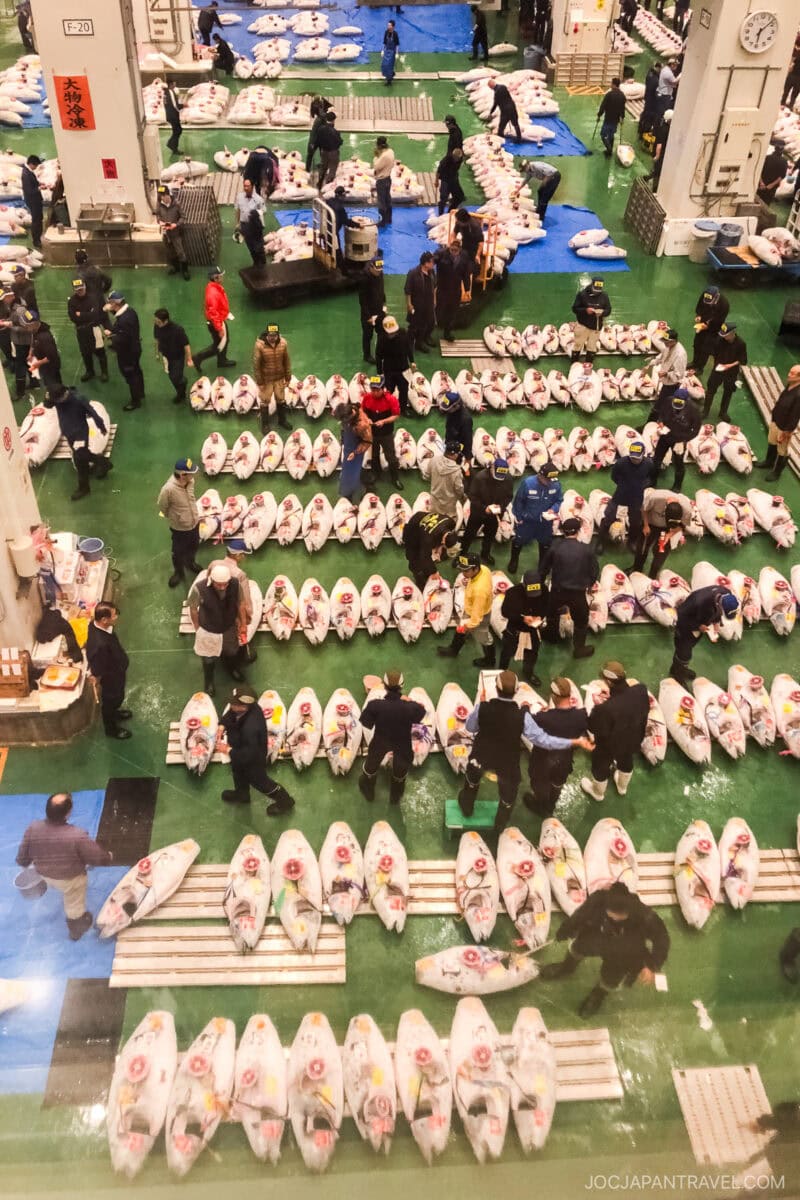
The star of Toyosu Market is the tuna auction in the Fisheries Wholesale Market Building. The auctions usually take place from about 5:30 am to 6:30 am. Buyers in rubber boots walk through neat rows of frozen tuna, checking the color and fat with small flashlights before the auctioneers start their fast, rhythmic calls.
As a visitor, I cannot step onto the auction floor, but there are two main ways to watch:
- Second floor observation windows There is a long corridor on the second floor with large windows that look straight down onto the auction area. Visitor entry starts around 5:00 am, and no reservation is required for this corridor. I like this option because it is simple. I just arrive early, follow the signs, and find a free spot along the glass.
- Special Tuna Auction Observation Deck For a closer view, there is a special observation deck on the lower floor. Here, only a pane of glass separates me from the action, and I can hear the auction and feel the energy in the room. This area is limited to about 100 people each morning and requires an advance online application and lottery.
Fisheries Intermediate Wholesale Market Building: Restaurants And Uogashi Yokocho
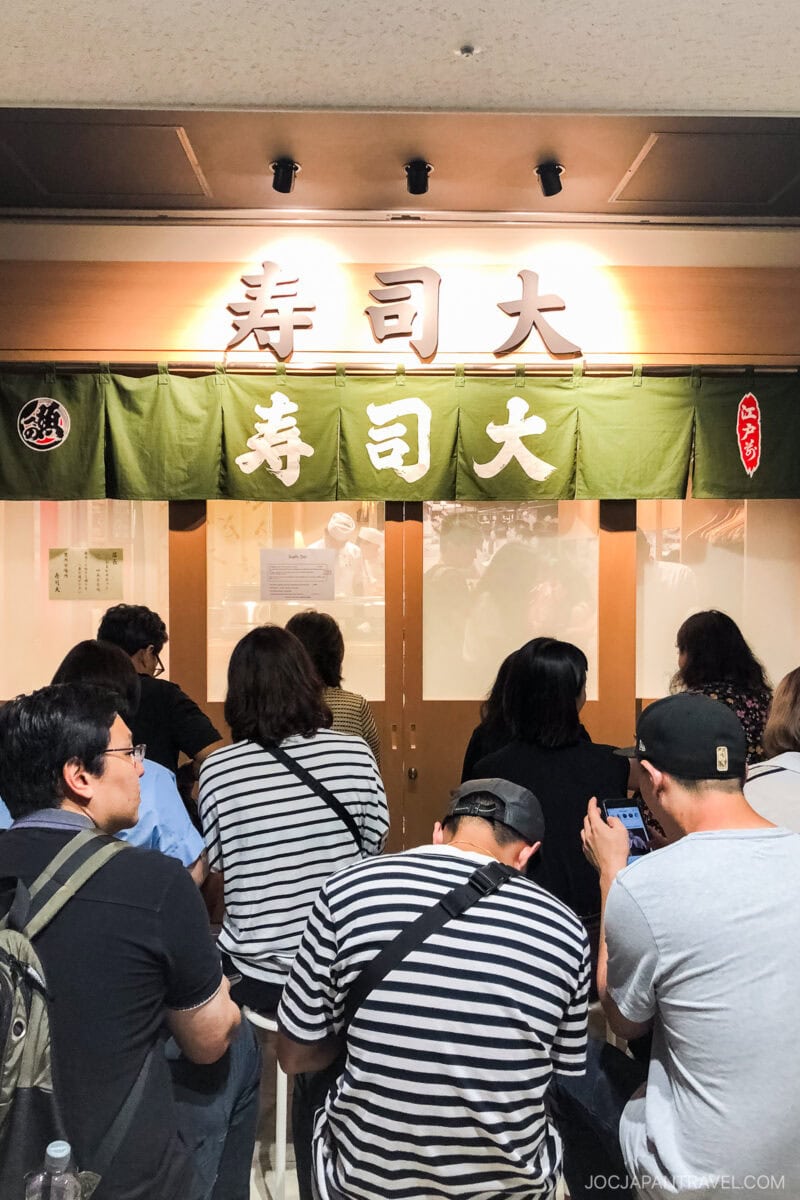
The Fisheries Intermediate Wholesale Market Building is where I spend most of my time after the auction. It has the largest restaurant area in Toyosu Market. Many of the famous sushi shops that used to be inside Tsukiji moved here, and it is a popular place for kaisendon (seafood rice bowls), nigiri sushi, curry rice, and gyudon.
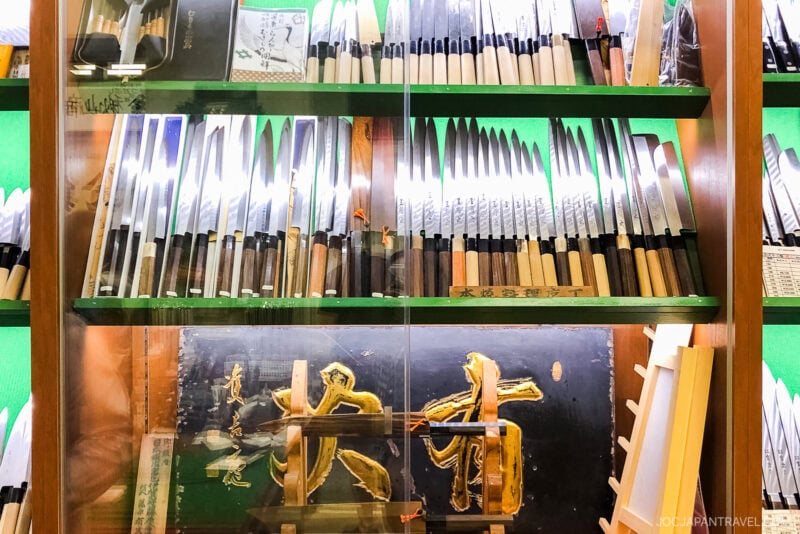
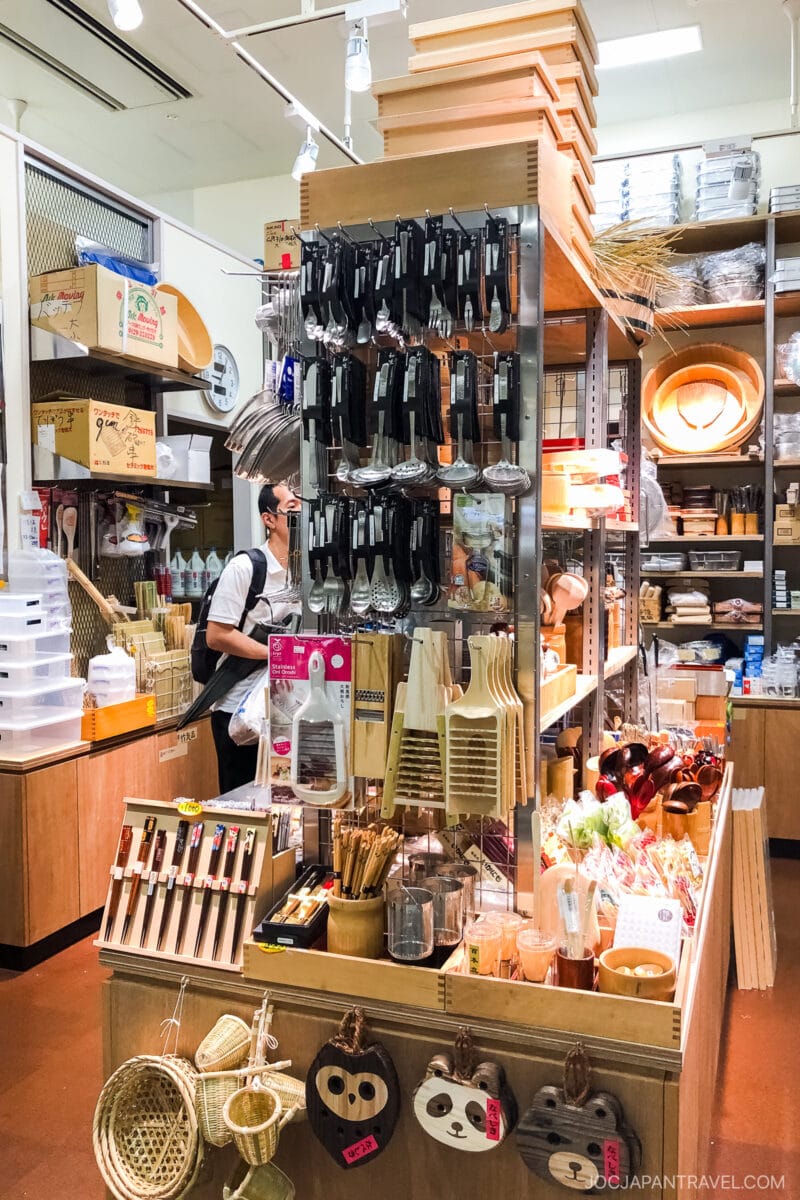
On the fourth floor is Uogashi Yokocho, a shopping zone with around 70 shops. Most shops mainly serve food professionals, but visitors are welcome. I enjoy browsing kitchen knives, Japanese tableware, spices, dried seafood, and cleaning tools that chefs actually use. It feels like walking behind the scenes of a restaurant kitchen.
Along the corridors, small windows let me peek down at the intermediate wholesale market floor, where smaller wholesalers prepare fish for sushi shops and restaurants. There is also a fun display where I can stand next to the outline of a giant bluefin tuna to see how big it really is compared to my height.
Fruit And Vegetable Market Building
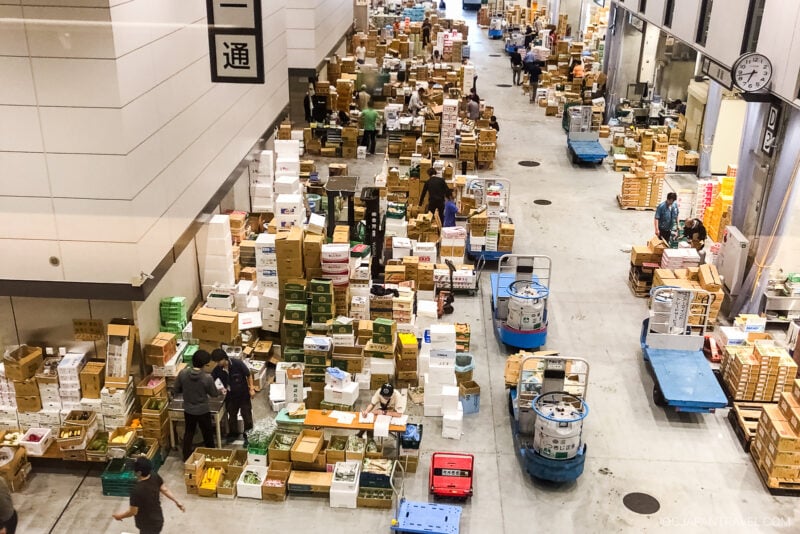
The Fruit and Vegetable Market Building focuses on fruits and vegetables rather than seafood, but it has a similar layout. There is a wholesale auction area, and visitors can watch the action through about a dozen windows or from an observation deck. Fruit and vegetable auctions usually start around 6:30 am.
I like walking through this building because it shows a different side of Tokyo’s food supply. Instead of tuna and shellfish, I see carefully stacked boxes of seasonal vegetables and premium fruits that might later appear in department store food halls or high end fruit shops. Near the entrance there are a few more restaurants and light meal options, which is helpful if the seafood restaurants are packed.
My Personal Impressions Of Toyosu Market

My feelings about Toyosu Market are a bit mixed, and I think it helps to be honest.
If my main goal is to see the tuna auction, Toyosu is absolutely worth the early wake up. The modern setup, the observation decks, and the clear visitor paths make it easier and safer than the old Tsukiji inner market. The buildings are clean, the air is cool, and the fish stays in better condition.
On the other hand, Toyosu does not have the same gritty charm that Tsukiji had. The old Tsukiji inner market felt raw and crowded, with narrow alleys and small shops packed side by side. Toyosu feels more like a well organized food factory. It is impressive, but less romantic.
For food, I often enjoy eating at Tsukiji’s outer market instead. The outer market is still open and full of street food stalls, small restaurants, and shops selling knives and kitchen tools.
Tips For Visiting Toyosu Market
Here are a few things I keep in mind when planning a visit:
- Arrive early: The best time to visit is between 5:00 am and 9:00 am. After that, the energy slowly fades and many wholesalers start closing down.
- Check the calendar: I always check the official Toyosu Market business day calendar, since the market is closed many Sundays, public holidays, and some Wednesdays.
- Dress warmly: Even in summer, the buildings are kept cool to protect the seafood. I bring a light jacket or wear layers.
- Watch your step: The visitor routes are clearly marked, but I still stay aware. Workers use forklifts and electric carts, and some floors can be wet.

How to Get to Toyosu Market
By Train
The most direct and reliable way to reach the market is by using the Tokyo Metro and then transferring to the Yurikamome Line.
- Tokyo Metro Yurakucho Line
- Take the Tokyo Metro Yurakucho Line to Toyosu Station.
- From major points:
- From Tokyo Station: Take the JR Yamanote Line one stop to Yurakucho Station, then transfer to the Yurakucho Line (Subway) to Toyosu Station. (Approx. 10 minutes total, excluding transfers).
- From Shinjuku Station: Take the JR Sobu Line to Ichigaya Station, then transfer to the Yurakucho Line to Toyosu Station. (Approx. 40 minutes total).
- Yurikamome Line (Automated Train)
- At Toyosu Station, follow the signs to transfer to the elevated, automated Yurikamome Line.
- Take the Yurikamome Line two stops to Shijō-mae Station (市場前駅).
- The market buildings are directly connected to Shijō-mae Station via a covered walkway.
By Taxi
- A taxi is the fastest option, especially if you plan to visit for the tuna auction before the first train runs (before 5:00 AM).
- From central Tokyo (e.g., Ginza or Tsukiji), the ride to the market takes around 10–20 minutes.
- Important: Specify your destination as “Toyosu Market” or “Shijo-mae Station” to ensure the driver takes you to the closest entrance.
Pro Tip
The early morning tuna auction starts around 5:45 AM. If you want to arrive on time for the auction viewing, you should aim to be at Shijo-mae Station by 5:20 AM at the latest. Taking a taxi is the only option if you need to arrive significantly earlier than the first train.
Is It Worth Visiting?
If you are excited to see the tuna auction and you are already waking up early from jet lag, Toyosu Market can easily become a highlight of your Tokyo trip. The modern buildings, clear visitor paths, and glass observation decks make it simple to follow what is happening on the market floor. Sushi breakfasts are very fresh and satisfying, and Uogashi Yokocho is a fun place to explore if you enjoy kitchen tools and Japanese cookware. If you care more about street food, small stalls, and a busy neighborhood feel, then you might enjoy spending more time at Tsukiji’s outer market instead.
More to Explore Nearby
As a hub for some of the freshest seafood in the world, the Toyosu Market is a destination on its own, but its location on Tokyo Bay places it near some of the capital’s most exciting modern attractions and waterfront parks.
- teamLab Planets TOKYO – Immerse yourself in this fascinating, large-scale digital art museum next door, where you walk through water and interact with virtual gardens and light displays.
- Odaiba – Head across the bay to explore this waterfront area featuring scenic views of Rainbow Bridge, various entertainment complexes, and a popular replica Statue of Liberty.
- Tokyo Best Foods to Eat – Explore an extensive guide to the capital’s top dishes and specialized dining experiences, which pairs perfectly with the food-centric atmosphere of the Outer Market.
- Tsukiji Outer Market – Visit the historic marketplace where the atmosphere, retail shops, restaurant supply vendors, and classic food stalls of the original market still thrive.