This post may contain affiliate links. Please read our disclosure policy.
Shoshazan Engyoji Temple is a historical site in Himeji dating back over 1,000 years. Set deep in the forests of Mount Shosha, it is considered one of western Japan’s most important mountain temples.

Engyoji Temple (円教寺) sits on Mount Shosha in Himeji, Hyogo Prefecture. It was founded in 966 by the Buddhist priest Shoku Shonin. The temple is known for its forested setting, ancient wooden halls, and deep seasonal beauty. It is also the 27th temple of the Saigoku Kannon Pilgrimage, one of Japan’s oldest pilgrimage routes.
Beyond its religious significance, it has gained international recognition. Several scenes from The Last Samurai, starring Tom Cruise, were filmed here. I visited early in the morning and had much of the grounds to myself. It is one of those places that reveals itself slowly, and the earlier you arrive, the better.
Mount Shosha’s Sacred Complex
Shoshazan Engyoji is about 30 minutes from Himeji Station by bus and ropeway. Founded over a thousand years ago, it has been a center of Kannon worship and mountain ascetic practice ever since. The main halls are designated Important Cultural Properties. The grounds include more than 20 structures connected by forested paths, a Michelin-starred restaurant serving shojin ryori, and views over the surrounding mountains and valleys.
My Experience at Engyoji Temple

At the base of the mountain is a ropeway station that carries you to the summit and the temple entrance. From there, you can take a minibus to the main halls for 500 yen return, or walk. I chose to walk. It took about 10 to 15 minutes through the forest. It was a calm and pleasant way to ease into the atmosphere before reaching the first hall.
Mani-den
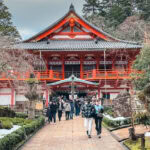
The first major structure you reach is Mani-den. It is built on tall wooden pillars over a steep slope and is designated an Important Cultural Property. The setting reminded me immediately of Kiyomizu-dera in Kyoto. The building seems to float above the surrounding forest in the same way. During my early morning visit, I could hear a monk chanting his daily sutra inside. It set the tone for the whole visit.
Mitsu no Do
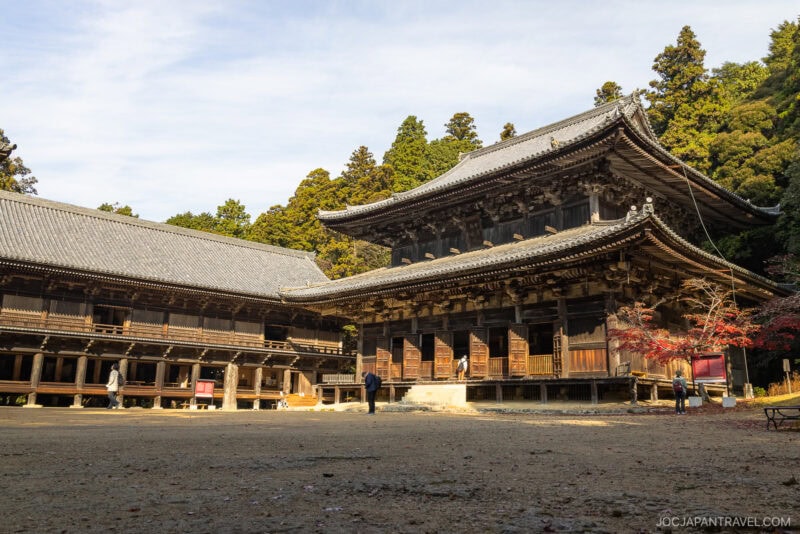
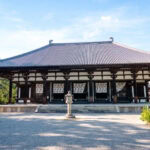
At the heart of the complex is Mitsu no Do, a group of three wooden halls. Daikodo is the main hall. Jikido, originally a lodging and dining hall, now exhibits temple treasures. Jogyodo is a gymnasium used for religious practice. All three are designated Important Cultural Properties. Film fans will recognize this area. It is where Tom Cruise and Ken Watanabe met in The Last Samurai.
Kaisando Hall and the Eternal Flame
The final major structure is Kaisando Hall, the inner sanctuary. Inside, a sacred flame is said to have burned continuously for more than 1,000 years. Beyond the three main areas, over 20 additional structures are scattered across the grounds and connected by forest paths. One of the most distinctive is Juryoin, a former sub-temple now operating as a restaurant. It serves shojin ryori, the traditional Buddhist vegetarian cuisine, and holds one Michelin star. Reservations are required and service is in Japanese only.

Andy’s Travel Tips
These simple tips will help you when you visit.
- Arrive as early as possible. The morning atmosphere is exceptional. Fewer crowds, birdsong, and the chance of hearing monks at their daily practice make an early visit well worth the effort.
- Visit in autumn for the best seasonal scenery. The red and orange foliage against the dark wooden halls is one of the most striking combinations in the Himeji area.
- Wear walking or hiking shoes. Some sections of the temple paths are rocky and steep. Flat shoes or sandals will make the visit uncomfortable.
- Budget 2 to 3 hours to cover the main halls, explore the forest paths, and take your time at each structure. Rushing through misses most of what makes the temple special.

How to Get to Engyoji Temple (Mount Shosha)
ngyoji Temple (書写山円教寺) is a historic temple complex located atop Mount Shosha in Himeji. It is famous for its massive wooden halls and for being a filming location for The Last Samurai.
By Bus and Ropeway (Recommended)
The most common way to reach the temple is by taking a bus from central Himeji and then riding the Mount Shosha Ropeway to the summit.
- From JR Himeji Station or Sanyo Himeji Station:
- Go to Bus Stop 10 at the North Exit of Himeji Station. Take Bus Number 8 bound for “Mount Shosha Ropeway” (Shoshazan Rōpuwei). The ride takes about 25 to 30 minutes.
- At the Ropeway Station:
- Transfer to the Mount Shosha Ropeway. The scenic ascent takes about 4 minutes. From the upper ropeway station, it is a 15 to 20-minute walk uphill to the main temple buildings (Mani-den).
- Alternative: A small shuttle bus is available from the upper ropeway station to the temple for a small fee (around ¥500 for a round trip) if you prefer not to walk.
By Hiking
- If you prefer to skip the ropeway, there are several hiking trails leading from the base to the temple. The most popular trail (Higashi-zaka) takes about 50 to 60 minutes to reach the temple complex.
Pro Tip
If you are traveling from Himeji Station, ask for the “Shoshazan Ropeway Combined Ticket” at the Shinki Bus information desk. It includes the round-trip bus fare and the round-trip ropeway ticket at a discounted price.
Is Engyoji Temple Worth Visiting?
Yes, and it holds up well in any season. Spring brings fresh greenery. Summer is cool and shaded. Autumn is spectacular. Winter is quiet and almost monastic. The temple has genuine depth, from the sacred flame to the Michelin-starred restaurant to the film history. It is not as well-known as Himeji Castle, but it rewards the extra effort. If you are already in Himeji, it would be a shame to skip it.
More to Explore Nearby
More to Explore Nearby
Engyoji sits atop Mount Shosha just outside Himeji, with easy access to feudal landmarks, Kobe’s cosmopolitan hillside neighbourhoods, and some of the region’s best onsen towns.
- Himeji Castle — Japan’s most celebrated castle sits at the foot of the mountain and is an unmissable companion to any Engyoji visit. Its brilliant white towers, nicknamed the “White Heron Castle,” are a UNESCO World Heritage Site.
- Kobe Kitano Ijinkan — A short train ride to Kobe brings you to this hillside district of beautifully preserved foreign residences, a remnant of the city’s 19th-century international community.
- Nunobiki Ropeway & Herb Gardens — Another rewarding hillside escape, Kobe’s herb garden offers panoramic city views and fragrant terraced gardens reachable by ropeway.
- Mt. Rokko — The ridge that defines Kobe’s skyline offers sweeping views over the city and Osaka Bay, with hiking trails and seasonal events that draw visitors year-round.