This post may contain affiliate links. Please read our disclosure policy.
Steeped in over 1,200 years of history, Mishima Taisha Shrine is a spiritual landmark where samurai once prayed and visitors today can enjoy serene gardens, cultural treasures, and local sweets.
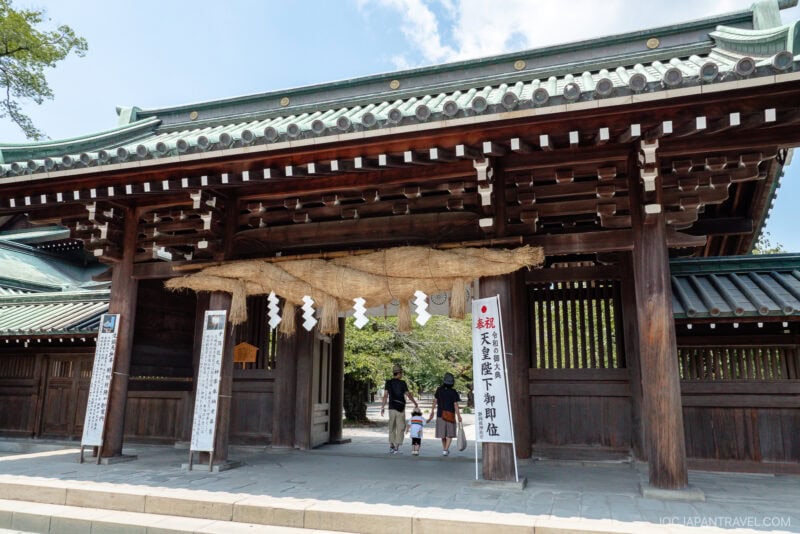
Why Visit Mishima Taisha Shrine?
Mishima Taisha is considered the most important shrine in the Izu region, and its atmosphere was a refreshing contrast to Izu’s adventure-filled landscapes.
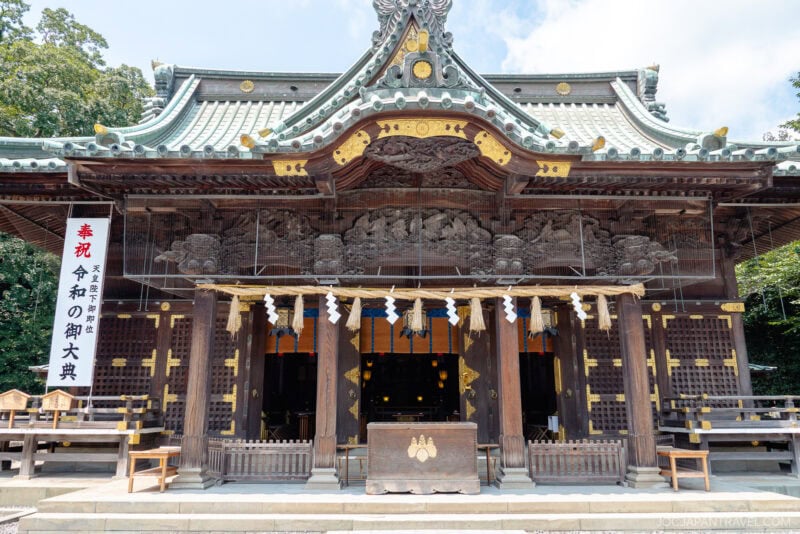
Although the original buildings were lost in the mid-1800s, the shrine was rebuilt in 1866 using zelkova wood and detailed hand-carvings. Today, it is recognized as an Important Cultural Property of Japan. Walking among the tall trees and restored halls, we appreciated how the site preserves its historical atmosphere.
A Shrine with Historical Significance
Mishima Taisha has been a place of worship for over 1,200 years. Its historical importance grew in 1180, when Minamoto no Yoritomo, later the first shogun of the Kamakura Shogunate, prayed here before beginning his rise to power. Knowing this background gives the shrine a sense of significance as you explore the grounds.
What to See at Mishima Taisha
The shrine grounds are spacious, with plenty to explore at a relaxed pace. Here are some highlights we enjoyed:
- Haiden and Honden (Main Halls): Beautifully rebuilt structures featuring intricate woodwork.
- Treasure Hall (Museum): A small but fascinating museum displaying historic artifacts tied to the shrine’s political and cultural role.
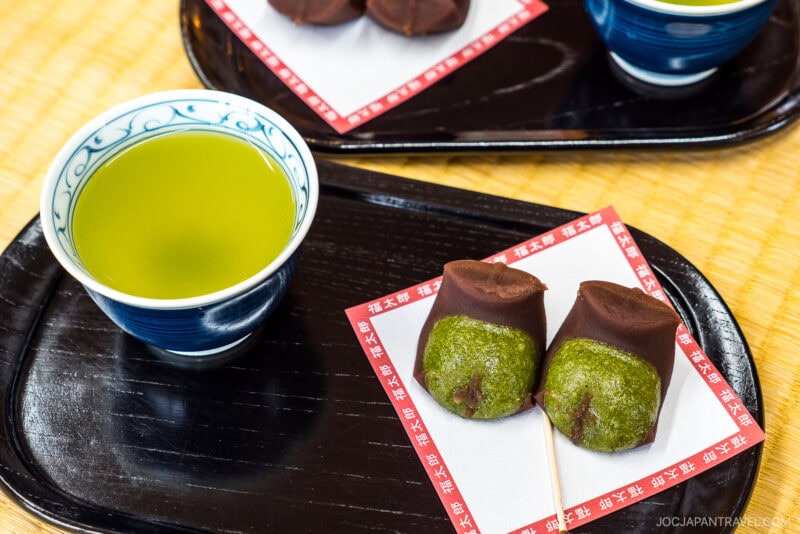
- Yomogi Mochi Tea Shop: The shrine’s own sweet shop, famous for its yomogi mochi with red bean paste. These rice cakes have won national awards and made the perfect afternoon snack with tea.
- Shrine Garden and Deer: Families will love visiting the small garden and greeting the resident deer. Food can be purchased to feed them, which was a fun surprise for our kids.
Even though it’s a historic and spiritual site, the shrine felt welcoming to visitors of all ages.
How to Get to Mishima Taisha Shrine (三嶋大社)
By Train
Ride the JR Tokaido Shinkansen to Mishima Station. Local JR lines and the Izuhakone Sunzu Line also stop here. From the South Exit, walk 10–15 minutes or take a short bus ride to “Mishima Taisha-mae.”
By Car/Taxi
About 10 minutes from Mishima Station. Roughly 90 minutes from central Tokyo via the Tomei or Shin-Tomei Expressway.
Is Mishima Taisha Shrine Worth Visiting?
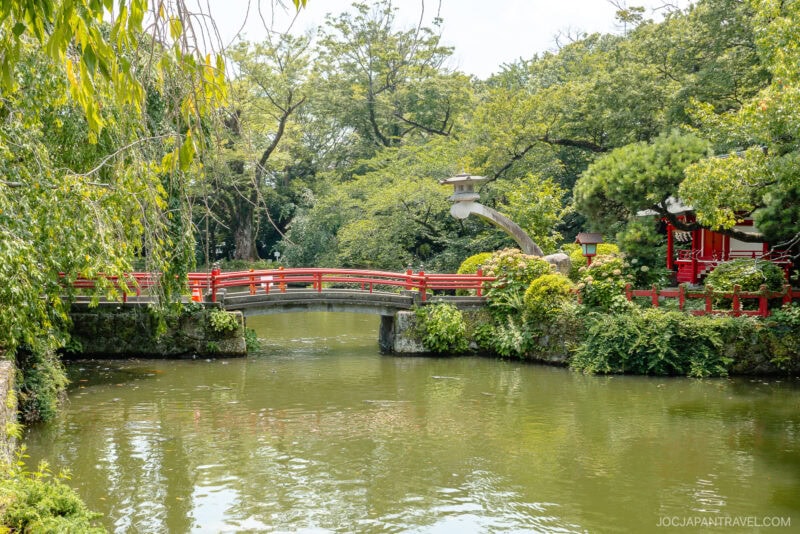
Mishima Taisha is a place where history, culture, and spirituality intersect. The architecture is striking, the grounds are inviting, and the connection to samurai-era Japan makes it a meaningful stop on any Izu Peninsula itinerary.
Our kids loved feeding the deer and exploring the paths, while we enjoyed learning about its deep role in Japanese history. If you’re traveling in the Izu area, this is a cultural highlight you shouldn’t miss.
More to Explore Nearby
Mishima Taisha Shrine is an ancient and highly revered Shinto shrine that served as an important stop on the historical Tokaido Highway. Located centrally in the city of Mishima, it is surrounded by parks, rivers, and cultural sites that highlight the city’s reputation as the “City of Water.”
- Rakuju-en Park – Just a short walk from Mishima Station, this expansive park was once the grounds of an imperial villa and now features a beautiful garden, a lake, and a small zoo.
- Genbei River – Follow the clear walking path along the Genbei River, which flows through the city with fresh spring water originating from Mount Fuji, offering a cool and refreshing atmosphere.
- Mishima Skywalk – Take a short bus ride to Japan’s longest pedestrian suspension bridge for exhilarating views of Mount Fuji and Suruga Bay, along with adventure activities like zip-lining.
- Unagi (Eel) Restaurants – Mishima is famous for its delicious freshwater eel (Unagi), which is raised in the pure, spring-fed water from Mt. Fuji. Seek out one of the city’s many specialty restaurants to try this local delicacy.