This post may contain affiliate links. Please read our disclosure policy.
With breathtaking views, a ropeway that glides up the mountain, and gardens perfect for strolling, Izunokuni Panorama Park is a favorite family destination on the Izu Peninsula.
What Is Izunokuni Panorama Park?
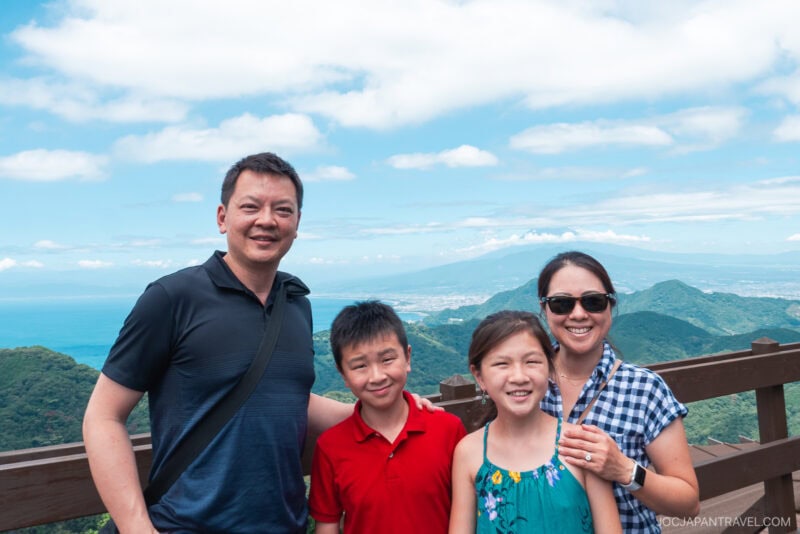
Izunokuni Panorama Park sits atop Mount Katsuragi (葛城山), 452 meters above sea level. Getting there is part of the fun—a scenic seven-minute ropeway ride that already treats you to views before you even reach the summit. At the top, you’ll find the beautifully designed Sky Garden, peaceful walking trails, a relaxing onsen spa, and views that stretch across Mt. Fuji, Suruga Bay, and the green hills of the Izu Peninsula.
We’ve come here more than once as a family, and each visit has felt a little different but always special. There’s something about standing in those wide-open spaces that makes you feel like you’ve stepped into a calmer world, high above the bustle of the towns below.
Highlights of Izunokuni Panorama Park
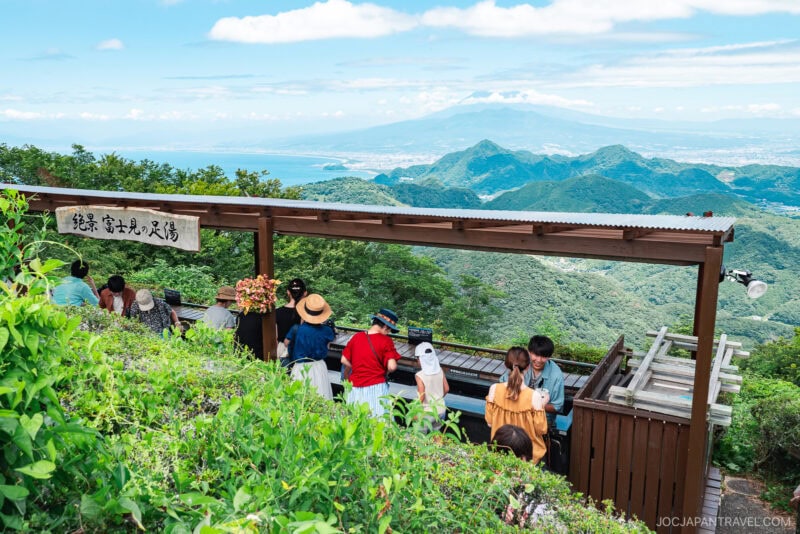
The View
The view alone is worth the trip. On a clear day, Mt. Fuji rises above green hills, while Suruga Bay and Izu’s dramatic coastline stretch into the distance. It’s a favorite spot for photographers and anyone who loves wide-open scenery.
The Viewing Deck
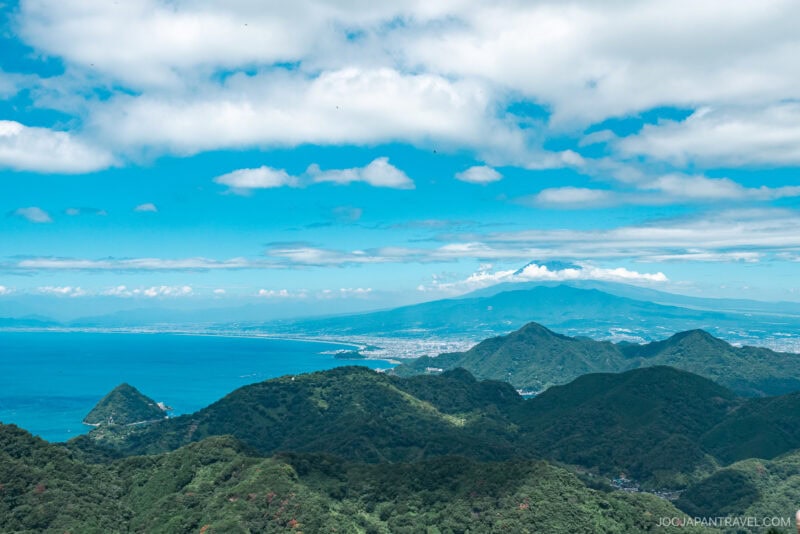
The main observation deck provides a 360-degree panorama. We lingered here to watch the shifting light across the mountains and water. Mornings and late afternoons often bring the clearest skies.
Infinity Footbath
Here at the mountaintop spa, day visitors can dip their feet into soothing hot spring baths while looking out at Mt. Fuji. With cozy cabanas and endless views, it’s a simple but unforgettable way to unwind.
Sky Garden and Walking Trails
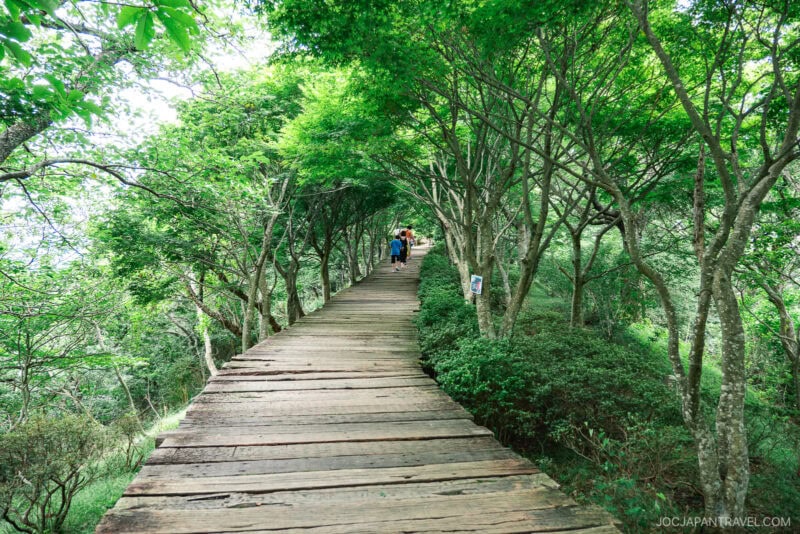
The Sky Garden is filled with seasonal plants, winding paths, and cozy benches. Families will also find a small playground for children, making it easy to enjoy both relaxation and play.
Katsuragi Shrine and the 100 Jizo Statues
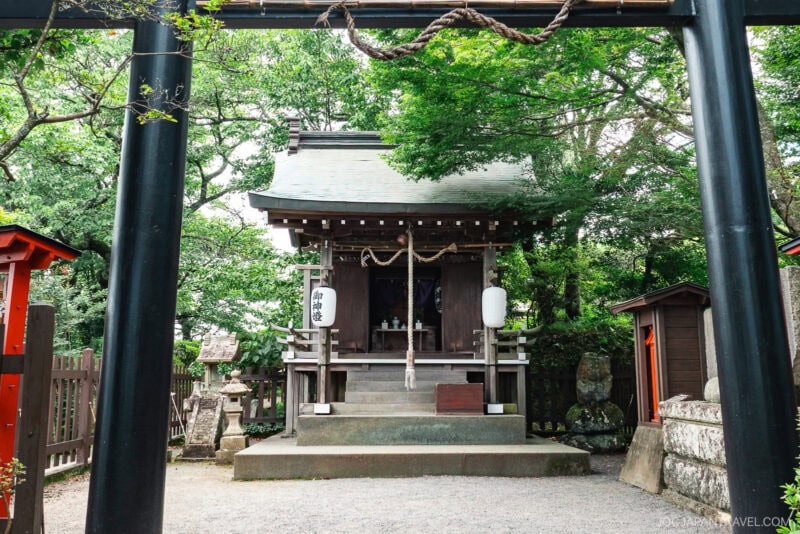
Tucked into the small forest is Katsuragi Shrine, a spiritual site dating back nearly 1,000 years. Nearby, you’ll find the Sky Garden’s 100 Jizo Statues, believed to be over 800 years old. The shaded path created a reflective, almost timeless atmosphere.
How to Get to Izunokuni Panorama Park
By Train
- From Mishima Station, take the Izuhakone Sunzu Line to Izu-Nagaoka Station. The ride takes about 20 minutes.
- From Izu-Nagaoka Station, take a taxi or local bus about 10 minutes to the ropeway base.
By Car or Taxi
- About 30 minutes from Mishima, 45 minutes from Atami, and 10 minutes from Izu Nagaoka Station.
- Parking is available at the ropeway base.
Pro Tip: Morning visits offer the best chance to see Mt. Fuji. On clear days, the views are outstanding.
Is Izunokuni Panorama Park Worth Visiting?
The park is one of the most memorable scenic stops in Izu. You can sip coffee while gazing at Mt. Fuji, stroll along peaceful shrine paths, or dip your feet into a relaxing hot spring footbath.
What we especially liked was how the park struck the right tone. It’s tranquil yet family-friendly, with plenty of space to wander, rest, and play. On a clear day, catching sight of Mt. Fuji from the summit truly feels like a once-in-a-lifetime moment.
More to Explore Nearby
After enjoying the magnificent views from the Izu Nagaoka Ropeway and the Ao Terrace, the surrounding region offers an excellent mix of historical sites, healing hot springs, and regional cuisine that defines the Izu Peninsula and the gateway city of Mishima.
- Mishima Skywalk – Head north to Mishima to cross Japan’s longest pedestrian suspension bridge, which offers exhilarating, unobstructed, panoramic views of Mount Fuji and the adjacent Suruga Bay.
- Shuzenji Onsen & Bamboo Forest – Explore one of Izu’s most historic hot spring towns, featuring the ancient Shuzenji Temple and a picturesque bamboo forest path perfect for a tranquil walk.
- Izu Nagaoka Onsen – Located right at the base of the ropeway, this charming hot spring town offers traditional ryokan and public baths, perfect for relaxing after your mountain ascent.
- Mishima Taisha Shrine – Visit the most important shrine in the nearby gateway city of Mishima, a key cultural site that once served as a major stop on the historic Tokaido Highway.