This post may contain affiliate links. Please read our disclosure policy.
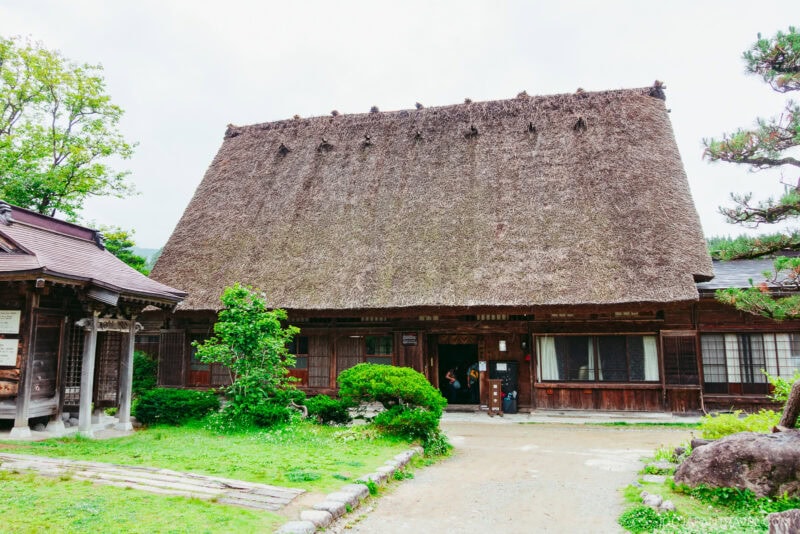
Step inside Kanda House in Shirakawa-go and discover what life is like inside traditional gassho-zukuri homes.
Touring a Living Time Capsule
Tucked into the scenic village of Shirakawa-go, Kanda House (神田家) is one of the best-preserved gassho-zukuri farmhouses in Japan. Our guided tour from Takayama included visiting this home-turned-museum, and it gave us a rare look at how people live and work in one of the country’s most remote mountain communities.
What to Expect When Visiting Kanda House
Kanda House is a 10-minute walk from the Shirakawa-go Bus Terminal. We visited in summer, when the thatched roofs were framed by green rice paddies, but many travelers aim for winter to see the village under deep snow.
From the moment we stepped inside, we were greeted with the soft warmth of a central hearth and a cup of tea. That welcome, paired with the scent of smoke in the air, set the tone for a memorable experience. Descendants of the original Kanda family still live here and help maintain this living piece of history.
Gassho-Zukuri Design: Built for Snowy Survival
Kanda House is a shining example of gassho-zukuri (合掌造り), or “praying hands” architecture. The steeply pitched thatched roof helps snow slide off, making it ideal for heavy winters. These homes are built entirely without nails and reach up to four stories high.
The house was built in the early 1800s by Wada Yaemon, the second son of the Wada family. It took more than ten years to complete. In addition to being a family home, it also functioned as a center for silk production, sake brewing, and even gunpowder manufacturing.
First Floor: Hearth, Hospitality, and Prayer
On the main level, we gathered around the large irori (sunken hearth), where the family once cooked, warmed themselves, and welcomed guests. The space includes living quarters, a Buddhist altar room, and even a guest area for visiting monks.
A fire watch window connects to the second floor, offering a way to monitor the hearth from above. We also spotted hoses and water systems placed throughout the home to help prevent fires—essential for preserving these fully wooden structures.
Second Floor: Tools of a Mountain Life
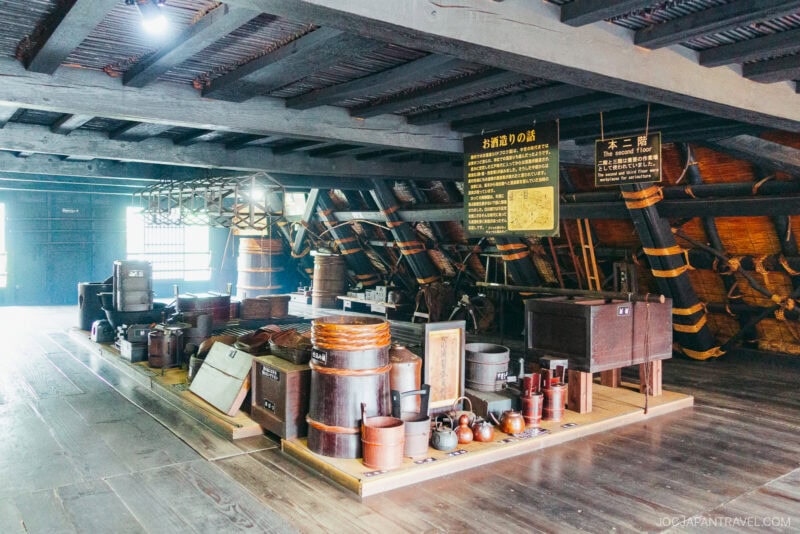
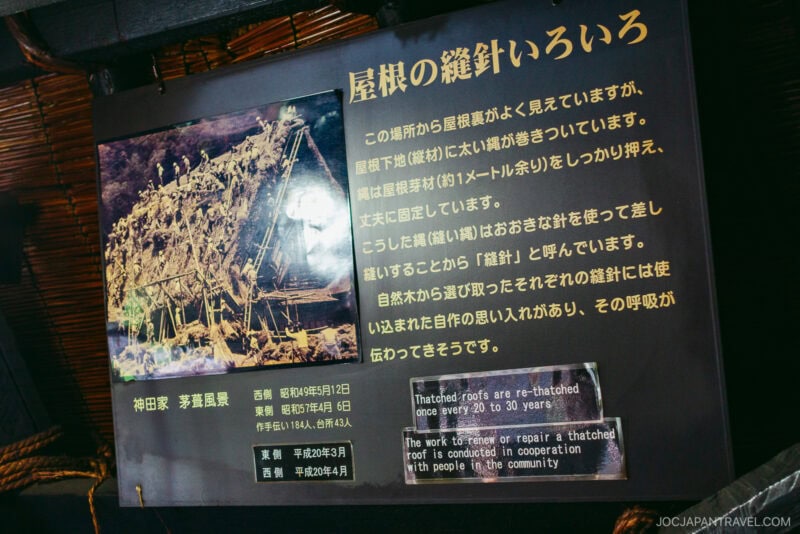
The second floor houses displays of tools used for farming, sake making, and daily life. One corner showcases roof beams tied with thick rope and stacked with straw insulation. A nearby photo shows 184 villagers working together to replace the thatch—a vivid example of Shirakawa-go’s deep sense of community.
Third and Fourth Floors: Silkworms and Smoke
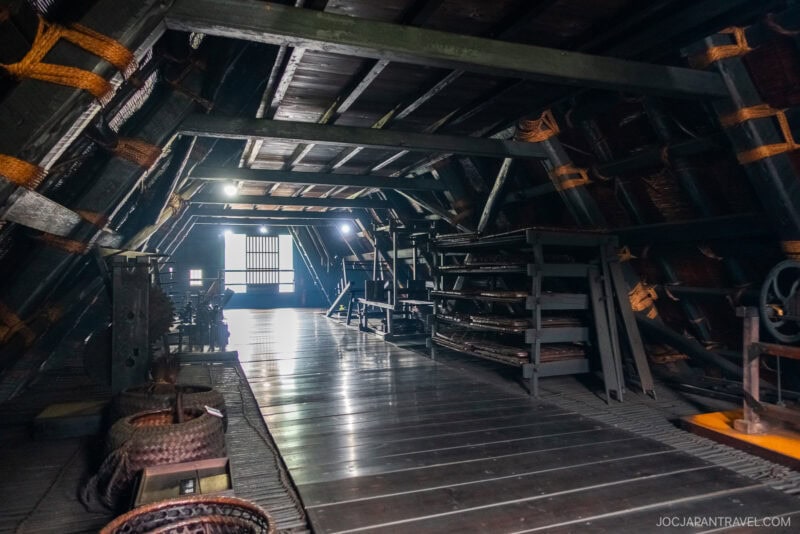
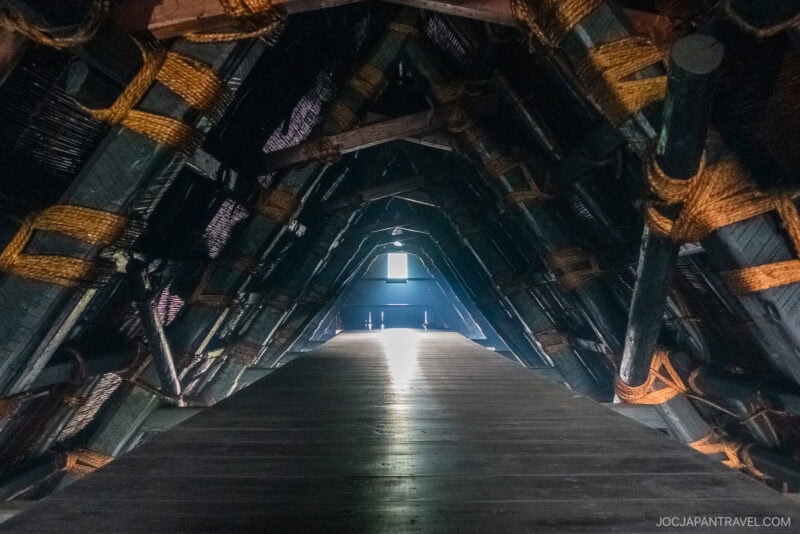
On the third level, the layout narrows but remains functional. This floor was used for silk farming, with woven trays, spinning wheels, and looms on display. On the fourth floor, we peered into the roof structure, where smoke from the hearth helps keep insects away and preserves the thatch.
There’s no chimney, so the smoke naturally rises through the house. We noticed our clothes picked up a hint of that earthy, smoky scent by the time we left.
Other Homes for Touring
If you’re exploring other homes, Nagase House and Wada House also offer tours.
How to Get to Kanda House
On Foot
- 8 minutes walk south from the bus terminal.
Pro Tip: Bring cash for admission and give yourself time to explore other gassho-zukuri homes nearby.
Is Kanda House Worth Visiting?
We highly recommend visiting one of the houses when you’re in Shirakawa-go. It’s so interesting to learn and see firsthand how generations survived, thrived, and built homes to endure the toughest conditions. Whether you come for the architecture or the local hospitality, it’s a visit you won’t forget.
More to Explore Nearby
After exploring the gassho-zukuri farmhouses of Shirakawa-go, head to Takayama for these cultural and historical highlights:
- Takayama Jinya – Visit the last remaining Edo-era government building in Japan, with tatami rooms and historical exhibits.
- Jinya Asaichi Morning Market – Pick up local produce and crafts just outside the Jinya.
- Takayama Old Town (Sanmachi Suji) – Explore preserved merchant houses, sake breweries, and sweet shops in the historic district.
- Takayama Museum of History and Art – Learn about the town’s development through interactive exhibits and restored buildings.