This post may contain affiliate links. Please read our disclosure policy.
On the Noto Peninsula in Ishikawa Prefecture, you’ll find dramatic coastlines, rice terraces, traditional crafts, and cultural treasures—all away from the hustle of Japan’s big cities.
Please note: The area is still recovering from the January 2024 Noto Earthquake. Some attractions and roads may be closed or under repair. Please check local updates or contact accommodations before making travel plans.
Exploring the Western Coast of Noto
We visited the Noto Peninsula over two days prior to the earthquake, focusing on the western coast. The peninsula welcomed us with unforgettable scenery, local flavors, and deep cultural heritage.
Chirihama Nagisa Driveway (千里浜なぎさドライブウェイ)
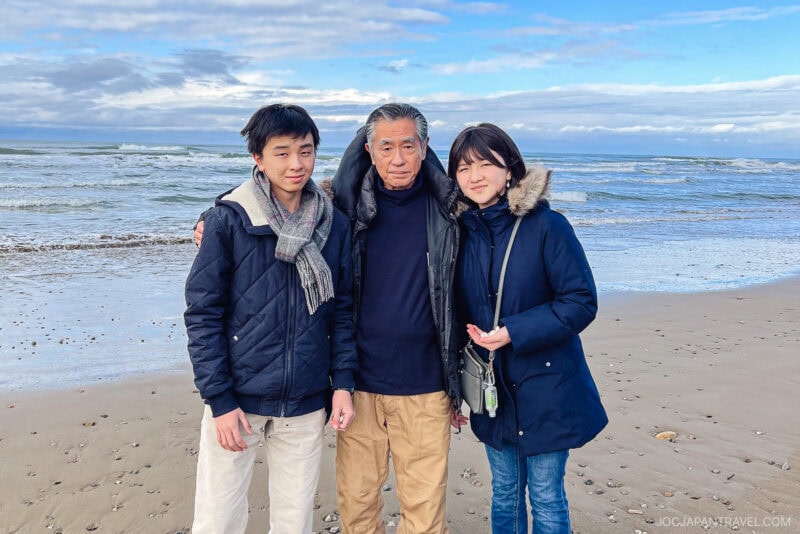
We began our trip at Chirihama Nagisa Driveway, Japan’s only beach where you can normally drive along the sand. Strong waves kept cars off the beach during our visit, but we enjoyed walking the shore, skipping stones, and collecting seashells.
Keta Grand Shrine (氣多大社)
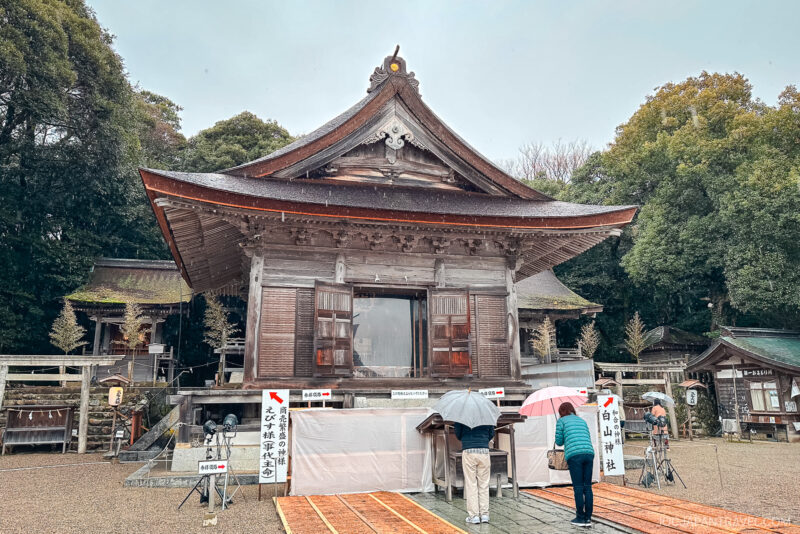
Next, we stopped at Keta Grand Shrine, an important Shinto site with a history of over 1,200 years. The wooded approach felt serene, and we made a side visit to the smaller Shrine of Knowledge nearby. Our kids happily joined the tradition of praying for a good school year.
Lunch at Yahata Sushiben (八幡すしべん)
For lunch, we tried Yahata Sushiben, a popular local noodle chain. The steaming bowls of udon were perfect for a cold day, with a dashi broth that was rich and full of flavor.
Noto Kongo (能登金剛) and Ganmon (巌門)
Driving north, we reached Noto Kongo Park, known for rugged coastal views and dramatic cliffs. Ganmon, a huge seaside rock with a natural sea cave, was the highlight. Walking trails and a scenic bridge made it easy to take in the views. In warmer months, boat tours offer another perspective.
Hatago-iwa Rock (機具岩) and Couple Rock (夫婦岩)
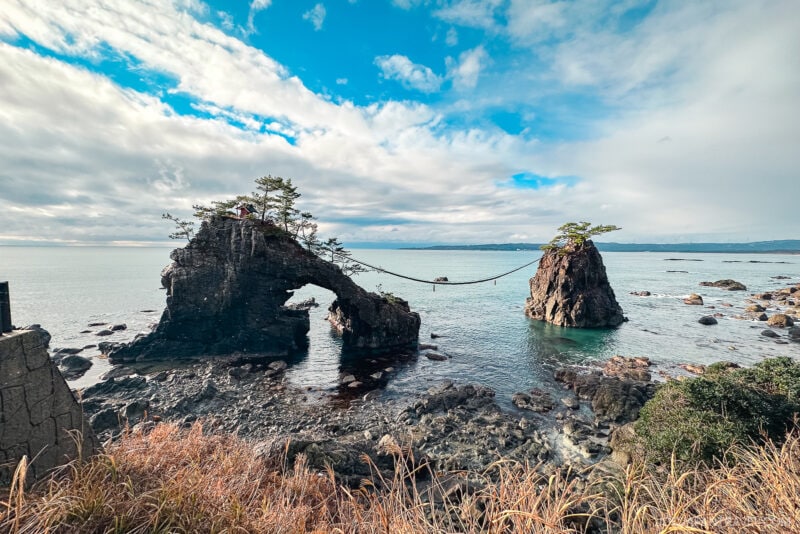
These sacred coastal rocks are tied together with shimenawa ropes. Hatago-iwa has a small shrine perched at the top, and both sites are linked to local legends. The quiet coastal setting gave them a special presence.
Sojiji Soin Temple (總持寺祖院)
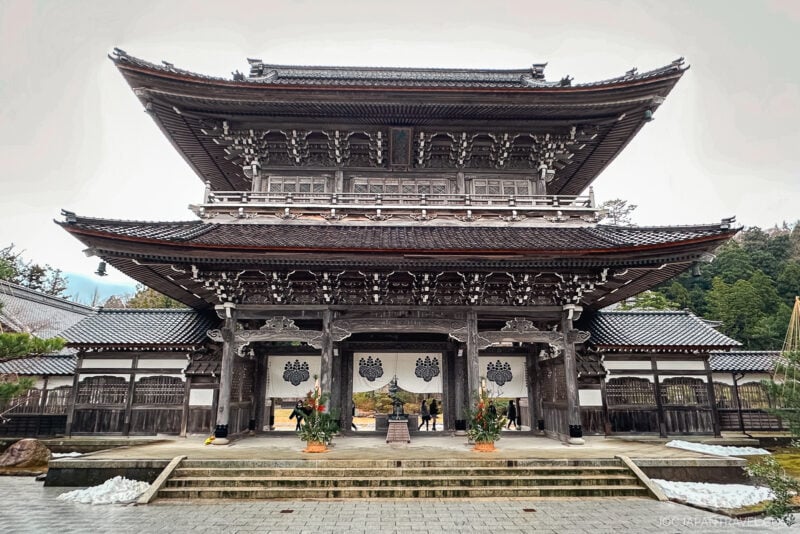
Founded in 1321, Sojiji Soin was once the head temple for thousands across Japan. After a fire in 1898, the halls were rebuilt with care. We admired the craftsmanship and explored the spacious grounds at our own pace.
Wajima Kiriko Art Museum (輪島キリコ会館)
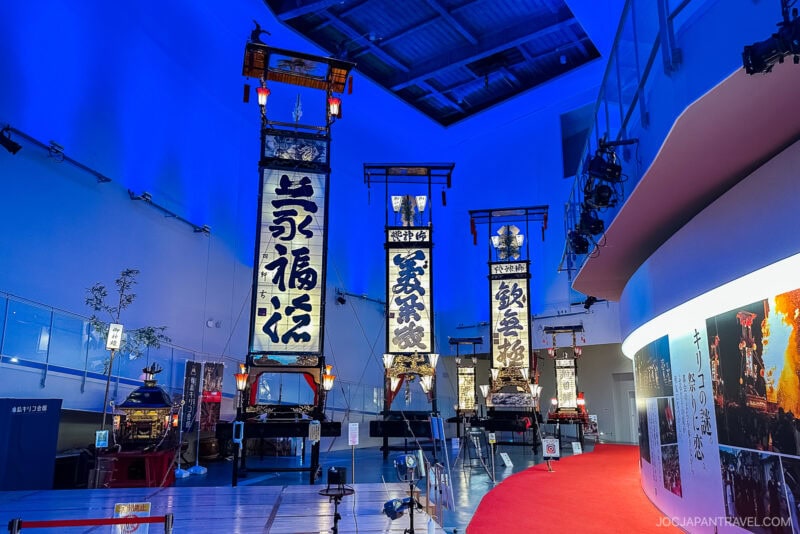
In Wajima, our first stop was the Kiriko Art Museum. The towering lantern floats used in local festivals were incredible to see up close, some reaching more than 40 feet high. Exhibits showed how each community celebrates differently, from carrying the floats into the sea to setting them ablaze.
Note: As of Sept 2025, the museum still closed indefinitely.
Wajima Museum of Lacquer Art (石川県輪島漆芸美術館)
This museum gave us a deeper understanding of Wajima lacquerware, one of Japan’s finest crafts. We watched demonstrations of the long process of layering and polishing, and marveled at a lacquer globe of the Earth. The artistry left us with a new appreciation for this tradition.
Shioyasu Shikki Kobo (しおやす漆器工房)
At this family-run lacquerware workshop, open since 1858, we browsed handmade chopsticks, trays, and bowls. The owner explained how each piece takes months to finish. It made choosing souvenirs even more meaningful.
Shiroyone Senmaida Rice Terraces (白米千枚田)
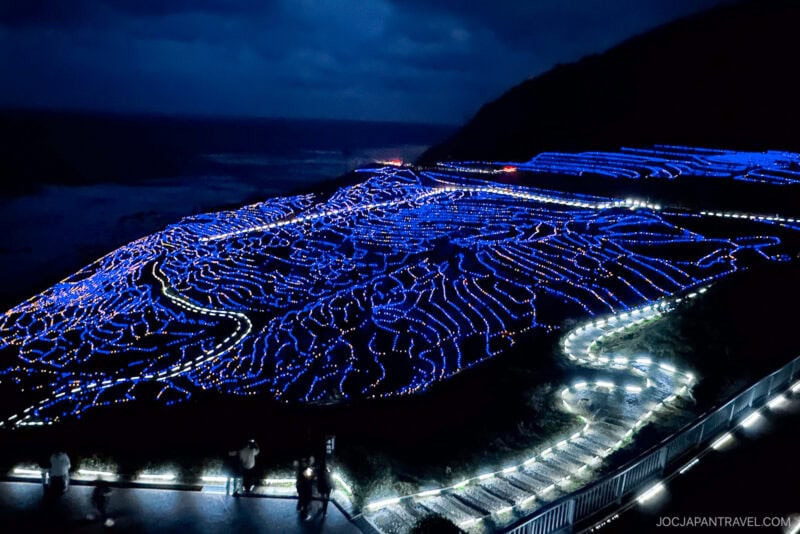
One of Noto’s most famous sights, the Shiroyone Senmaida Rice Terraces are especially striking in winter. From October to March, 25,000 LED lights illuminate the 1,004 paddies, with colors changing every 15 minutes. We bundled up and stayed to watch—the scene was magical.
Staying at Noto No Show Ryokan (海游 能登の庄)
For our overnight stay, we checked into Noto No Show Ryokan. We celebrated New Year’s with a traditional osechi meal, featuring Noto specialties like blowfish and notoguro. The dishes were served on lacquerware and Kutani porcelain, adding to the sense of place.
Note: As of Sept 2025, the ryokan is still closed indefinitely.
Travel Tips for Visiting Noto Peninsula
- A rental car is essential to explore the western coast. Public transport is limited and slow.
- Winter is windy and cold, especially along the coast. Bring warm clothing for night outings.
- Seafood dominates local menus, so plan ahead if you have dietary restrictions.
How to Get to Noto Peninsula
Train + Car
- From Tokyo: Take the Hokuriku Shinkansen to Kanazawa. The ride takes about 2.5–3 hours.
- From Osaka or Kyoto: Take the Limited Express Thunderbird to Kanazawa. Travel time is about 2.5 hours.
Driving Times
- Kanazawa to Wajima: about 2.5 hours by car.
- Kanazawa to Shiroyone Senmaida: about 2.5–3 hours by car.
Navigation Tips
- Fuel up in larger towns. Rural stations may close early. Winter roads can be icy and windy. Drive with caution.
Pro Tip: Verify road, bus, and attraction status after the 2024 earthquake. Plans may change with ongoing repairs.
Is Noto Peninsula Worth Visiting?
Noto Peninsula is ideal if you want an authentic mix of coastal scenery, cultural traditions, and historic crafts. From shrines and temples to rice terraces glowing at night, the region offers a side of Japan that feels both unique and welcoming. Supporting local businesses here also helps the area recover after the earthquake.
More to Explore Nearby
The Noto Peninsula’s dramatic coast and traditional artisan culture are perfectly complemented by the rich history, famous gardens, and thriving contemporary art scene of nearby Kanazawa, the gateway city to the region.
- Kenrokuen Garden – Wander through one of Japan’s Three Great Gardens, a magnificent landscape recognized for its classic design principles, including the famous Kotoji-tōrō stone lantern.
- Higashi Chaya District – Step back in time in Kanazawa’s best-preserved geisha district, where wooden latticework houses now host traditional tea rooms and gold leaf craft shops.
- Kanazawa Castle Park – Explore the beautifully restored gates, turrets, and expansive grounds of the former seat of the powerful Maeda clan, which ruled the historic Kaga domain.
- 21st Century Museum of Contemporary Art – Visit this celebrated modern art museum, famous for its unique circular, glass-walled design and playful, interactive permanent installations like The Swimming Pool.