This post may contain affiliate links. Please read our disclosure policy.
Stroll through Kenrokuen Garden, where winding paths, quiet ponds, and seasonal colors reflect centuries of artistry and nature in perfect balance.
A Garden Rooted in Legacy
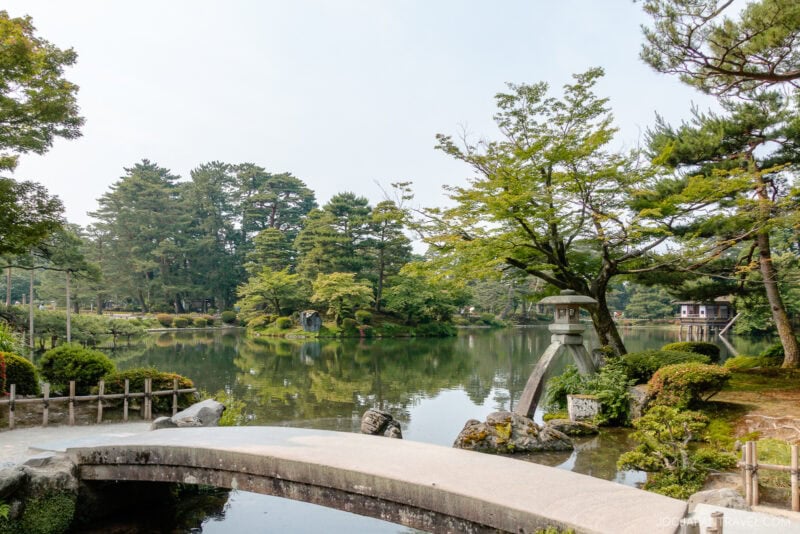
Kenrokuen Garden (兼六園) sits just beside Kanazawa Castle and was once part of the Maeda clan’s outer castle grounds. The Maeda were not only powerful feudal lords but also great patrons of the arts. Over 14 generations, they transformed this space into one of the most elegant gardens you’ll find anywhere in Japan.
Walking through Kenrokuen, you can really feel the history all around you, gently softened by the rustle of leaves and the soothing sound of flowing streams.
What Does “Kenrokuen” Mean?
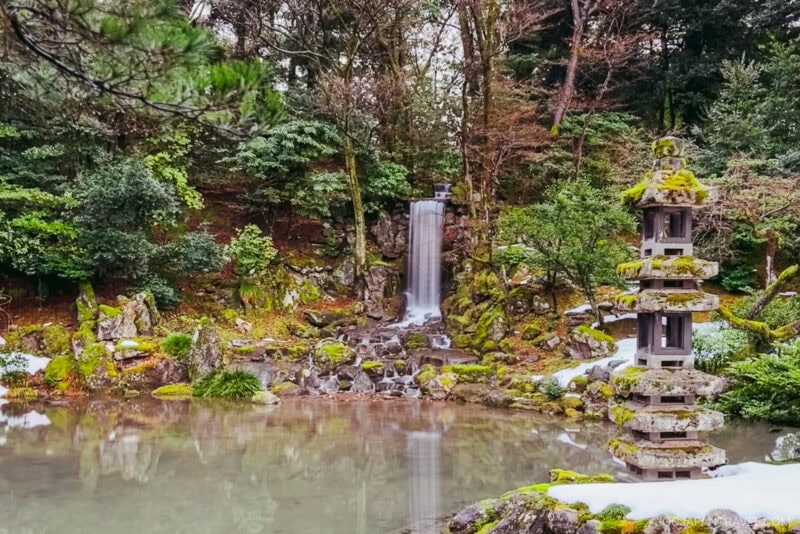
The name Kenrokuen means “Garden of Six Attributes.” It refers to the six qualities that define the ideal landscape: spaciousness, seclusion, antiquity, artificiality, abundant water, and scenic views.
Not many gardens capture all six, but Kenrokuen manages to balance them beautifully. With over 25 acres of ponds, teahouses, stone bridges, and lookout points, there’s something to discover around every bend.
Highlights Inside the Garden
One of the most photographed spots in Kenrokuen is the Kotoji-toro, a two-legged stone lantern that stands beside Kasumigaike Pond. It’s not just a symbol of the garden—it’s become an icon of Kanazawa itself. There’s a small bridge nearby that offers the perfect photo angle, but it’s often crowded. We waited patiently for our turn, along with others eager to capture the same timeless view.
We also stopped by Japan’s oldest working fountain, which operates with only natural water pressure. It’s a quiet yet fascinating detail that shows the ingenuity behind the garden’s design.
Another favorite was the Shigure-tei Teahouse, originally built in 1725. Inside its aged wooden beams and simple tatami rooms, you can sit down and enjoy a traditional Japanese tea service in a peaceful setting.
A Living Garden in Every Season
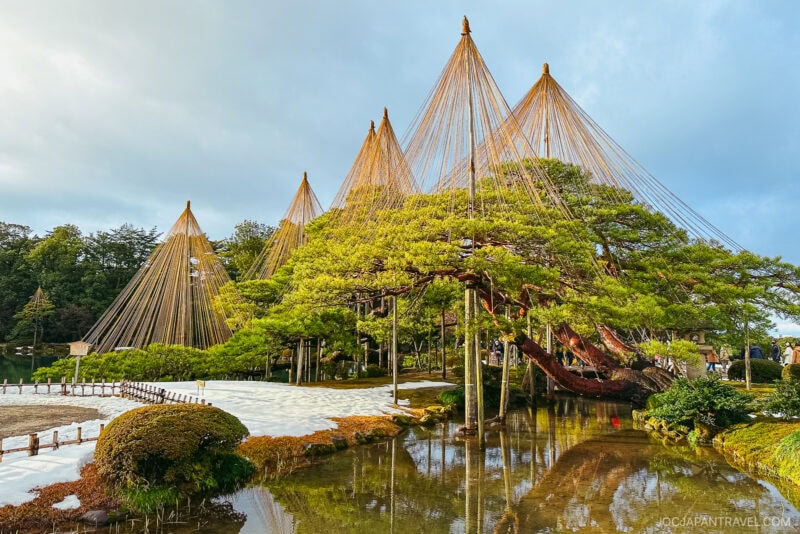
Kenrokuen was built to reflect beauty year-round. In spring, cherry blossoms bloom along the garden paths. Summer brings a refreshing canopy of green and the sound of water trickling through stone-lined streams.
Autumn is spectacular, with maple leaves turning brilliant red and gold. In winter, we saw yukitsuri, the conical ropes tied to protect tree branches from heavy snow. This iconic sight is unique to Kanazawa and one of the most memorable parts of visiting in the colder months.
Don’t Miss: The Pedestrian Way
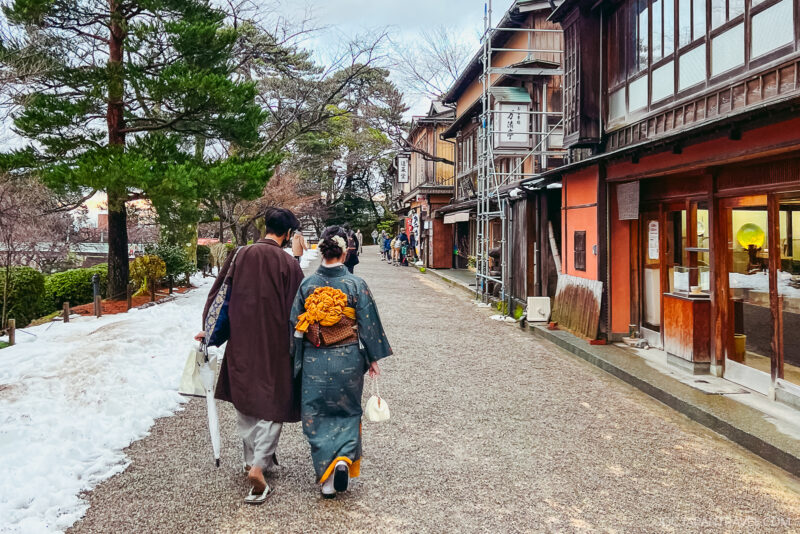
Just outside the garden, we walked along the Pedestrian Way, a lively promenade filled with tea shops, seasonal sweets, and small souvenir stalls. It was the perfect place to rest with a cup of matcha or sample a local wagashi sweet beneath blooming sakura trees.
How to Get to Kenrokuen Garden
Bus
- From Kanazawa Station, take the Kanazawa Loop Bus and get off at RL8 or LL8 (Ishikawamon Gate stop).
- Total travel time: 20–25 minutes.
Taxi
- A taxi from Kanazawa Station takes about 10 minutes and costs around ¥1,200–¥1,500.
Pro Tip: Buy the Kenrokuen+1 Pass or the Cultural Forest Travel Pass to save when visiting Kanzawa.
Is Kenrokuen Garden Worth Visiting?
Absolutely. It’s one of those places that stays with you long after you leave. Kenrokuen isn’t just a peaceful stroll; it’s like stepping into a living work of art that truly captures the soul of Japanese garden design.
With its ever-changing seasonal beauty, easy location, and rich history, it quickly became one of our favorite spots to explore in Kanazawa. We think you’ll feel the same way.
More to Explore Nearby
After walking the scenic paths of Kenrokuen Garden, you’ll find even more history, culture, and local color just steps away:
- Myoryu-ji Temple (Ninja-dera) – A mysterious temple full of hidden doors, secret staircases, and defensive tricks used by samurai.
- Nishi Chaya District – A quieter geisha district with charming wooden buildings and a small museum.
- Hyakurakusou – Yuwaku Onsen – Take a relaxing trip to Kanazawa’s nearby hot spring village, just 30 minutes from the city center.
- Kanazawa Food Guide – Discover must-try local specialties like gold leaf ice cream, Jibuni stew, and fresh seafood.