This post may contain affiliate links. Please read our disclosure policy.
With a striking gate and peaceful gardens, Oyama Shrine brings together global design and local history right in the heart of Kanazawa.
A Surprising Mix of Cultures
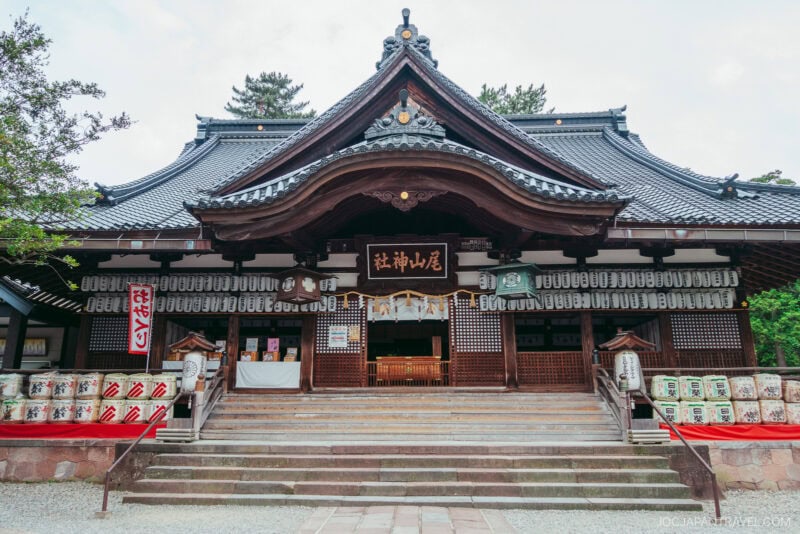
At first glance, Oyama Shrine (尾山神社) felt different from every other shrine we had visited in Japan. Instead of the usual wooden torii gate, we saw a tall, three-story gate with stained glass windows and European-style details. It didn’t look like any other shrine we’d visited in Japan.
Most people stop to admire the gate, but we especially enjoyed the peaceful garden behind the shrine. The stone paths, small wooden bridges, and moss-covered greenery created a quiet space that felt far from the busy city.
A Shrine Dedicated to Kanazawa’s Founding Lord
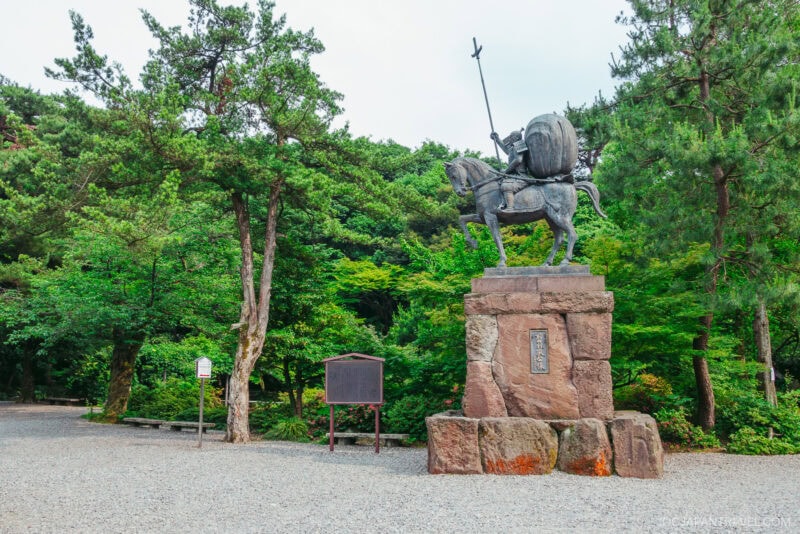
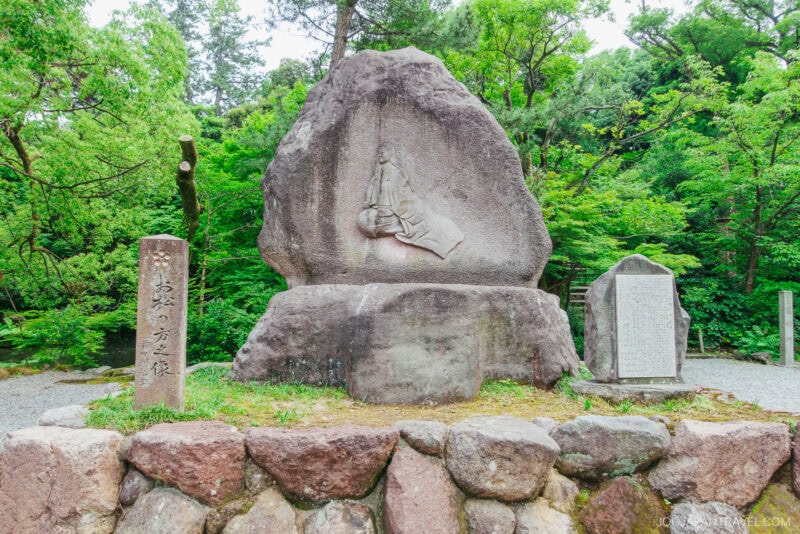
Oyama Shrine honors Lord Maeda Toshiie, the first daimyo of the powerful Kaga Domain. A bronze statue of him stands in front of the shrine, along with a carving of his wife, Lady Omatsu. The Maeda family played a major role in shaping Kanazawa’s culture and prosperity during the Edo period.
We learned that the shrine was originally built in 1599 and moved to its current location in 1873. It’s still a place where locals come to pray, especially during the New Year holidays and seasonal festivals.
The Famous Gate That Was Almost a Lighthouse
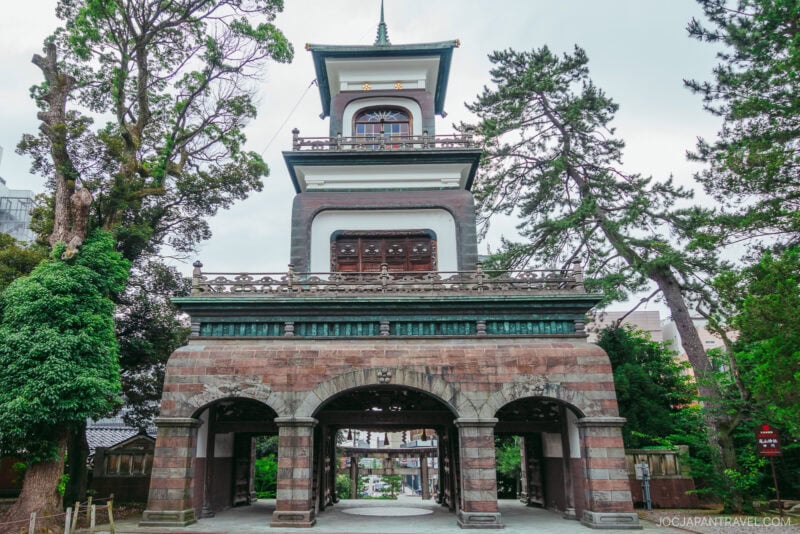
The shrine’s most iconic feature is its main gate, completed in 1875. Designed by a Dutch architect, it mixes Japanese, Chinese, and Western styles. The top floor features stained glass imported from the Netherlands, and the brickwork and design elements were so unusual that the structure was once considered for use as a lighthouse.
This blend of styles makes it one of the most unique shrine gates in Japan—and one of the most photogenic. Almost everyone stops here for photos before heading deeper into the grounds.
Strolling Through the Gardens
While the gate is impressive, the true charm of Oyama Shrine lies in its garden. It felt like a hidden retreat in the middle of the city. We crossed small bridges, listened to the soft sound of flowing water, and watched koi swimming under the surface of the ponds.
Some parts of the garden date back to the early 1600s. Today, it’s occasionally used for small concerts and seasonal events. There’s also a carving of Lady Omatsu said to bring good fortune in love.
How to Get to Oyama Shrine
Bus
- From Kanazawa Station, take the Kanazawa Loop Bus (RL) and get off at Korinbo (RL15). Walk 3 minutes to the shrine.
- Total travel time: About 15 minutes.
Taxi
- A taxi from Kanazawa Station takes about 10 minutes and costs around ¥1,200–¥1,500.
Pro Tip: Visit in the early morning or late afternoon for the best lighting if you’re planning to take photos of the gate and garden.
A Small Shrine with a Big Impression
Oyama Shrine might be smaller than some of the more famous shrines in Japan, but that’s part of what makes it special. We loved its mix of unexpected architecture and peaceful garden vibes.
If you’re into unique design or just want a quiet spot to take a breather, it’s definitely worth a visit. Plus, it’s close to other popular sights, so it’s super easy to add to your Kanazawa itinerary.
More to Explore Nearby
After visiting Oyama Shrine and passing through its unique stained-glass gate, explore more of Kanazawa’s rich blend of tradition and creativity:
- Kanazawa Loop Bus – Hop on this easy sightseeing route to reach Kenrokuen, the samurai district, and other top spots.
- Higashi Chaya District – Explore a beautifully preserved geisha quarter filled with teahouses, gold leaf shops, and history.
- Kanazawa Castle Park – Stroll through massive stone walls and reconstructed gates just a few blocks away.
- Hyakurakusou – Yuwaku Onsen – Take a short trip into the hills to relax at a quiet hot spring retreat in Kanazawa’s onsen village.