This post may contain affiliate links. Please read our disclosure policy.
Yakuoin Onsenji Temple combines the restorative atmosphere of Yamashiro Onsen with serene grounds and a little-known connection to the origins of hiragana.

A Tranquil Temple in the Center of Town
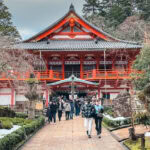
Tucked just behind Yamashiro Onsen’s main bathhouse, Yakuoin Onsenji Temple is an easy stop during a walk through town. The grounds are modest yet carefully maintained. We visited in winter just after a snowfall, which gave the temple an especially serene atmosphere.
The snow-covered paths and quiet garden made it feel far removed from the bustle of the onsen town, even though we were only steps away from nearby cafes and shops.
The temple welcomes visitors of all backgrounds, whether you practice Buddhism or not. For us, it was the perfect complement to the hot springs. We could pause here for a bit of reflection and calm, either before heading into a bath or afterward to let the relaxation sink in.
A Hidden Legacy: The Birthplace of Hiragana?

One of the most fascinating discoveries at Yakuoin Onsenji Temple is its connection to Japanese writing. As we wandered the grounds, we found a path lined with hiragana characters. Following the trail led us to a small stone altar and an inscription that told a local legend.
According to local tradition, the temple is associated with Myokaku Shonin (明覚上人), a monk from the Heian period who is believed to have influenced the early development of hiragana. While not all historical records confirm this, the story adds an intriguing layer of culture to the otherwise quiet site.
How to Get to Yakuoin Onsenji Temple
On Foot
From Kosoyu public bathhouse in Yamashiro Onsen, walk about 2 minutes. The temple sits just behind the main bathhouse area in central Yamashiro Onsen.
By Train + Taxi
From Kagaonsen Station, a taxi takes about 15 minutes.
By Car
From Kaga Onsen Station and Yamanaka Onsen, the drive takes about 10 to 15 minutes. From Komatsu Airport The drive takes about 35 minutes.
Pro Tip: Visit before late afternoon for softer light and fewer visitors. Pair it with CoCo Gallery and the Kutaniyaki Kiln Museum nearby.
Is Yakuoin Onsenji Temple Worth Visiting?

It’s worth a quick stop if you’re already in Yamashiro Onsen. The temple adds a layer of depth to the onsen experience, offering space for contemplation and an intriguing story about hiragana’s origins.
More to Explore Nearby
Yakuoin Onsenji Temple is the protective temple of the famous Kinosaki Onsen, sitting on a hillside overlooking the town. After visiting the temple and viewing its scenic setting, the surrounding area is defined by the seven public hot springs, willow-lined canals, and historic towns of northern Hyogo Prefecture.
- Kinosaki Onsen Sotoyu Meguri (Public Bath Tour) – The main draw of the town! Experience the tradition of Sotoyu Meguri (visiting all seven public hot springs) while strolling the picturesque streets in a yukata (cotton kimono).
- Kinosaki Onsen Ropeway – Take the scenic ropeway ride up Mount Daishi, which leads directly to the temple grounds, and enjoy a spectacular panoramic view of the town, the Maruyama River, and the Sea of Japan coast.
- Izushi Castle Town – A short distance away, explore this preserved castle town, famous for its rows of traditional white-walled storehouses, soba noodles, and the remnants of the former Izushi Castle.
- Amanohashidate – Journey east into neighboring Kyoto Prefecture to visit one of Japan’s Three Scenic Views, a magnificent pine-covered sandbar often combined with a trip to Kinosaki Onsen.