This post may contain affiliate links. Please read our disclosure policy.
The Rocky Mountaineer offers one of the world’s most scenic rail journeys, combining glass-domed views of the Canadian Rockies with gourmet meals and seamless service.
Starting in Vancouver
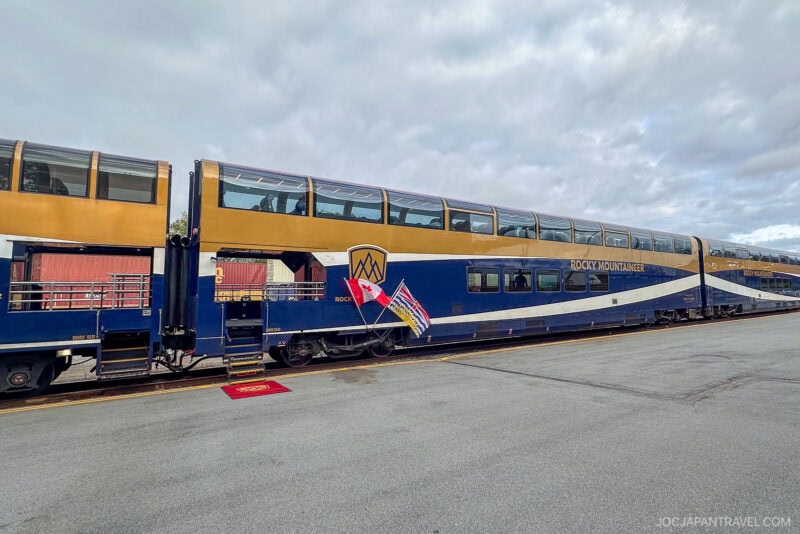
Vancouver, framed by ocean and forested mountains, is the ideal departure point. From the moment we arrived, the Rocky Mountaineer staff made everything effortless. Even when the shuttle bus broke down and couldn’t pick us up from the hotel, they quickly arranged a taxi and greeted us personally at the station. It set the tone for a smooth and welcoming trip.
Our Itinerary on the Rocky Mountaineer

We chose the two-day First Passage to the West route:
- Day 1: Vancouver, BC to Kamloops, BC (8:00 a.m. – 7:00 p.m.)
- Day 2: Kamloops, BC to Banff, Alberta (6:50 a.m. – 10:30 p.m.)
Day 1 evening ends at a hotel arranged by the company, with luggage delivered directly to your room. Not having to haul suitcases made the experience even more relaxing.
Why We Chose GoldLeaf Service

The Rocky Mountaineer has two classes—SilverLeaf and GoldLeaf. We opted for GoldLeaf and felt it was worth every penny.
- The upper-level glass-dome car gave us sweeping views.
- Seats were heated, reclining, and incredibly comfortable.
- Hosts brought drinks and snacks to our seats while sharing stories about the landscapes and history.
Meals were served downstairs in a dedicated dining room. Highlights included steelhead trout, Alberta beef, and freshly baked desserts. There’s also an open-air platform where we took photos and felt the mountain breeze.
Pro Tip: Bring a wide-brimmed hat if traveling on sunny days, as the dome lets in plenty of light.
Quick Facts About the Rocky Mountaineer
- Season: April to October, with June through September offering long daylight and vibrant scenery
- Delays: The train shares tracks with freight trains, so expect occasional waits
- Direction: Traveling east into the Rockies provides the most dramatic mountain reveal
Day 1 – Vancouver to Kamloops

We left Vancouver with coffee in hand, watching farmland and the Fraser River glide past.
Hell’s Gate and Railway History
One highlight was Hell’s Gate, where the river narrows into powerful whitewater rapids. Guides explained the protective rock sheds and avalanche barriers that keep the line safe. At Craigellachie, we passed the site of the “last spike” of the Canadian Pacific Railway in 1885.
Evening in Kamloops

Closer to Kamloops, we saw slopes scarred by recent wildfires—a striking contrast to the lush valleys earlier in the day. After winding through dozens of tunnels, we arrived around 7 p.m., where dinner and a hotel room awaited.
Day 2 – Kamloops to Banff
Our second day began before sunrise. We were welcomed with fresh pastries and stunning mountain views as the train headed deeper into the Rockies.
Into the Heart of the Rockies

This leg brought the most dramatic scenery—turquoise rivers, towering peaks, and wildlife sightings that included eagles, ospreys, bighorn sheep, and even a black bear.
Spiral Tunnels and Engineering Feats

The Spiral Tunnels, carved by hand in the early 1900s, remain a marvel of engineering. The looping tracks reduce steep grades that once made this pass treacherous. Watching our train curl through them was unforgettable.
We reached Banff close to 10:30 p.m., greeted by midsummer twilight. Buses were waiting to take us to our hotels, ending two full days of rail magic.
Our Final Take on the Rocky Mountaineer

The Rocky Mountaineer combines jaw-dropping scenery with thoughtful service, excellent meals, and complete ease of travel. While it’s a splurge, it felt like a true once-in-a-lifetime experience.
We would recommend it for couples, families with older kids, or multigenerational trips. For anyone dreaming of seeing the Canadian Rockies by train, this journey more than delivers.
More to Explore Nearby

Once in Banff, you’ll find plenty of ways to extend your trip:
- Banff National Park – Iconic mountain landscapes, turquoise lakes, and hiking trails
- Lake Louise – Famous turquoise waters and the Fairmont Chateau Lake Louise
- Icefields Parkway – A scenic drive to Jasper with glaciers, waterfalls, and wildlife
- Banff Gondola – Sweeping views of the Rockies from Sulphur Mountain