This post may contain affiliate links. Please read our disclosure policy.
Banff National Park is Canada’s oldest national park, where dramatic glaciers, turquoise lakes, and alpine trails create unforgettable adventures for families.
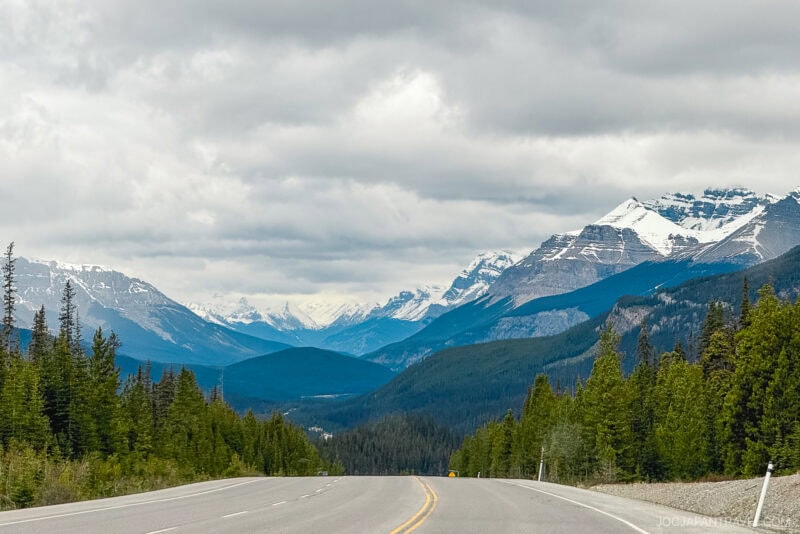
Our Itinerary for Banff and the Rockies
We based ourselves in the town of Banff for several days and explored by rental car. Our highlights included:
- Strolling through Banff town
- Exploring the Columbia Icefield and walking on a glacier
- Hiking Johnston Canyon
- Canoeing the Bow River
- Summiting Mount Norquay via ferrata
- Visiting Lake Louise and Moraine Lake
It was an ambitious plan, but worth every minute.
Travel Tip: We went back to Banff in 2025, and stayed right in downtown Banff. It was easier to walk to restaurants and other activities.
Day One: Exploring the Town of Banff
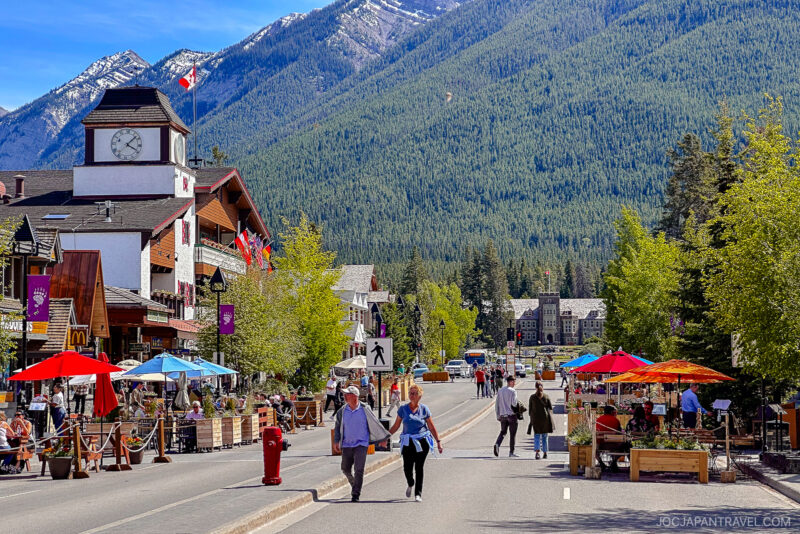
Banff felt like it came straight out of a storybook. Snow-capped peaks surrounded us, and the streets were lined with cozy shops and restaurants. Since we had a rental car, we set our own pace and quickly felt at home in this alpine village.
Day Two: Columbia Icefield Glacier Adventure
We left early to drive north along the Icefields Parkway, one of the most scenic roads in the world.
Athabasca Glacier
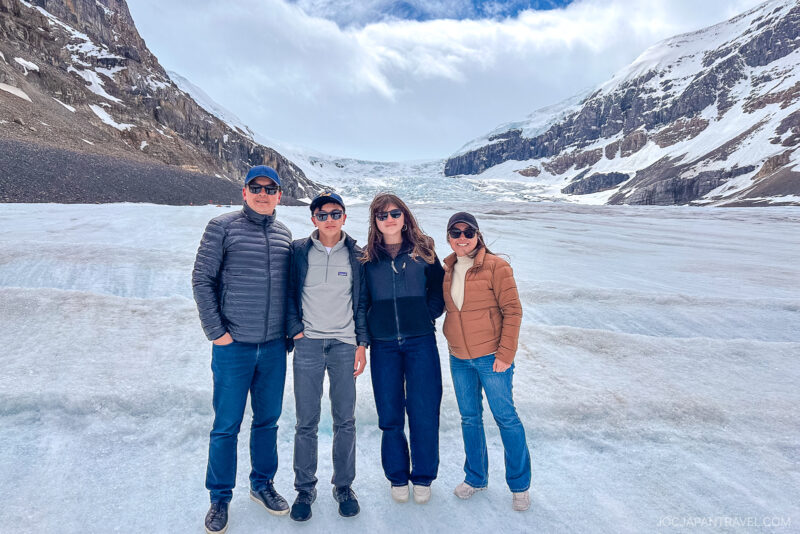
We joined the Columbia Icefield Adventure, which included a ride on a massive “Ice Explorer” vehicle that took us right onto the glacier. Walking on ancient ice was surreal—the crisp air and vast silence left a lasting impression.
Glacier Facts:
- Area: ~6 sq km (2.3 sq miles)
- Depth: ~300 m (1,000 ft)
- Elevation: ~2,700 m (8,900 ft)
Columbia Icefield Skywalk
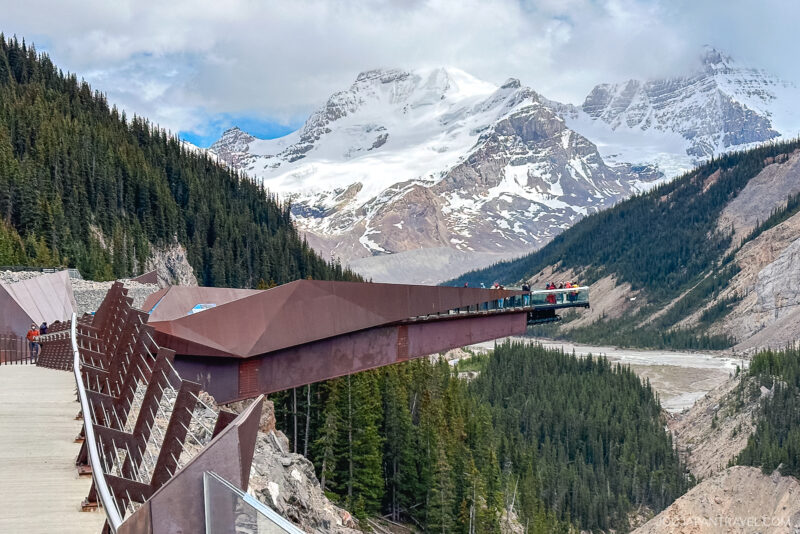
Afterward, we stepped onto the Skywalk, a glass platform suspended 280 m (900 ft) above the valley floor. The views of rugged peaks and glacial rivers were spectacular, and the exhibits helped us understand the region’s geology and wildlife.
Day Three: Johnston Canyon and Canoeing the Bow River
In the morning, we hiked Johnston Canyon. The trail follows a turquoise river through narrow limestone walls, with bridges leading to waterfalls and hidden pools.
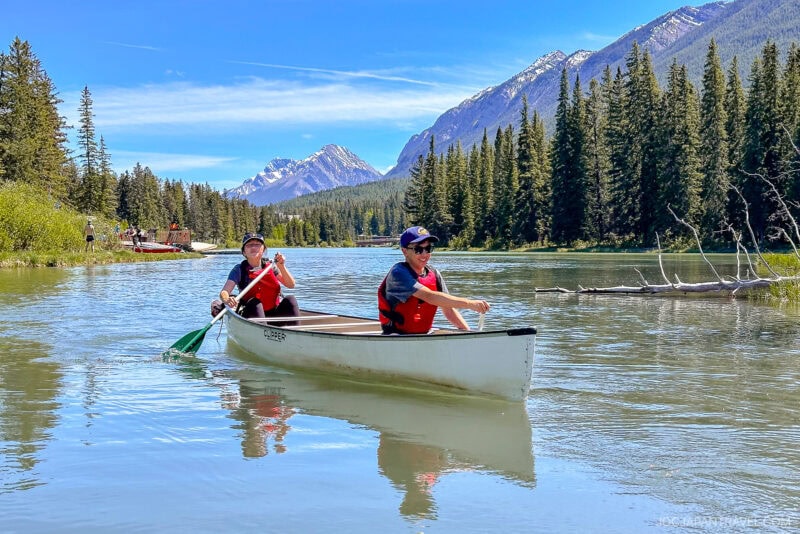
That afternoon, we rented canoes from the Banff Canoe Club. Paddling along the Bow River was peaceful and scenic, and it felt far less crowded than Lake Louise or Moraine Lake.
Day Four: Mount Norquay, Moraine Lake, and Lake Louise
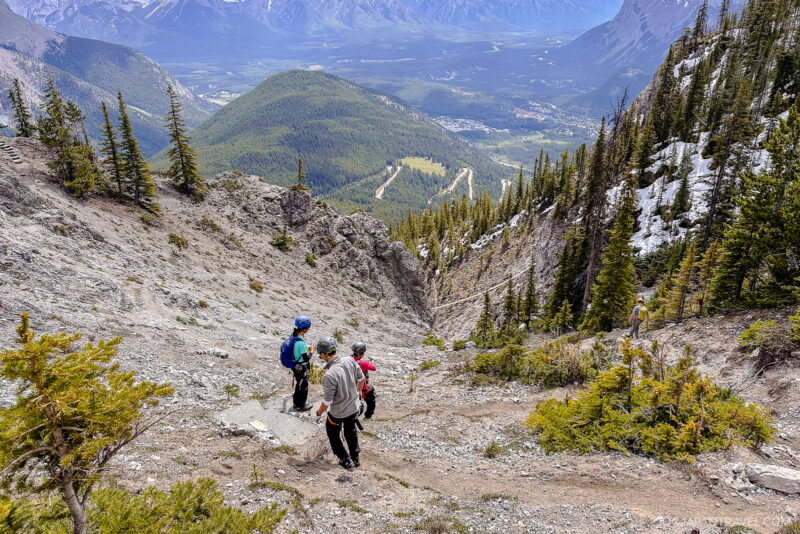
Our son and I started with a guided via ferrata climb on Mount Norquay. Using ropes and iron rungs, we scrambled to the summit for incredible views of the Banff Valley.
In the afternoon, we visited two of the park’s most famous lakes.
Lake Louise and Moraine Lake
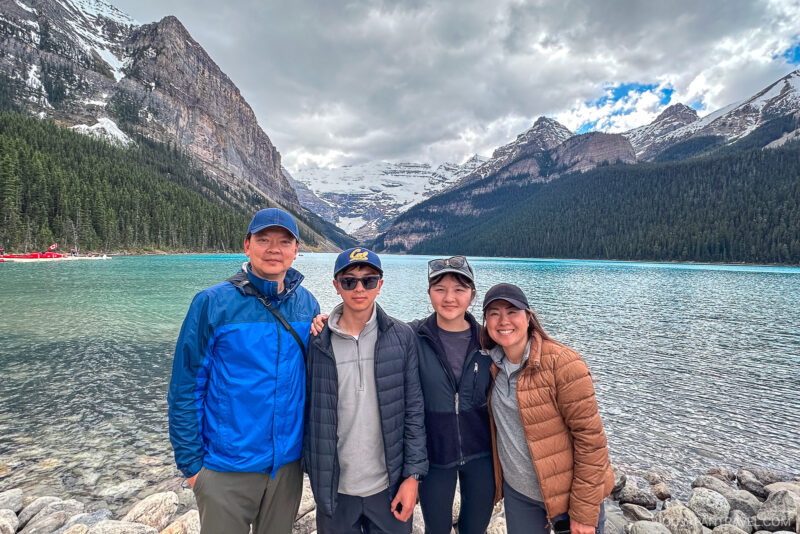
Both are glacier-fed and known for their vivid blue-green color. Since private cars are no longer allowed at Moraine Lake, we reserved shuttle tickets in advance. The surrounding trails and viewpoints made it easy to spend hours soaking in the scenery.
Tip: Visit Moraine Lake first, as shuttle spaces fill quickly. Staying overnight near Lake Louise makes for a more relaxed visit.
Bonus Stop: Wagashi Tea House in Canmore

On our way out of the Rockies, we stopped in Canmore for lunch at Wagashi Tea House, a Japanese cafe run by a local family. We enjoyed a traditional Japanese breakfast and fluffy waffles—a warm and memorable way to end our trip.
How to Get to Banff National Park
Banff National Park is located in the Canadian Rocky Mountains in Alberta, Canada.
By Air
The closest major airport is Calgary International Airport (YYC), which is about a 1.5 to 2-hour drive east of Banff.
- Rental Car: This is the most popular option as it gives you the freedom to explore the park and surrounding areas. Rental car agencies are located directly at the airport.
- Shuttle Service: Numerous private companies (like Banff Airporter and Brewster Express) offer convenient and affordable shuttle service directly from the airport to the town of Banff and many of its hotels. This is a great choice if you don’t want to drive.
By Car
The drive from Calgary to Banff is on the Trans-Canada Highway (Highway 1), a well-maintained, scenic route. Approximate drive times are:
- From Calgary: 1.5 to 2 hours
- From Vancouver, BC: 10 to 12 hours
Driving offers the most flexibility for exploring the park, as attractions like Lake Louise, Moraine Lake, and the Icefields Parkway are spread out. However, during peak summer and holidays, parking in the town of Banff and at popular attractions can be extremely limited. Consider using the Roam Public Transit system to get around once you are in the park.
Is Banff National Park Worth Visiting?
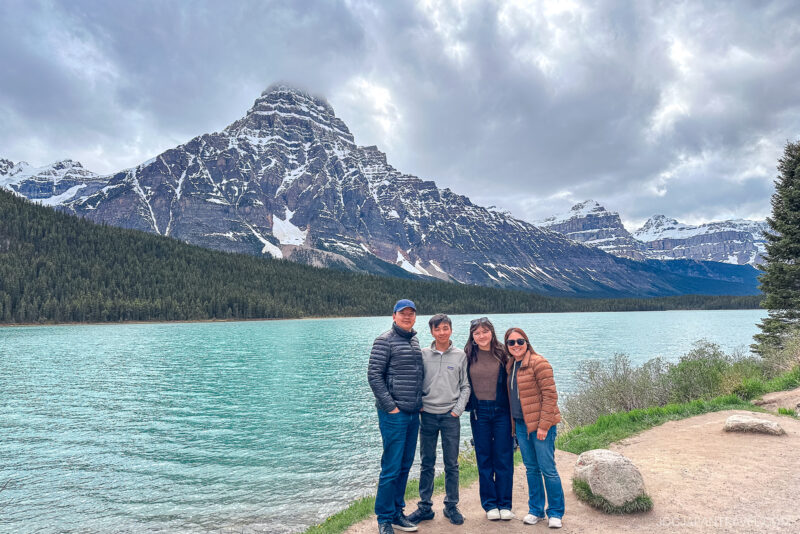
Absolutely! We couldn’t get enough of Banff and ended up going back the very next year. Banff National Park is one of the world’s great natural destinations. Between glacier walks, river paddles, and those breathtaking turquoise lakes, it’s the kind of place that makes you fall in love with nature all over again and forget about everything else.
Every moment feels special, and it’s one of those places that never leaves your heart.
More to Explore Nearby
Once you’ve explored Banff, there are more adventures close by:
- Yoho National Park – Emerald Lake and the towering Takakkaw Falls
- Kootenay National Park – Scenic drives, hot springs, and colorful canyons
- Canmore – A mountain town with hiking trails, cafes, and family-friendly charm
- Jasper National Park – Wildlife spotting and the stunning Maligne Lake