This post may contain affiliate links. Please read our disclosure policy.
In the center of Kamakura, Tsurugaoka Hachimangu Shrine stands as a powerful link to the city’s samurai past, blending history, tradition, and everyday local life.
A Legacy of Samurai Spirit
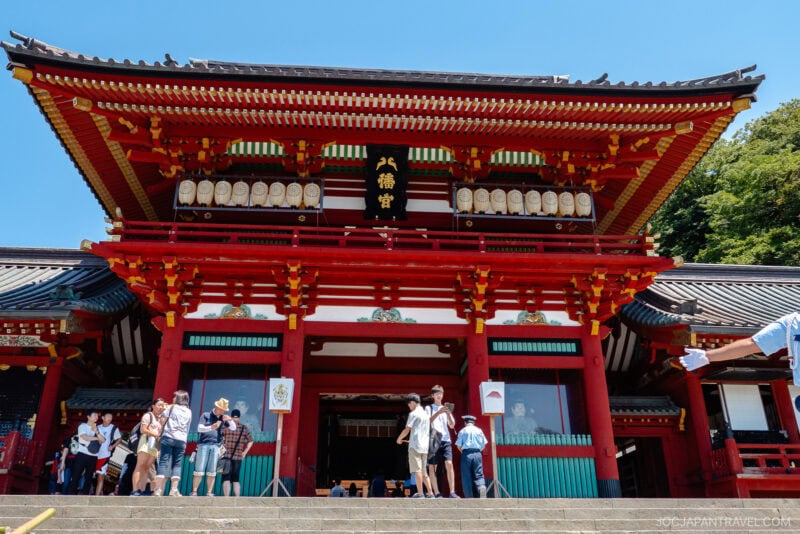
Tsurugaoka Hachimangu is Kamakura’s most important Shinto shrine. Founded in 1063 by Minamoto no Yoriyoshi and relocated in 1180 by Minamoto no Yoritomo, the founder of the Kamakura shogunate, it has been tied to Japan’s warrior history for centuries. The shrine honors Hachiman, the Shinto god of war and protector of the samurai.
Walking through the large torii gates and up the broad stone steps, we were reminded of the shrine’s long history. More than a scenic spot, it served as the spiritual and political heart of Kamakura during the samurai era.
What to See at Tsurugaoka Hachimangu

Main Hall (Hongu)
The current structure, rebuilt in the 1820s, sits high above the city. Its bold red-and-white façade is a classic example of Edo-period architecture. From here, you can enjoy wide-reaching views over Kamakura.
Wakamiya Shrine

At the base of the main staircase, this sub-shrine is popular for traditional Shinto weddings. It’s one of the oldest surviving parts of the complex.
Genpei Pond and Bridges
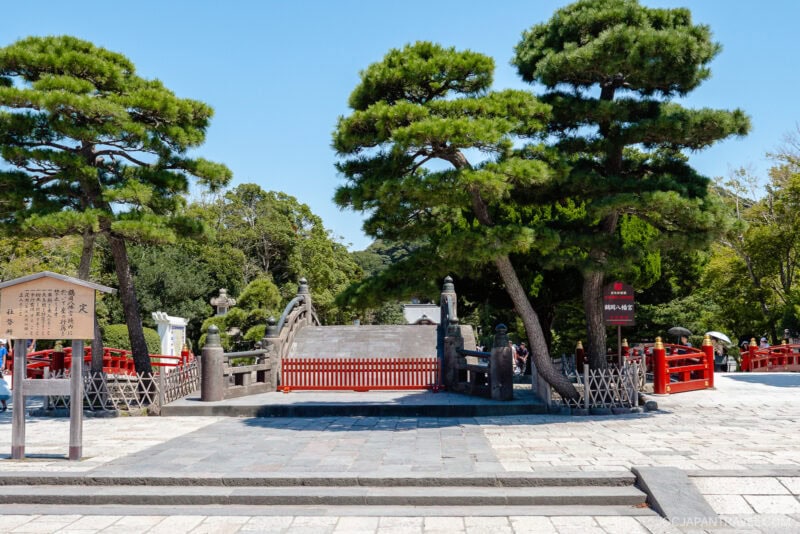
The twin ponds symbolize the Minamoto and Taira clans. In spring, the arched red bridge surrounded by cherry blossoms creates one of Kamakura’s most famous seasonal views.
Throughout the grounds, we loved seeing everyday life unfold—students in uniforms, families on weekend strolls, and couples in yukata pausing beneath the ginkgo trees.
A Walk Along Dankazura
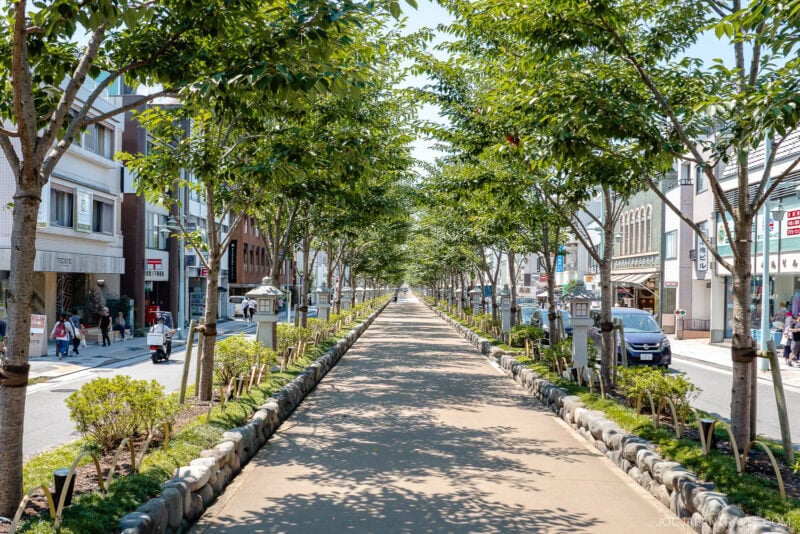
The approach to the shrine is just as memorable. Dankazura is a raised, tree-lined avenue built by Yoritomo as a prayer for his wife’s safe childbirth. Today it connects Kamakura Station to the shrine with a path shaded by cherry trees and lined with small shops and cafes. Walking this route gave us a sense of anticipation as the shrine came into view.
Shrine or Temple – What’s the Difference?
For first-time visitors to Japan, it helps to know the distinction. Shrines (jinja) belong to Shinto, Japan’s native religion, while temples (tera) are Buddhist. At shrines like Tsurugaoka Hachimangu, you’ll pass through torii gates, see ema prayer plaques, and watch visitors clap and bow at the altar.
How to Get to Tsurugaoka Hachimangu Shrine
By Train
Ride the JR Yokosuka Line to Kamakura Station. The trip from Tokyo takes about 1 hour. Walk 10 minutes via Komachi-dori or the Dankazura path.
By Car or Taxi
From central Yokohama, the drive takes about 45 to 60 minutes. Parking near the shrine is limited, especially on weekends. Taxis from Kamakura Station take 5 to 10 minutes.
Pro Tip: Arrive early for softer light and fewer crowds. Visit on weekdays during peak seasons when possible.
Is Tsurugaoka Hachimangu Shrine Worth Visiting?

Yes! This shrine is one of Kamakura’s must-see landmarks. It’s more than a religious site—it’s a living reminder of the city’s samurai heritage and cultural identity. With its rich history, seasonal beauty, and easy access from Tokyo, Tsurugaoka Hachimangu offers a memorable experience at the very heart of Kamakura.
More to Explore Nearby
As Kamakura’s most important Shinto shrine, Tsurugaoka Hachimangu is central to the city’s historical downtown, placing you close to the area’s oldest Zen temples, famous Buddhas, and unique local dining experiences.
- Kamakura Kencho-ji – Visit the city’s oldest Zen Buddhist temple, featuring beautiful Zen gardens and architecture, located just north of the Hachimangu.
- Kamakura Kotoku-in (Great Buddha) – Discover this monumental outdoor bronze statue of Amida Buddha, which is the most famous and recognizable symbol of Kamakura.
- Chayakado Restaurant – Enjoy a local culinary highlight at this well-regarded restaurant, known for specializing in authentic Kamakura cuisine and traditional Japanese dishes.
- Hokokuji Temple – Find tranquility at the unique “Bamboo Temple,” famous for its beautiful grove and small tea house where you can enjoy matcha.