This post may contain affiliate links. Please read our disclosure policy.
Home to the world’s oldest surviving wooden structures, Horyu-ji in Nara reveals a rare glimpse into the origins of Japanese Buddhism and architecture.
Walking Through More Than 1,300 Years of History
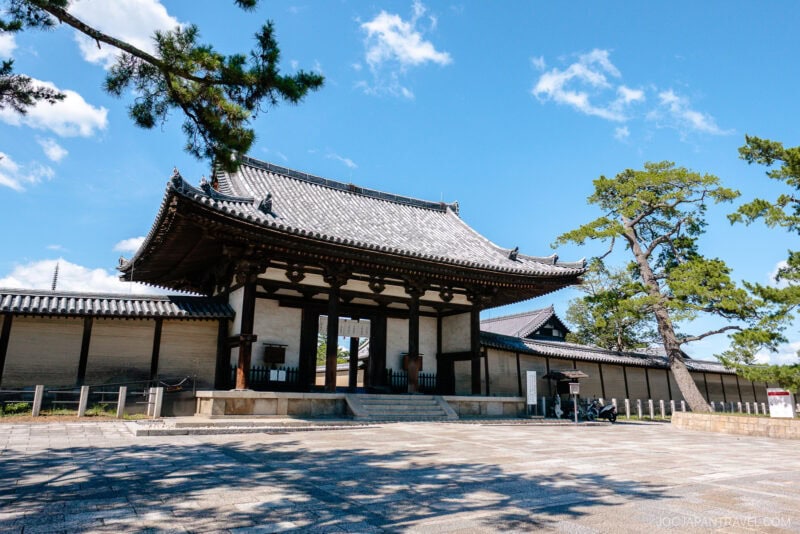
Horyu-ji (法隆寺) is one of Japan’s most significant temples, both for its historical importance and its incredible preservation. Founded in 607 by Prince Shotoku, a central figure in the spread of Buddhism, it stands today as a UNESCO World Heritage Site and a living museum of early Japanese culture.
The temple grounds cover 46 acres (187,000 m²) and are home to dozens of halls, pagodas, and treasures. While many temples in Japan have been rebuilt over the centuries, Horyu-ji’s Western Precinct still contains wooden structures dating back to the late 7th century—the oldest in the world.
Western Precinct Highlights

Kondo (Main Hall)
Built in the Asuka period, this two-story hall houses some of Japan’s most important Buddhist sculptures, including the Shaka Triad by master sculptor Tori Busshi.
Goju-no-to (Five-Story Pagoda)
Over 1,300 years old, this elegant pagoda serves as a reliquary. Standing beneath its tiered eaves, it’s easy to imagine the craftsmanship and dedication it took to build.
Daikodo (Great Lecture Hall)
Rebuilt in 990 after a fire, this large hall reflects the temple’s role in education and monastic life.
Eastern Precinct and Yumedono
Crossing over to the Eastern Precinct, the standout is Yumedono (Hall of Dreams)—an octagonal hall built to honor Prince Shotoku. Inside are spiritual relics and statues, some only displayed on special occasions.
Between the two precincts is the Gallery of Temple Treasures, a modern museum displaying over 300 artifacts, including rare scrolls, bronze statues, and ceremonial items. Photography isn’t allowed, but the collection offers an excellent introduction to early Buddhist art.
A Living Legacy of Buddhism

Visiting Horyu-ji is more than sightseeing—it’s a direct encounter with Japan’s earliest Buddhist heritage. The architecture, art, and layout all reflect the vision of Prince Shotoku.
How to Get to Horyu-ji (法隆寺)
Train
From JR Nara Station, take the JR Yamatoji Line to Horyu-ji Station (about 11 minutes). From the station, it’s a 20-minute walk or a short Nara Kotsu bus ride to the temple entrance.
From Kintetsu Nara Station, go to JR Nara Station and transfer to the JR Yamatoji Line for Horyu-ji Station.
Bus
From Horyu-ji Station, take a Nara Kotsu bus to the Hōryū-ji-mae stop near the temple. Ride time is about 5 minutes.
By Car or Taxi
Horyu-ji is in Ikaruga, roughly 25 minutes by taxi from central Nara depending on traffic. Paid parking is available near the temple.
Time Needed
Plan about half a day to see the Western Precinct, Eastern Precinct, and the Gallery of Temple Treasures.
Pro Tip: Arrive near opening to explore both precincts and the museum before the crowds.
Is Horyu-ji Worth Visiting?
We recommend visiting Horyu-ji if you’re interested in history, architecture, or Buddhism. It’s quieter than central Nara, and you can see buildings that have stood for more than 1,300 years.
More to Explore Nearby
As the site of the world’s oldest wooden buildings and a key piece of Japanese Buddhist history, Horyu-ji is the perfect start to exploring the cluster of ancient temples and former palace grounds in Western Nara.
- Toshodai-ji Temple – Visit this nearby UNESCO World Heritage site, renowned for its serene classical architecture and historical connection to China.
- Yakushi-ji Temple – Explore this famous Imperial temple, another World Heritage site in the area, known for its symmetrical layout and colorful pagoda.
- Heijo Palace Site – Wander through the expansive grounds of the former Imperial Palace, which served as the capital’s center of power during the Nara Period.
- Saidai-ji Temple – Discover the “Great Western Temple,” historically counted as one of Nara’s seven great temples, dedicated to the Buddha.