This post may contain affiliate links. Please read our disclosure policy.
Experience the magic of Zao in the winter with our ultimate guide. From must-see attractions to hidden gems, we’ve got you covered for the perfect winter getaway.
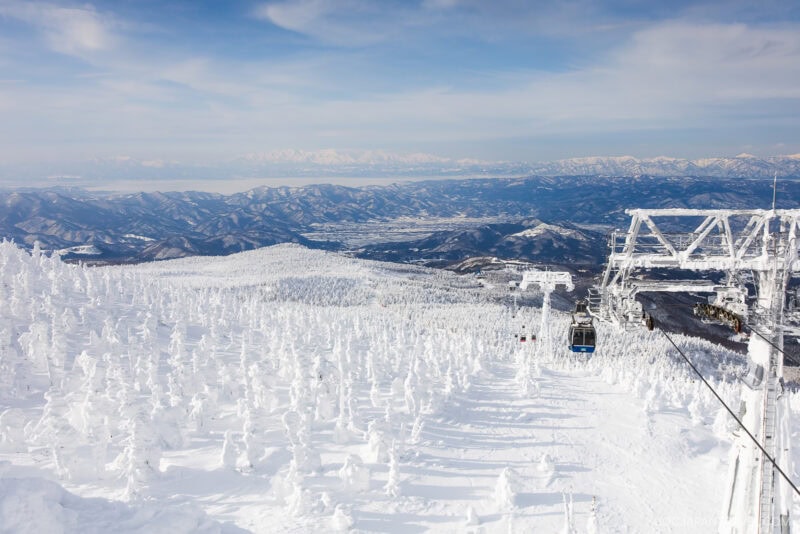
Mount Zao, or Zaosan (蔵王山), is a volcanic mountain range straddling Yamagata and Miyagi in northern Tohoku. Mount Kumano, the highest peak at 1,841 meters, features the crater lake Okama, also called “Goshiki-Numa” (Five Color Pond), which shifts color with the weather.
Known as a power spot in northern Honshu, Mount Zao ranks among Tohoku’s tallest mountains and is one of Japan’s 100 famous peaks. The mountainsides are home to the iconic frost-covered “snow monsters,” a natural wonder I’ll explore later.
On Yamagata’s western side lies Zao Ski Resort, a paradise for winter sports, hot springs, and nature lovers. I spent a night there to take in the beauty and share what you can do on Mount Zao in winter.
How to Get to Zao Ski Resort
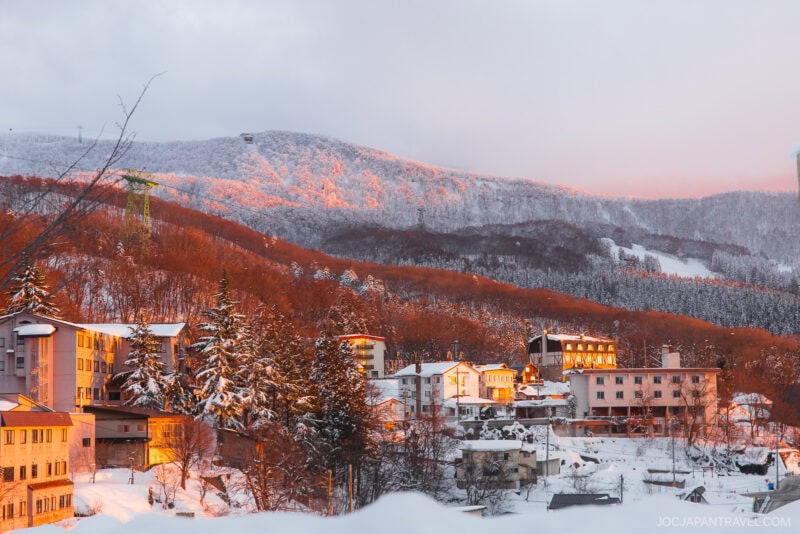
After arriving in Sendai, I drove about 1 hour and 20 minutes to Zao. Roads may look clear at first, but they get slippery near the resort, so drive carefully.
If you prefer public transport, take the Senzan Line from Sendai Station to Yamagata Station (about 1 hour 20 minutes, 1,170 yen one way in 2024). From Yamagata Station No.1 Bus Stop, board the Yamako Bus to Zao Onsen Bus Terminal (40 minutes, 1,000 yen). You can find the bus timetable here.
When to Visit Zao Ski Resort
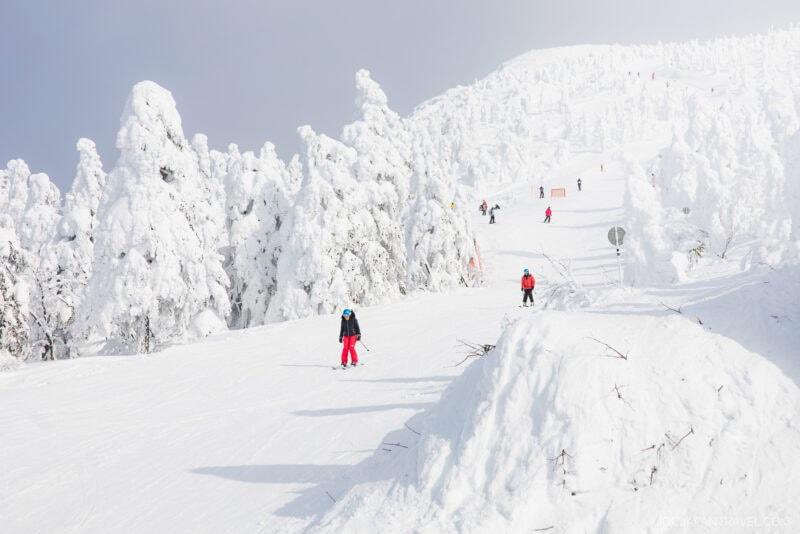
Zao Ski Resort opens in early December and runs until late April or early May, depending on snow conditions. The best time for skiing or snowboarding is January and February, when powdery snow is at its peak.
Spring skiing in March and April offers fewer crowds and warmer weather, though the snow is less fluffy.
To see the famous snow monsters, visit in mid-February, when temperatures drop to -10°C to -15°C (14–5°F). Note that Okama Crater, popular with hikers in other seasons, is closed in winter.
What is there to do in Zao Ski Resort in Winter
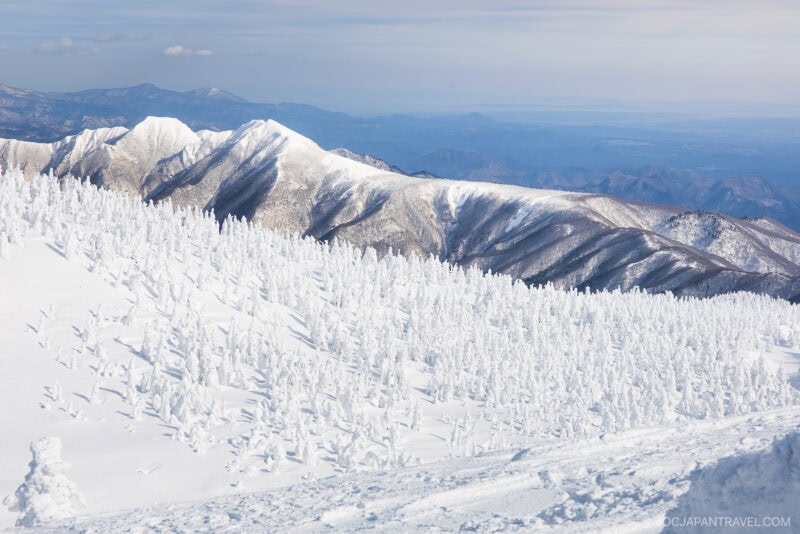
While Zao Ski Resort is famous among skiers and snowboarders, there are many other activities that you can enjoy. During my stay, I saw many people wandering around the resort, enjoying the scenery, relaxed atmosphere, and food!
Skiing and Snowboarding
With 14 slopes, 30+ lifts, gondolas, ropeways, and plenty of off-piste tracks, Zao Ski Resort is a winter sports haven. Slopes range from beginner to advanced, and lower lifts are open for night skiing.
Rental shops throughout the resort offer gear for half-day to week-long stays. First-timers can book private or group lessons at Zao Base Center Jupeer.
You can also find a list of schools here, with some having English support. Peak season gets busy, so book lessons in advance rather than on the day.
Winter Trekking and Snow Monsters
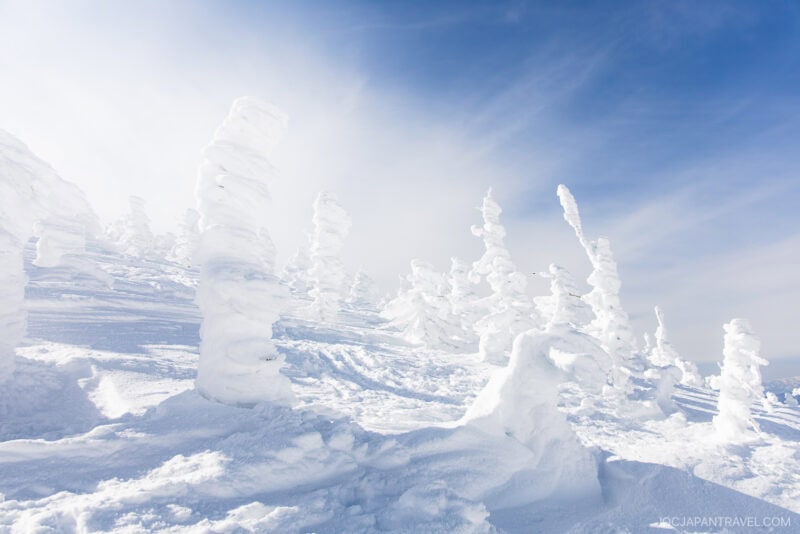
Mount Zao is famous for its “snow monsters,” or Juhyo. These frosty creatures are formed when icy northwesterly winds from Siberia meet water vapor from the Tsushima Warm Current, dressing the trees in thick layers of snow and ice. It’s like nature’s own army of whimsical, frozen guardians!
How is Snow Monsters Formed
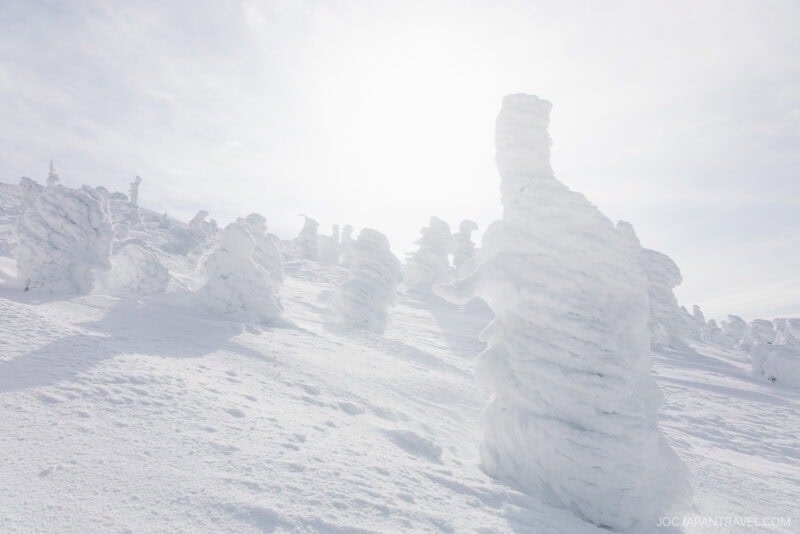
In winter, water vapor forms snow clouds that rise over the Asahi Mountains, pass through the Yamagata Basin, and hit the Zao Mountain Range, causing heavy snowfall. Many cloud particles become supercooled droplets that freeze on the Aomori Fir Trees, creating the iconic snow monsters.
I joined a winter trek to see the snow monsters up close at a leisurely pace, booking through Visit Yamagata. You can request an English-speaking guide. Courses last 5–6 hours with breaks, and beginners are welcome. I went with the A course.
After booking, I received a confirmation email with a gear list. I picked up everything I needed at Shiba Ski Rental. It gets extremely cold at the summit, so bring Heattech clothing, a scarf, and gloves. Sunglasses are essential too, as the snow is blinding on sunny days!
Trekking at Zao
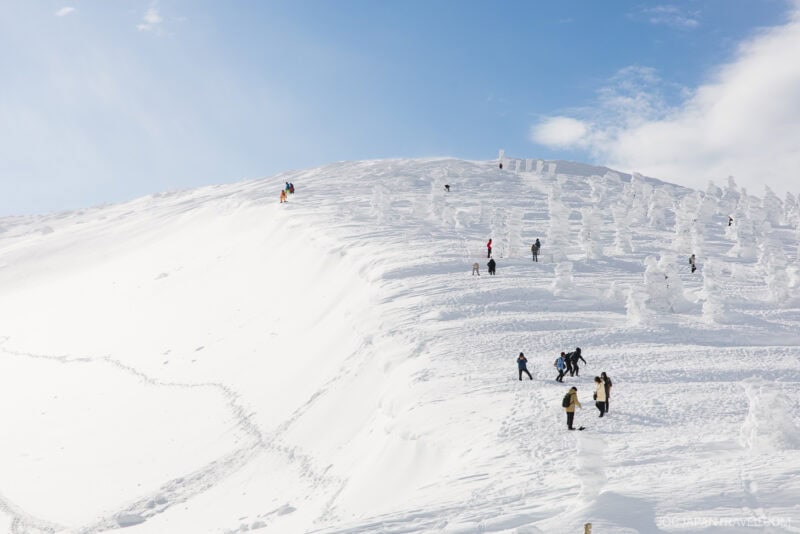
I lucked out with perfect weather, enjoying clear views over Zao and Yamagata. The tour goes ahead even in poor conditions.
My guide, Takahashi-san, a Zao local and former photographer with decades of climbing experience, shared the story of the snow monsters and gave tips for the best photos.
The trek began at 8:15 am at Sanroku Station, taking two gondolas up to Jizo Sancho Station on Mount Jizo. Whether trekking with a guide or riding the gondola, I recommend arriving early, as lines can stretch for hours.
At the top, you’ll find skiers, snowboarders, and plenty of visitors admiring the snow monsters.
Seeing Snow Monsters Up Close
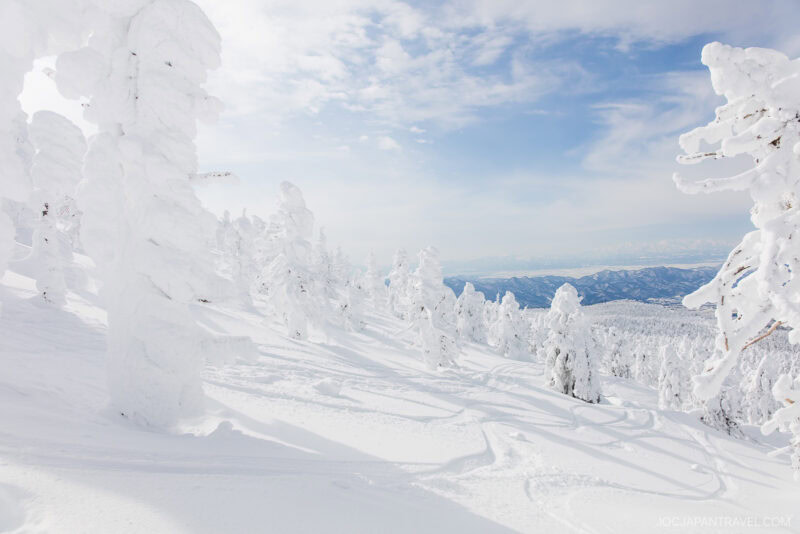
We passed the Jizo statue, one of Mount Zao’s three gods, mostly buried in snow with only its head and upper torso visible. Then we climbed to the peak of Mount Jizo, taking in views of Zao and the western mountain ranges.
In summer, you can continue hiking Mount Kumano to see the Okama Crater.
On the way down, we weaved through the snow monsters, noticing how the strong winds shape their icy forms. Takahashi-san also pointed out that Aomori Fir Trees are declining due to Todomatsu beetles, with some shrinking or decaying.
We crossed ski and snowboard courses, explored one of Takahashi-san’s “special” trails, and stopped for lunch at a rest house. The final hour of the trek offered more breathtaking scenery before we made our way down.
The Views From Torikabuto Observatory
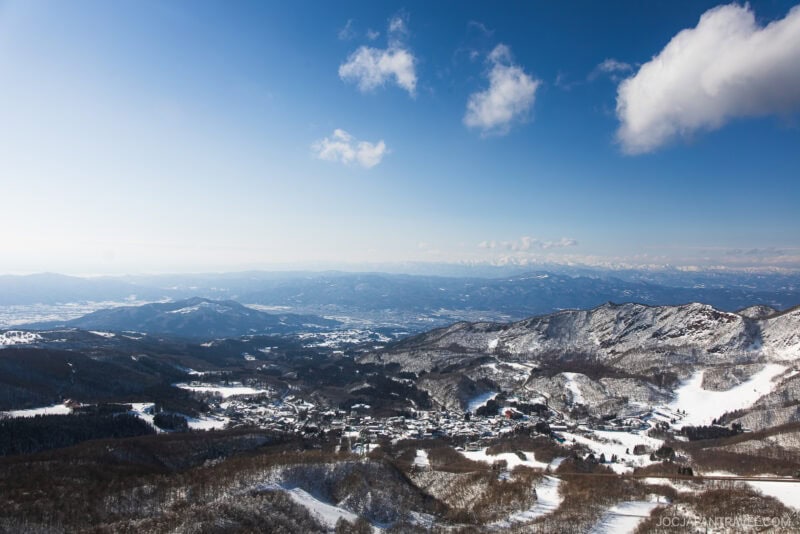
The tour ended at Torikabuto Observatory, which offers stunning views back over Mount Jizo. On a clear day, you can spot Zao Onsen town to the right, Kaminoyama to the left, and distant peaks like Mt. Adatara, the Azuma and Iide ranges, Mt. Gassan, Mt. Hayama, and Mt. Chokai.
Snow trekking here was easily one of my top experiences in eight years of living in Japan. Photos don’t do justice to the scale and beauty of Zao’s nature. You need to see it in person!
In the evening, there’s a night cruiser tour and special illumination that lights up the snow monsters. I missed it on my visit, but check at Sanroku Station for details if you go.
Zao Onsen
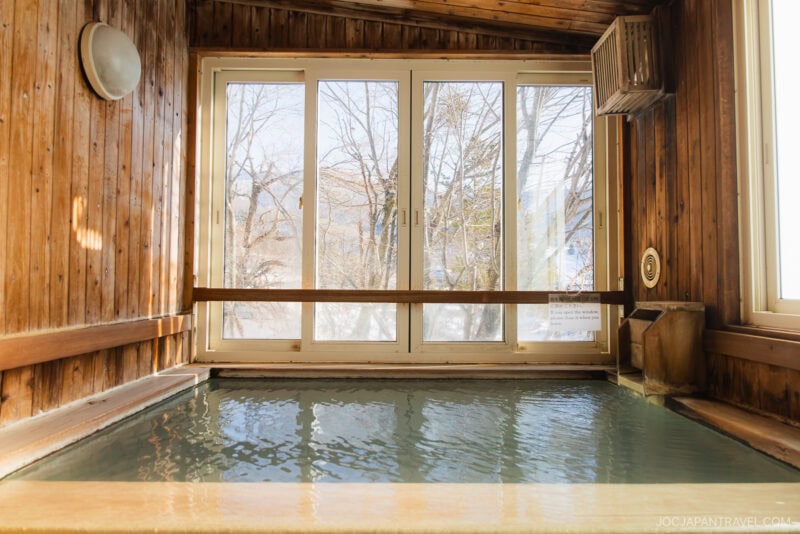
Zao Onsen is a collection of hot springs with a history of over 1,900 years, said to have healed a wounded warrior. Known for their strong, acidic, sulfuric waters, locals call them the “Springs of Beauty” for their skin and muscle benefits.
Many accommodations at Zao Ski Resort have their own onsen, but you can also visit public baths like Kamiyu, Shimoyu, and Kawarayu. Note that the popular Zao Dai-Rotemburo (Large Outdoor Baths) is closed in winter.
A full list of public baths, footbaths, and spas is available here.
Hotel Tsuruya
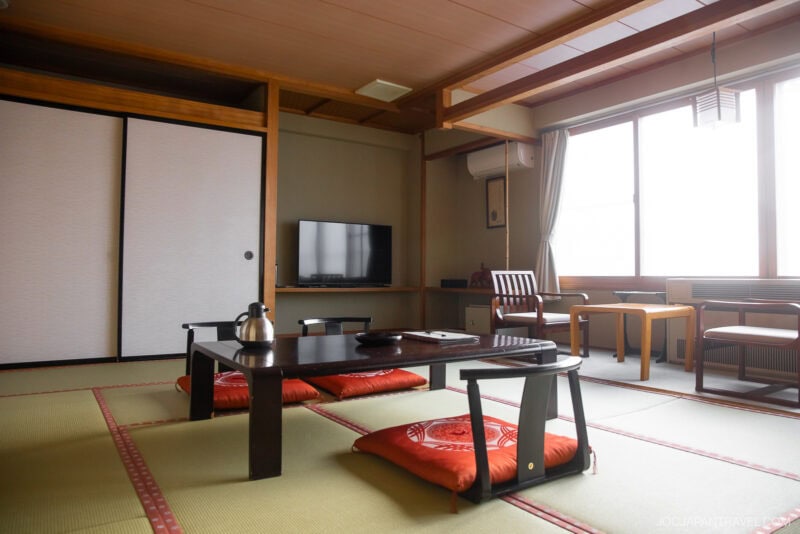
There’s a range of ryokans and hotels, and I stayed at Tsuruya, famous for its onsens. The staff greeted me with amazake, helped with luggage, and showed me around the facilities.
My room had a traditional Japanese-style setup with tatami mats, a low table, and a view that stole the show.
The onsens use 100% natural hot spring water at 125°F (52°C). Boiling at first, they’re perfect after skiing or trekking. Guests can reserve one private bath per day for 50 minutes.
Food at Hotel Tsuruya
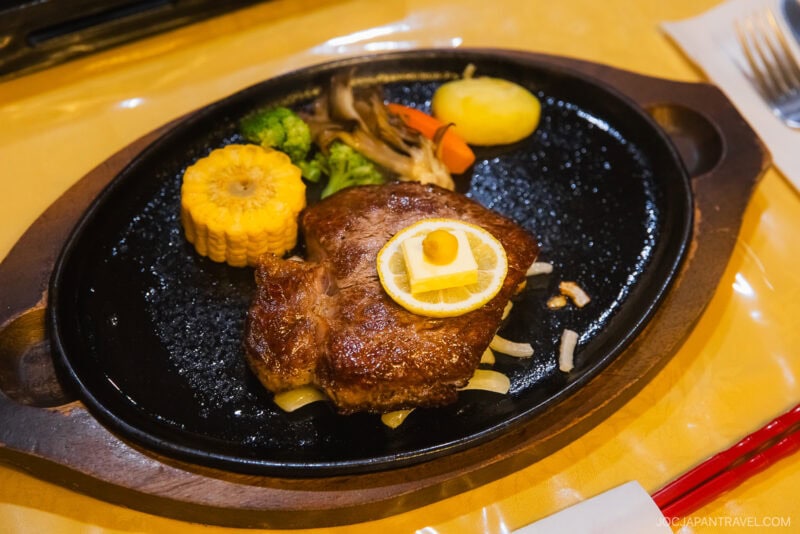
For dinner, you can choose from Yamagata Local Cuisine, Shabu-Shabu, Sukiyaki, or the Zao Beef Set, all made with seasonal Yamagata ingredients and served in a private dining room.
I went with the Zao Beef Set—200g of incredibly tender beef from Zao Kogen Farm, accompanied by side dishes, salad, rice, and miso soup.
Breakfast featured a variety of small dishes, fish, a pot of oden, and bread, perfect for fueling a day of exploring.
Final Thoughts on Zao Ski Resort
Visiting Zao Ski Resort was a dream come true for me, especially finally seeing the snow monsters up close. Photos hardly capture the magic! The frosted trees and sweeping landscapes are even more stunning in person. If you’re traveling to Japan in winter, Zao should definitely be on your itinerary!
More to Explore Nearby
Zao is the heart of winter in Tohoku, famous for its magnificent Snow Monsters and excellent powder. This location is an ideal base for exploring other atmospheric winter villages, historical cities, and renowned natural landmarks across the region.
- Ginzan Onsen – Travel north to this picturesque, historic hot spring town known for its beautifully preserved wooden inns and nostalgic, gaslit streets under a blanket of snow.
- Matsushima Bay – Visit the coastal area of Miyagi Prefecture to see one of Japan’s most celebrated scenic views: hundreds of tiny, pine-covered islands dotting the calm bay.
- Sendai City – Explore the largest city in the Tohoku region, known for its wide, tree-lined avenues, historical sites, and delicious local cuisine like beef tongue (gyutan).
- Aizu Wakamatsu – Journey south to this historic samurai city in Fukushima Prefecture, famous for its reconstructed Tsuruga Castle and deep feudal-era history.