This post may contain affiliate links. Please read our disclosure policy.
Discover the best Tokyo autumn leaves spots, from famous gardens to hidden parks, with peak color tips, hours, and simple access directions.
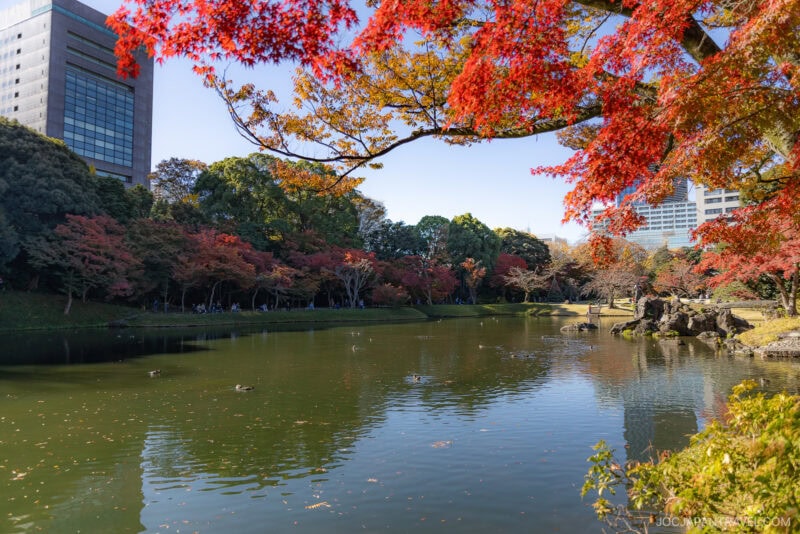
After Tokyo’s hot and humid summer, I love when the air finally turns crisp and I can pull on a sweater and go search for koyo, or autumn leaves. The world’s largest city suddenly feels softer, with pockets of red, gold, and orange tucked between high-rises and train lines.
Tokyo is famous for food, shopping, and neon, but it is also one of my favorite cities in Japan for autumn colors. In this guide, I will walk you through my top 10 spots to see autumn leaves in Tokyo, along with typical peak dates, hours, fees, and a few tips from my own visits.
The best time to see autumn leaves in Tokyo is usually from mid November to early December, with golden ginkgo trees peaking around late November and red maples often at their best from late November into early December.
1. Meiji Jingu Gaien Ginkgo Avenue (Meiji Jingu Gaien Icho Namiki)
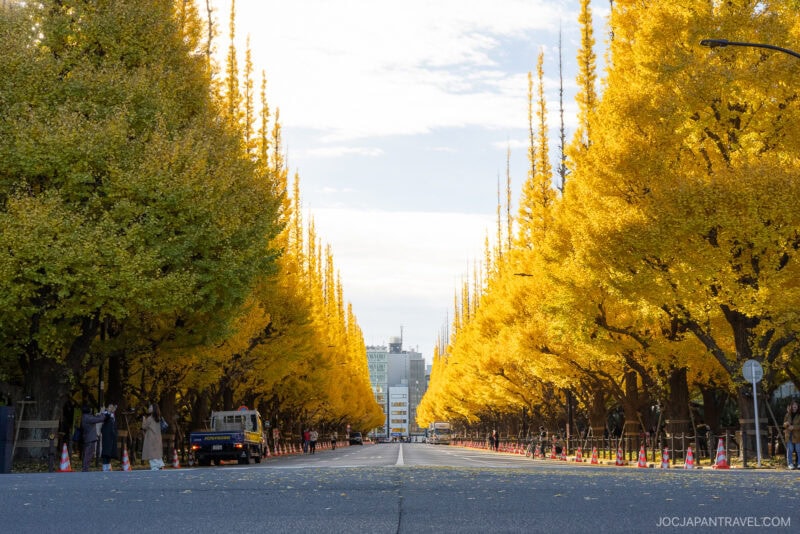
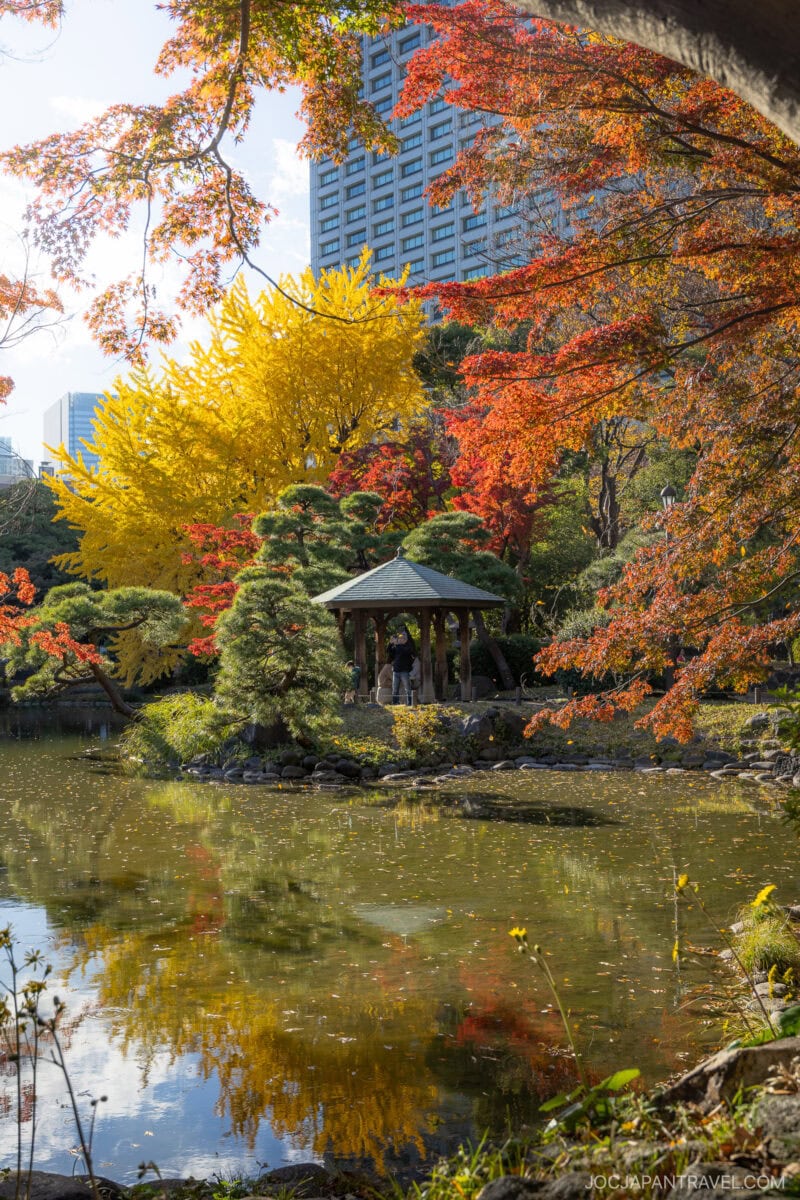
Meiji Jingu Gaien’s Ginkgo Avenue is probably the most famous autumn street in Tokyo. A straight 300 meter avenue lined with 146 carefully trimmed ginkgo trees turns into a tunnel of gold at the end of November. When the light hits the leaves, they almost glow.
Because it is so iconic, this is also one of the busiest places in autumn. Cars usually run along the road during the day, so I always stay behind the barriers and use the crosswalks, even when everyone is excited to take photos.
In recent years, the Jingu Gaien Ginkgo Festival has been held from about mid November to early December. During part of that period, the avenue becomes car free in the evenings, and the trees are lit up from about 4:30 PM to 7:30 PM, which makes it much easier and safer to stroll and take pictures.
- Typical peak color: Late November to early December
- Opening hours: Street area is open all day
- Night illumination: Around 4:30 PM to 7:30 PM on selected festival days
- Entrance fee: Free
- Andy’s tip: I like to arrive right after sunrise or just before sunset. Early morning is calmer, and in the late afternoon you can catch both golden hour sunlight and the start of the illumination.
2. Yoyogi Park (Yoyogi Koen)
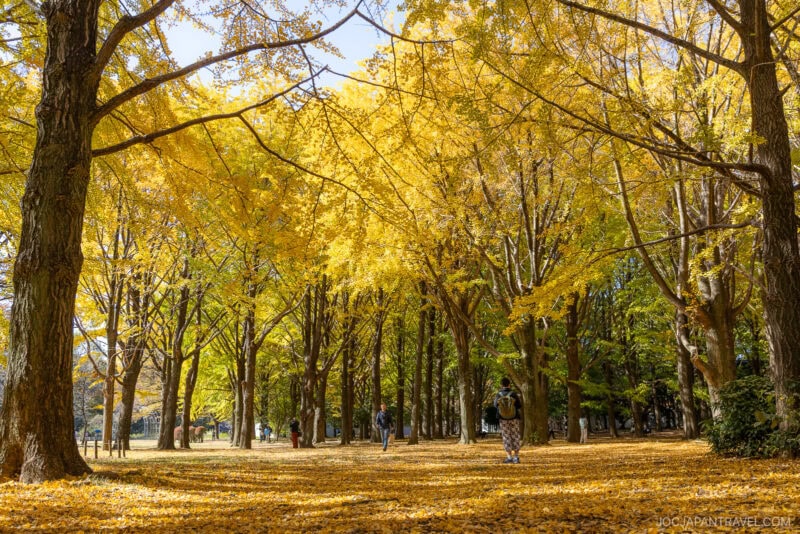
Just west of Harajuku, Yoyogi Park feels like Tokyo’s backyard. It is one of the city’s largest parks and used to be the athletes’ village for the 1964 Tokyo Olympics. Today it is full of joggers, families, and people walking their dogs, especially on weekends.
At the Harajuku Gate, tall ginkgo trees create a bright yellow welcome. Deeper inside, zelkova and maple trees add warm orange and red tones. I like to walk from the fountain area through the wide lawns in the northern part of the park, then end near the smaller landscaped areas in the south.
- Typical peak color: Late November to early December
- Opening hours: Generally open all day, though facilities usually keep daytime hours
- Entrance fee: Free
- Andy’s tip: If you are visiting nearby Meiji Jingu Shrine or Takeshita Street in Harajuku, plan a short autumn walk in Yoyogi Park as a quiet break from the crowds.
3. Rikugien Gardens (Rikugien)
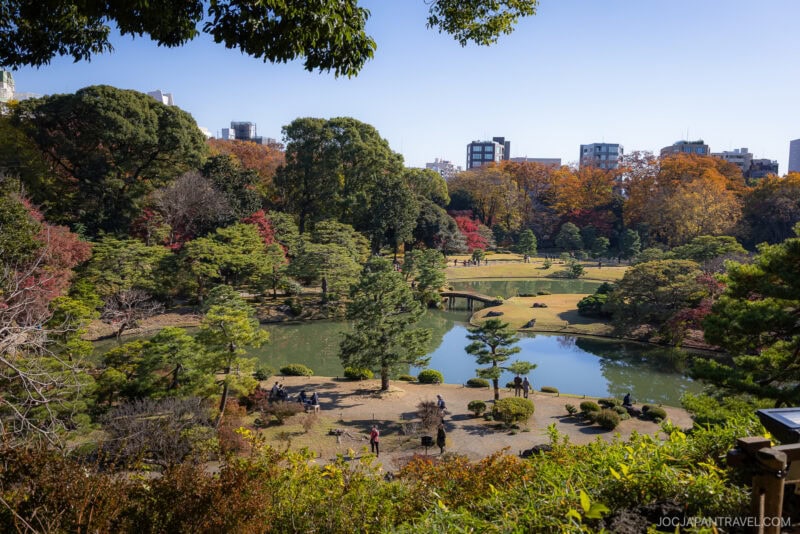
Rikugien is one of Tokyo’s classic Edo period landscape gardens and one of my personal favorites for autumn. Created in the early 18th century, it took several years to complete and is now filled with maple, ginkgo, and zelkova trees around a central pond.
In autumn, the reflection of the red and gold leaves on the pond is beautiful from almost any angle. I like to follow the circular trail and pause at Fujishirotoge Viewpoint, a small hill that gives a wide view over the garden and the city beyond.
Rikugien also runs a very popular autumn illumination. On illumination evenings, the garden closes around 5:00 PM, then reopens at 6:00 PM with a special ticket system. The paths become one way, and soft lights highlight the trees and the water. Recently, daytime admission has been around 300 yen, and special illumination tickets are about 1,000 to 1,200 yen depending on whether you buy in advance or same day.
- Typical peak color: Late November to early December
- Opening hours (regular): 9:00 AM to 5:00 PM, last entry 4:30 PM
- Entrance fee (regular): About 300 yen for adults, discounted for seniors, children free or discounted
- Andy’s tip: I book illumination tickets online when possible, then visit in the late afternoon for daytime colors, step out when the garden closes, and reenter at night with my illumination ticket. It feels like two different gardens in one visit.
4. Shinjuku Gyoen National Garden (Shinjuku Gyoen)
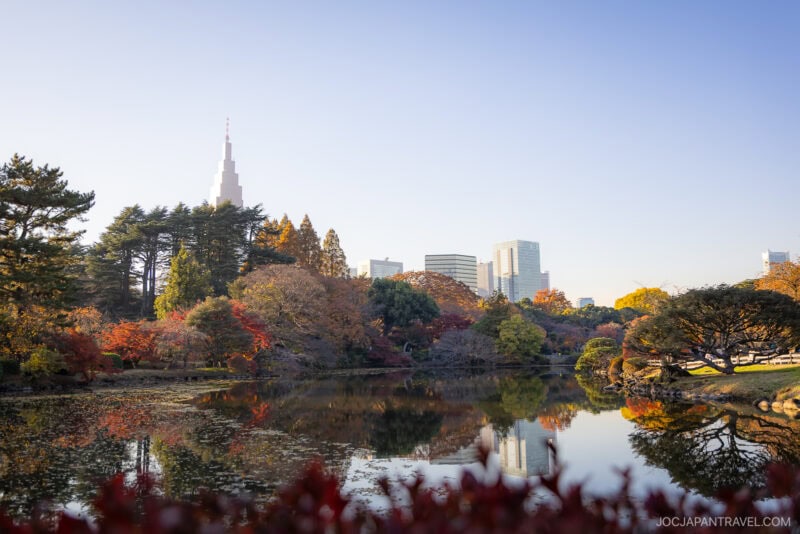
Shinjuku Gyoen is a large, carefully designed park that mixes Japanese, English, and French style gardens. With ponds, small hills, teahouses, and wide lawns surrounded by skyscrapers, it is one of the easiest places to experience nature in central Tokyo.
In autumn, maples and ginkgo trees are scattered throughout the park. I like to enter from Shinjuku Gate, walk through the open lawns, then loop past the Japanese garden and teahouses. On a clear day, the contrast between red leaves and glass towers is very Tokyo.
- Typical peak color: Mid November to mid December
- Opening hours: Varies depending on the season, check Shinjuku Gyoen official site for info.
- Andy’s tip: Shinjuku Gyoen gets busy on weekends. If you can, come on a weekday morning and bring a simple picnic. I often grab onigiri from a nearby convenience store and enjoy them on the lawn while leaf watching.
5. Ueno Park (Ueno Onshi Koen)
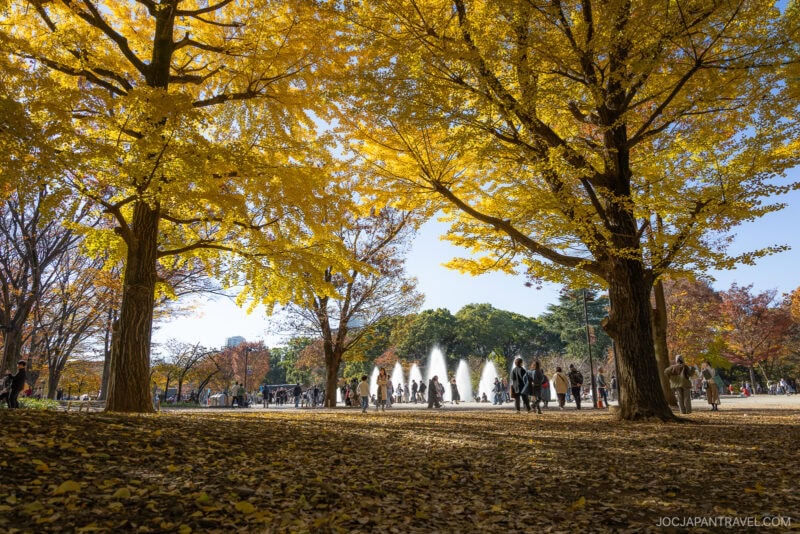
If you are visiting Tokyo’s museum district, it is very easy to combine Ueno Park with a day of culture. The park is famous for cherry blossoms in spring, but the long paths, ponds, and open squares also look beautiful in autumn.
I like to start near the statue of Saigo Takamori and then walk toward Shinobazu Pond, where trees line the water. Takenodai Square is another nice place to pause, listen to the fountains, and people watch. Around the park you will find Tokyo National Museum, Ueno Zoo, and several other museums and temples, so it is easy to turn a quick walk into a full day.
- Typical peak color: Late November to early December
- Opening hours: Park area open all day
- Entrance fee: Park itself is free, but museums and zoo have separate fees
- Andy’s tip: On a clear afternoon, I like to stroll Ueno Park first, then head to nearby Ameyoko shopping street for snacks and early dinner.
6. Koishikawa Korakuen Garden (Koishikawa Korakuen)
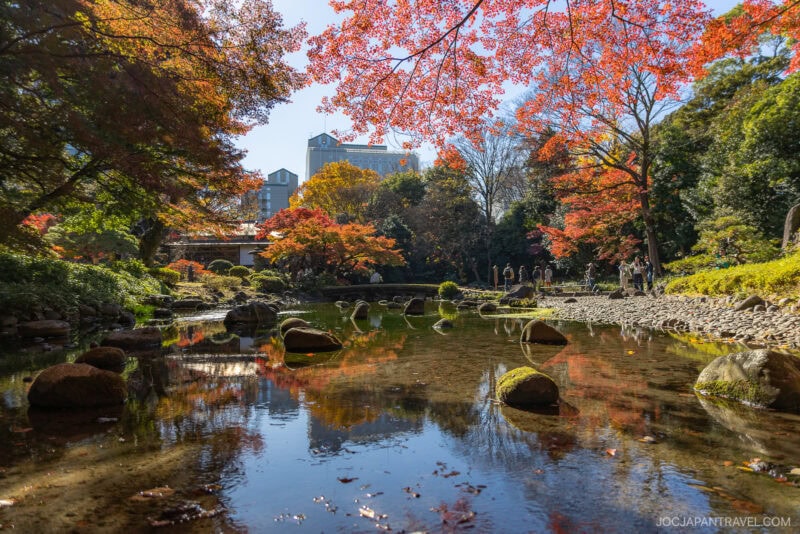
Koishikawa Korakuen is one of Tokyo’s oldest Japanese gardens, built in the early Edo period. It sits right next to Tokyo Dome City, yet once you step inside, it feels very calm and old fashioned.
The garden uses ponds, small hills, and carefully placed stones to recreate famous views from around Japan and China. The red maple leaves and yellow ginkgo trees frame these mini landscapes in late November and early December, which is why many locals choose this garden for koyo.
Do not miss the circular Full Moon Bridge, which reflects in the pond to create a full circle when the water is still.
- Typical peak color: Late November to early December
- Opening hours: 9:00 AM to 5:00 PM, last entry 4:30 PM
- Entrance fee: About 300 yen for adults, discounts for seniors, children free under certain conditions
- Andy’s tip: Because Koishikawa Korakuen and Rikugien often peak around the same time, I like to visit one in the morning and the other in the afternoon for a perfect foliage day.
7. Hibiya Park (Hibiya Koen)

Hibiya Park is my personal favorite in central Tokyo. Opened in 1903, it is known as Japan’s first Western style park and sits right between Tokyo Station, the Imperial Palace area, and the luxury shopping of Ginza.
The star of the park is the large fountain and pond. In autumn, trees around the water turn warm shades of yellow and red, and the fountain sometimes runs with different patterns and evening lighting. I often see people sketching, practicing photography, or simply sitting on benches with coffee after a day of shopping.
- Typical peak color: Late November to early December
- Opening hours: Open 24 hours
- Entrance fee: Free
- Andy’s tip: If you are staying near Tokyo Station and only have a short break, Hibiya Park is one of the fastest and easiest places to feel a bit of autumn in the city.
8. Hamarikyu Garden (Hama Rikyu Onshi Teien)
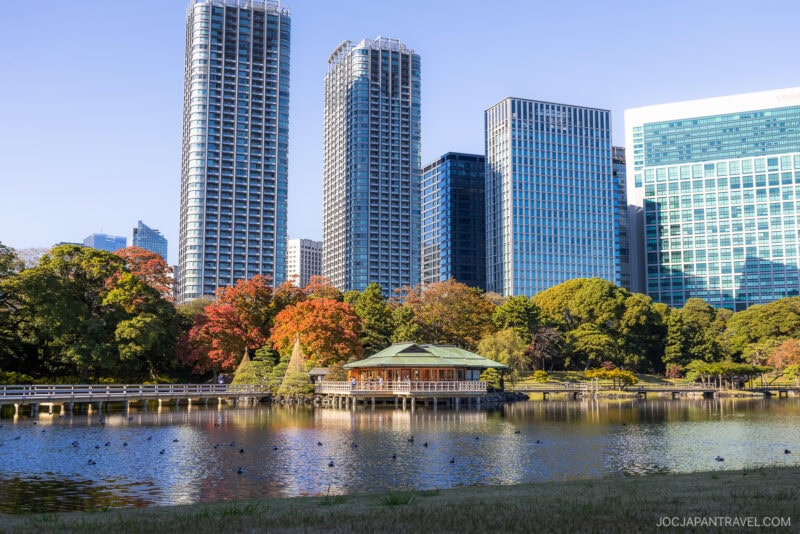
Hamarikyu Garden sits right on Tokyo Bay next to the Shiodome business district. It was once a feudal lord’s residence and duck hunting grounds, and later became an imperial garden. Today, it blends tidal seawater ponds, pine trees, and a teahouse with views of modern office towers.
I enjoy crossing the wooden bridges to the Nakajima Teahouse in the middle of the pond and sipping matcha while looking back at the skyscrapers. The contrast between the old garden design and the new skyline feels very “Tokyo”.
- Typical peak color: Late November to early December
- Opening hours: Usually 9:00 AM to 5:00 PM, last entry 4:30 PM, with seasonal or event changes
- Entrance fee: Around 300 yen for adults, with some discounts
- Recently, Hamarikyu has had some temporary closures for events and maintenance, so I always recommend checking the latest notice on the official site before you go.
- Andy’s tip: Combine Hamarikyu with a Sumida River cruise or a walk in nearby Shiodome and Ginza. On a clear day, the light on the water and leaves is beautiful in late afternoon.
9. Kyu Furukawa Gardens (Kyu Furukawa Teien)
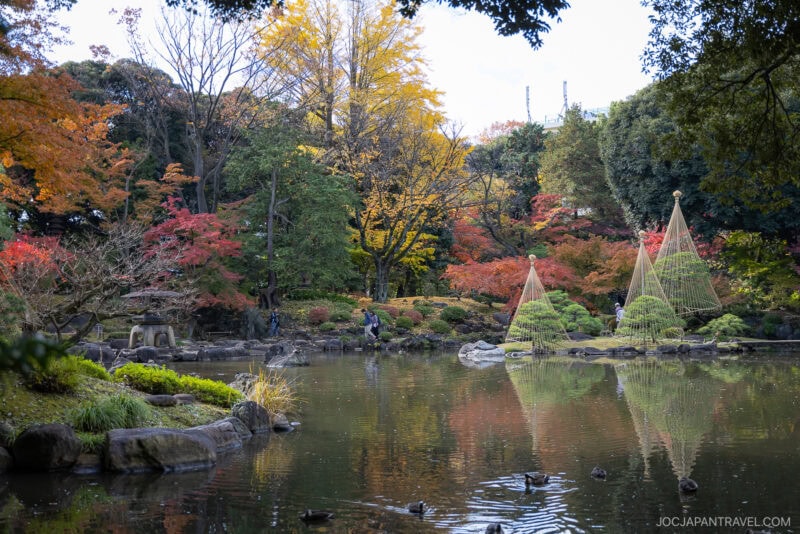
Kyu Furukawa Gardens feels like a small movie set. On the upper level sits a Western style stone mansion with a rose garden, and below it a traditional Japanese garden with ponds, waterfalls, and a tea house.
The roses usually bloom around mid October to late November, so during some years you can enjoy both roses and autumn leaves in the same visit. By mid November to early December, the Japanese garden area becomes especially pretty, with maples and ginkgo trees turning rich colors around Shinji Ike, a pond shaped roughly like the kanji character for “heart” or “mind.”
- Typical peak color: Mid November to early December
- Opening hours: 9:00 AM to 5:00 PM, last entry 4:30 PM
- Entrance fee: About 150 yen for adults, discount for seniors, children free or discounted
- Andy’s tip: Kyu Furukawa is only a short ride from Rikugien. If you love gardens, these two make a very satisfying pairing, especially in late November.
10. Showa Memorial Park (Showa Kinen Koen)
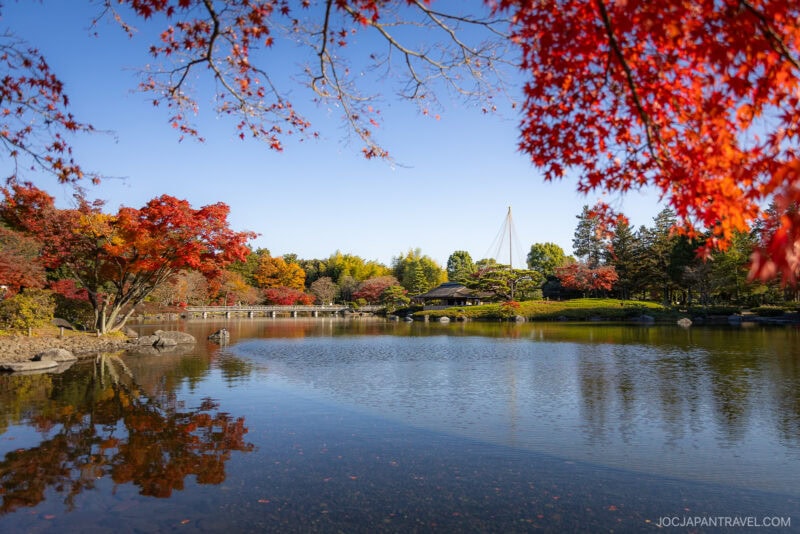
To balance central Tokyo, I also like to include Showa Memorial Park in Tachikawa, on the west side of the city. The park is huge, more than 160 hectares, with cycling paths, large lawns, a Japanese garden, playgrounds, and seasonal flower fields.
In autumn, the long ginkgo avenues near Tachikawa Gate turn bright yellow, and the Japanese garden fills with red maple leaves. The ginkgo here often peak a little earlier than the more central Meiji Jingu Gaien, sometimes around mid November.
Typical peak color: Mid November for ginkgo, late November for maples
Opening hours:
- November 1 to end of February: 9:30 AM to 4:30 PM
- March 1 to October 31: 9:30 AM to 5:00 PM
- Weekends and national holidays from Apr 1 to Sep 30: 9:30 AM to 6:00 PM Entrance fee: Adults about 450 yen, seniors discounted, children free
Showa Memorial Park also hosts special autumn events and occasional evening illuminations in the Japanese garden, which may require separate tickets.
Andy’s tip: I like to rent a bicycle inside the park and ride to the ginkgo avenue first, then the Japanese garden. If you travel with kids, this is one of the best family friendly foliage spots in Tokyo.
How to Get There
One of the best things about viewing autumn leaves in Tokyo is how easy it is to reach most spots by train and subway. I usually use an IC card such as Suica or Pasmo, which lets me tap in and out on almost all lines. Signs at stations are in both Japanese and English, and exits are clearly marked.
Here are the main stations for each spot in this guide:
- Meiji Jingu Gaien Ginkgo Avenue: Aoyama Itchome Station or Gaienmae Station on the Tokyo Metro, or Shinanomachi Station on JR lines
- Yoyogi Park: Harajuku Station on JR Yamanote Line, or Yoyogi Koen Station on Tokyo Metro Chiyoda Line
- Rikugien Garden: Komagome Station on JR Yamanote Line or Tokyo Metro Namboku Line
- Shinjuku Gyoen: Shinjuku Gyoenmae Station or Shinjuku Sanchome Station on Tokyo Metro, or a short walk from JR Shinjuku Station
- Ueno Park: Ueno Station on JR, Tokyo Metro Ginza Line, or Hibiya Line
- Koishikawa Korakuen: Iidabashi Station or Korakuen Station on Tokyo Metro and Toei lines
- Hibiya Park: Hibiya Station on Tokyo Metro, or a short walk from JR Yurakucho or Tokyo Station
- Hamarikyu Garden: Shiodome Station on Toei Oedo Line or Yurikamome Line, or a walk from Shimbashi Station
- Kyu Furukawa Gardens: Kami Nakazato Station on JR Keihin Tohoku Line or Nishigahara Station on Tokyo Metro Namboku Line
- Showa Memorial Park: Tachikawa Station on JR Chuo Line or Nishi Tachikawa Station right by one of the entrances
For all of these, I like to check route options on a transit app before I leave, and I give myself a bit of extra time in case I get distracted by street food or a side street along the way.
Is It Worth Visiting?
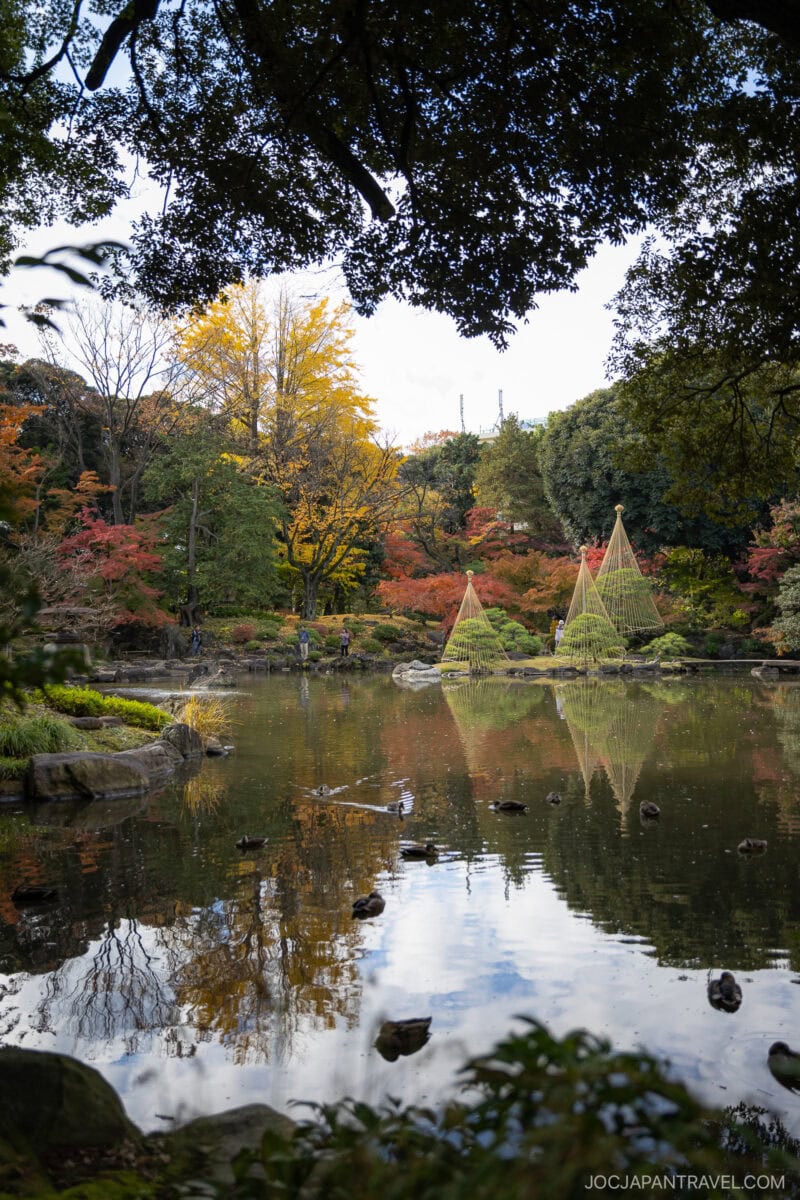
If you are visiting Tokyo between mid November and early December, I truly believe it is worth planning at least one full day around autumn leaves. The city offers a wide range of experiences, from free and casual parks like Yoyogi and Ueno to more formal paid gardens such as Rikugien, Koishikawa Korakuen, and Shinjuku Gyoen.
For a first trip, I often suggest this simple combination:
- One central garden such as Shinjuku Gyoen or Rikugien
- One easy free park such as Yoyogi Park or Ueno Park
- If you have more time, add Meiji Jingu Gaien for golden ginkgo, or Showa Memorial Park for a bigger day out
As a travel writer based in Sapporo, I get to see autumn all over Japan, but Tokyo still surprises me every year. The mix of historical gardens, modern towers, and everyday city life creates a very special atmosphere. If you enjoy slow walks, photography, or simply sitting on a bench with a warm drink while the leaves fall around you, then yes, Tokyo in autumn is absolutely worth it.