This post may contain affiliate links. Please read our disclosure policy.
Join us to discover the majesty of Nachi Falls, Japan’s tallest cascade, where every plunge whispers tales of ancient wisdom and serene spirituality.
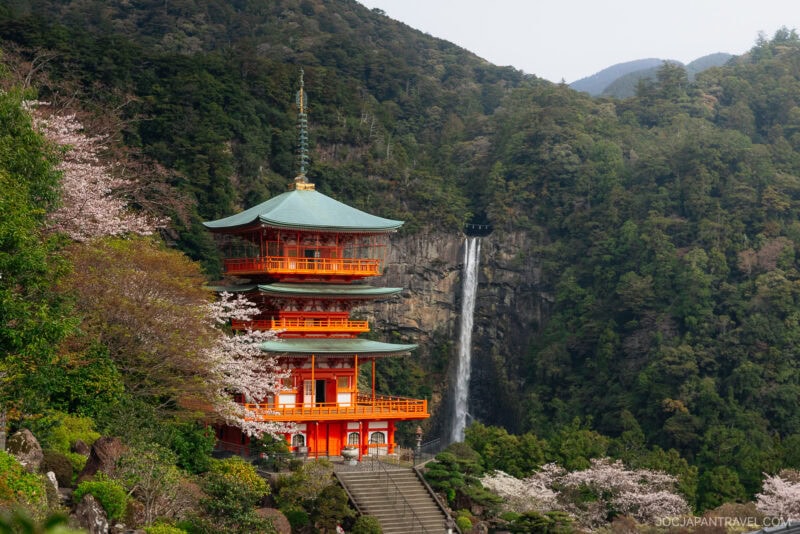
Nachi Waterfall, also known as Nachi no Taki, is Japan’s tallest single-drop waterfall, cascading an impressive 436 feet (133 meters). Located in Wakayama Prefecture, the waterfall paired with the three-story Seigantoji Pagoda creates one of Japan’s most iconic and photographed scenes, drawing visitors from around the world.
The stunning view is only the beginning of what this sacred region offers. The area surrounding Nachi Falls is part of a larger spiritual landscape interwoven with ancient shrines, temples, and pilgrimage routes where Buddhism and Shintoism have coexisted for centuries. Recognized as a UNESCO World Heritage Site in 2004, it’s a place where Japan’s history and spirituality feel alive in every step.
When I visited in spring, the cherry blossoms added an even more ethereal touch, painting the area in soft pink. With scenery this breathtaking, it’s easy to see why Nachi Falls has captivated travelers for generations.
How to Get to Nachi Falls

Nachi Falls is about a 15-minute drive from Nachi Station. Parking lots are available around the area for 500 to 1000 yen per day, though they fill up quickly. I recommend arriving early, around 8 a.m., to secure a spot.
If you prefer public transportation, take the Nachisan Line bus from Kii-Katsuura Station. The ride takes about 30 minutes and costs 630 yen one way (as of 2024). The bus also stops at Nachi Station along the route.
One of the most rewarding ways to approach the waterfall is by starting at the Daimonzaka Trail, an ancient cobblestone path lined with centuries-old cedar trees. The trail features 267 steps stretching about 600 meters and leads to the Kumano Nachi Taisha shrine complex after roughly 20 minutes of walking.
If hiking isn’t for you, stay on the bus to Nachi-no-taki-mae (in front of the waterfall) or continue to the Nachisan stop to explore the area more easily. Note that the last bus back to Kii-Katsuura Station departs around 6:04 p.m. (subject to seasonal changes), so plan accordingly.
Is Nachi Falls Accessible as a Day Trip?
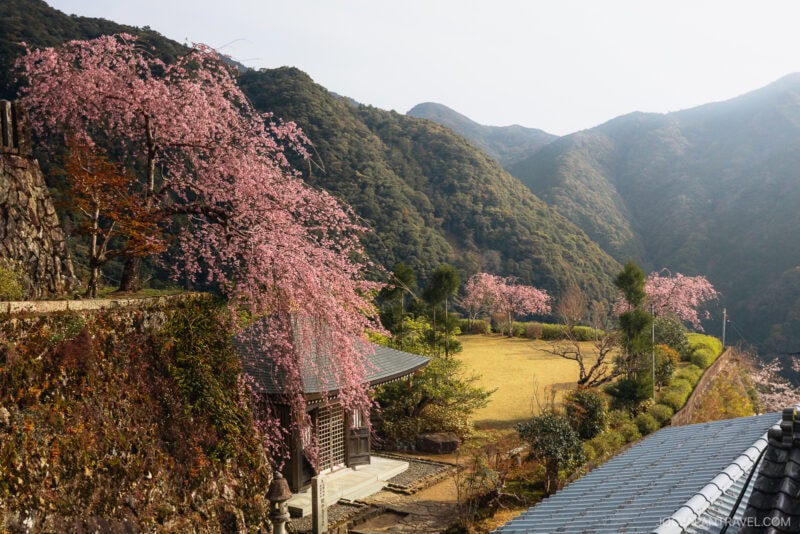
Technically, yes, but it’s not ideal. Nachi Falls is over four hours by car from Osaka or Nagoya, making it a long and tiring day trip. Since many attractions close around 4:30 p.m., you might feel rushed.
A better option is to stay overnight in Katsuura, a coastal town between Nachi and Kii-Katsuura Stations. You’ll find peaceful ryokans (traditional inns) and hotels offering ocean views and relaxing onsens.
I stayed at Kamenoi Hotel Nachi Katsuura,, which overlooks the sea. Even though I arrived late in the evening, the experience was restful and the onsen was excellent. Spending the night nearby also lets you visit the waterfall early in the morning before crowds arrive.
Kumano Nachi Taisha and Kumano Faith
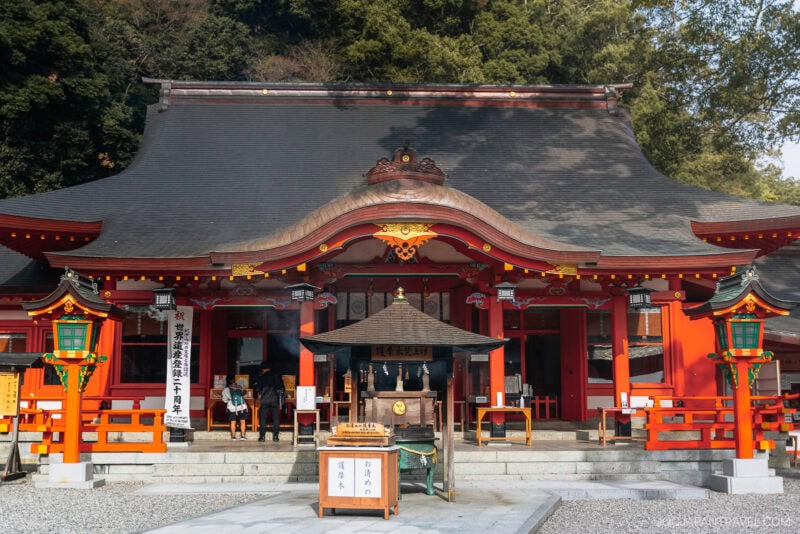
The most significant site in the area is Kumano Nachi Taisha (熊野那智大社), a sacred shrine with more than 1,700 years of history. It is one of the Kumano Sanzan – the three grand shrines of the Kumano region – along with Kumano Hongu Taisha and Kumano Hayatama Taisha.
Hidden deep in the Kii Mountain Range, the Kumano region is often called “the land of the gods.” Pilgrims have long believed that walking these trails brings spiritual rebirth. This sense of devotion evolved into what became known as the Kumano faith. Even emperors made the journey here, seeking enlightenment and divine favor.
A unique aspect of the Kumano faith was its inclusiveness, as it welcomed both Buddhist and Shinto deities. This harmony lasted until 1868, when the Meiji government mandated their separation.
To reach Kumano Nachi Taisha, be prepared to climb many stairs. The entrance is marked by a large torii gate, followed by even more steps leading up to the shrine grounds.
Within the complex, you’ll find an 850-year-old camphor tree believed to have been planted by Taira no Shigemori (1138–1179), a powerful regent of the Taira clan. The treasure hall (300 yen entry) displays historical art and artifacts, including the karasu-ishi, or “stone of Yatagarasu,” a three-legged crow said to have guided Japan’s first emperor, Jimmu.
Seigantoji at Nachi Falls
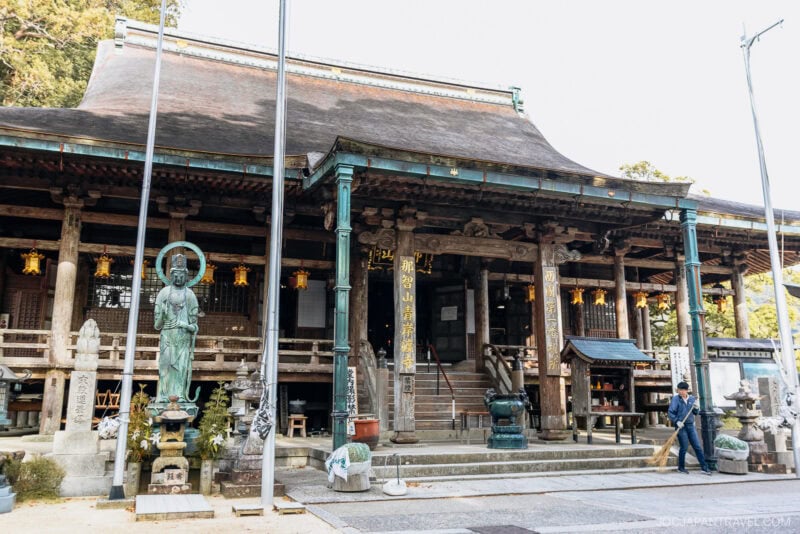
Next to the shrine stands Seigantoji (那智山青岸渡寺), a Buddhist temple once linked to Kumano Nachi Taisha. Legend tells of Ragyō Shōnin, a monk from India who came here seeking a place to train. While meditating under the waterfall, he reportedly encountered Kannon, the Goddess of Mercy.
The temple’s original structure dates back to the 6th century, but the current wooden building was rebuilt in 1587. From its grounds, you can enjoy a panoramic view of tiled temple roofs, the three-story pagoda, and the majestic waterfall beyond.
Seigantoji Pagoda
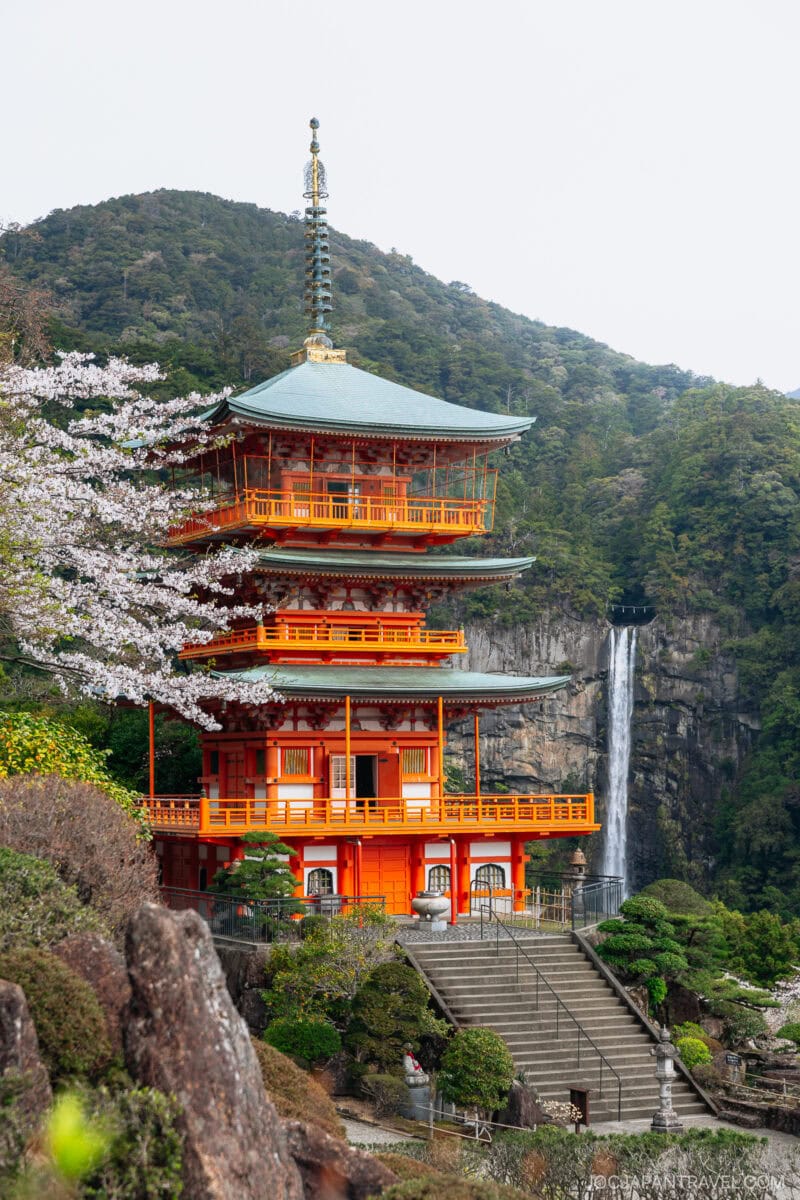
A short walk downhill brings you to the famous three-story pagoda, one of Japan’s most photographed landmarks. It opens at 8:30 a.m., so arriving early gives you the chance to take photos before the crowds arrive. In the quiet of the morning, you can hear birds singing and the roar of the waterfall echoing through the valley.
Entry costs 300 yen. The original pagoda was lost to fire in 1581 and reconstructed in 1972. Each floor honors a different deity:
- First floor: Fudo Myo-o, a guardian figure associated with Nachi Falls.
- Second floor: Amida Buddha, ruler of the Western Paradise.
- Third floor: Thousand-Armed Kannon, the bodhisattva of compassion.
From the top floor balcony, Nachi Falls plunges into the forest below, surrounded by mountains. You can feel the mist on your skin, hear the water crash into the rocks, and sense the sacred power of this place.
Moudemochi
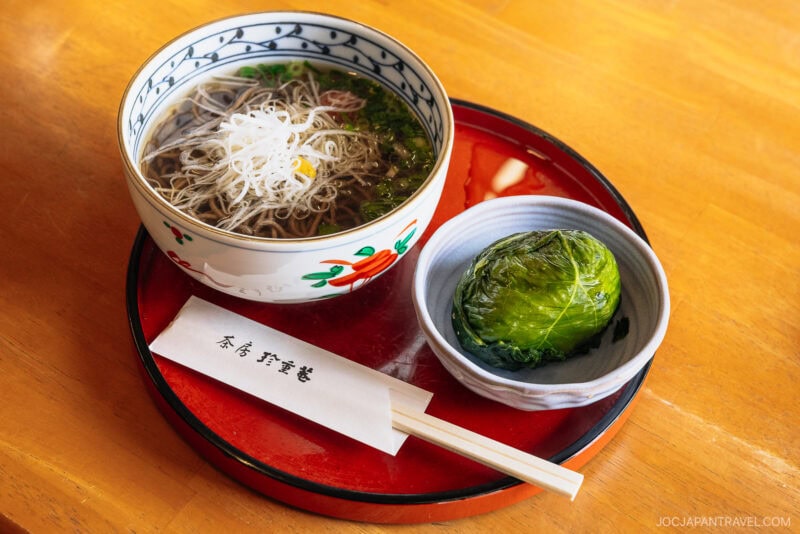
After exploring, I stopped for lunch at Moudemochi, a little restaurant near the site. They serve soba and udon noodles, wagashi (traditional sweets), and matcha. I tried the “Moude” soba, which came with grated daikon and meharizushi (rice balls wrapped in pickled mustard greens).
Meharizushi originated as a convenient meal for farmers and travelers in the Kumano region. The tangy, refreshing greens paired with the rice were simple yet satisfying, just what I needed after a morning of exploring.
Hiro Jinja
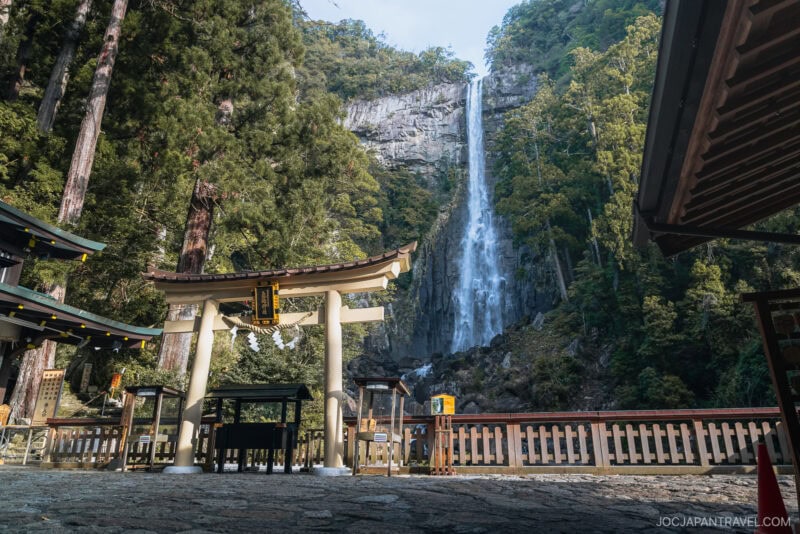
Finally, descend to Hiro Jinja, an auxiliary shrine to Kumano Nachi Taisha. Marked by a pale torii gate, it leads you to the base of the waterfall where you can take in its full power and beauty.
The shrine doesn’t have a traditional worship hall; instead, visitors pray directly facing the waterfall. Throughout the area, you’ll notice dragon motifs, such as the dragon-shaped chozuya (water basin). It’s believed that a dragon god resides in the falls, protecting them. For 100 yen, you can drink the sacred water from a dragon-shaped fountain, said to bring longevity and good health.
Final Reflections on Nachi Falls
That concludes my visit to Nachi Falls and the sacred grounds of Kumano Nachi Taisha. Beyond the well-known sights, the area is filled with smaller shrines and hidden gems waiting to be discovered. Surrounded by nature and centuries of faith, it’s easy to understand why this place has inspired so many travelers and pilgrims alike.
More to Explore Nearby
Nachi Falls is Japan’s tallest single-drop waterfall and is intrinsically linked to the UNESCO World Heritage-listed pilgrimage site of Kumano Nachi Taisha Grand Shrine. After experiencing the power and spiritual significance of the falls, the surrounding Kii Peninsula offers one of the most profound historical and natural journeys in Japan.
- Kumano Nachi Taisha and Seiganto-ji Temple – Located directly above the falls, explore these two sacred sites—a Shinto shrine and a Buddhist temple—that beautifully demonstrate the historical fusion of religions in Japan.
- Kumano Kodo Pilgrimage Routes – Step onto the ancient trails surrounding the waterfall. These World Heritage routes offer stunning natural scenery and a historical journey connecting the sacred sites of the Kii Peninsula.
- Koyasan (Mount Koya) – Visit the spiritual capital of Shingon Buddhism, located further north on the Kii Peninsula. Explore its magnificent temples and the sacred Okunoin cemetery, offering a complementary historical contrast.
- Shirahama Onsen – Journey to this major coastal resort town in Wakayama Prefecture, famous for its white-sand beaches, coastal scenery, and excellent hot spring resorts, providing a perfect place for relaxation.