This post may contain affiliate links. Please read our disclosure policy.
Train travel in Japan is fast, reliable, and surprisingly easy once you understand the basics. In this guide, I will walk you through how it works from a traveler’s perspective.
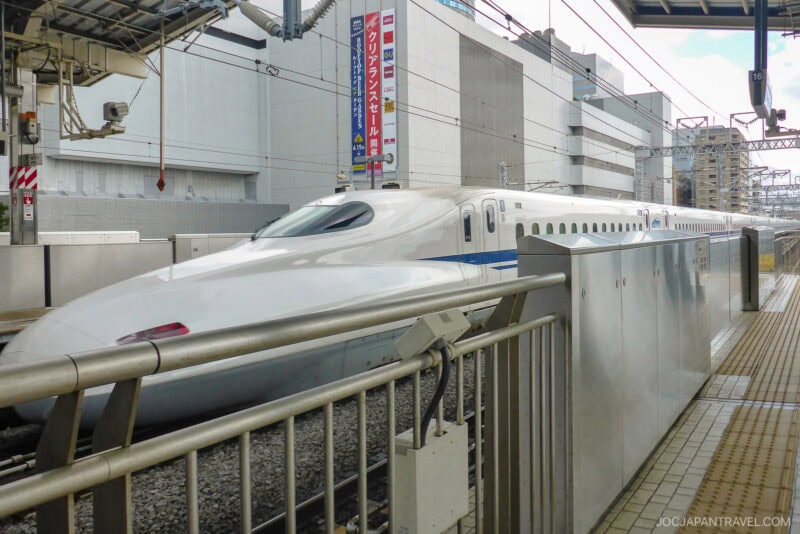
Train travel in Japan can feel intimidating at first, especially when you see how many lines and companies operate across the country, but it is one of the reasons I love traveling here.
Whether I am commuting around Sapporo or traveling long distances across the country, they rarely let me down. In this complete guide to train travel in Japan, I will explain how the Japanese train system is structured, how to buy tickets, when to use IC cards or passes, and what to expect on board so that you can travel around Japan with ease and confidence.
Table of Contents
Japan Train Companies
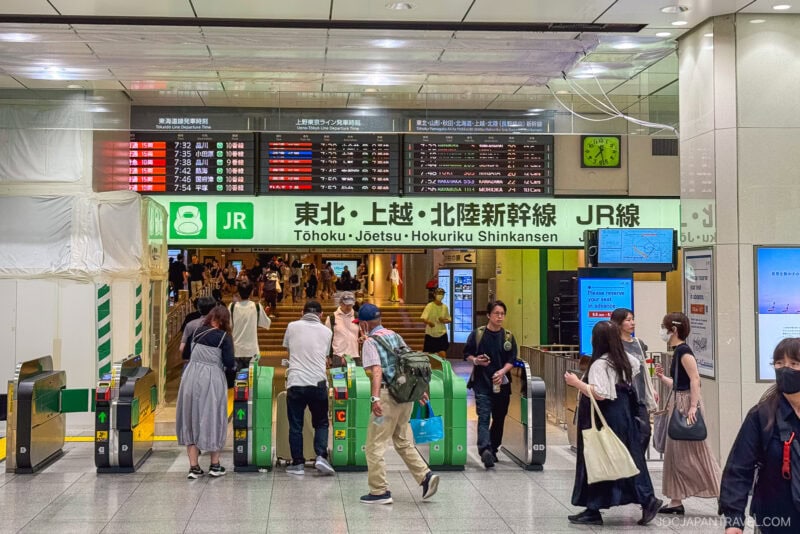
JR Japan Railways
The Japanese railway system is operated by many different railway operators. JR (Japan Railways) owns roughly 80% of the railroads, which you will most likely use to get around the country. The JR group comprises six independent rail companies, each operating trains in a specific region and all of the Shinkansen (bullet trains) nationwide:
- Central Japan Railway Company (JR Central)
- East Japan Railway Company (JR East)
- Hokkaido Railway Company (JR Hokkaido)
- West Japan Railway Company (JR West)
- Shikoku Railway Company (JR Shikoku)
- KyushuRailway Company (JR Kyushu)
Private Railway Operators
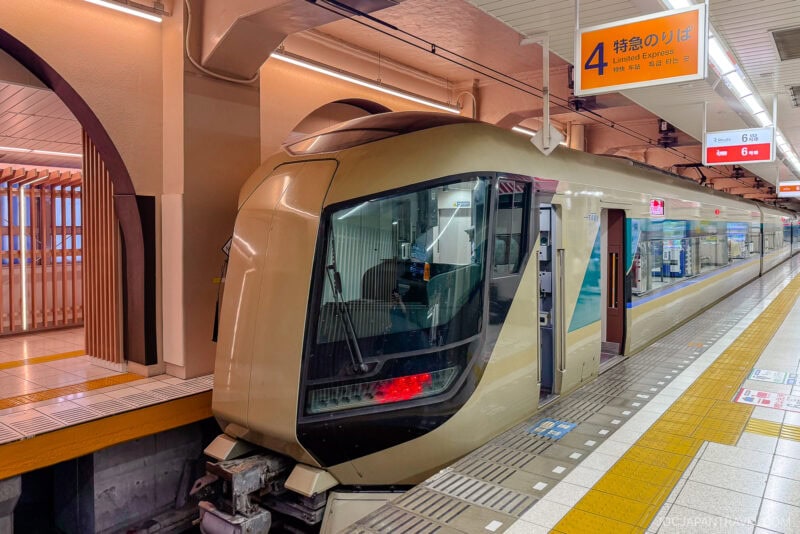
Aside from JR, there are countless other privately owned railway operators. Some operate just a single line, while others manage larger networks and operate exactly like any other train. You will need a separate ticket for each operator. Tickets between operators are not interchangeable. Examples of these privately owned operators are:
- Odakyu (Tokyo) – runs 3 three lines from central Tokyo to the west and Kanagawa Prefecture.
- Meitetsu (Nagoya) – runs a rail network around Nagoya that includes access to Central Japan Airport
- Hankyu (Osaka) – oversees lines in northern Osaka, connecting Osaka with Kobe and Kyoto
Types of Trains in Japan
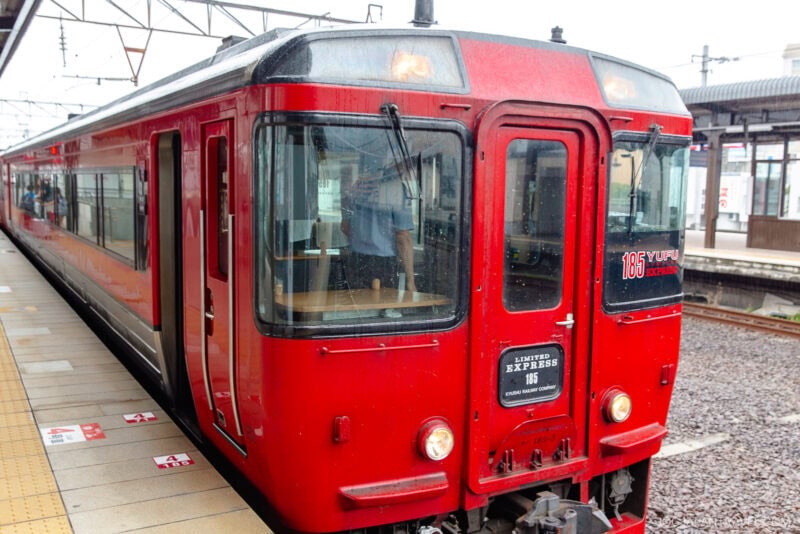
There are various types of trains to look out for while traveling around Japan. They all serve different purposes, so it’s essential to check which type of train you need to take.
Local Trains (普通列車)
Local trains require a regular ticket with no extra fee required. They will stop at every station along the line. If you are traveling long distances, avoid taking a local train, as it is the slowest option. I take these trains for short-distance trips within cities as they are usually less crowded.
Rapid Trains (快速)
Rapid trains require a regular ticket with no extra fee required. It costs the same amount as a local train ticket but skips a few stations, making longer distances shorter. I usually double-check that my stop is included, since rapid trains can easily skip smaller stations.
Express Trains (急行)
Express trains generally cost the same as regular tickets. In some cases, they can cost a little more. Similar to rapid trains, they skip a few stations and are a quicker way to get through long distances.
Limited Express Trains (特急)
Limited express trains require a limited-express ticket in addition to the regular ticket. These trains only stop at major stations. Although it is more expensive than other trains, I prioritise speed and convenience to get to my destination faster.
Shinkansen (新幹線)
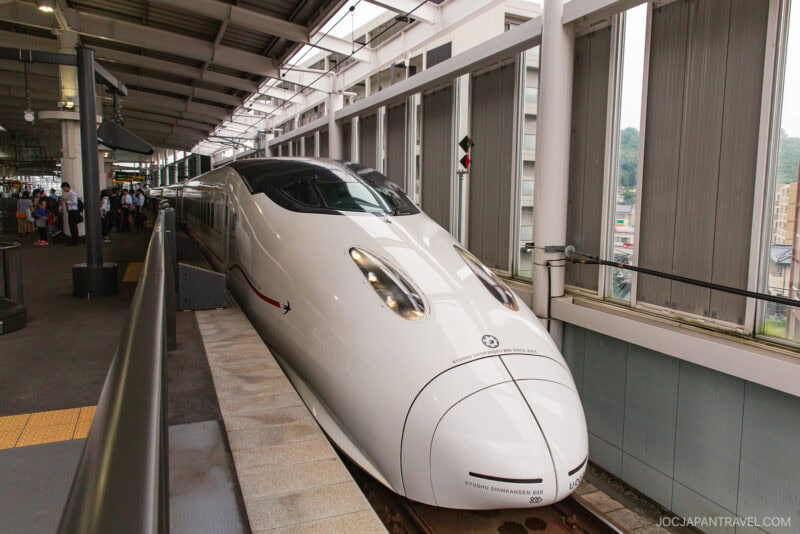
All Shinkansen require a Super Express ticket in addition to the basic fare ticket. It is the fastest way to travel around the country by train. They have very few stops and can reach speeds of up to 285 km/h (177 mph). They run on completely separate tracks from the trains mentioned above.
There are many Shinkansen trains, but two to watch are the Mizuho and Nozomi. These make the fewest stops, making them the quickest way to get around the country. However, if you have a JR pass, you will have to pay an additional fee to use the Mizuho and Nozomi trains. If you don’t want to pay additional fees, you can use the other Shinkansen (like Hikari or Sakura), which are slightly slower.
Google Maps

Before you start your travels, I recommend downloading Google Maps. Simply enter your destination, and it will show you available routes, prices, which line to take, which platform to board from, and which station to get off at. If you are going to a specific location (restaurant, landmark, etc.), it will even tell you which exit to take. It becomes particularly handy in remote areas and late at night when fewer trains are running.
Make sure to pay extra attention to whether it is a local, rapid, or express train. Some lines have rapid and express trains that skip stations, while others have local trains that stop at every station. If you are unsure, it will usually say on the side of the train as it arrives at the platform.
Purchasing Train Tickets in Japan

Standard Tickets
It can be confusing to use a ticket machine for the first time, so I’ve broken down the steps you need to know.
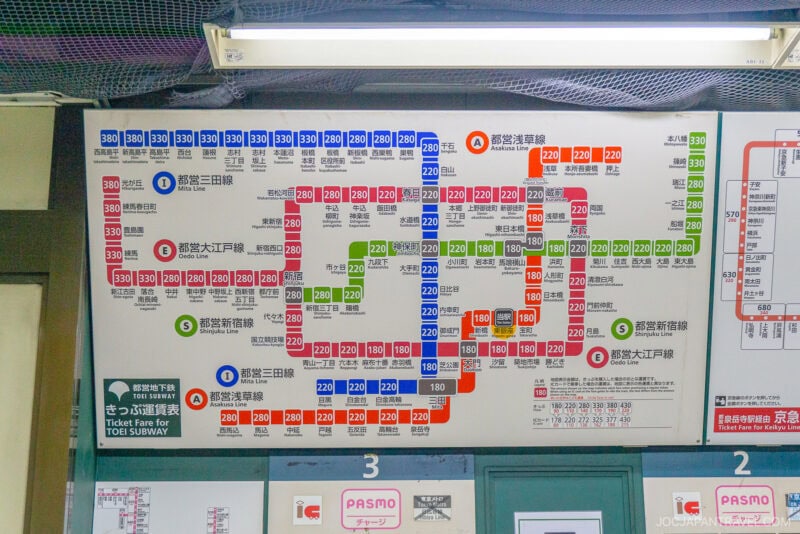
- First, find the ticket machines near the station gates. There is usually a large fare map above them.
- Look for your destination on the map. In major cities, it will also have the English names. The station you are at is usually shown in larger text, often in red, or marked with an arrow. Your destination will have the fare amount next to it. If you are using Google Maps, it usually says the fare amount at the bottom of the screen.
- Once you know how much your trip will cost, go to the ticket machine and tap the “English” button in the top-right corner of the screen.
- Select the number of passengers on the left-hand side of the screen.
- Then choose the fare amount shown on the map. You usually don’t select the station name; you select the fare amount. If the map shows 200, select 200 on the ticket machine.
- Insert your coins or notes.
- Your ticket will be printed immediately, and you will receive your change (if any).
At the ticket gate, insert your ticket and retrieve it on the other side. Make sure you do not lose it, as you will need it to exit at your destination.
IC Cards

I always recommend purchasing an IC card. These are transportation cards that let you scan at the ticket gates instead of buying physical tickets for every journey. It covers nearly all trains and even many buses.
The two major types are SUICA (my recommendation) and PASMO, both of which are used nationwide. You can purchase a physical copy of the card at major airport/train station ticket machines and service centers. I recommend picking one up as soon as you land in Narita or Haneda Airport. They come with a 500 yen deposit fee, and you will have to top up your card with cash at a ticket machine. When you return home, head to the ticket office at Haneda or Narita Airport, where you can exchange the IC card for the 500 yen deposit and any remaining balance.

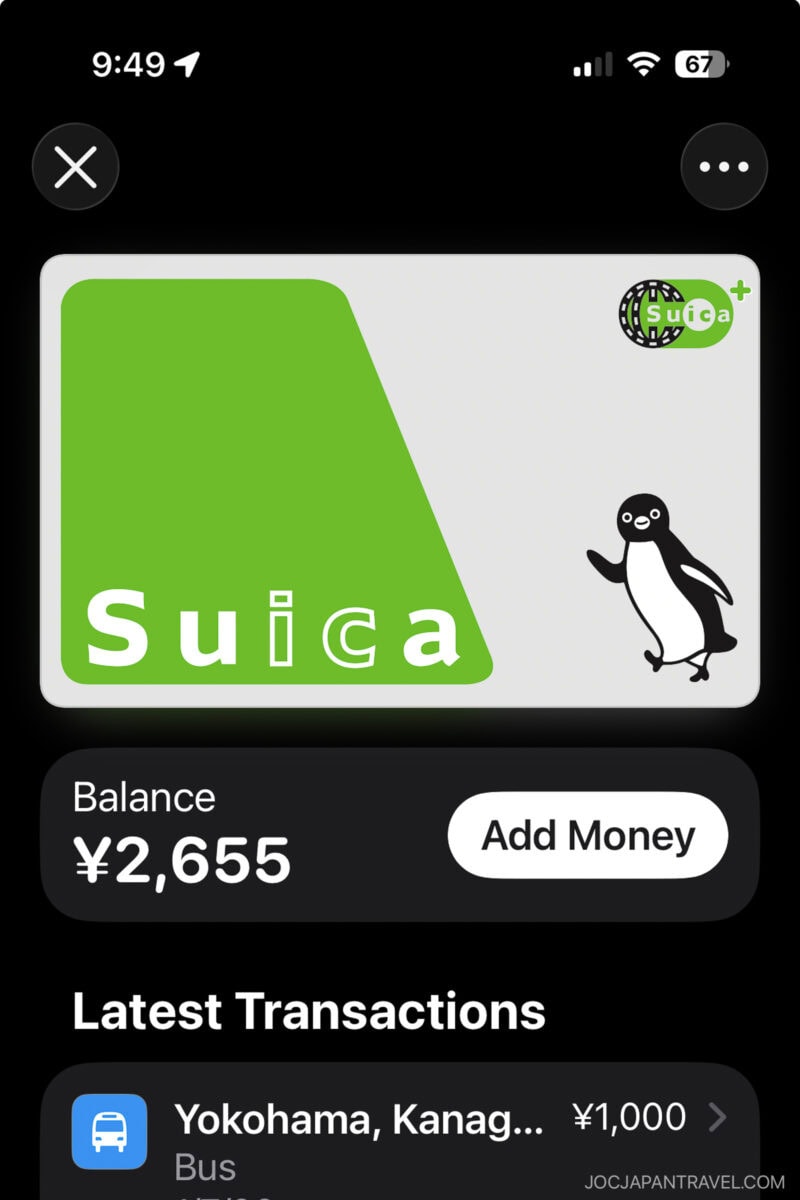
For more convenient, stress-free travel, I recommend adding Mobile Suica to your phone so you don’t have to carry a physical card. You will need a credit card to add funds to the IC card. You simply touch your phone on the IC card reader at the ticket gates, and then scan again when you pass through the ticket gates at your destination. It will automatically deduct the amount for your journey. Unfortunately for the US visitors, this only works on iPhone and not on Android.
Availability for physical and mobile IC cards can change, so I recommend checking the official Suica or PASMO website.

Shinkansen Tickets

The first thing to know about a Shinkansen ticket is that it requires two tickets. The “basic-fare ticket” (乗車券, jōshaken) covers the basic fare from the departure station to the destination. The “super express ticket” (特急券, tokkyūken) is the additional fee required for riding the Shinkansen. Therefore, you will receive two tickets when purchasing. You can look for the corresponding Japanese text above to check whether you have them.

You can purchase Shinkansen tickets at ticket machines or at staffed ticket counters:
- At a ticket machine, change the language to English. Then select your destination, boarding date and time, number of passengers, and seat type (non-reserved, reserved, green car, gran class). The screen will ask you if you need a “basic-fare ticket.” On the ticket machine screen, this is an optional purchase.
- The reason is that you can use an IC card instead of buying a basic-fare ticket. If you do not have an IC card, select the option to purchase the basic-fare ticket. You need this basic-fare ticket in addition to the super express ticket, which will be purchased automatically.
- At the ticket counter, provide the same information, and they will print your ticket. Please note that not all staff members can communicate in English.
- Ticket buying can feel confusing because some Shinkansen trips can be booked online through Smart EX, such as routes from Tokyo toward Kyushu (including Kagoshima). With online bookings, the basic fare and express charge are bundled into one ticket or QR code instead of two separate paper tickets.
Japan Rail Pass (JR Pass)
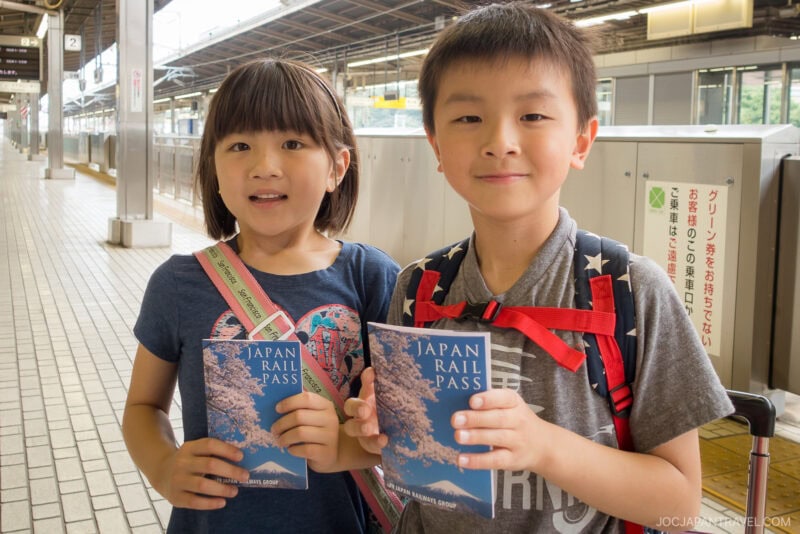
The JR Pass only works for JR services. There are 7-, 14-, and 21-day passes that give you unlimited access to all JR trains, including Shinkansen (Nozomi and Mizuho require an additional fee), buses, and ferries.
Prices and rules are subject to change, so I recommend checking the official JR Pass website.
City Passes
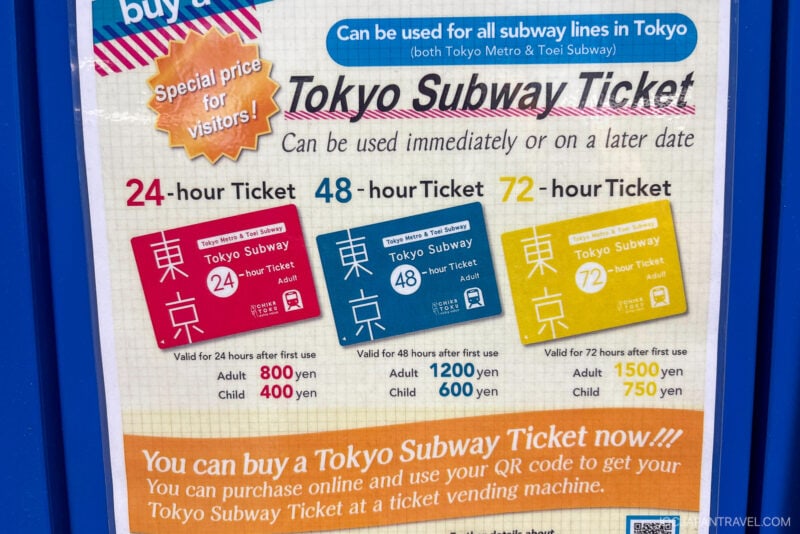
Many Japanese cities offer city passes that provide unlimited 24-hour to 72-hour access to the city’s transportation, including trains, trams, buses, and metros. You can purchase them at a ticket counter in any of Japan’s big cities, such as Tokyo, Osaka, Kyoto, Sapporo, Nagoya, Hiroshima, and more. I would recommend them if you’re sticking to one city with a heavily packed itinerary.
How to Reserve Train Seats
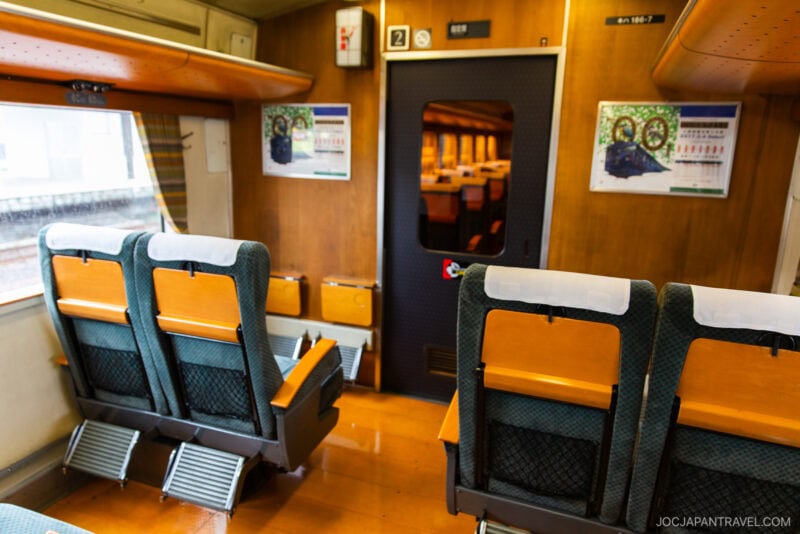
Typically, only limited express trains and the Shinkansen have reserved seating. You can reserve your train seat when you purchase your ticket at the ticket machine or when you tell the staff at the ticket counter. If you have a JR Pass, you are entitled to free seat reservations. Go to the ticket counter and tell the staff member which train you are planning to board, and you will be able to select your seat.
I highly recommend paying the additional fee for seat reservations where possible, especially during peak seasons and national holidays. Traveling is tiresome, so there’s nothing worse than being seatless for a long train journey.
How to Board a Train

Before Boarding
- Get ready: Use an IC card with enough balance. If you do not have one, or you are taking a limited express or Shinkansen, buy a ticket.
- Pass through the ticket gate by scanning your IC card or entering your ticket. If you are using a ticket, it will be returned on the other side of the gate; you must take it with you.
For Shinkansen rides, you usually need to insert both tickets at the same time: the basic fare ticket and the super express ticket. If you are using an IC card for the basic fare, tap your IC card first, then insert the super express ticket. If something is wrong, the gates may close and beep. Don’t panic. Step to the side and ask a station staff member for help. - Head to your platform. The most important signs are written in Japanese and English.
- On many platforms, marks on the floor indicate where the doors of the arriving train will be located. Waiting passengers will line up behind those marks. Train drivers are trained to stop within centimeters. On long-distance trains, additional marks indicate the car number, whether the car is ordinary or green, and whether it carries reserved or non-reserved seats.
After Boarding
- When the train arrives, move to the side of the train door and keep the center aisle clear so people can exit. Make sure to wait for other passengers to disembark before boarding.
- Upcoming stations and connecting lines are announced in Japanese. In major cities and on Shinkansens, they may also be announced in English. Newer trains have electronic signs, which display the upcoming station and other useful information, so keep an eye out.
- At your destination, scan your IC card or insert your ticket at the exit ticket gates. For IC cards, the fare will be automatically deducted from your balance. For physical ticket card users, you will not receive a ticket on the other side of the gate, as in step 2.
- If you have the wrong fare ticket or your IC card balance is insufficient, the ticket gate reader will turn red and emit an audible alert. This happens to everyone at least once (and to me, countless times). Just don’t panic. Step aside so others can proceed. If you have a physical ticket or IC card, use the fare adjustment machine to pay the remaining fare (it will automatically calculate for you), and exit through the gates. If you are using mobile Suica, top up your balance in the app by adding more funds, then scan again at the gates
Train Etiquette

Train etiquette is particularly important in Japan. I have split them up into two categories:
Non-Shinkansen trains
- If you have a big backpack, turn it around and wear it on your front or place it between your legs. You can also put it on the rack above the seats, but do not forget it when you leave!
- Eating or drinking on the train is generally frowned upon, as is talking on your cell phone.
- Avoid excessive noise/talking. Furthermore, do not sit on the floors or hang from the handrails.
- Trains have priority seats that should be offered first to older passengers, pregnant passengers, and passengers with disabilities. These are typically on both sides of each train car, and the seats will be a different color.
- Women-only train cars will be available during peak hours. There will be a pink sign on the floor in front of the designated carts, indicating the hours of operation. All passengers may use these cars outside the specified hours.
- Avoid taking large suitcases onto trains during peak hours.
Shinkansen
- Avoid excessive noise. Talking on your cell phone is frowned upon, so use it only in designated areas, such as the decks between carriages.
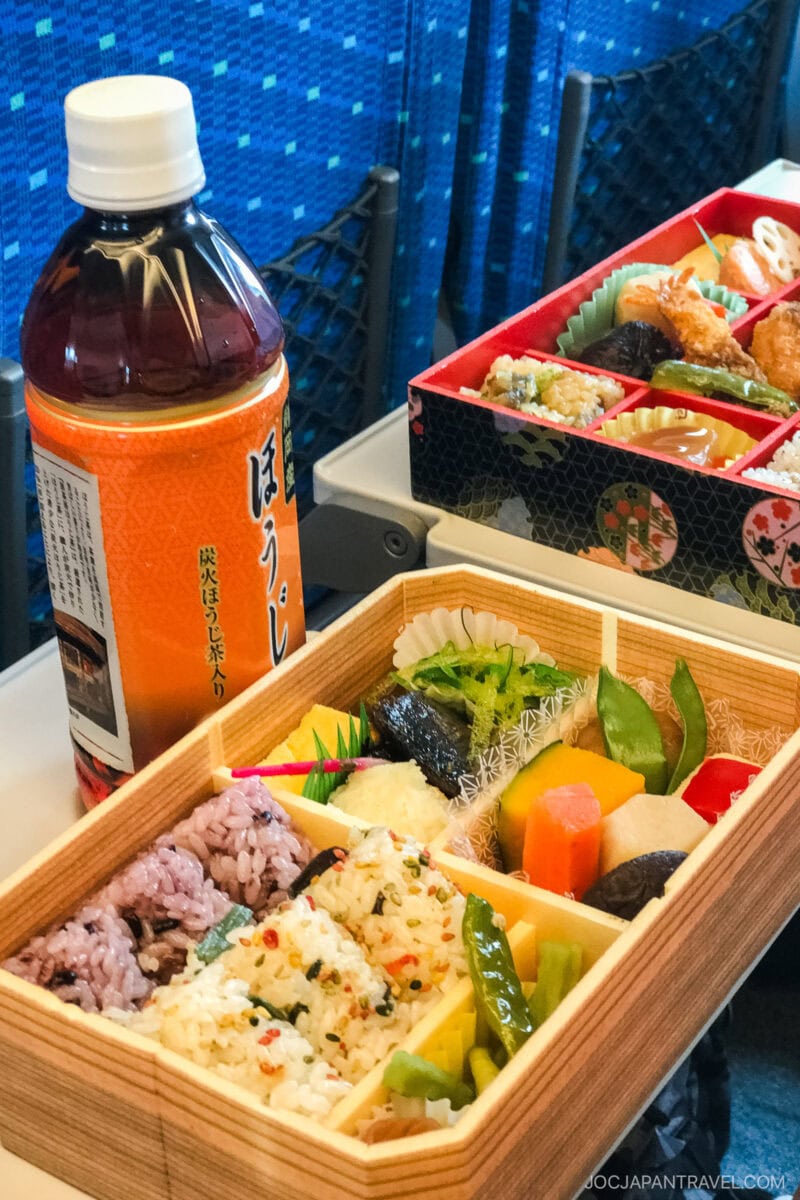
- Eating and drinking are allowed. Many people eat ekiben (railway bento) or snacks and drinks. Please take your trash and do not leave it at your seat.
- Reclining is acceptable. When you do so, be considerate of the person behind you, as they may be eating or drinking. When you arrive at your destination, return the seat to its original position.
- For large luggage, use the designated storage spaces or the spaces above the seats.
Getting Around Japan by Train
Once you understand how the train system works, getting around Japan by train becomes simple and stress-free. I rely on trains for almost every trip, and they make it easy to move between cities, explore neighborhoods, and keep to a tight schedule without a car. With a little practice, reading maps, buying tickets, and making transfers will feel natural, letting you focus less on logistics and more on enjoying the journey itself.