This post may contain affiliate links. Please read our disclosure policy.
Asahikawa Ramen Village brings together eight of the city’s top ramen shops in one spot, making it the perfect place to taste Hokkaido’s regional ramen culture.

What Makes Asahikawa Ramen Special
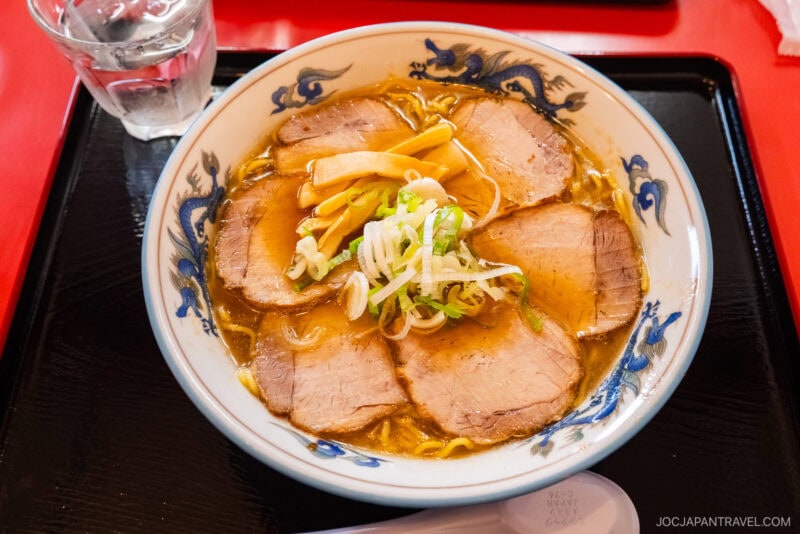
While Sapporo is known for miso ramen, Asahikawa has made its mark with shoyu (soy sauce) broth. The soup is savory, layered with flavor, and usually topped with a thin layer of pork fat to keep it hot during frigid winters.
The noodles are medium-thick and slightly wavy, designed to soak up the broth. Common toppings include chashu pork, bamboo shoots, and green onions. It’s the kind of bowl that warms you right through after a day of sightseeing in Hokkaido’s coldest major city.
Exploring Asahikawa Ramen Village
The Asahikawa Ramen Village is a small complex on the city’s outskirts that houses eight ramen shops, each serving its own take on shoyu ramen. If you’ve visited ramen chains abroad, you might recognize Hokkaido Ramen Santouka, which started here before expanding internationally.
We ate at Ramen Tenkin (ラーメン天金), a long-standing local favorite dating back to 1952. The broth was rich and hearty, and the chashu slices were tender enough to melt in our mouths. It was more filling than we expected, but every bite was satisfying.
The Ramen Shrine
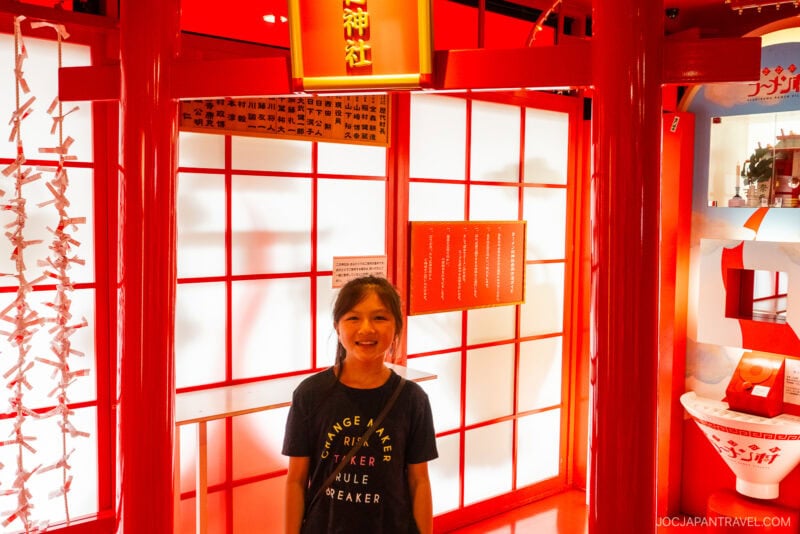
Right next to the shops is a small Ramen Shrine (ラーメン神社). It’s both playful and symbolic, giving visitors a place to offer prayers and couples a chance to wish for good fortune in love.
Souvenirs to Take Home
Before leaving, we browsed the souvenir shop, which sells packaged ramen from each shop in the village. It’s a great way to bring home your favorite bowl or share a taste of Hokkaido with friends.
How to Get to Asahikawa Ramen Village
Train
Take JR to Minami-Nagayama Station. From there, it’s about a 7-minute walk to the village.
Car or Taxi
It’s about 20 minutes from Asahikawa Station and 30 minutes from Asahikawa Airport. Free parking is available on-site.
Pro Tip
The village is located along the route between the zoo and central Asahikawa, making it a convenient meal stop. Visit outside peak lunch hours to avoid long lines. Many shops offer mini bowls so you can sample more than one style of ramen.
Is Asahikawa Ramen Village Worth Visiting?
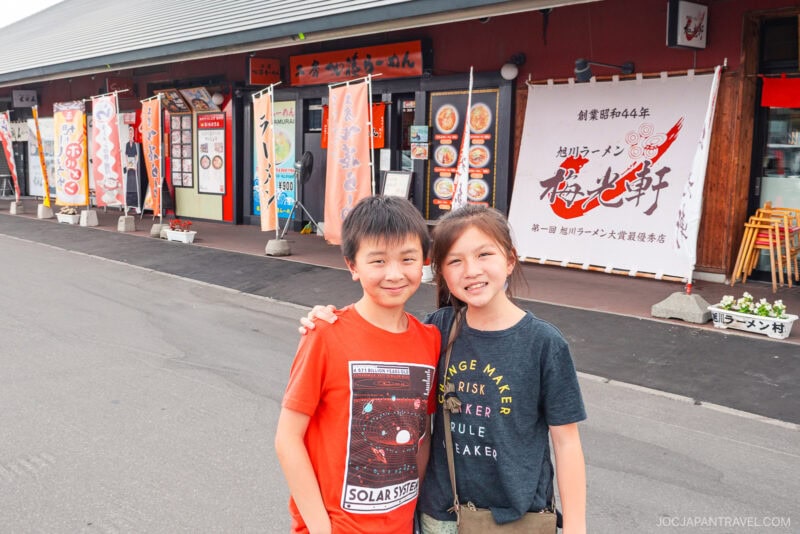
If you enjoy ramen or want to experience Hokkaido’s regional food culture in one place, it’s a great place to stop. With multiple shops to choose from, a quirky ramen shrine, and take-home souvenirs, the village offers both a satisfying meal and a fun local experience.
More to Explore Nearby
After sampling the famous shoyu broth at Asahikawa Ramen Village, the city offers a host of rewarding cultural and historical attractions, plus easy access to world-class nature and unique animal experiences.
- Asahiyama Zoo – Visit one of Japan’s most celebrated zoos, famed for its innovative “behavioral exhibits” that let you observe animals from unique angles.
- Otokoyama Sake Brewery Museum – Tour a historic brewery to learn about traditional sake making using the clear waters of Daisetsuzan, complete with tastings of their acclaimed rice wine.
- Asahikawa Winter Festival – Discover the city’s second-largest winter event, featuring massive snow sculptures, light displays, and ice slides, typically held in February.
- Ueno Farm – Escape the city to explore beautiful, expansive gardens designed to thrive in Hokkaido’s climate, offering a tranquil and colorful experience from spring through autumn.