This post may contain affiliate links. Please read our disclosure policy.
Hamamatsu Castle in Shizuoka Prefecture is closely tied to Tokugawa Ieyasu, the first shogun of a unified Japan. Its history, reconstructed keep, and surrounding park make it an engaging stop for travelers exploring between Tokyo and Osaka.
A Castle Steeped in History
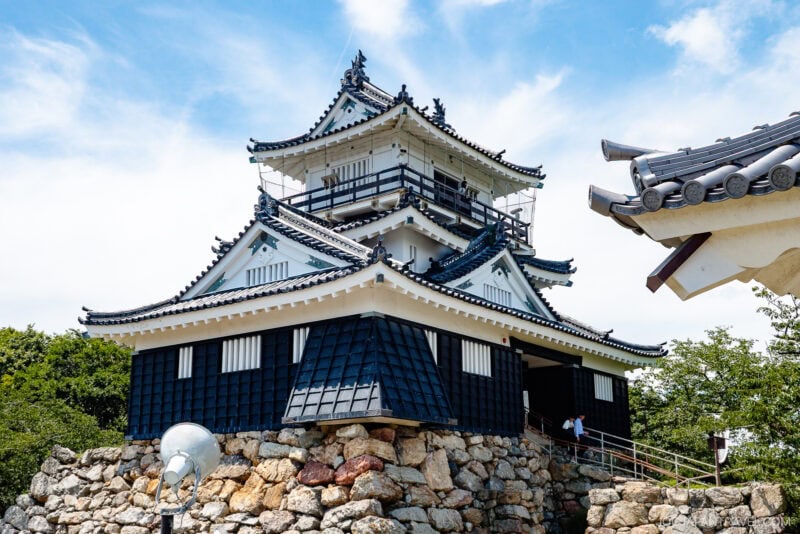
Hamamatsu Castle may not be as grand as Himeji or Osaka Castle, but its importance lies in who once lived here. Tokugawa Ieyasu built the castle in 1570 after defeating the Imagawa clan and called it home for 17 years. From this base, he fought decisive battles that shaped his rise to power.
Because many lords who later ruled Hamamatsu were promoted to high positions in the Tokugawa Shogunate, the castle earned the nickname “Castle of Success”. The current keep is a reconstruction, but the original stone base—over 400 years old—remains intact.
The Restored Gate and Stone Walls
The entrance gate, rebuilt using the traditional Nozura-zumi technique, offers a glimpse into early Edo-period craftsmanship. Instead of neatly cut blocks, builders stacked natural field stones with small pebbles filling the gaps. This method allows rainwater to drain and helps the walls withstand earthquakes.
Standing in front of these rugged stones, we could see how such construction survived centuries. Inside, exhibits explain the restoration process, including defensive features like openings for dropping rocks or boiling water on attackers.
Exploring the Castle Tower
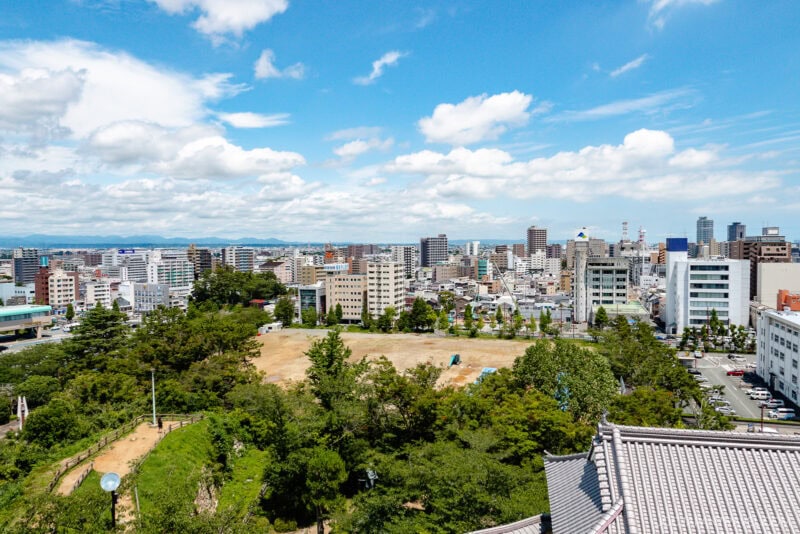
Hamamatsu Castle’s three-story tower is small but filled with fascinating displays.
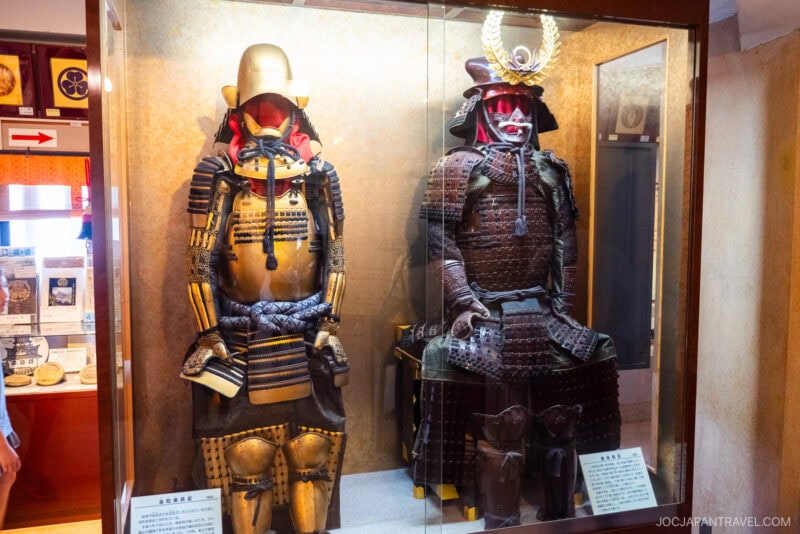
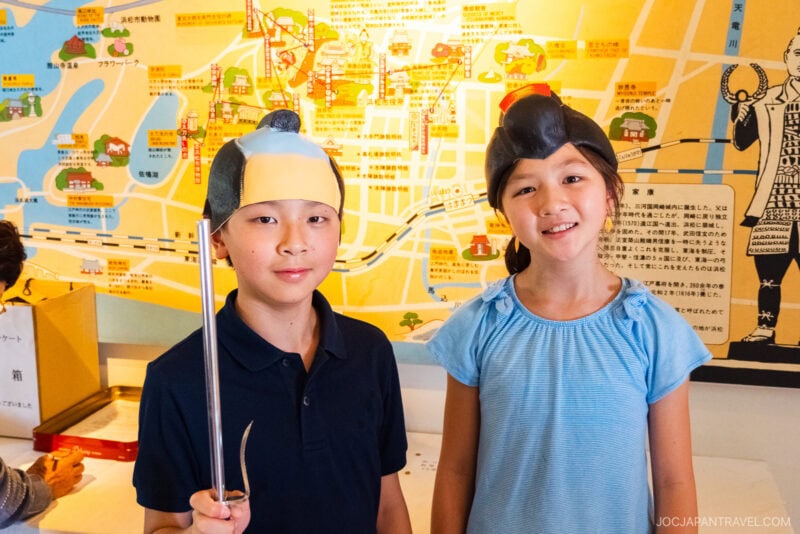
- First Floor – Tokugawa Ieyasu’s Life Exhibits include replica armor, weapons, and personal artifacts tied to Ieyasu. There’s even a statue of the young shogun and props for kids to pose with.
- Second Floor – Edo-Period Weaponry Swords, matchlock guns, ornate saddles, and a miniature diorama of Hamamatsu during Ieyasu’s time give insight into the era’s battles.
- Third Floor – Observatory From the top, we enjoyed views of Hamamatsu City, the surrounding park, and, on clear days, the Pacific Ocean. While not as tall as other castles, it offered a calm perspective of the city.
After the Castle – Local Food Delights
Once we finished exploring, we turned our attention to Hamamatsu’s famous cuisine. The city is best known for two specialties: unagi (freshwater eel) and gyoza (pan-fried dumplings). Sampling both was the highlight of our stop.
How to Get to Hamamatsu Castle
Hamamatsu Castle sits in central Hamamatsu City, not far from JR Hamamatsu Station on the Tokaido Line.
By Train
- From Tokyo: Take the Tokaido Shinkansen to Hamamatsu Station (about 1 hour 40 minutes).
- From Kyoto: About 1 hour by Shinkansen.
- From Osaka: About 1 hour 30 minutes by Shinkansen.
Taxi
- From Hamamatsu Station, take a taxi for about 10 minutes
Pro Tip: Pair your castle visit with an unagi meal nearby to round out the Hamamatsu experience.
Is Hamamatsu Castle Worth Visiting?
If you’re passing through Hamamatsu, we think the castle is worth a stop. The exhibits, rugged stone walls, and observatory views offer a meaningful glimpse into Tokugawa Ieyasu’s legacy.
With its central location, welcoming park, and easy access to Hamamatsu’s famous unagi and gyoza, the castle makes a rewarding detour on any trip between Tokyo and Osaka or while exploring Shizuoka Prefecture.
More to Explore Nearby
As a historical site where Tokugawa Ieyasu once resided, Hamamatsu Castle is central to the city, positioning you near a massive scenic lake, unique factory tours, and famous regional food specialties.
- Lake Hamana – Discover the vast saltwater lake nearby, offering beautiful scenery and opportunities for marine recreation and relaxation.
- Unagi Pie Factory – Take a tour of this unique factory that produces Hamamatsu’s famous “nighttime confection,” a crunchy eel-flavored snack.
- Hamamatsu Gyoza – Dive into the local culinary scene by learning more about this famous regional specialty, often cooked in a distinctive circular presentation.
- Hamamatsu Unagi – Explore the city’s other famous local delicacy, freshwater eel (unagi), which is sourced from nearby Lake Hamana.