This post may contain affiliate links. Please read our disclosure policy.
Discover Atsuta Shrine in Nagoya, a revered spiritual site rich with imperial treasures, sacred deities, and authentic local cuisine.
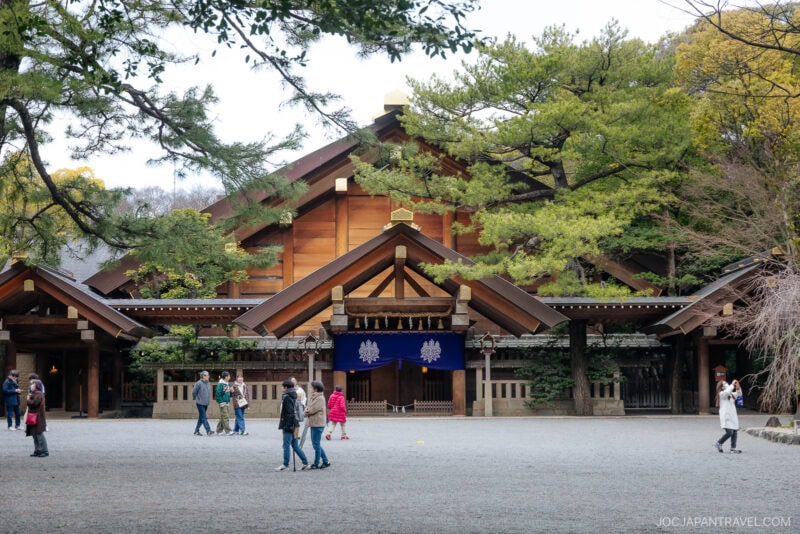
Hidden in the heart of Nagoya, Atsuta Jingu has welcomed visitors for more than 1,900 years. Locals call it Atsuta-San or Atsuta-Sama, a name spoken with affection and respect.
Stepping into its grounds feels like leaving the city behind, with quiet paths, sacred treasures, and ceremonies that have been preserved for centuries. It is a place where Japan’s history and spirit come alive. Here is everything you can explore at this cherished shrine.
How to Get to Atsuta Shrine
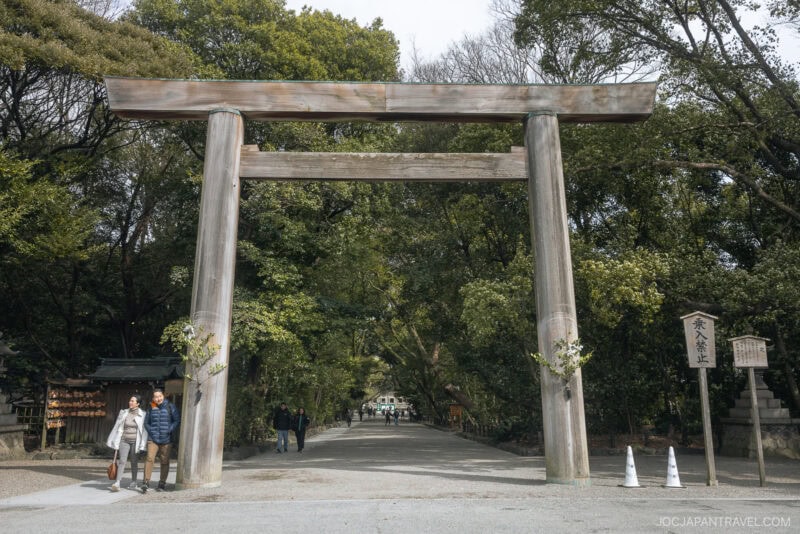
From Meitetsu Nagoya Station, hop on the Meitetsu Line to Jingumae Station. The ride takes about 5 minutes and costs 250 yen one way. From Jingumae Station, it’s just a short, pleasant walk to the shrine entrance.
If you’re coming from JR Nagoya Station, take the JR Tokaido Line to Atsuta Station. The trip is around 10 minutes and costs 200 yen one way. From Atsuta Station, the shrine is a 5- to 10-minute walk.
History of Atsuta Shrine
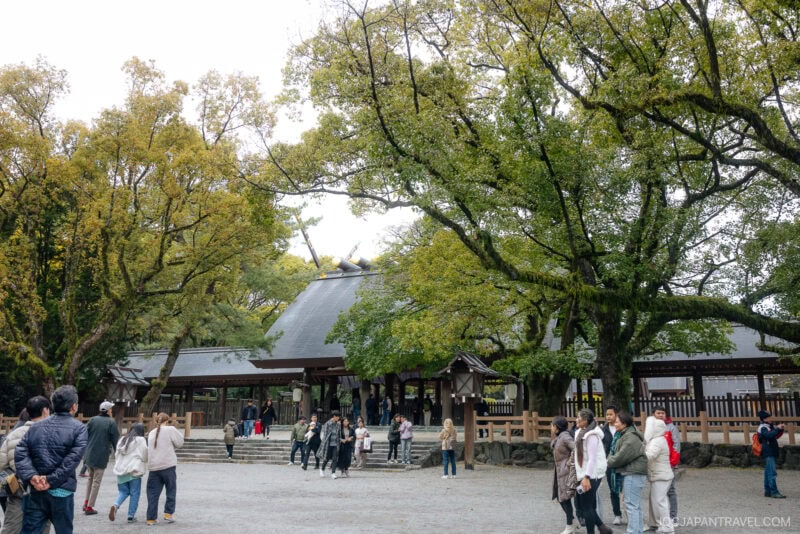
Atsuta Shrine has stood for over 1,900 years, with its founding recorded in Japan’s oldest texts, the Kojiki and Nihonshoki(712–720 AD).
The shrine is closely linked to the sacred sword Kusanagi no Tsurugi, one of Japan’s Three Imperial Regalia. According to legend, the god Susanoo first slew an eight-headed serpent and discovered a sword in its tail, which he then gave to the Sun Goddess Amaterasu.
Later, Prince Yamato used the sword to escape a grass fire, earning it the name Grass-Cutting Sword. After his death in 113 AD, the sword and other treasures were placed in a shrine at his widow’s home and were eventually moved to the current site. Although the original sword is not on display, replicas can be seen in the treasure house.
During the Meiji period (1868–1912), Atsuta Shrine was rebuilt in the Shinmei-zukuri style, one of Japan’s three most important architectural styles.
What to do at Atsuta Shrine
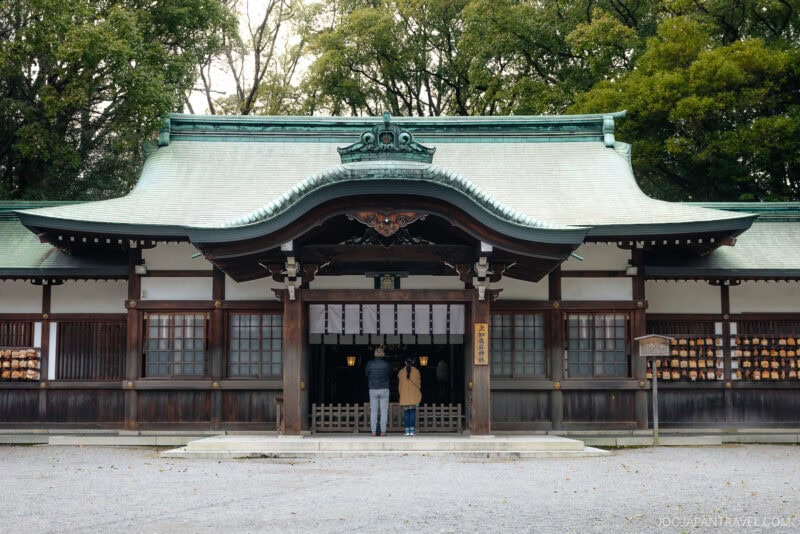
The shrine spreads across 46 acres (190,000 m²) and includes museums, parks, auxiliary shrines, and the main hall.
Strolling along the pathways, you can feel centuries of history in the air, with a quiet sense of mystery and calm. Along the way, a series of structures invite exploration, each offering its own glimpse into the shrine’s rich heritage.
Bunkaden Treasure Hall
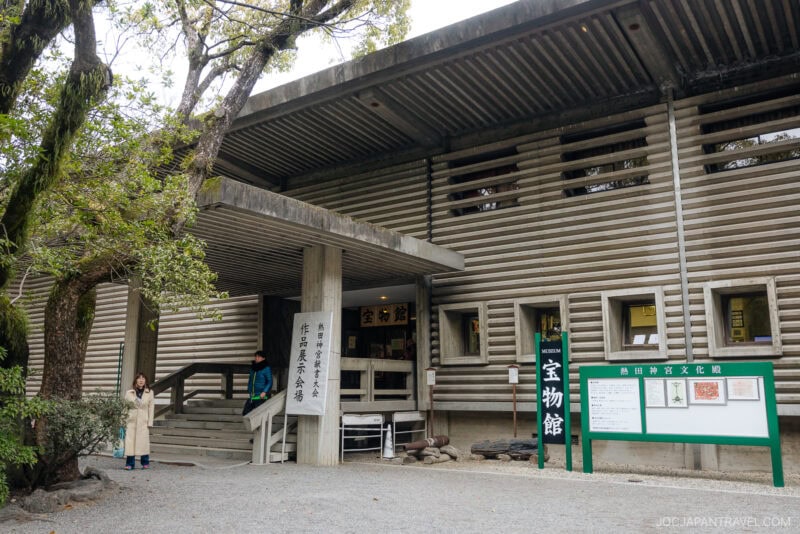
Start at the Bunkaden Treasure Hall, where 4,000 treasures await, including samurai swords, Bugaku masks, and sacred garments used for the deities. About 170 pieces are national treasures or important cultural properties.
Nearby, you’ll notice the Nobunaga-Bei wall, a rare Otsuchi-style structure made of roof tiles and cement. Built in 1560 by warlord Oda Nobunaga to give thanks for his victory at the Battle of Okehazama, the two-meter-high, 400-meter-long wall still stands as a remarkable piece of history.
Sacred Camphor Tree
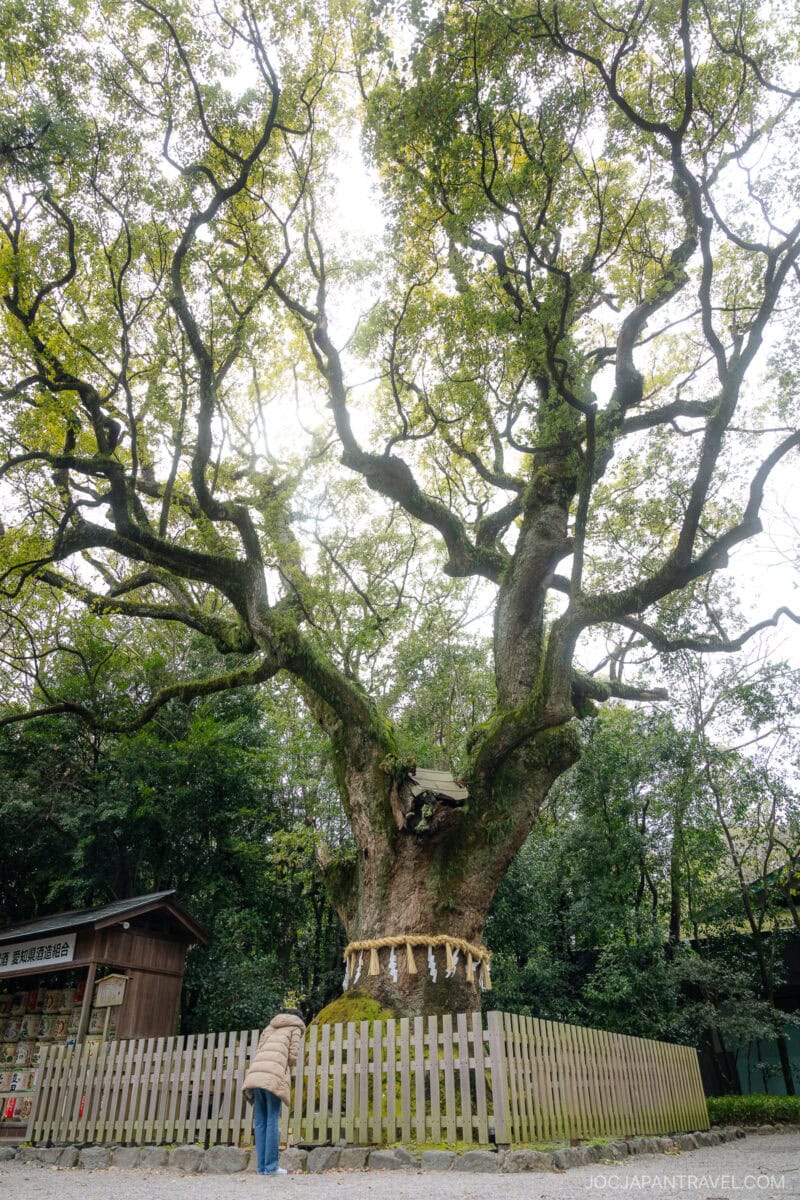
Among the many trees, look for the thousand-year-old Goshinboku, a sacred camphor tree. It is said to have been planted by the Buddhist priest Kukai (Kobo Daishi). Visitors often stop to pray and feel the calming energy from its ancient roots.
At the center of the grounds stands the Hongu, the main shrine. It is dedicated to the Sun Goddess Amaterasu and the legendary Kusanagi-no-Tsurugi. The inner sanctuary is closed to the public, but you can make an offering and enjoy the peaceful atmosphere.
Before leaving, visit the small stalls nearby to pick up an omamori (charm), omikuji (fortune), or ema (wishing plaque).
⛩️ Recommended read: A Beginner’s Guide to Japanese Shrine and Temple Etiquette
If you visit in early summer, be sure to catch the Atsuta Festival on June 5. The festival features drumming, dancing, food stalls, and traditional rituals. At night, hundreds of lanterns glow, and the celebration ends with a fireworks display.
What to eat at Atsuta Shrine
Kishimen Udon – Kusunagi Plaza & Museum
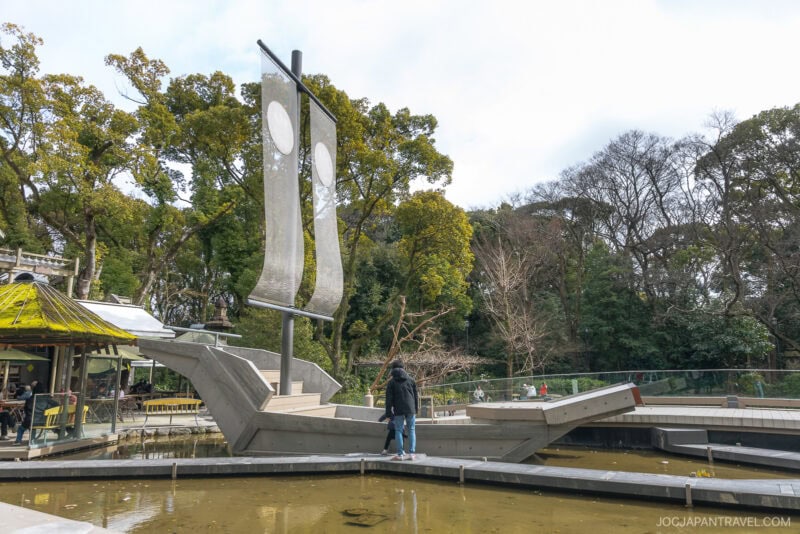
Take a break at Kusunagi Plaza to enjoy kishimen udon, one of Nagoya’s local specialties. These flat, chewy noodles have a lighter texture than regular udon. It’s a comforting meal between sightseeing.
I recommend Miya Kishimen, an outdoor restaurant surrounded by trees. Their signature bowl, topped with braised pork, spinach, and bonito flakes, was one of my favorite dishes in Nagoya.
After your meal, browse the nearby souvenir shop or relax by the water before continuing your walk through the shrine grounds.
Hitsumabushi – Atsuta Horaiken Jingu
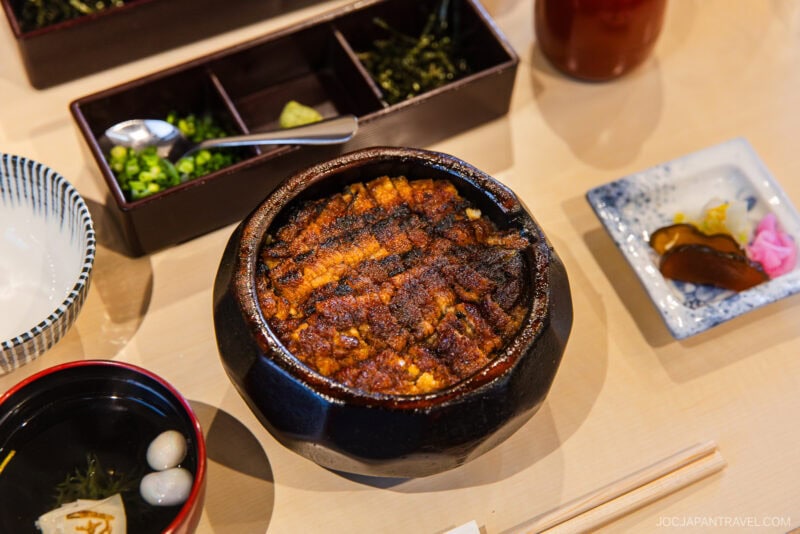
Just outside the south entrance of the shrine is Horaiken, a popular unagi (eel) restaurant serving hitsumabushi, one of Nagoya’s most iconic dishes. Established in 1873, Horaiken has multiple locations, but the branch near Atsuta Shrine is especially popular with visitors.
Hitsumabushi offers a unique way to enjoy grilled eel. You eat it over rice with scallions, wasabi, and seaweed in four different styles—learn how in our complete Nagoya Food Guide.
The long lines here say it all. If there’s one dish you shouldn’t miss in Nagoya, it’s hitsumabushi.
Final Thoughts
I hope this guide inspires your visit to Atsuta Jingu. Between its centuries of history, beautiful architecture, tranquil paths, and delicious local flavors, it offers a full experience of Nagoya’s culture that’s not to be missed.
More to Explore Nearby
As one of Japan’s most important Shinto sites, Atsuta Shrine provides a deep connection to the country’s ancient history and spirit, and its location in Nagoya makes it a perfect hub for exploring the broader Chubu and Kansai regions.
- Hida Takayama – Explore the beautifully preserved old town of Takayama, where you can stroll through traditional streets and sample local specialty foods like Hida beef.
- Shirakawa-go – Journey north from Nagoya to these unique mountain villages, famous for their traditional gassho-zukuri (praying hands) farmhouses, which are UNESCO World Heritage Sites.
- Jigokudani Monkey Park – Head towards Nagano to observe the famous “snow monkeys” bathing in natural hot spring pools amidst the dramatic backdrop of the surrounding snowy mountains.
- Osaka Dotonbori – Travel to the nearby Kansai region and dive into the electric atmosphere of Osaka’s most famous entertainment district, known for its huge neon signs and street food culture.