This post may contain affiliate links. Please read our disclosure policy.
With its wooden stage, panoramic valley views, and sacred waterfall, Kiyomizu-dera is one of Kyoto’s most unforgettable temples and a UNESCO World Heritage Site.
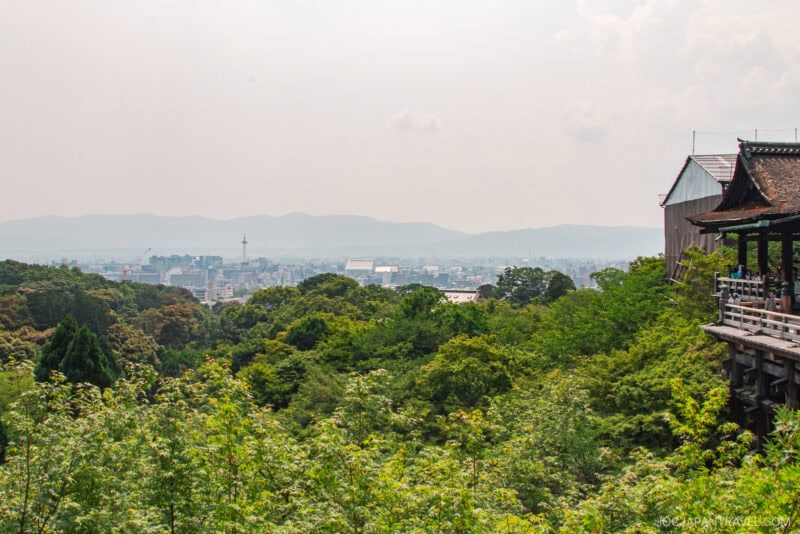
A Temple of Faith and Views
Of all the temples in Kyoto, Kiyomizu-dera is our family’s favorite. We visited the temple on a clear morning, and the uphill walk through Higashiyama’s old streets made reaching the temple feel like a journey back in time.
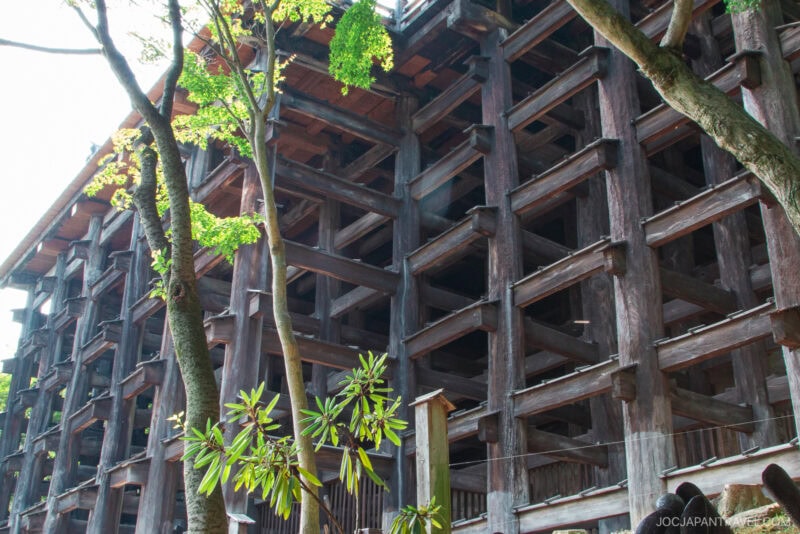
Built in 1633 without a single nail, the temple’s wooden stage projects dramatically over the hillside, offering sweeping views of Kyoto surrounded by cherry blossoms in spring or fiery maples in autumn.
The Japanese phrase “to jump off the stage at Kiyomizu” means to take a leap of faith, reflecting the daring spirit of the architecture. Standing on that platform, it was easy to see why the temple has inspired such a saying.
Highlights of Kiyomizu-dera
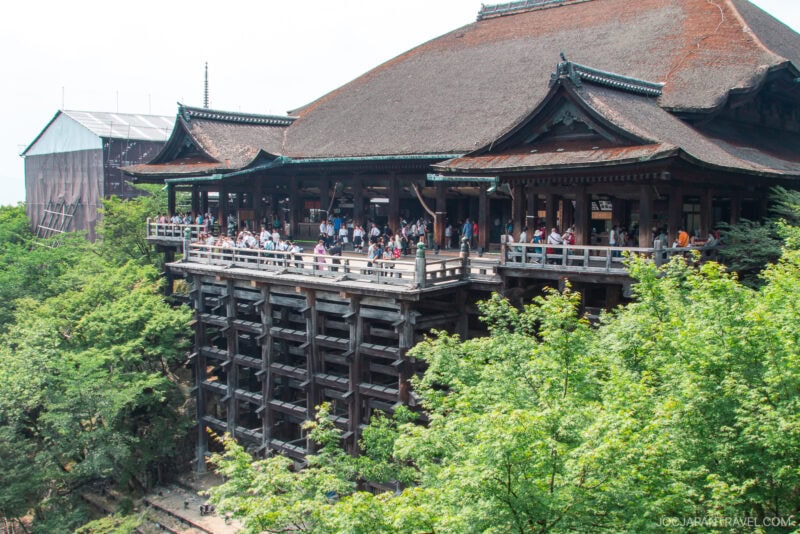
UNESCO World Heritage Site
In 1994, Kiyomizu-dera was added to the UNESCO World Heritage list as part of the Historic Monuments of Ancient Kyoto. Its blend of history, engineering, and spirituality makes it a true cultural treasure.
Otowa Waterfall
At the base of the temple sits Otowa Waterfall, the source of the “pure water” in the temple’s name. Visitors line up to drink from one of its three streams using long-handled cups. Each stream is believed to bring a blessing: success in school, love, or long life. Tradition says you should only choose one—drinking from all three is considered greedy.
Koyasu Pagoda
A short walk leads to Koyasu Pagoda (子安塔), a three-tiered pagoda said to bless mothers with safe childbirth. The view of the main hall from this spot is one of the most photographed angles of Kiyomizu-dera.
Sub-Temples and Shrines
Scattered around the grounds are smaller shrines and halls. One temple dedicated to the mother of Buddha is known for offering maternal blessings and felt especially peaceful compared to the busier main areas.
Strolling the Approach
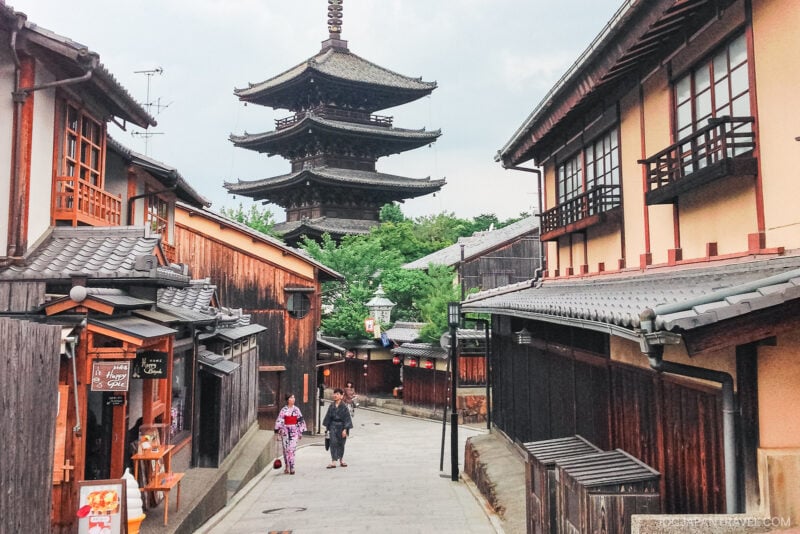
The half-mile uphill walk to Kiyomizu-dera is lined with pottery shops, pickle stands, and sweet shops. Nami and I were catching our breath, but the kids had a blast exploring all the little shops along the way.
After visiting the temple, we rewarded ourselves to kakigori shaved ice—strawberry for the kids and ujikintoki (green tea with red beans) for us. It was the perfect refreshment before heading back down.
How to Get to Kiyomizu-dera
Kiyomizu-dera is located in Kyoto’s eastern Higashiyama district. The uphill walk is part of the experience, so wear comfortable shoes.
From Kyoto Station
Take Kyoto City Bus #100 or #206 to the Gojo-zaka or Kiyomizu-michi stop. From there, it’s about a 10–15 minute walk uphill to the temple.
By Train
Take the Keihan Line to Kiyomizu-Gojo Station. From the station, it’s a 20-minute walk to the temple grounds.
By Taxi
A taxi from Kyoto Station takes about 10 to 15 minutes. The fare is around ¥2,000 to ¥3,000.
Pro Tip: Visit early in the morning or late in the afternoon to enjoy fewer crowds and softer light for photos.
Is Kiyomizu-dera Worth Visiting?
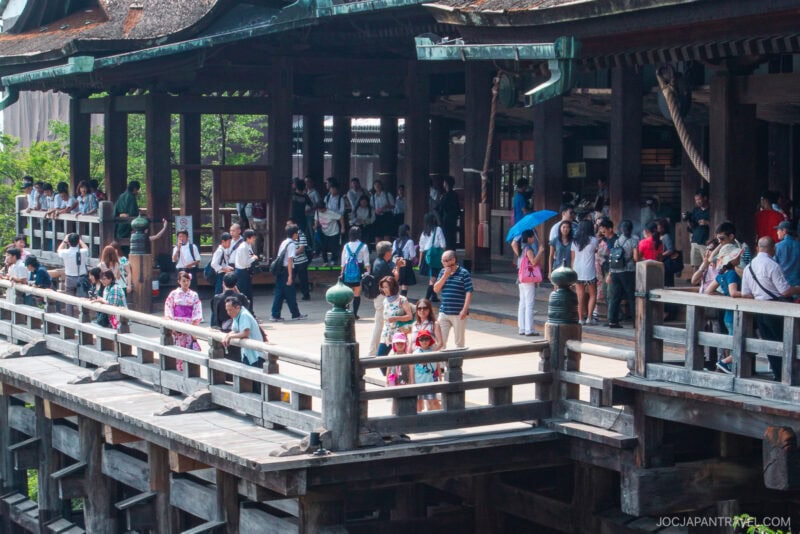
Kiyomizu-dera is one of Kyoto’s most iconic temples and belongs on every traveler’s itinerary. The combination of dramatic architecture, sacred rituals, and breathtaking views makes it a memorable experience for families, couples, or solo travelers alike. Standing on the wooden stage and looking out over Kyoto is a view we’ll never forget.
More to Explore Nearby
Kiyomizu-dera is perfectly situated in the historic Higashiyama District, meaning your visit can easily extend into exploring Kyoto’s most charming cultural streets, famous geisha districts, and other profound temples.
- Gion District – Stroll through Kyoto’s most famous geisha district, known for its preserved traditional architecture and exclusive teahouses.
- Kodai-ji Temple – Visit this nearby significant temple, noted for its beautiful rock garden and elegant bamboo grove, offering a peaceful retreat from the crowds.
- Kyoto Station – Learn how to navigate the city’s major transportation hub, which also features excellent shopping, dining, and observation deck views.
- Koyasan (Mount Koya) – Experience a profound spiritual contrast by visiting the mountain temple complex that serves as the headquarters of Shingon Buddhism.