This post may contain affiliate links. Please read our disclosure policy.
Embark on a spiritual journey in Koyasan, Japan. Stay overnight at a traditional temple and immerse yourself in the tranquility and beauty of this sacred mountain town.
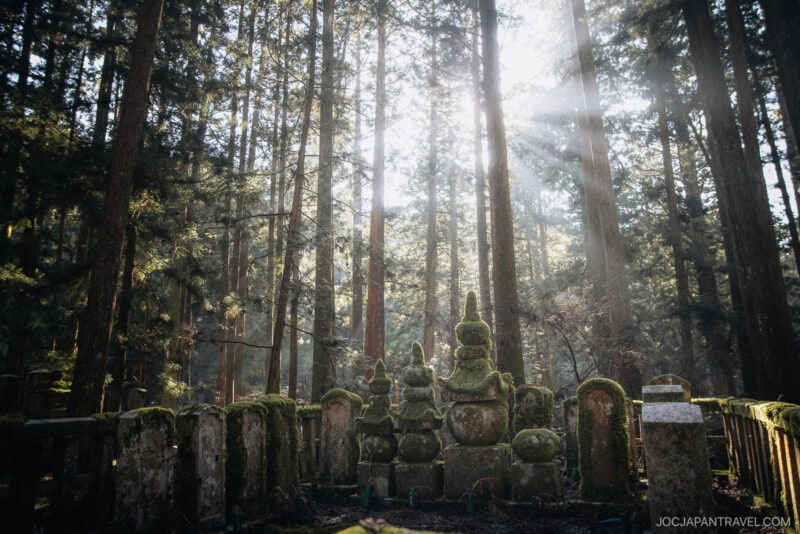
Set within Wakayama’s quiet mountains, Koyasan (Mount Koya) is one of Japan’s most sacred sites. Founded in 816 by monk Kobo Daishi (Kukai, 774–835), the mountaintop sanctuary is the heart of Shingon Buddhism. Its peaceful surroundings have welcomed emperors, lords, and politicians for centuries. Now, travelers can experience Koyasan firsthand by staying in a temple lodging.
In 2004, Koyasan, along with Kumano Sanzan and its pilgrimage routes, became a UNESCO World Heritage site as “Sacred Sites and Pilgrimage Routes in the Kii Mountain Range.” I was lucky to stay in a temple and immerse myself in the area’s rich history.
How to Get to Koyasan
From Osaka Namba Station, the easiest way is by train. Take the Limited Express Nankai Koya Line to Gokurakubashi Station. It takes about 1 hour 20 minutes and 1,720 yen one way (2024 prices). An express or rapid express option takes roughly 1 hour 40 minutes for 930 yen.
At Gokurakubashi, ride the cable car to Koyasan Station—5 minutes, 500 yen. From there, a 10-minute bus to Senjunbashi stop (220 yen) brings you to the heart of town.
World Heritage Ticket
If you’re visiting Koyasan, the Koyasan World Heritage Ticket is worth considering. It covers a round-trip to Mount Koya, unlimited local buses, and discounted entry to select attractions.
Digital tickets cost 3,140 yen but don’t include the Limited Express from Namba or Kongobuji discounts. Paper tickets are available at Namba: 3,540 yen for regular, 4,090 yen for Limited Express, with child tickets at half price.
For day-trippers, the World Heritage Koyasan One-Day Free Ticket (1,100 yen adults, 550 yen children) offers 24-hour unlimited bus access.
Danjo Garan
The central temple complex, Danjo Garan, was the first site Kobo Daishi built after founding Koyasan. It includes about 20 temples and smaller buildings, each with its own design and purpose. Surrounded by eight mountain peaks, Daishi envisioned Koyasan as a living mandala, representing the universe.
The 45-meter, two-story Konpon Daito Pagoda is its centerpiece. Inside, the Womb Realm Mandala shows a three-dimensional vision of the world, with a striking statue of Dainichi Nyorai, the main deity of Shingon Buddhism.
Saito Pagoda
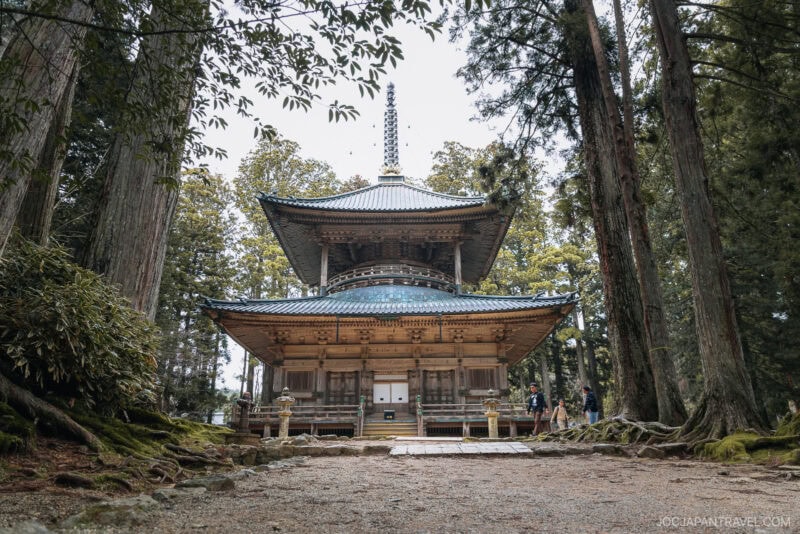
Just a short walk away is the Saito Pagoda, representing the Diamond Realm Mandala. I found myself lingering on the paths, discovering hidden corners and intricate details that tell Koyasan’s story.
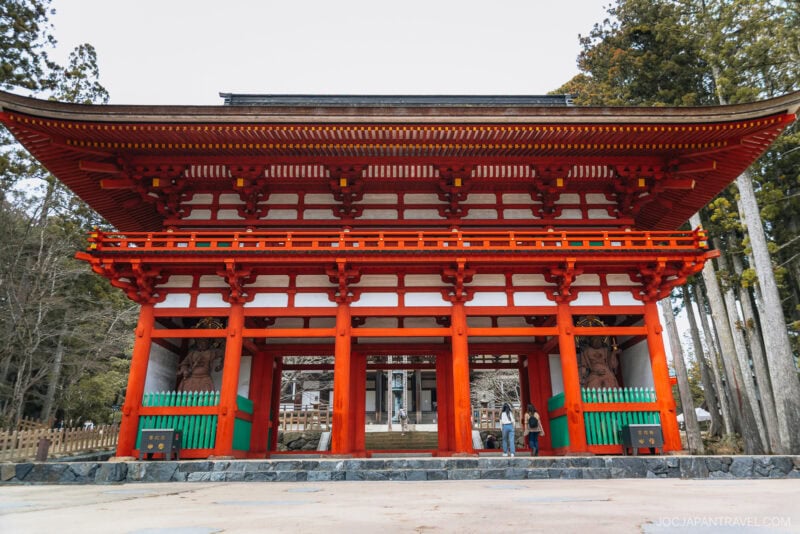
About 10 minutes west is the massive Daimon Gate, Koyasan’s welcoming entrance, flanked by two imposing Kongo Rikishi statues. It’s the largest I’ve seen outside Nara.
Kongobuji
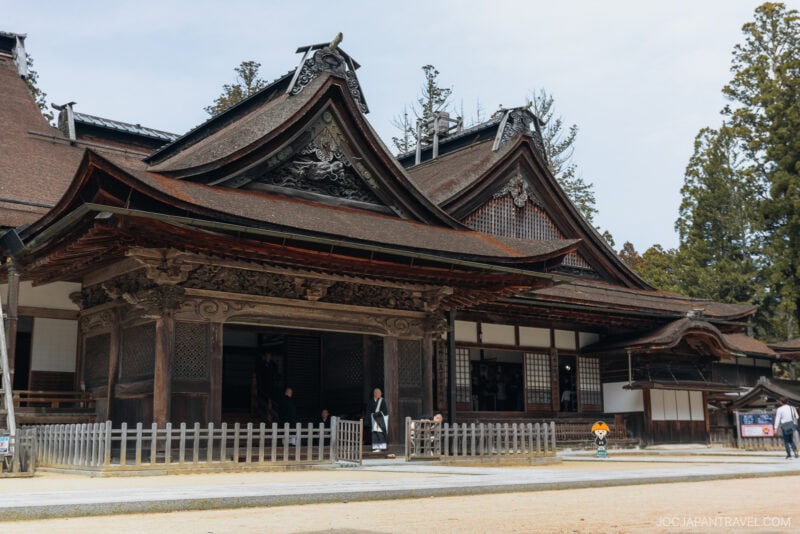
Kongobuji, a National Treasure and Shingon headquarters, immediately impressed me. Built by Toyotomi Hideyoshi in 1593 in memory of his mother, it’s worth the 1,000 yen admission.
Inside, the Ohiroma Room dazzles with gold fusuma and crane paintings by Kano Tanyu, and the Yanaginoma (Willow Room) holds a somber history.
I enjoyed resting in the Shin Betsuden tatami hall over tea and a light snack, then stepping outside to Banryutei Rock Garden, Japan’s largest, where two dragons rise from clouds to protect the temple.
Temple Lodging
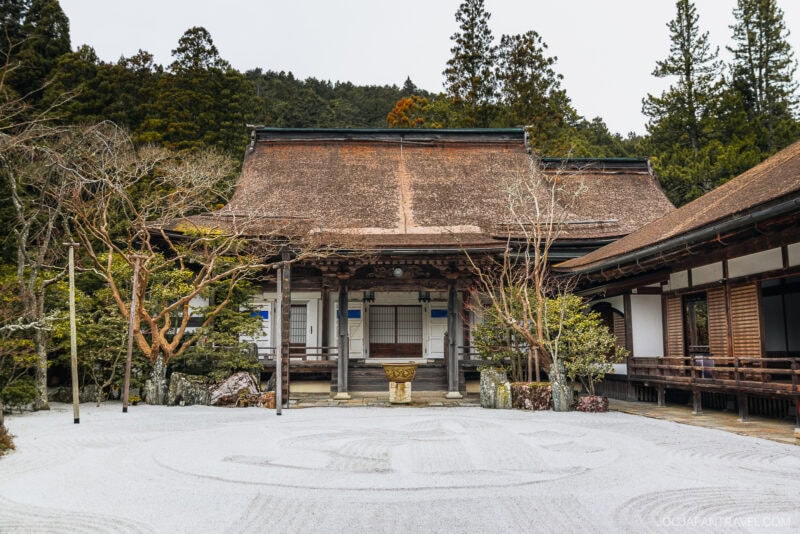
One of the best ways to experience Koyasan is by staying overnight at a temple, or shukubo. Of the roughly 117 temples in the area, 52 offer accommodations, many of which are foreigner-friendly and can be booked online.
I stayed at Ren’gejo-in, just a 10-minute walk from the town center. Its rich history made the stay feel extra special, and reading about it added a deeper connection to Koyasan’s spiritual charm.
Ren’gejo-in

The sanmon gate marks the entrance, with large paper lanterns bearing the Sanada family crest—both father and son once stayed here. The front rock garden, in karesansui style, depicts rivers and ponds with stones, sand, and plants.
Rooms are traditional, with tatami floors, decorated fusuma, and shared bathrooms. My room had a lovely view of the central courtyard, home to a 500-year-old pine and a maple tree that survived a Tempo Period fire.
Temple Lodging Dinner
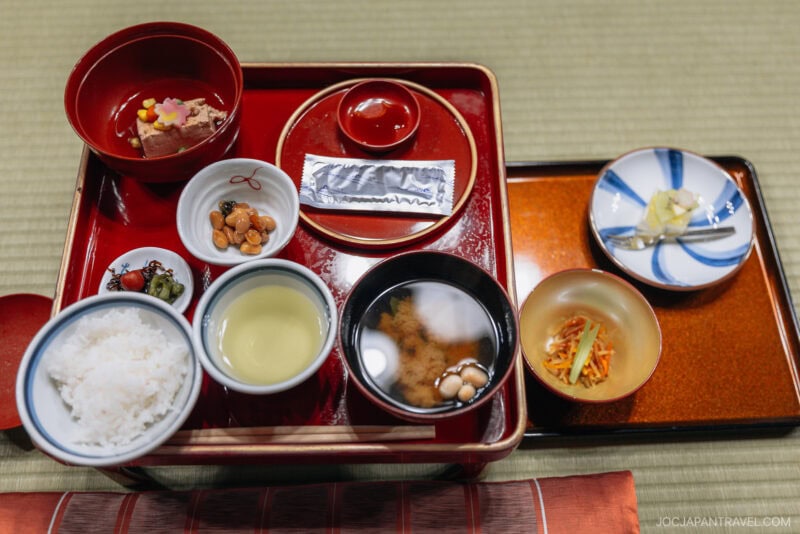
Guests are encouraged to check in before 5 p.m. for a 6 p.m. dinner of shojin ryori, a plant-based temple cuisine featuring tofu, tempura, stews, noodles, and rice. Before dinner, you can join a 45-minute sutra recital and meditation led by the temple monk.
The next morning, optional prayers start at 6 a.m., followed by a classic Japanese breakfast at 7 a.m. Check-out is at 9 a.m., leaving time to explore the temple further.
While the temple functions like a hotel, it remains a sacred space. Noise should be minimal, and photos of monks or the Gomada hall are not allowed. The focus here is on the serene architecture, gardens, and tranquil atmosphere.
Okunoin

After Kobo Daishi’s passing in 835, he was buried at Okunoin, Japan’s largest cemetery, with over 200,000 gravestones stretching more than a mile (2 km).
The entrance is marked by Ichinohashi Bridge, lined with towering cedar trees. Bowing before crossing is a sign of respect. A second bridge near the Okunoin-mae bus stop offers parking and a slightly shorter route.
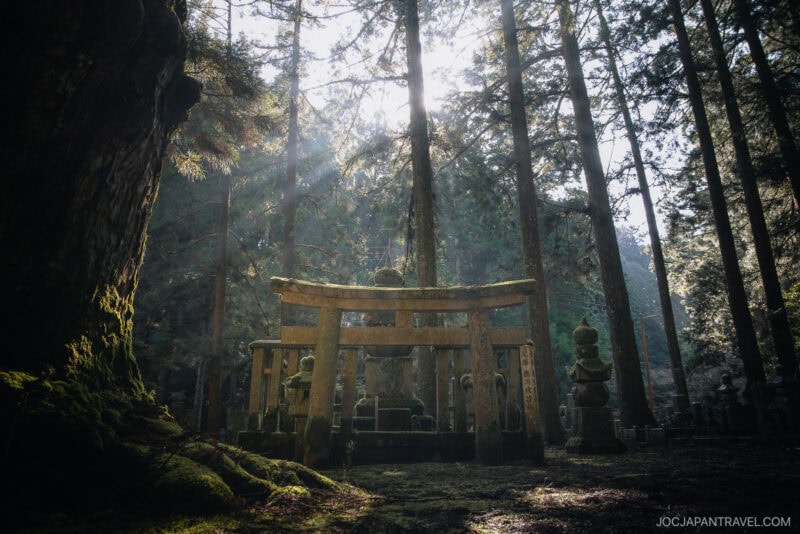
I visited early, hoping to catch the morning sunlight filtering through the cedars, and it was magical. Walking through the moss-covered gravestones, torii gates, and Jizo statues, I felt the serene history of Koyasan whisper through the forest.
Gokusho Offering Hall
Along the path, you’ll reach the Gokusho Offering Hall, lined with Mizumuke Jizo (Water-Covered Jizo), where visitors pour water over the statues to honor ancestors. Morning prayers were taking place when I visited, so I refrained from taking photos.
A little further is Gobyobashi Bridge, marking the entrance to Okunoin’s more sacred areas, where photography, food, and drinks are prohibited. Here you’ll find Torodo Hall, the Hall of Lamps, with 10,000 lanterns donated by worshipers—two have burned for over 900 years.
The cemetery is open 24 hours, though some areas may be inaccessible early or late.
Experience Koyasan’s Spiritual Heart
Staying at a temple gives you a deep connection to Koyasan’s spiritual essence and Japan’s rich cultural heritage. As you wander the paths, small shrines and hidden temples add layers of history and meaning.
I hope you have the chance to visit and feel the quiet beauty of this sacred mountain for yourself.
More to Explore Nearby
Koyasan is one of the most sacred sites in Japan, providing a serene and profound look into Shingon Buddhism. Its location in the mountains of Wakayama Prefecture makes it a spiritual contrast and logistical neighbor to the bustling cities of Kansai.
- Osaka Castle – Transition from the spiritual tranquility of Koyasan to the historical grandeur and modern energy of nearby Osaka, home to this magnificent fortress.
- Osaka Dotonbori – Experience the stark contrast of Koyasan’s solemn atmosphere by diving into the electric, neon-lit entertainment and street food district of Osaka.
- Nara Park – Continue your exploration of ancient Japanese religious centers by visiting Nara, where hundreds of deer roam among significant Buddhist temples and Shinto shrines.
- Kinosaki Onsen – Conclude your journey of reflection and rest with a visit to this charming, traditional hot spring town known for its seven public bathhouses.