This post may contain affiliate links. Please read our disclosure policy.
Okayama Korakuen Garden offers a glimpse into Japan’s feudal past with its Edo-period design, seasonal beauty, and easy access from Okayama Castle.
Walking from Okayama Castle Across Tsukimi Bridge
Our visit began with a stroll across Tsukimi Bridge (月見橋) from Okayama Castle, the pedestrian-only “moon viewing” bridge over the Asahi River. It connects Okayama Castle to the garden and sets a poetic tone for the visit.
If you plan to see both landmarks, consider buying the combination admission ticket. It’s a small savings and a convenient way to enjoy two of Okayama’s top attractions in one afternoon.
A Garden Built for a Daimyo
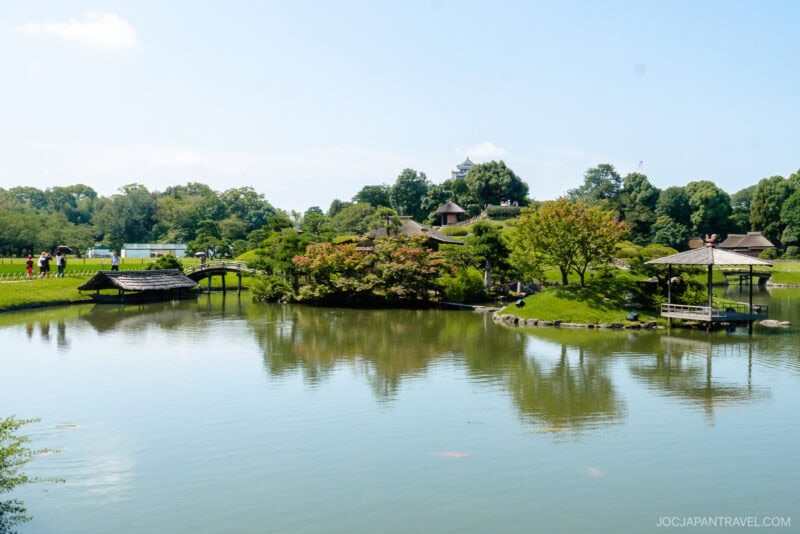
Korakuen was created in 1700 by the ruling Ikeda clan as a retreat for the daimyo and his guests. It was a place for leisure, from tea gatherings to cultural entertainment. The garden opened to the public in 1884 and has been carefully maintained ever since. Thanks to detailed records, the layout remains true to its original Edo-period design. Strolling through its 14 hectares gives visitors a sense of continuity with the past.
Highlights Inside Korakuen Garden
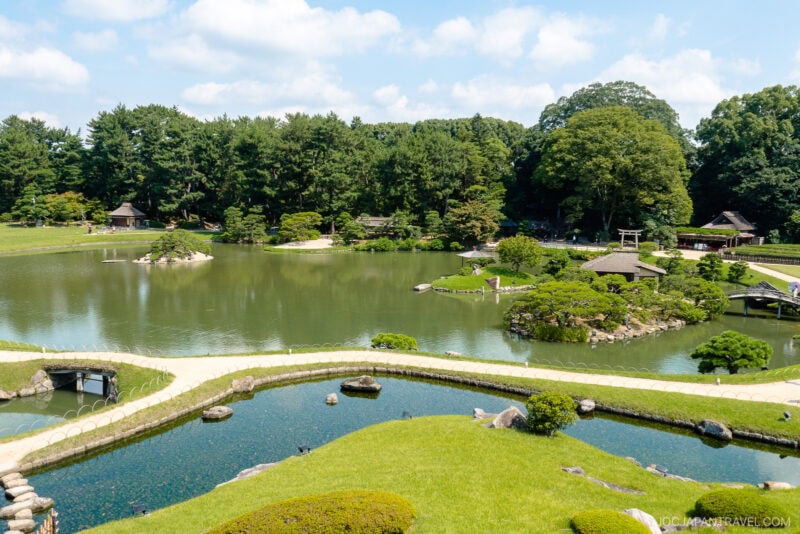
Korakuen is a strolling garden, designed for visitors to enjoy changing views from every angle. These were some of our favorite stops:
- Yuishinzan Hill: A small artificial hill that provides sweeping views of the garden—great for seasonal photos.
- Sawa-no-ike Pond: The central pond, ringed with walking paths and bridges, home to colorful koi.
- Crane Aviary: Once home to red-crowned cranes, it remains a symbol of the garden’s historic ties to imperial culture.
The mix of open lawns, waterways, and groves means there’s something to enjoy in every season—cherry blossoms in spring, lotus flowers in summer, crimson maples in autumn, and camellias in winter.
Why We Loved Korakuen Garden

We’ve visited many gardens in Japan, but Korakuen felt especially memorable. It balances elegance with calm, with paths that invite slow exploration. We appreciated the sense of history and the easy walk from Okayama’s city center.
How to Get to Okayama Korakuen Garden
Korakuen Garden sits across the Asahi River from Okayama Castle, making it easy to visit both in one trip.
By Train
From Okayama Station, walk about 25 minutes, or ride the Higashiyama streetcar to Shiroshita Station and walk 10 minutes to the South Gate.
By Taxi
About 10 minutes from Okayama Station; typical fare ¥1,000–¥1,500 depending on traffic.
Combo Ticket
You can buy a Korakuen + Okayama Castle combination ticket at the gate, just past Tsukimi Bridge.
Pro Tip: Visit in the morning for softer light and fewer crowds; check for seasonal evening illuminations.
Is Okayama Korakuen Garden Worth Visiting?

Yes, Korakuen is absolutely worth visiting. It’s one of Japan’s Three Great Gardens, and the combination of history, seasonal scenery, and accessibility makes it an ideal stop in Okayama. Pairing it with Okayama Castle creates a half-day itinerary that captures both cultural depth and scenic beauty.
More to Explore Nearby
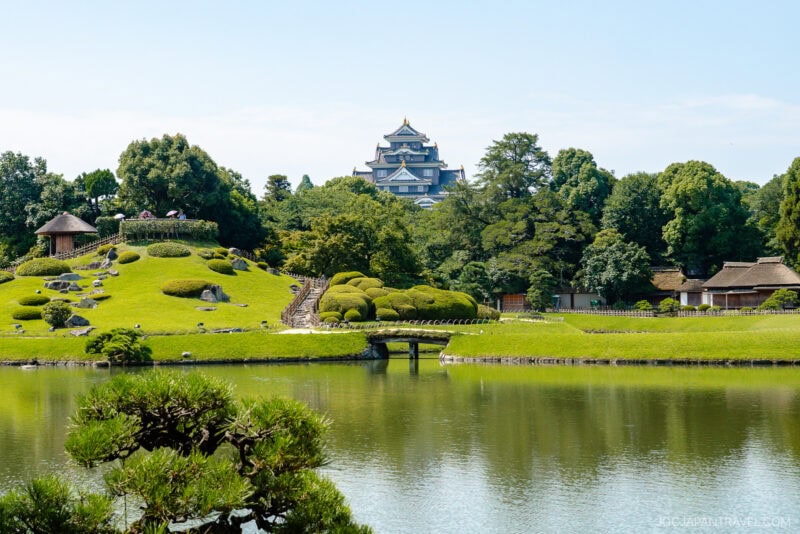
Okayama Korakuen Garden (岡山後楽園) is one of Japan’s Three Great Gardens, celebrated for its expansive lawns, scenic water features, and the beautiful backdrop provided by Okayama Castle. After enjoying the tranquility of this landscape, the surrounding area offers a rich mix of history, architecture, and contemporary art.
- Okayama Castle (Ujo Park) – Located directly across the Asahi River from the garden, the “Crow Castle” is a reconstructed landmark famous for its striking black exterior and its integral role in the garden’s iconic view.
- Kurashiki Bikan Historical Quarter – Take a short train ride to this wonderfully preserved merchant town. Its willow-lined canals, white-walled storehouses (kura), and the prestigious Ōhara Museum of Art offer a journey back in time.
- Naoshima Art Island – Easily accessible via a ferry from nearby Uno Port, this island is a must-see for contemporary art lovers, featuring the Benesse House Museum and outdoor works.
- Washuzan Highland – Located near Kurashiki, this area provides spectacular, panoramic views of the Seto Inland Sea, the Great Seto Bridge, and its numerous islands, especially renowned for its sunset vistas.