This post may contain affiliate links. Please read our disclosure policy.
Step into the Nara Palace Site (Heijo Palace), once the political and cultural center of Japan’s first permanent capital. Explore reconstructed halls, museum exhibits, and living history displays across its vast grounds.
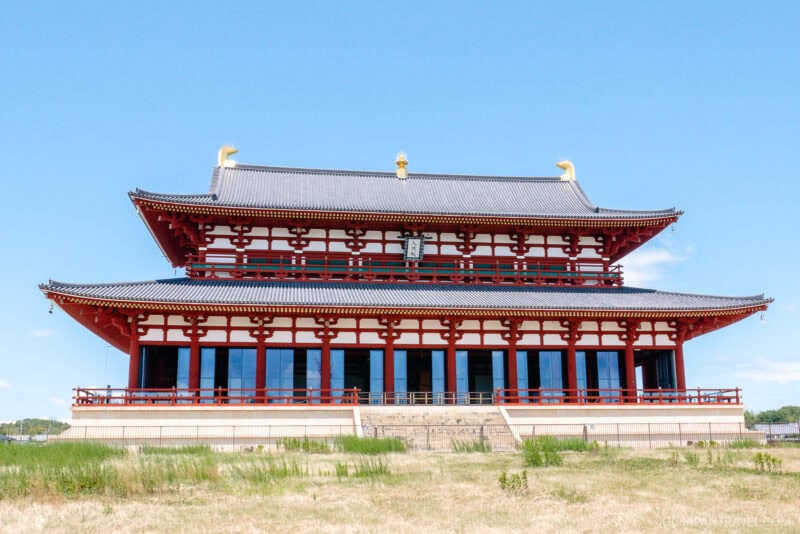
A Different Side of Nara’s World Heritage Sites
While most of Nara’s UNESCO landmarks are temples and shrines, the Nara Palace Site—formerly Heijo Palace (平城宮跡)—provides a rare glimpse into the secular life of the Nara period (710–784 AD). This was once the Imperial residence and administrative hub, modeled after the grand capitals of China’s Tang Dynasty.
The site, spread across more than 120 hectares, was abandoned when the capital moved to Kyoto. Its wooden buildings disappeared, and the area became farmland until 20th-century excavations uncovered its remains. Today, it’s been partially reconstructed and turned into an open-air history book visitors can walk through.
Highlights of the Nara Palace Site
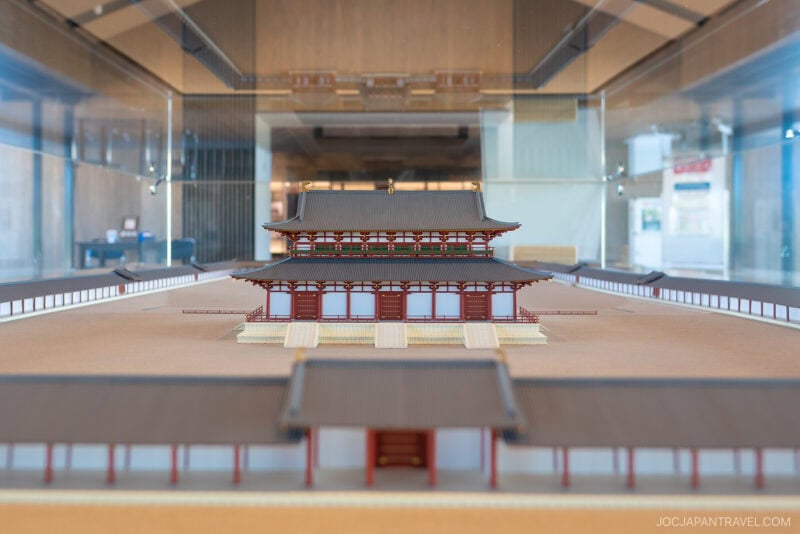
Daigokuden (Great Hall of State)
Standing at the center of the palace grounds, this enormous hall was where the Emperor met with court officials and foreign envoys. The reconstruction used traditional sixth-century techniques, complete with bright vermillion columns and sweeping wooden floors.
Suzaku-mon Gate
This stately entrance once welcomed dignitaries into the palace complex. Walking through the reconstructed gate gives a sense of the grandeur that defined ancient Nara.
Heijo Palace Museum
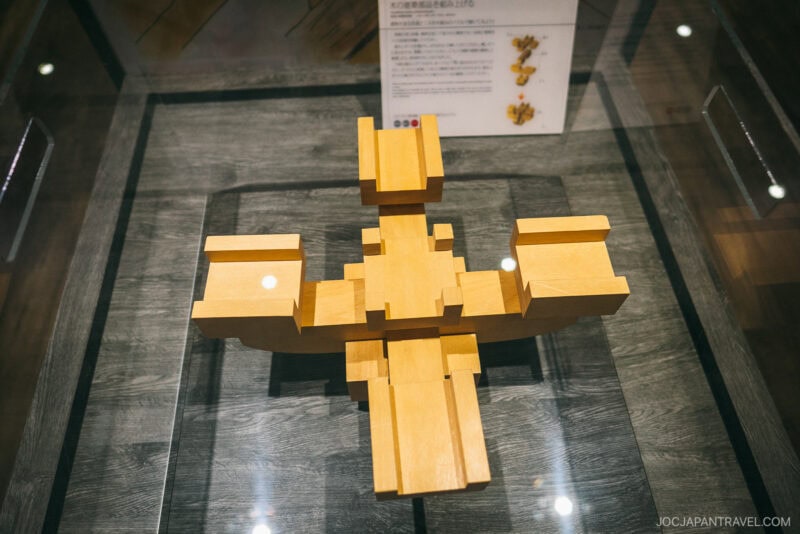
Free to enter, the museum displays artifacts uncovered during excavations—roof tiles, wooden tablets, and miniature palace models. We enjoyed the hands-on stations where kids could try their hand at ancient crafts.
Restoration and Craft Exhibit Hall
This space shows how the reconstructions were built, from tile making to woodworking. Families will appreciate the interactive displays that bring centuries-old techniques to life.
A Living History Experience
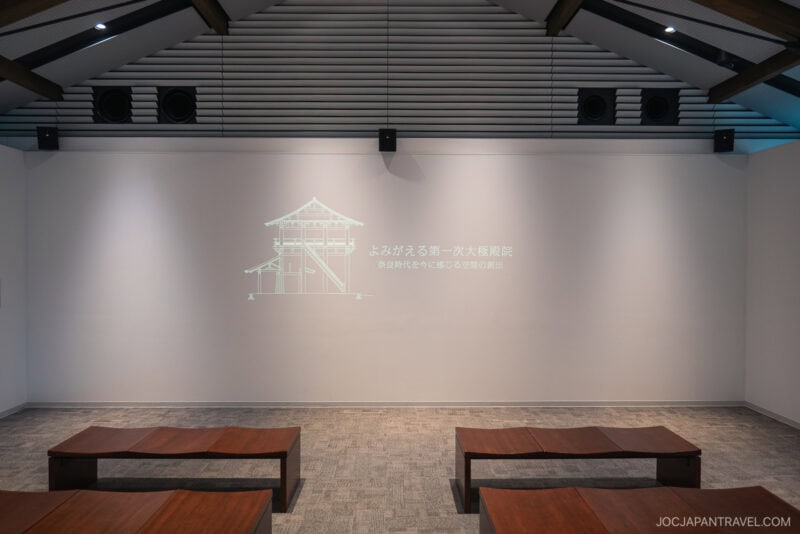
We spent a few hours exploring the Daigokuden, the museum, and the craft exhibit hall. The grounds cover a wide area, so be prepared for some walking. This visit is more about learning how Japan’s early government functioned and how those buildings are being reconstructed than about ornate visuals.
How to Get to Nara Palace Site (Heijo Palace)
Bus
From JR Nara Station (West Exit) or Kintetsu Nara Station, take a Nara Kotsu Bus bound for Gakuen-mae Station. Get off at the Suzakumon-hiroba-mae (朱雀門ひろば前) bus stop. The bus ride from Kintetsu Nara Station takes approximately 10-15 minutes, and from JR Nara Station, it takes about 15-20 minutes.
Should You Visit Nara Palace Site?
While it’s not as photogenic as Todai-ji or Kasuga Taisha, the Nara Palace Site offers context and scale you won’t find at religious landmarks. It’s a refreshing change of pace that helps visitors picture everyday life in Japan’s first capital.
More to Explore Nearby
The expansive former Imperial Palace Site provides a fascinating look into the center of ancient Japan, placing you conveniently near a cluster of the city’s greatest World Heritage-listed temples and its main attractions.
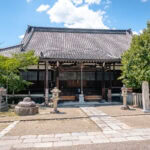
- Saidai-ji Temple – Discover the “Great Western Temple” nearby, historically one of Nara’s seven great temples.
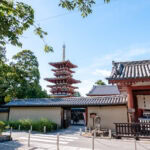
- Yakushi-ji Temple – Visit this nearby World Heritage site, famous for its beautifully symmetrical layout and magnificent pagoda.
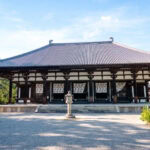
- Toshodai-ji Temple – Explore this serene UNESCO World Heritage temple, notable for its classical architecture and historical connection to the Chinese monk Jianzhen.
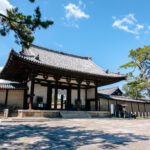
- Horyu-ji Temple – Travel a short distance west to explore the world’s oldest surviving wooden structure, a profound collection of historically significant buildings.