This post may contain affiliate links. Please read our disclosure policy.
At Shuri Castle, centuries of Ryukyu royal heritage meet striking Chinese-style architecture and the emotional story of a cultural treasure’s revival.
A Castle Like No Other
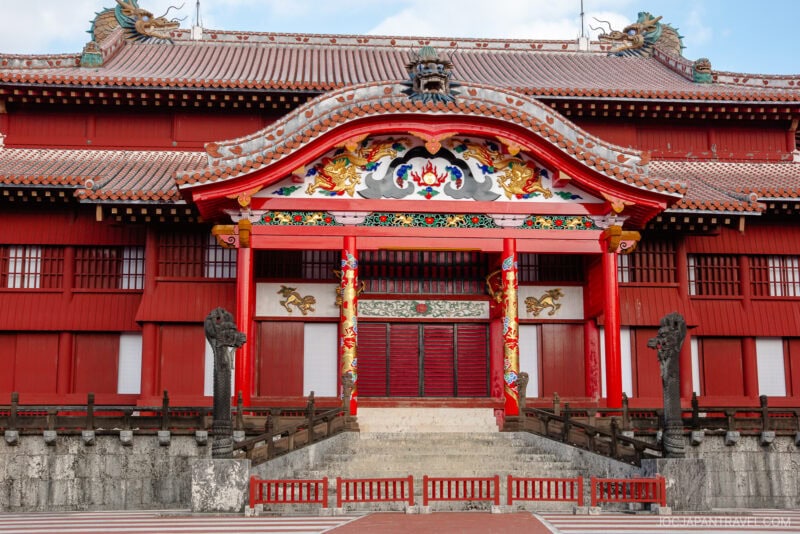
Shuri Castle doesn’t look like most Japanese castles. You won’t see soaring white towers or deep moats. Instead, bright vermilion gates, curved stone walls, and dragon-topped roofs reflect centuries of trade and cultural exchange with China and Southeast Asia. This was the political and spiritual center of the Ryukyu Kingdom for over 500 years.
Much of the castle was destroyed during World War II and carefully rebuilt in the 1990s. Sadly, in 2019, fire consumed several key buildings—including the main hall. But reconstruction is already underway and expected to finish by 2026. Even as work continues, visiting the site today presents a rare chance to witness Okinawan resilience and pride in action.
A Walk Through History
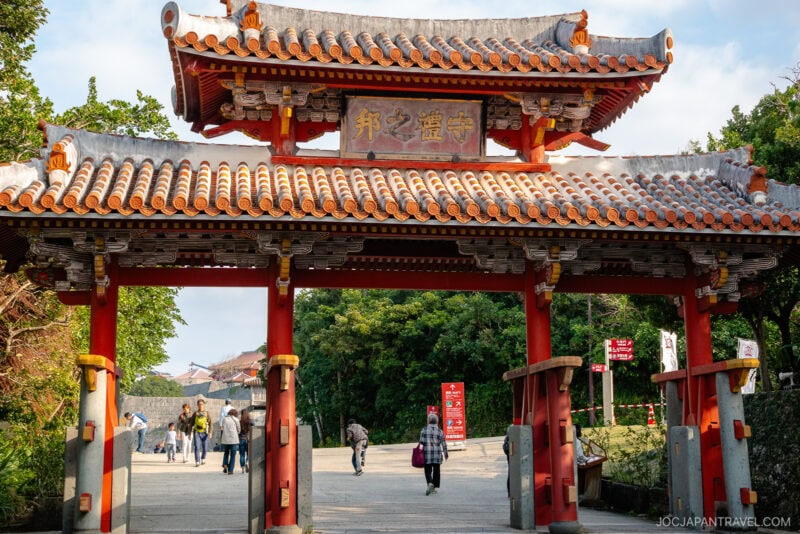
The Shureimon Gate is one of Okinawa’s most photographed landmarks, and it made a strong first impression. From there, the path to the main grounds led us through several gates, including Kankaimon (“Gate of Joyful Return”) and Zuisenmon (“Gate of Auspicious Springs”). Each had its own role in the palace’s original layout. Walking along the stone paths and open courtyards helped us picture what the royal complex might have felt like centuries ago.
A Rare Architectural Blend
What sets Shuri Castle apart for us is its striking architecture. The vivid red lacquered halls, intricate dragon carvings, and distinctive tiled roofs instantly transport you to another era. They reflect a strong Chinese aesthetic, a reminder of the Ryukyu Kingdom’s deep ties with China—connections that shaped the islands’ politics, trade, and even spiritual life.
Because of its cultural and historical significance, Shuri Castle is part of the UNESCO World Heritage listing known as the Gusuku Sites and Related Properties of the Kingdom of Ryukyu.
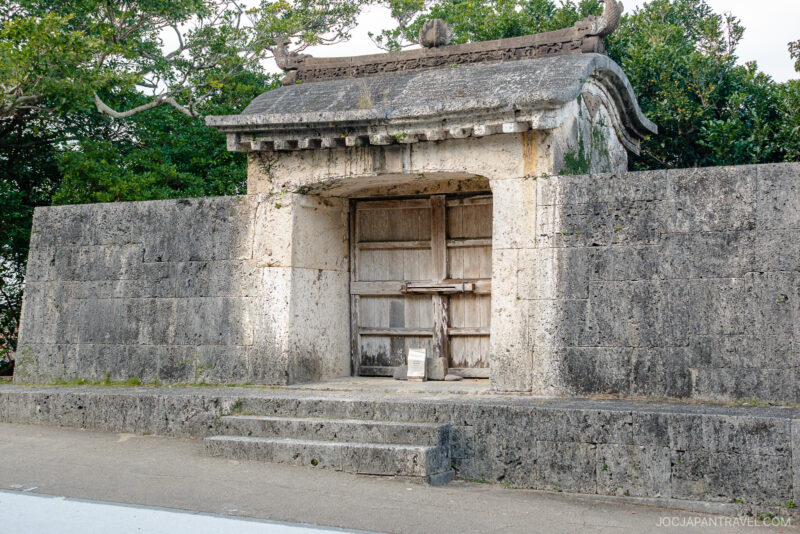
If you have the time, we highly recommend strolling a few minutes down the road to Sonohyan-utaki Ishimon, a sacred stone gate where Ryukyuan kings once stopped to pray before embarking on journeys. It’s a small site, but there’s a quiet, almost timeless peace to it.
How to Get to Shuri Castle
Train
- Take the Yui Rail Monorail to Shuri Station. From there, it’s a 15-minute uphill walk to the entrance.
- Total travel time: 30 minutes from central Naha.
Bus
- Take a local city bus (such as bus #1, #14, or #346) from the Naha Bus Terminal. Get off at the Shurijo Koen Iriguchi bus stop.
Taxi
- About ¥2,000–¥2,500 from central Naha, 15–20 minutes depending on traffic.
Should You Visit Shuri Castle?
Yes—absolutely. Shuri Castle is one of Okinawa’s most meaningful places. It’s a powerful story of survival, restoration, and pride in Okinawa’s distinct heritage. The blend of Chinese and Japanese influences, panoramic views, and open-air experience make it easy to enjoy with with the entire family.
More to Explore Nearby
After touring the reconstructed palace grounds of Shuri Castle, continue exploring Okinawa’s unique blend of royal history, local crafts, and sacred sites nearby.
- Nakagusuku Castle – Wander through one of Okinawa’s best-preserved castle ruins with panoramic views over the Pacific and ancient limestone walls.
- Seifa Utaki – Visit this sacred grove and UNESCO World Heritage site deeply tied to the spiritual roots of the Ryukyu Kingdom.
- Shikinaen – Stroll through a former royal garden featuring stone bridges, lush greenery, and a peaceful palace pavilion.
- Okinawa World – Head south to explore Gyokusendo Cave and hands-on cultural exhibits at this family-friendly theme park rooted in Okinawan traditions.